Kirjojen hintavertailu. Mukana 11 342 296 kirjaa ja 12 kauppaa.

Kirjahaku

Etsi kirjoja tekijän nimen, kirjan nimen tai ISBN:n perusteella.

1000 tulosta hakusanalla John Henry Perry

The Letters and Diaries of John Henry Newman: Volume VIII: Tract 90 and the Jerusalem Bishopric
John Henry Newman (1801-90) was brought up in the Church of England in the Evangelical tradition. An Oxford graduate and Fellow of Oriel College, he was appointed Vicar of St Mary's Oxford in 1828; from 1839 onwards he began to have doubts about the claims of the Anglican Church and in 1845 he was received into the Roman Catholic Church. He was made a Cardinal in 1879. His influence on both the restoration of Roman Catholicism in England and the advance of Catholic ideas in the Church of England was profound. Volume VIII covers a turbulent period in Newman's life with the publication of Tract 90. His attempt to show the compatibility of the 39 Articles with Catholic doctrine caused a storm both in the University of Oxford and in the Church. He and others were horrified by the establishment of a joint Anglo-Prussian Bishopric in Jerusalem, considering it an attempt to give Apostolical succession to an heretical church. In 1842 he moved away from the hubbub of Oxford life to nearby Littlemore.
John Henry Newman

John Henry Newman

Oxford University Press
2015
sidottu
John Henry Newman was one of the most eminent of Victorians and an intellectual pioneer for an age of doubt and unsettlement. His teaching transformed the Victorian Church of England, yet many still want to know more of Newman's personal life. Newman's printed correspondence runs to 32 volumes, and John Henry Newman: A Portrait in Letters offers a way through the maze. Roderick Strange has chosen letters that illustrate not only the well-known aspects of Newman's personality, but also those in which elements that may be less familiar are on display. There are letters to family and friends, and also terse letters laced with anger and sarcasm. The portrait has not been airbrushed. This selection of letters presents a rounded picture, one in which readers will meet Newman as he really was and enjoy the pleasure of his company. As Newman himself noted, 'the true life of a man is in his letters'.
John Henry: Roark Bradford's Novel and Play
Roark Bradford's 1931 novel and 1939 play dealing with the legendary folk-hero John Henry (both titled John Henry) were extremely influential in their own time, but have since then been nearly forgotten. Steven C. Tracy has united these hard-to-find works in a single critical edition that helps contextualize-and revive-both texts. An expansive introduction explores Bradford's life; recounts critical responses to his works; and surveys John Henry's pervasiveinfluence in folk, literary, and popular culture. The volume also features a wide array of supplementary materials including a selected bibliography and discography, transcriptions of folksong texts and recordings available during the 1930s, and a chronology of the lives of both Bradford and Henry. As Tracy'sintroduction makes clear, such a consideration of Bradford-set in the context of writers, both black and white, drawing upon African American folklore and using dialects along with stereotypical and non-stereotypical portrayals-is long overdue. This new edition is a windfall for scholars and students of folklore and African American literature.
John Henry Newman

John Henry Newman

Roderick Strange

Darton,Longman Todd Ltd
2008
nidottu
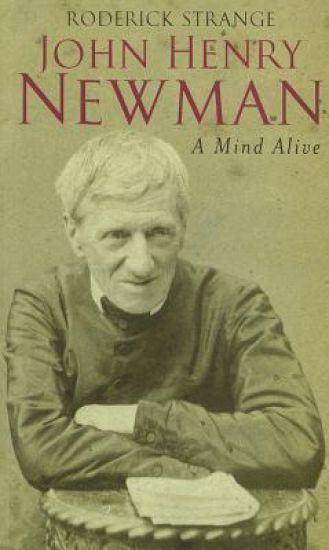
John Henry Newman is one of the most significant and enigmatic figures of the nineteenth century, renowned for his original mind, the beauty of his writing, and for his profound influence on both Anglicanism and Roman Catholicism. He will be canonised on October 13th, 2019. Yet his personality remains elusive and his legacy is still contested. Who was Newman and what is his significance for us today? John Henry Newman: A Mind Alive paints a vivid and nuanced portrait of Newman as a thinker, a friend, and a priest, and shows us how he approached some of the controversial issues that still divide Christians. Those who want to come to know Newman better and to learn from him will be able to meet him in this concise and elegant new study.
IISermon Notes of John Henry Cardinal Newman, 1849-1878

IISermon Notes of John Henry Cardinal Newman, 1849-1878

John Henry Cardinal Newman

University of Notre Dame Press
2001
sidottu
Newman was told that Catholic priests do not read sermons, but this does not mean that he made them up as he went along. He planned his Catholic sermons as meticulously as he did his famous Parochial and Plain, but he committed them to memory and then he made notes afterwards. His sermons, delivered over a period of thirty years, provide some fascinating insights into his active mind and the range of subjects he covered within the framework of the Church's liturgical year. James Mozley, writing in 1946, said, "A sermon of Mr. Newman's enters into our feelings, ideas, and modes of viewing things. Persons look into Mr. Newman's sermons and see their own thoughts in them." Unpublished for ninety years, Sermon Notes of John Henry Cardinal Newman shows Newman's brilliant mind at work.
John Henry Newman

John Henry Newman

A.N. Wilson

SPCK Publishing
2007
nidottu
John Henry Newman is recognized as one of the greatest Christian thinkers of the modern age. He was also a man of prayer and deep spirituality. A. N. Wilson's wide-ranging anthology of Newman's prayers, poems and meditations will appeal to all those who are fascinated by this inspirational man. The readings cover the general themes of faith, prayer, the contemplation of Christ, discipleship, the meaning of holiness, and the hope of heaven. In an engaging Introduction, Wilson brings fresh insight to Newman's life and thought. This carefully arranged anthology will provide comfort and sustenance to all those who cherish Newman's writings and to those who are keen to discover one of our best loved spiritual writers for the first time.
John Henry Newman

John Henry Newman

Eamon Duffy

SPCK Publishing
2019
sidottu
‘In another world it is otherwise, but here below to live is to change, and to be perfect is to have changed often.’ From An Essay on the Development of Christian Doctrine (1903) Canonized by Pope Francis in October 2019, Saint John Henry Newman (1801–90) was one of the most controversial and influential thinkers of his day. He is now recognized as one of the finest prose stylists of modern times, as well as a popular poet and hymn-writer. His spiritual autobiography, Apologia Pro Vita Sua, is a modern classic, and his many theological writings continue to be widely read and highly regarded by Christians of all traditions. As Eamon Duffy brilliantly demonstrates in this fresh assessment of Newman’s life and achievement, other theologians of his time are now largely of historical interest whereas Newman is still very much our contemporary. ‘This splendid book. . . expertly illuminates every aspect of Newman's life [and] work.’ Wall Street Journal
John Henry Newman: A Very Brief History

John Henry Newman: A Very Brief History

Eamon Duffy

SPCK Publishing
2020
nidottu
Part One: The History (What do we know?) This brief historical introduction to Newman explores the social, political and religious factors that formed the original context of his life and writings, and considers how those factors affected the way he was initially received. What was his impact on the world at the time and what were the key ideas and values connected with him? Part Two: The Legacy (Why does it matter?) This second part explores the intellectual and cultural `afterlife' of Newman, and considers the ways in which his impact has lasted and been developed in different contexts by later generations. Why is he still considered important today? In what ways is his legacy contested or resisted? And what aspects of his legacy are likely to continue to influence the world in the future? The book has a brief chronology at the front plus a glossary of key terms and a list of further reading at the back.
John Henry Newman

John Henry Newman

Frank M Turner

Yale University Press
2002
sidottu
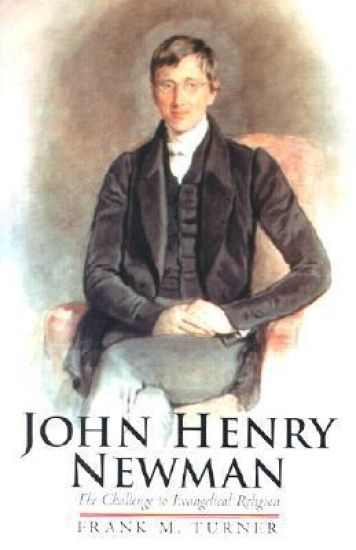
One of the most controversial religious figures of the nineteenth century, John Henry Newman (1801-1890) began his career as a priest in the Church of England but converted to the Roman Catholic Church in 1845. He became a cardinal in 1879. Between 1833 and 1845 Newman, now best known for his autobiographical Apologia Pro Vita Sua and The Idea of a University, was the aggressive leader of the Tractarian Movement within Oxford University. Newman, along with John Keble, Richard Hurrell Froude, and E. B. Pusey, launched an uncompromising battle against the dominance of evangelicalism in early Victorian religious life. By 1845 Newman's radically outspoken views had earned him censure from Oxford authorities and sharp criticism from the English bishops. Departing from previous interpretations, Turner portrays Newman as a disruptive and confused schismatic conducting a radical religious experiment. Turner demonstrates that Newman's passage to Rome largely resulted from family quarrels, thwarted university ambitions, the inability to control his followers, and his desire to live in a community of celibate males.
John Henry Newman

John Henry Newman

Frank M. Turner

Yale University Press
2011
pokkari
A provocative reappraisal of a pivotal figure, John Henry Newman also offers an important reconsideration of the religious and intellectual history of the nineteenth century. One of the most controversial religious figures of the nineteenth century, John Henry Newman (1801–1890) began his career as a priest in the Church of England but converted to the Roman Catholic Church in 1845. He became a cardinal in 1879.Between 1833 and 1845 Newman, now best known for his autobiographical Apologia Pro Vita Sua and The Idea of a University, was the aggressive leader of the Tractarian Movement within Oxford University. Newman, along with John Keble, Richard Hurrell Froude, and E. B. Pusey, launched an uncompromising battle against the dominance of evangelicalism in early Victorian religious life. By 1845 Newman’s radically outspoken views had earned him censure from Oxford authorities and sharp criticism from the English bishops.Departing from previous interpretations, Turner portrays Newman as a disruptive and confused schismatic conducting a radical religious experiment. Turner demonstrates that Newman’s passage to Rome largely resulted from family quarrels, thwarted university ambitions, the inability to control his followers, and his desire to live in a community of celibate males.
John Henry Days

John Henry Days

Colson Whitehead

ANCHOR BOOKS
2002
nidottu
From the bestselling, two-time Pulitzer Prize-winning author of The Underground Railroad and The Nickel Boys, a novel that is "funny and wise and sumptuously written" (Jonathan Franzen, The New York Times Book Review).Colson Whitehead's triumphant novel is on one level a multifaceted retelling of the story of John Henry, the black steel-driver who died outracing a machine designed to replace him. On another level it's the story of a disaffected, middle-aged black journalist on a mission to set a record for junketeering who attends the annual John Henry Days festival. It is also a high-velocity thrill ride through the tunnel where American legend gives way to American pop culture, replete with p. r. flacks, stamp collectors, blues men, and turn-of-the-century song pluggers. John Henry Days is an acrobatic, intellectually dazzling, and laugh-out-loud funny book that will be read and talked about for years to come.
John Henry: An American Legend

John Henry: An American Legend

Ezra Jack Keats

Random House USA Inc
1987
pokkari
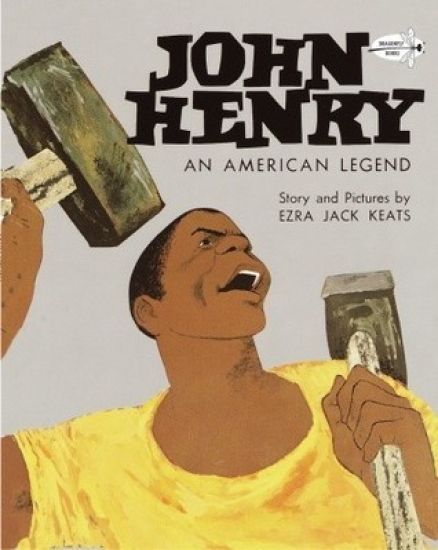
Illus. in full color. The Caldecott Medalist's powerful classic is now reissued in a handsome paperback edition, as well as a library edition. "The heroic figure of John Henry is captured in a simple rhythmic picture book. Dramatic pictures with large bold figures express the feeling of this tall tale."--(starred) School Library Journal.
John Henry Muirhead (Routledge Revivals)
First published in 1942, Reflections documents the life of John Henry Muirhead and the philosophical age that he observed. The first part of the volume derives from Muirhead’s own autobiographical narrative, left unfinished when he died in May 1940. The second part features two final chapters written by John W. Harvey that comprehensively record the final stages of Muirhead’s life. Harvey’s chapters incorporate Muirhead’s unfinished final years of commentary and begin at the man’s retirement from Birmingham Chair in 1921.As a student and teacher of philosophy, Muirhead’s life ran almost precisely parallel to what he himself refers to as ‘one of the most vivid and important movements in British and American philosophy’. He came into contact with some of the age’s primary thinkers and as such, his own autobiography is important in providing an insight into his contemporary philosophical environment.
John Henry Muirhead (Routledge Revivals)
First published in 1942, Reflections documents the life of John Henry Muirhead and the philosophical age that he observed. The first part of the volume derives from Muirhead’s own autobiographical narrative, left unfinished when he died in May 1940. The second part features two final chapters written by John W. Harvey that comprehensively record the final stages of Muirhead’s life. Harvey’s chapters incorporate Muirhead’s unfinished final years of commentary and begin at the man’s retirement from Birmingham Chair in 1921.As a student and teacher of philosophy, Muirhead’s life ran almost precisely parallel to what he himself refers to as ‘one of the most vivid and important movements in British and American philosophy’. He came into contact with some of the age’s primary thinkers and as such, his own autobiography is important in providing an insight into his contemporary philosophical environment.