This work has been selected by scholars as being culturally important, and is part of the knowledge base of civilization as we know it. This work was reproduced from the original artifact, and remains as true to the original work as possible. Therefore, you will see the original copyright references, library stamps (as most of these works have been housed in our most important libraries around the world), and other notations in the work.This work is in the public domain in the United States of America, and possibly other nations. Within the United States, you may freely copy and distribute this work, as no entity (individual or corporate) has a copyright on the body of the work.As a reproduction of a historical artifact, this work may contain missing or blurred pages, poor pictures, errant marks, etc. Scholars believe, and we concur, that this work is important enough to be preserved, reproduced, and made generally available to the public. We appreciate your support of the preservation process, and thank you for being an important part of keeping this knowledge alive and relevant.
Jean Henri Merle d'Aubigné, Genevan historian of Christianity, offered Protestants in post-French revolutionary Europe historical reflections on the origins of their religious and political organizations. Best known for his 13-volume history of the Reformation, Merle d'Aubigné's popularity was without rival in the middle third of the 19th century. Roney argues that Merle d'Aubigné must be seen as an important historian who promoted new historical methods developed in German historical schools and the Romantic study of history. He used contemporary concepts, such as liberty and conscience, to explain the important place of Christianity in Western Civilization.
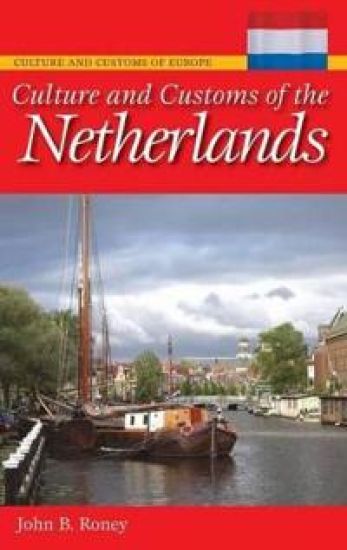
"The Culture and Customs of the World" series delivers a fresh, modern perspective on individual countries for which detailed information is most in demand in the school curriculum and library. Each volume is written by a country expert especially to meet the needs of students and the general reader. The world's countries come alive in insightful, accessible chapters that cover crucial topics as: the land and history; the people, language, food, and traditional dress; religion and thought; social customs and lifestyle; media; literature; marriage, family, women's roles, and education; performing arts, music, and cinema; and, art and architecture. For a complete listing of all titles in this series, go to our associated website.
Air pollution is harmful to human health, but little is known about the costs of pollution-related health care. This study estimated the effect of air pollution on medical spending: The authors determined how much failing to meet air quality standards cost various purchasers of hospital care in California over 2005-2007.
The third edition of Managing Employee Performance and Reward: Systems, Practices and Prospects has been thoroughly revised and updated by a new four-member author team. The text introduces a new conceptual framework based on systems thinking and a dual model of strategic alignment and psychological engagement. Coverage of chapter topics provides a balance between research evidence and practice and, in this new edition, is enhanced with a more applied and technical approach. The text also includes chapters dedicated to conceptual framing, base pay and individual recognition and reward; 'reality check' breakout boxes with practical examples and current problems on each of strategic alignment, employee engagement, organisation justice and workforce diversity; and a new chapter exploring new horizons in performance and reward practice and research with a focus on the mega-trends of technological transformation under 'Industry 4.0', new economic forms and relationships arising from the 'gig' economy, and generational change.
Provides a unique review of the major spatial aspects of transport systems, a detailed analysis of transport problems in urban and rural areas, an evaluation of social and environmental impacts, and a planning and policy overview. Divided into four parts, each considering a different aspect of transport geography. The first part outlines the basic geography of transport and examines transport and spatial structures, focusing upon the varying contributions made by transport to industrial, agricultural and urban development. Part two moves to consider specific transport systems at both national and international scales, drawing on studies from industrialised and developing nations and discussing the effects upon transport of the political changes in the former USSR and Eastern Europe. The third part examines some of the many problems of transport and urban and rural areas using specific examples to illustrate the contrasting difficulties and evaluate current urban transportation planning methods.
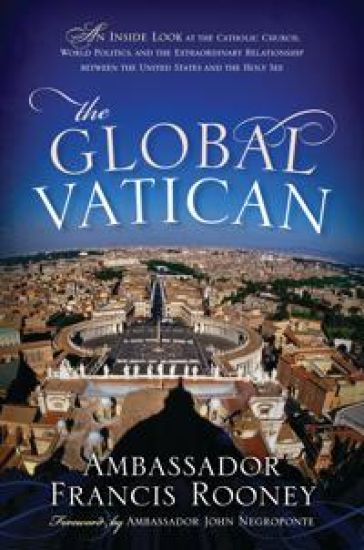
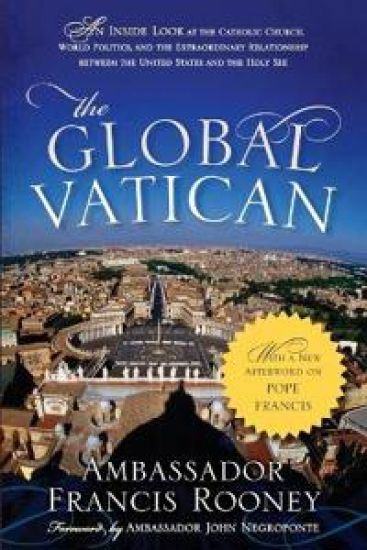
From the centuries-long prejudices against Catholics in America, to the efforts of Fascism, Communism and modern terrorist organizations to “break the cross and spill the wine,” this book brings to life the Catholic Church’s role in world history, particularly in the realm of diplomacy. Former U.S. ambassador to the Holy See Francis Rooney provides a comprehensive guide to the remarkable path the Vatican has navigated to the present day, and a first-person account of what that path looks and feels like from an American diplomat whose experience lent him the ultimate insider’s perspective. Part memoir, part historical lesson, The Global Vatican captures the braided nature of religious and political power and the complexities, battles, and future prospects for the relationship between the Holy See and the United States as both face challenges old and new.
From the centuries-long prejudices against Catholics in America, to the efforts of Fascism, Communism, and modern terrorist organizations to “break the cross and spill the wine,” this book brings to life the Catholic Church’s role in world history, particularly in the realm of diplomacy. Former U.S. ambassador to the Holy See Francis Rooney provides a comprehensive guide to the remarkable path the Vatican has navigated to the present day, and a first-person account of what that path looks and feels like from an American diplomat whose experience lent him the ultimate insider’s perspective. Part memoir, part historical lesson, The Global Vatican captures the braided nature of religious and political power and the complexities, battles, and future prospects for the relationship between the Holy See and the United States as both face challenges old and new. Updated now to include a view towards Pope Francis’ first trip to the United States, The Global Vatican looks forward to the revitalization of the Church in this newest global papacy.
Harvested Forages deals with the subject of food for domestic animal feeding. Such food is called "forage" and includes things like alfalfa and other plants usually referred to as "hay." Topics include the ways that this forage is produced, how it is harvested, and ways that it should be stored. Other issues that are dealt with include various criteria and measurement procedures for assessing forage nutritive quality, potential health hazards associated with particular plants and plant toxins, and various issues of plant growth, pest control, and soil fertility--among other topics. This book is essential for any institution with a strong program in range sciences, animal sciences, animal feeding and nutrition, and related programs.
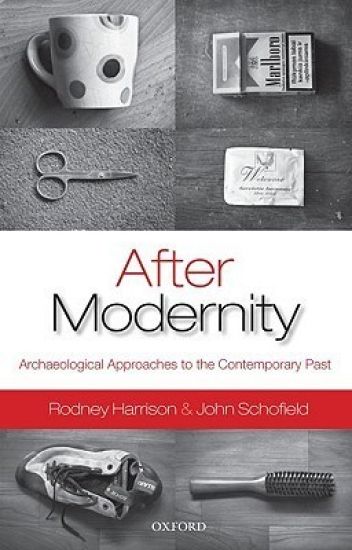
This book summarizes archaeological approaches to the contemporary past, and suggests a new agenda for the archaeology of late modern societies. The principal focus is the archaeology of developed, de-industrialized societies during the second half of the twentieth century and the beginning of the twenty-first. This period encompasses the end of the Cold War and the beginning of the 'internet age', a period which sits firmly within what we would recognize to be a period of 'lived and living memory'. Rodney Harrison and John Schofield explore how archaeology can inform the study of this time period and the study of our own society through detailed case studies and an in-depth summary of the existing literature. Their book draws together cross-disciplinary perspectives on contemporary material culture studies, and develops a new agenda for the study of the materiality of late modern societies.
This book summarizes archaeological approaches to the contemporary past, and suggests a new agenda for the archaeology of late modern societies. The principal focus is the archaeology of developed, de-industrialized societies during the second half of the twentieth century and the beginning of the twenty-first. This period encompasses the end of the Cold War and the beginning of the 'internet age', a period which sits firmly within what we would recognize to be a period of 'lived and living memory'. Rodney Harrison and John Schofield explore how archaeology can inform the study of this time period and the study of our own society through detailed case studies and an in-depth summary of the existing literature. Their book draws together cross-disciplinary perspectives on contemporary material culture studies, and develops a new agenda for the study of the materiality of late modern societies.
Provides a unique review of the major spatial aspects of transport systems, a detailed analysis of transport problems in urban and rural areas, an evaluation of social and environmental impacts, and a planning and policy overview. Divided into four parts, each considering a different aspect of transport geography. The first part outlines the basic geography of transport and examines transport and spatial structures, focusing upon the varying contributions made by transport to industrial, agricultural and urban development. Part two moves to consider specific transport systems at both national and international scales, drawing on studies from industrialised and developing nations and discussing the effects upon transport of the political changes in the former USSR and Eastern Europe. The third part examines some of the many problems of transport and urban and rural areas using specific examples to illustrate the contrasting difficulties and evaluate current urban transportation planning methods.
""Play Production for Amateurs"" by Rodney Bennett is a comprehensive guidebook for anyone interested in producing a play, whether it be for a school, community theater, or other amateur production. The book covers all aspects of play production, from selecting a play and casting actors, to designing sets and costumes, to staging and directing the final production. The book is divided into three main sections: pre-production, production, and post-production. In the pre-production section, Bennett discusses the process of selecting a play, analyzing the script, and casting actors. He also provides guidance on creating a production schedule, setting up a rehearsal space, and working with a production team. The production section covers the actual staging of the play, including blocking, movement, and stage design. Bennett provides detailed instructions on creating sets and costumes, lighting and sound design, and managing the technical aspects of the production. Finally, the post-production section covers the wrap-up of the production, including strike (the dismantling of the set), evaluating the production, and planning for future productions. Bennett also includes a helpful appendix with sample forms and checklists for use in the production process. Overall, ""Play Production for Amateurs"" is a valuable resource for anyone interested in producing a play, whether they are a seasoned veteran or a first-time producer. Bennett's clear and concise writing style, along with his wealth of experience in the theater world, make this book an essential guide for anyone looking to create a successful amateur production.This scarce antiquarian book is a facsimile reprint of the old original and may contain some imperfections such as library marks and notations. Because we believe this work is culturally important, we have made it available as part of our commitment for protecting, preserving, and promoting the world's literature in affordable, high quality, modern editions, that are true to their original work.
This book classifies the maximal subgroups of the almost simple finite classical groups in dimension up to 12; it also describes the maximal subgroups of the almost simple finite exceptional groups with socle one of Sz(q), G2(q), 2G2(q) or 3D4(q). Theoretical and computational tools are used throughout, with downloadable Magma code provided. The exposition contains a wealth of information on the structure and action of the geometric subgroups of classical groups, but the reader will also encounter methods for analysing the structure and maximality of almost simple subgroups of almost simple groups. Additionally, this book contains detailed information on using Magma to calculate with representations over number fields and finite fields. Featured within are previously unseen results and over 80 tables describing the maximal subgroups, making this volume an essential reference for researchers. It also functions as a graduate-level textbook on finite simple groups, computational group theory and representation theory.