Kirjojen hintavertailu. Mukana 11 717 486 kirjaa ja 12 kauppaa.

Kirjahaku

Etsi kirjoja tekijän nimen, kirjan nimen tai ISBN:n perusteella.

1000 tulosta hakusanalla John Stuart Mill

John Stuart Mill, best essays

John Stuart Mill, best essays

John Stuart Mill

Createspace Independent Publishing Platform
2017
nidottu
John Stuart Mill (1806 - 1873) was an English philosopher, political economist and civil servant. One of the most influential thinkers in the history of liberalism, he contributed widely to social theory, political theory and political economy. Dubbed "the most influential English-speaking philosopher of the nineteenth century", Mill's conception of liberty justified the freedom of the individual in opposition to unlimited state and social control. Mill was a proponent of utilitarianism, an ethical theory developed by his predecessor Jeremy Bentham. He contributed to the investigation of scientific methodology, though his knowledge of the topic was based on the writings of others, notably William Whewell, John Herschel and Auguste Comte, and research carried out for Mill by Alexander Bain. Mill engaged in written debate with Whewell. A member of the Liberal Party, he was also the first Member of Parliament to call for women's suffrage. In this book: On Liberty Utilitarianism The Subjection of Women
John Stuart Mill

John Stuart Mill

Sven Sochorik

Grin Publishing
2009
pokkari
Studienarbeit aus dem Jahr 2002 im Fachbereich Politik - Politische Theorie und Ideengeschichte, Note: 2,0, Technische Universit t Dresden, Veranstaltung: Proseminar: Einf hrung in das Studium der politischen Theorie, Sprache: Deutsch, Abstract: Das liberale und das kommunitaristische Staatsverst ndnis im Vergleich vor dem Hintergrund des Staatsbegriffes bei John Stuart Mill.
The Ethics of John Stuart Mill: Original Edition of 1897
Complete digitally restored reprint (facsimile) of the original edition of 1897 with excellent resolution and outstanding readability. Edited with introductory essays by Charles Douglas, lecturer and assistant in moral philosophy in the University of Edinburgh. John Stuart Mill (born May 20, 1806, died May 8, 1873). He was a British philosopher, political economist and civil servant. He was an influential contributor to social theory, political theory and political economy. He has been called "the most influential English-speaking philosopher of the nineteenth century". Mill's conception of liberty justified the freedom of the individual in opposition to unlimited state control.
John Stuart Mill: Life, Life Lessons & Achievements

John Stuart Mill: Life, Life Lessons & Achievements

John Stuart Mill

Madison Adams Press
2019
nidottu
This classic memoir brings the complete biography of the one of the greatest thinkers of the western philosophy. Mill is considered to be the most influential mind of liberalism. His work contributed greatly to the development of social theory, political theory and political economy thanks to which he earned the title of "the most influential English-speaking philosopher of the nineteenth century". In this book, John Stuart Mill described his life from childhood and early education until old age. He wrote about his main interests, notable ideas and great influences. Contents: Childhood and Early Education Moral Influences in Early Youth My Father's Character and Opinions Last Stage of Education, and First of Self-education Youthful Propagandism The "Westminster Review" A Crisis in My Mental History One Stage Onward Commencement of the Most Valuable Friendship of My Life My Father's Death Writings and Other Proceedings Up to 1840 General View of the Remainder of My Life Completion of the "System of Logic" Publication of the "Principles of Political Economy" Marriage Retirement From the India House Publication of "Liberty" "Considerations on Representative Government" Civil War in America Examination of Sir William Hamilton's Philosophy Parliamentary Life Remainder of My Life
The Political Theory of John Stuart Mill: 7 Book Collection
This collection of selected work presents John Stuart Mill as a political theorist. In this seven-book edition you can find out Mill's thoughts on representative government, parliamentary reform and capital punishment. This collection also contains books where Mill discussed some of the current topics of his time such as the relations between England and Ireland, American Civil War and improvements in the administration of India. Contents: Considerations on Representative Government To What Extent Forms of Government Are a Matter of Choice The Criterion of a Good Form of Government That the Ideally Best Form of Government Is Representative Government Under What Social Conditions Representative Government Is Inapplicable Of the Proper Functions of Representative Bodies Of the Infirmities and Dangers to Which Representative Government Is Liable Of True and False Democracy; Representation of All, and Representation of the Majority Only Of the Extension of the Suffrage Should There Be Two Stages of Election? Of the Mode of Voting Of the Duration of Parliaments Ought Pledges to Be Required From Members of Parliament? Of a Second Chamber Of the Executive in a Representative Government Of Local Representative Bodies Of Nationality, as Connected With Representative Government Of Federal Representative Governments Of the Government of Dependencies by a Free State England and Ireland Memorandum of the Improvements in the Administration of India During the Last Thirty Years Revenue Administration, & Rights of the Rural Population Judicature and Legislation Improvement of the Country by Public Works Education Miscellaneous Improvements Bengal Survey Survey and Assessment of the North-western Provinces Survey and Assessment of the Bombay Territory Exemption of Lands Improved by the Ryots From Extra Assessment Speech in Favor of Capital Punishment The Contest in America Thoughts on Parliamentary Reform A Few Words on Non-intervention
John Stuart Mill

John Stuart Mill

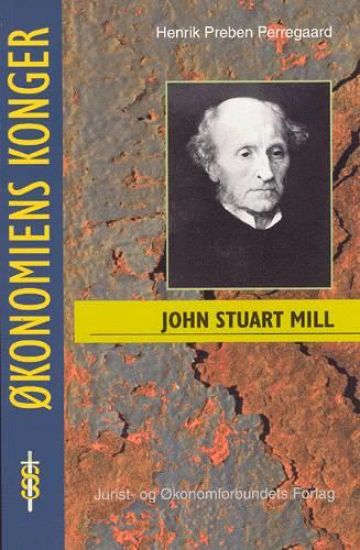
Perregaard H

Jurist- og økonom-
2003
nidottu
John Stuart Mill er den socialliberale samfundstænker, der i det 19. århundrede evnede at forbinde Ricardos fundamentalistiske liberalisme og de praktiske forhold i den britiske økonomi. Han ønskede at fremme politisk frihed og økonomisk velstand for alle samfundsborgere. Der er overraskende mange paralleller mellem den politisk økonomiske diskussion i midten af 1800-tallet og den, vi oplever i dag. Socialismen døde ved murens fald, og liberalismen sejrede. Resultatet er blevet et samfund, hvor alle i stigende grad tænker på sig selv. Der er derfor behov for, at vi atter vender os mod den europæiske kulturtradition, der har argumenteret for frihed og liberalisme under ansvar - personligt og socialt. De socialistiske tanker om lighed og solidaritet kan vi heller ikke undvære. Her kommer Mill ind i billedet. Bogen beskriver Mills liv og hans bidrag til den økonomiske videnskab. Men også Mills mere politisk prægede analyser om den repræsentative regering, frihedens problemer og kvindernes underkuelse behandles.
John Stuart Mill: Principles of Political Economy (Grapevine edition)

John Stuart Mill: Principles of Political Economy (Grapevine edition)

John Stuart Mill

Grapevine India Publishers Pvt Ltd
2024
nidottu
John Stuart Mill: Principles of Political Economy is a seminal work that continues to shape modern economic thought. Through meticulous analysis and eloquent prose, Mill delves into the intricate workings of economic systems, exploring the dynamics of production, distribution, and consumption. With a keen eye for social justice, he advocates for policies that prioritize the well-being of all citizens, emphasizing the importance of individual liberty alongside collective progress. A timeless classic, Mill's insights remain indispensable for understanding the complexities of economics and society.
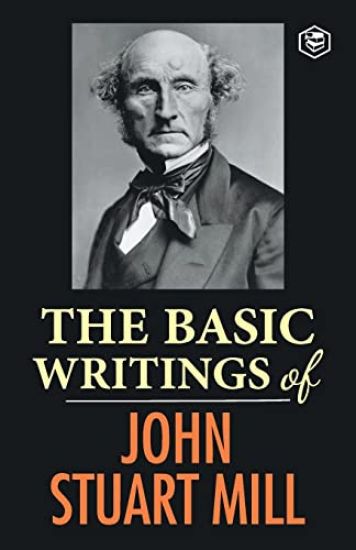
The Basic Writings of John Stuart Mill

The Basic Writings of John Stuart Mill

John Stuart Mill

SANAGE PUBLISHING HOUSE LLP
2022
nidottu
The writings of John Stuart Mill have become the cornerstone of political liberalism. Collected in this volume are John Stuart Mill's Four seminal and most widely read works: On Liberty, The Subjection of Women, Utilitarianism and Socialism. Mill's conception of liberty (from his most famous book, On Liberty) justified the freedom of the individual in opposition to unlimited state control. The Subjection of Women is a passionate defense of the rights of women from the point of view of a man that truly believes in equality. In Utilitarianism, Mill's major contribution is his argument for the qualitative separation of pleasures, in response to Jeremy Bentham's formulation of utilitarianism: the "greatest-happiness principle", which holds that one must always act so as to produce the greatest aggregate happiness among all sentient beings, within reason. Socialism is an early attempt of visualizing a way of putting the Marxist theory into practice. Mill realizes that distributing the wealth onto the proletariat will lead to a state of routine work, where there is neither motivation nor anxiety, not realizing, however, that routine will devoid performance of excellence. John Stuart Mill has been called "the most influential English-speaking philosopher of the nineteenth century."
The Basic Writings of John Stuart Mill

The Basic Writings of John Stuart Mill

John Stuart Mill

SANAGE PUBLISHING HOUSE LLP
2022
sidottu
The writings of John Stuart Mill have become the cornerstone of political liberalism. Collected in this volume are John Stuart Mill's Four seminal and most widely read works: On Liberty, The Subjection of Women, Utilitarianism and Socialism. Mill's conception of liberty (from his most famous book, On Liberty) justified the freedom of the individual in opposition to unlimited state control. The Subjection of Women is a passionate defense of the rights of women from the point of view of a man that truly believes in equality. In Utilitarianism, Mill's major contribution is his argument for the qualitative separation of pleasures, in response to Jeremy Bentham's formulation of utilitarianism: the "greatest-happiness principle", which holds that one must always act so as to produce the greatest aggregate happiness among all sentient beings, within reason. Socialism is an early attempt of visualizing a way of putting the Marxist theory into practice. Mill realizes that distributing the wealth onto the proletariat will lead to a state of routine work, where there is neither motivation nor anxiety, not realizing, however, that routine will devoid performance of excellence. John Stuart Mill has been called "the most influential English-speaking philosopher of the nineteenth century."
John Stuart Mill

John Stuart Mill

Palgrave Macmillan
2013
nidottu
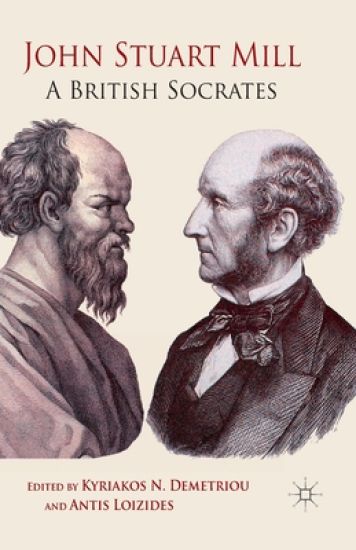
This edited collection highlights the inquisitive and synthetic aspects of John Stuart Mill's mode of philosophising while exploring various aspects of Mill's thought, intellectual development and influence. The contributors to this volume discuss a number of Mill's ideas including those on political participation, democracy, liberty and justice.
John Stuart Mill and the Meaning of Life

John Stuart Mill and the Meaning of Life

Elijah Millgram

Oxford University Press Inc
2019
sidottu
John Stuart Mill was one of the most important and influential philosophers of the nineteenth century. He was also someone who exemplified a view about the meaning of life that is widespread among both philosophers and nonacademics: that projects are what make your life meaningful, and if a single project is large enough to occupy center stage in it, that is the meaning of your life. His brilliant career notwithstanding, Mill's life was a train wreck; the intellectual energy and philosophical ingenuity which he devoted to figuring out what had gone wrong make him a fascinating object lesson in the view that projects give life meaning. Elijah Millgram argues that what went wrong was the very fact that Mill's life was a project-the tragedy of his life was an almost inevitable consequence of living out this account of the meaning of life. At once a scholarly contribution to the history of an important philosophical figure and an intervention in an ongoing debate within moral philosophy, this book takes on a topic that people outside the academy expect philosophy to address, but which it too rarely does: namely, the meaning of life. It is simultaneously an exercise in biography and a novel reconstruction and reframing of some of the central theories and texts of the philosophical canon. Millgram's work attempts to look at the theory of rationality from an unusual angle by asking: what difference does it make to the shape and progress of someone's life whether he has one or another understanding of practical reasoning-that is, of how one ought to reason about what to do?
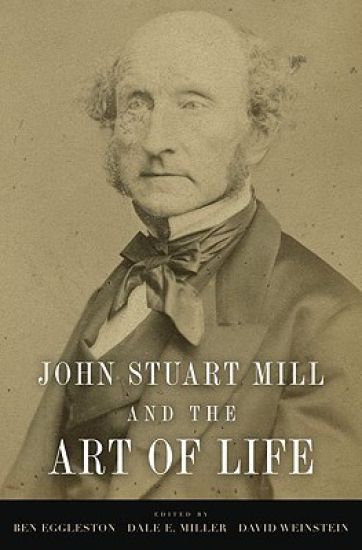
John Stuart Mill and the Art of Life

John Stuart Mill and the Art of Life

Oxford University Press Inc
2010
sidottu
The 'Art of Life' is John Stuart Mill's name for his account of practical reason. In this volume, eleven leading scholars elucidate this fundamental, but widely neglected, element of Mill's thought. Mill divides the Art of Life into three 'departments': 'Morality, Prudence or Policy, and AEsthetics'. In the volume's first section, Rex Martin, David Weinstein, Ben Eggleston, and Dale E. Miller investigate the relation between the departments of morality and prudence. Their papers ask whether Mill is a rule utilitarian and, if so, whether his practical philosophy must be incoherent. The second section contains papers by Jonathan Riley and Wendy Donner, who explore the relation between the departments of morality and aesthetics. They discuss issues ranging from supererogation to aesthetic pleasure and humanity's relationship with nature. The papers in the third section consider the Art of Life's axiological first principle, the principle of utility. Elijah Millgram contends that Mill's own life refutes his claim that the Art of Life has a single axiological first principle. Philip Kitcher maintains that Mill has a dynamic axiology requiring us to continually refine our conception of the good. In the final section, three papers address what it means to put the Art of Life into practice. Robert Haraldsson locates an 'Art of Ethics' in On Liberty that is in tension with the Art of Life. Nadia Urbinati plumbs the classical roots of Mill's view of the good life. Finally, Colin Heydt develops Mill's suggestion that we regard our own lives as works of art.
John Stuart Mill and the Meaning of Life

John Stuart Mill and the Meaning of Life

Elijah Millgram

Oxford University Press Inc
2022
nidottu
John Stuart Mill was one of the most important and influential philosophers of the nineteenth century. He was also someone who exemplified a view about the meaning of life that is widespread among both philosophers and non-academics: that projects are what make your life meaningful, and if a single project is large enough to occupy center stage in it, that is the meaning of your life. His brilliant career notwithstanding, Mill's life was a train wreck; the intellectual energy and philosophical ingenuity which he devoted to figuring out what had gone wrong make him a fascinating object lesson in the view that projects give life meaning. Elijah Millgram argues that what went wrong was the very fact that Mill's life was a project--the tragedy of his life was an almost inevitable consequence of living out this account of the meaning of life. At once a scholarly contribution to the history of an important philosophical figure and an intervention in an ongoing debate within moral philosophy, this book takes on a topic that people outside the academy expect philosophy to address, but which it too rarely does: namely, the meaning of life. It is simultaneously an exercise in biography and a novel reconstruction and reframing of some of the central theories and texts of the philosophical canon. Millgram's work attempts to look at the theory of rationality from an unusual angle by asking: what difference does it make to the shape and progress of someone's life whether he has one or another understanding of practical reasoning--that is, of how one ought to reason about what to do?
John Stuart Mill and the Art of Life

John Stuart Mill and the Art of Life

Oxford University Press Inc
2012
nidottu
The "Art of Life" is John Stuart Mill's name for his account of practical reason. In this volume, eleven leading scholars elucidate this fundamental, but widely neglected, element of Mill's thought. Mill divides the Art of Life into three "departments": "Morality, Prudence or Policy, and Aesthetics." In the volume's first section, Rex Martin, David Weinstein, Ben Eggleston, and Dale E. Miller investigate the relation between the departments of morality and prudence. Their papers ask whether Mill is a rule utilitarian and, if so, whether his practical philosophy must be incoherent. The second section contains papers by Jonathan Riley and Wendy Donner, who explore the relation between the departments of morality and aesthetics. They discuss issues ranging from supererogation to aesthetic pleasure and humanity's relationship with nature. The papers in the third section consider the Art of Life's axiological first principle, the principle of utility. Elijah Millgram contends that Mill's own life refutes his claim that the Art of Life has a single axiological first principle. Philip Kitcher maintains that Mill has a dynamic axiology requiring us to continually refine our conception of the good. In the final section, three papers address what it means to put the Art of Life into practice. Robert Haraldsson locates an 'Art of Ethics' in On Liberty that is in tension with the Art of Life. Nadia Urbinati plumbs the classical roots of Mill's view of the good life. Finally, Colin Heydt develops Mill's suggestion that we regard our own lives as works of art.