This book explains how the debate over originalism emerged from the interaction of constitutional theory, U.S. Supreme Court decisions, and American political development. Refuting the contention that originalism is a recent concoction of political conservatives like Robert Bork, Johnathan O'Neill asserts that recent appeals to the origin of the Constitution in Supreme Court decisions and commentary, especially by Justices Antonin Scalia and Clarence Thomas, continue an established pattern in American history. Originalism in American Law and Politics is distinguished by its historical approach to the topic. Drawing on constitutional commentary and treatises, Supreme Court and lower federal court opinions, congressional hearings, and scholarly monographs, O'Neill's work will be valuable to historians, academic lawyers, and political scientists.
This book explains how the debate over originalism emerged from the interaction of constitutional theory, U.S. Supreme Court decisions, and American political development. Refuting the contention that originalism is a recent concoction of political conservatives like Robert Bork, Johnathan O'Neill asserts that recent appeals to the origin of the Constitution in Supreme Court decisions and commentary, especially by Justices Antonin Scalia and Clarence Thomas, continue an established pattern in American history. Originalism in American Law and Politics is distinguished by its historical approach to the topic. Drawing on constitutional commentary and treatises, Supreme Court and lower federal court opinions, congressional hearings, and scholarly monographs, O'Neill's work will be valuable to historians, academic lawyers, and political scientists.
Michael Levi Rodkinson (1845–1904) was a journalist, author, and publisher whose literary projects spanned numerous countries and continents. Hero to some and scoundrel to others, Rodkinson was a polemical figure whose beliefs underwent many transformations over the course of his life, most significantly from Hasidism to combative Haskalah to eventually anticipating the neo-Romantic trends of the early twentieth century. Throughout his career, Rodkinson’s writing challenged the familiar genres of the literature of Hasidism and the Haskalah, shaping the religious realities of his readers and articulating a spiritual and community life among Jews, who took his ideas to heart in surprising ways. Today, Rodkinson is frequently referred to as a minor Hasidic author and publisher, a characterization based on the criticism of his opponents rather than on his writings. In Literary Hasidism, Meir draws upon those writings and their reception to present a completely different picture of this colorful and influential writer. Examining Rodkinson’s lifelong role as a catalyzing agent of different cultural phenomena, his diverse publishing activities, and his writings in their respective stages, Meir grants readers a provocative new vantage point from which to consider this divisive, enigmatic figure.
Michael Levi Rodkinson (1845–1904) was a journalist, author, and publisher whose literary projects spanned numerous countries and continents. Hero to some and scoundrel to others, Rodkinson was a polemical figure whose beliefs underwent many transformations over the course of his life, most significantly from Hasidism to combative Haskalah to eventually anticipating the neo-Romantic trends of the early twentieth century. Throughout his career, Rodkinson’s writing challenged the familiar genres of the literature of Hasidism and the Haskalah, shaping the religious realities of his readers and articulating a spiritual and community life among Jews, who took his ideas to heart in surprising ways. Today, Rodkinson is frequently referred to as a minor Hasidic author and publisher, a characterization based on the criticism of his opponents rather than on his writings. In Literary Hasidism, Meir draws upon those writings and their reception to present a completely different picture of this colorful and influential writer. Examining Rodkinson’s lifelong role as a catalyzing agent of different cultural phenomena, his diverse publishing activities, and his writings in their respective stages, Meir grants readers a provocative new vantage point from which to consider this divisive, enigmatic figure.
The Science of the Marathon and the Art of Variable Pace Running encourages you to rediscover running by gradually slowing down, running at your own pace, and learning to accelerate. This book is about Veronique Billat's 30 years of research, life studies, and practical experience. This research takes place in real life and extreme racing situations; it does not take place on treadmills, rather in marathon races and the high mountains. It's about adapting new technologies to the needs of training and understanding the possibilities for the improvement of human energy. The key to long term success without injury or overtraining is to train with quality and not quantity. It is no longer necessary to train by running long distances in preparation for specific types of running races. Performance is not just about a result, but rather a road to true happiness. We invite you to discover this new way of running as it is a realistic minimalist-based training using your running mind-body feelings sensations and your lifestyle. The practice of marathon running is, above all, a serious endeavor for anyone 10 to 100 years old, that will let you dream immense possibilities.ReviewsI thought I knew everything I needed to know about marathon pacing before I read The Science of the Marathon. Whether your goal is to complete a marathon with a smile on your face or set a new personal best. Dr. Billat and Edwards fascinating and persuasive book will help you prepare with greater purpose and race with more confidence.--Matt Fitzgerald, author of 80/20 Running, Brain Training For Runners, Life is a Marathon, and many others. This amazing book covering 30 years of exercise science and human experience from Dr. Billat is designed for the coach, scientist, or running enthusiast who desires to understand the physiology and variability of individual banners. I learned some new and interesting things and the book reaffirms that doing accelerations and varying the pace spontaneously on runs is a good thing. I have never used GPS-watch and run by feel, so it is nice to hear that is not crazy. It's refreshing to read about optimizing fat metabolism as this is the evolutionary fuel of the human. At age 53, this book keeps me honest to do my strength training and sprints every day.Dr. Mark Cucuzzella, Professor of Family Medicine, West Virginia University School of Medicine, author of "Run For Your Life" 2008Drs Billat and Edwards have put together a book that combines the best of sports science and in the field research. It's refreshing to see a book on running that connects the dots, delves deep into the science, but still bases its recommendations on how we should run as nature intended.Barry Murray M.Sci, Faculty at Munster Technological University, CEO of Optimum Nutrition For Sport, Irish National endurance runner Veronique Billat is one of the most innovative and important researchers currently active in determining the science of optimum training. I have found her work to be useful for boosting the performances of runners not only in the marathon, but all the way down to the 800-any distance at which aerobic capability matters. My runners swear by it. Richard A. Lovett, Coach, Team Red Lizard, Portland Oregon and Co-author of Alberto Salazar's Guide to Road Racing"Drs. Billat and Edwards did an excellent job writing this book. Dr. Edwards has been a huge help getting Brenda back to top running form. You don't have to be an elite runner to train like one. Brenda has benefited from the 30-30 workouts described in the book. I would recommend this amazing book to anyone looking to take their fitness to the next level."Carlos Handler, Coach, Brenda Martinez USA Olympic Track & Field Runner
Everything about work changed in 2020. Billions of people were sent home from the office, unsure of what they'd be coming back to, or when. Organizations crammed decades of transformation into weeks. And every leader was asked for the same, impossible thing: clarity.Bestselling authors and management experts Johnathan and Melissa Nightingale capture a year of leadership lessons, from the first COVID lockdowns to the first anniversary. Unmanageable is the definitive read on how it felt to adapt, reinvent, and lead during the most tumultuous time in a generation. From the early chaos, to unending burnout, and the unprecedented turnover that followed, the pandemic laid bare the cracks in the old rules of work. Unmanageable introduces the new rules, and offers a practical and essential guide for what comes next. If you want to understand the future of work, start here.
Critical Built Heritage Practice and Conservation - Evolving Perspectives supports an alternative point of departure for engaging with the historic built environment, by critically questioning the legitimacy of dominant conservation concepts and methods that are often taken for granted within building conservation, architecture, and adaptive reuse.The meaning of heritage is changing. From pastness to presentness, from preservation to participation, and from tangible to intangible, heritage is increasingly understood as a dynamic, social, and intangible process across many disciplines. Consequently, the role and remit of the built heritage practitioner – and in particular the architectural conservationist – is becoming progressively complex and in need of a critical gaze. Is restoration really a falsehood from beginning to end? Should the condition of existing materials determine the conservation method? Is authenticity really an inherent quality within old buildings? By engaging with a critical interpretation of heritage, this book makes space for practitioners to consider the evolution of their own role within a rapidly changing context of built heritage practice. Reinforced by a shift in emphasis from materials to meanings, a ‘socio-material outlook’ is proposed which champions an enhanced focus on intangible heritage within the built heritage sector, whilst still acknowledging the physical condition of old buildings is a priority for many stakeholders.This book has been written with practitioners, students, and educators of architectural conservation in mind – although will also be of relevance to the broader built heritage industry; as well as academics, researchers, and heritage students with a passion for contemporary dialogues in heritage studies.
Critical Built Heritage Practice and Conservation - Evolving Perspectives supports an alternative point of departure for engaging with the historic built environment, by critically questioning the legitimacy of dominant conservation concepts and methods that are often taken for granted within building conservation, architecture, and adaptive reuse.The meaning of heritage is changing. From pastness to presentness, from preservation to participation, and from tangible to intangible, heritage is increasingly understood as a dynamic, social, and intangible process across many disciplines. Consequently, the role and remit of the built heritage practitioner – and in particular the architectural conservationist – is becoming progressively complex and in need of a critical gaze. Is restoration really a falsehood from beginning to end? Should the condition of existing materials determine the conservation method? Is authenticity really an inherent quality within old buildings? By engaging with a critical interpretation of heritage, this book makes space for practitioners to consider the evolution of their own role within a rapidly changing context of built heritage practice. Reinforced by a shift in emphasis from materials to meanings, a ‘socio-material outlook’ is proposed which champions an enhanced focus on intangible heritage within the built heritage sector, whilst still acknowledging the physical condition of old buildings is a priority for many stakeholders.This book has been written with practitioners, students, and educators of architectural conservation in mind – although will also be of relevance to the broader built heritage industry; as well as academics, researchers, and heritage students with a passion for contemporary dialogues in heritage studies.
From the imaginations of Seth McDuffee, author of the bestselling Big Sneaky Barbarian books, and award-winning screenwriter and audiobook narrator Johnathan McClain comes a new series that answers the question . . ."What would happen if you crossed the high fantasy of Wheel of Time with the irreverent comedy of Hitchhiker's Guide to the Galaxy?"Bruce Silver is the author of the Riftbreaker novels, one of the most popular, beloved fantasy book series of all time. He's got everything he's ever dreamed of having: freedom to tell the stories he wants to tell, legions of enthusiastic fans who wait eagerly to see what he'll write next, and a really nice car. But despite all that, Bruce finds himself dissatisfied, battling an ennui he can't quite put his finger on. So he decides to do what anyone would do in his situation: burn it all down by unexpectedly killing off Carpathian Einzgear, Riftbreaker's cherished hero. A solid plan with absolutely no downside whatsoever.Until . . .Bruce wakes up to find himself suddenly transported inside the world of the novels he's written. And . . . seen by everyone he encounters as Carpathian Einzgear himself. Which is problematic for a variety of reasons, not least of which being that, when Carpathian died, he left behind a sea of destruction, broken promises, and shattered lives that Bruce is now responsible for repairing-only, without access to all the powers and skills Carpathian built up through the course of ten books. Bruce is going to have to start over at the beginning.Meet Your Maker is a comedic, epic fantasy series that asks the questions: What is fiction? What is reality? And does it make a difference, when everyone and everything is trying to kill you?Bruce created this world. Now he has to survive it.
From the imaginations of Seth McDuffee, author of the bestselling Big Sneaky Barbarian books, and award-winning screenwriter and audiobook narrator Johnathan McClain comes the second volume of this meta LitRPG to answer the oft-considered question . . ."What would it look like if Brandon Sanderson had written The Princess Bride?" Bruce Silver thought he'd written the ending to his series. But the story disagreed.Still trapped inside the fantasy he believes he created, Bruce has survived monsters, magical systems, and the awkwardness of being mistaken for Carpathian Einzgear, the dead hero hekilled off. But as Bruce begins to repair the damage Carpathian left behind, he'll discover something worse than a corrupted plotline: a world he can no longer control.The System is glitching. And there may be more to his story than Bruce realizes. Meanwhile, the group of soul-bonded allies he never meant to abandon--his Heart Guard--is beginning to come undone.Now, Bruce must confront the cost of every word he wrote . . . and all the ones he didn't. Because the enemies rising against him aren't just monsters or cults or angry wizards. They're consequences.Meet Your Maker Volume 2 is the continuation of a series that blends epic fantasy, absurdist comedy, and metafictional mayhem in a story about authorship, accountability, and the people who keep believing in you even when you stop believing in yourself. Praise for Meet Your Maker Volume 1 "Everything I wanted and more. So much more. . . . Meet Your Maker] will stay with you long after the final page." ―Amie Kaufman, New York Times-bestselling author of the Isles of the Gods series"F***ing incredible. Wild to see two talented voices come together and produce something so seamless. Truly next level." ―Kyle Kirrin, author of the Ripple System series"A rare book that makes you laugh, draws you in with intrigue, then holds up a mirror to your own subconscious. I wish I'd written it." ―Haylock Jobson, author of the Heretical Fishing series"This fantastic start to a new series blends humor, fantasy, and clever meta-commentary on reading, writing, and fandom." ―AudioFile
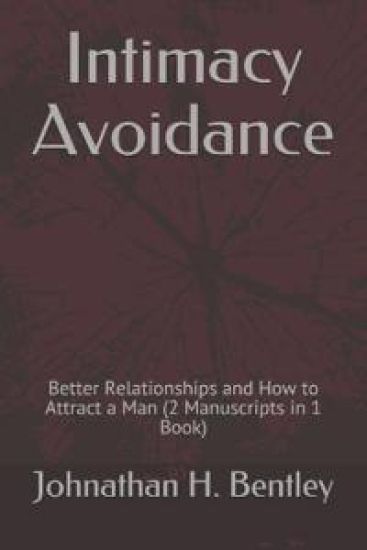
Many people want to experience better relationships in their lives, but sadly, not all of them break through the problems that hold them back from achieving their lifelong dream. Avoiding intimacy is not healthy, and it can lead to more problems.Do you find yourself: - Struggling with jealousy?- Clinging to problematic relationships because you feel that they are better than no relationship at all?- Distancing yourself from relationships, even though you'd like to be in a relationship?- Pursuing relationships, only to end up backing away from them later on?- Living in fear of rejection?- Living in fear of abandonment?If so, this book is for you.It will cover: - How to overcome the fear of letting your guard down- How to boost your ability to trust your partner- How to overcome the fear of abandonment- How to build your confidence in a way that attracts a high-quality man- How to stay patient as you wait for the right guy- Where to meet high-quality guys- and plenty more
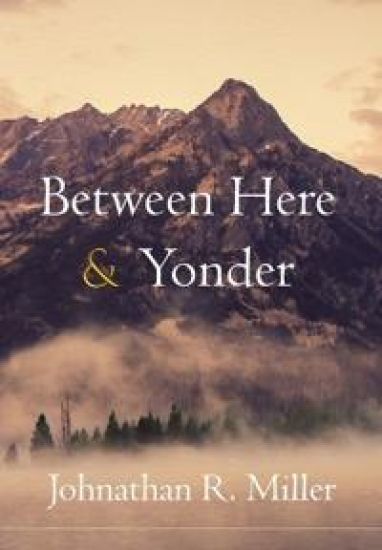
"We were settled in front of Mount Yonder. The wind would cascade down her majestic slope, allowing the gentle gusts to envelop our Orchard, with the breeze caressing the leaves on the Apple Trees, emblazoned with hundreds of the sweet fruit." These are the words written masterfully by American writer, Johnathan R. Miller. He crafts a story, centered around a 12-year-old, committed to a deep best friendship with Levi Robinson. A compelling story, packed with elements of faith and truth, the boys learn the importance of what friendship and faith mean through an arduous search for a woman who has disappeared without a trace. Follow them on their journey as they learn about the power of faith, trust, and friendship.
Brownie and Rosie are forced into a new turn of events. They are soon to be attacked by bears and hunters, from the Cotton Ranges to Camp Huntington. They will meet up with strangers and trek through serious dangers across the entire Rabbit Kingdom. Will they survive? How will their adventure end?A thrilling conclusion to the Rabbit Tale saga
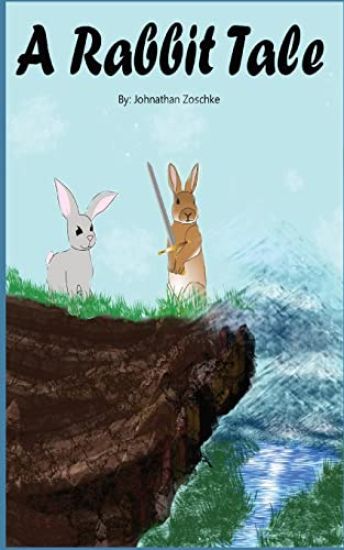
Six-year-old Brownie Cottontail meets up with orphaned ten-year-old Rosie Jacks. When Brownie's parents are taken by the hunters, they mess about from their home in Rabbit Hollow to the peaks of Cliff Mountain in an attempt to rescue them, getting attacked by bears and hunters along the way. Will they survive in this dangerous world?
In this book, readers will discover the importance of creating a family legacy that goes beyond material wealth. The author emphasizes the value of passing down values, traditions, and experiences to future generations. The book covers topics such as: Brainstorming Your Legacy: Readers will learn how to define their legacy by identifying their skills, passions, and ideal life. They will be guided through creating a plan with actionable steps and seeking support from others who can help them achieve their goals.Living Your Legacy: The author emphasizes the importance of using one's strengths and passions to achieve their goals and live their legacy. Readers will learn how to share their legacy by passing down traditions and wealth to future generations.Building a Faithful Family Legacy: Parents will learn how to be present and lead by example, with gifts of love and family. The author emphasizes the role of being a steward for the family's legacy by taking responsibility for preserving and passing it down.Creating Generational Wealth: The book provides actionable steps for creating generational wealth by investing in oneself, family, and community, paying off debt, investing in stocks, real estate, education, and life insurance, consulting experts, prioritizing financial education, and building a business.Passing Down Good Money Values: The author highlights the importance of instilling good money values in the next generation. Readers will learn how to be a good money role model, teach kids the basics of money management, and encourage them to make their own money.This book is a comprehensive guide for families who want to build a lasting legacy that goes beyond material wealth. The author provides practical advice and actionable steps for passing down values, traditions, and wealth to future generations. By following the guidance in this book, families will create a legacy that will be remembered for generations to come.
Even if your world seems to have fallen apart, just know that GOD has your best interest at heart. HE has great plans for you and is positioning you into place for a greater tomorrow.
Do you want to discover how to guide people in the right direction by recognising their emotions?Do you wonder why some people are progressing faster in their career than you, even when they seem less smart?Do you want to learn how to manage people more effectively, so you can cut your workweek from 60 hours to 40 hours?Then keep reading...A recent study in Career Builder shows that 71% of the hiring managers said: An employee s Emotional Intelligence (or EQ), is more important than their IQ . 75% of them even said they were more likely to promote a high-EQ employee than a high IQ employee.Which is why ... since it was first labeled by professor Daniel Goleman in his 1995 best seller, Emotional Intelligence ... more and more evidence shows that your EQ has a bigger influence on your success as a leader than your IQ.And luckily, it s a skill that can be acquired without months of studying.Here s a tiny bit of what you ll discover in Emotional Intelligence for Leadership How to leverage positive emotions in people to increase their productivity and happiness (page 40 and page 53)How to recognise 3 key emotions from other people and build better relationships (page 39)How to avoid complaining and mockery within your workforce (page 126)How to manage your own emotions so you can make decisions based on sound logic and reasoning (page 26)How to use your voice to influence people and regain the positive spirit in your team (page 99)How to turn jealousy into motivation by putting things in another perspective (page 117)How to deal with the biggest enemy for the productivity of your team (page 122)And much, much more.Even if your empathy regarding other people s feelings isn t quite like Gandi s or Mother Theresa s. The everyday examples from the office floor, will give you the tools and techniques to recognise and react to those emotions as a successful leader.Maybe you are doubting if reading a book about emotional intelligence can help you in your busy life as a modern day leader. That s why a big part of this book is dedicated to the unique 4 week Emotional Intelligence Booster Program.This program is specially developed to raise your EQ as a leader. Besides raising your self-awareness and getting more fruitful relationships, it will also skyrocket your chances of getting a promotion.It s time to sharpen your most essential leadership skill Emotional Intelligence.Scroll up and choose Add to Cart to become the well-respected leader you deserve to be.