Kirjojen hintavertailu. Mukana 11 244 527 kirjaa ja 12 kauppaa.

Kirjahaku

Etsi kirjoja tekijän nimen, kirjan nimen tai ISBN:n perusteella.

1000 tulosta hakusanalla Jonathan Webb

The Sermons of Jonathan Edwards

The Sermons of Jonathan Edwards

Jonathan Edwards

Yale University Press
1999
pokkari
Jonathan Edwards, widely considered America’s most important Christian thinker, was first and foremost a preacher and pastor who guided souls and interpreted religious experiences. His primary tool in achieving these goals was the sermon, out of which grew many of his famous treatises. This selection of Edwards’ sermons recognizes their crucial role in his life and art.The fifteen sermons, four of which have never been published before, reflect a life dedicated to experiencing and understanding spiritual truth. Chosen to represent a typical cycle of Edwards’ preaching, the sermons address a wide range of occasions, situations, and states, corporate as well as personal. The book also contains an introduction that discusses Edwards’ contribution to the sermon as a literary form, places his sermons within their social and cultural contexts, and considers his theological aims as a way of familiarizing the reader with the "order of salvation" as Edwards conceived of it. Together, the sermons and the editors’ introduction offer a rounded picture of Edwards the preacher, the sermon writer, and the pastoral theologian.
Jonathan Edwards

Jonathan Edwards

George M. Marsden

Yale University Press
2004
pokkari
Winner of the Bancroft Prize • Finalist for the National Book Critics Circle Award for Biography • Finalist for the American Society of Church History’s Philip Schaff Prize “The finest biography of this towering figure. . . . Marsden guides readers through Edwards’s profoundly alien world with authority and fluidity.”—Benjamin Schwarz, Atlantic Monthly A controversial theologian and the author of the famous sermon Sinners in the Hands of an Angry God, Jonathan Edwards (1703–1758) ignited the momentous Great Awakening of the eighteenth century. In this definitive and long-awaited biography, Jonathan Edwards emerges as both a great American and a brilliant Christian. George Marsden evokes the world of colonial New England in which Edwards was reared—a frontier civilization at the center of a conflict between Native Americans, French Catholics, and English Protestants. Drawing on newly available sources, Marsden demonstrates how these cultural and religious battles shaped Edwards’s life and thought. Marsden reveals Edwards as a complex thinker and human being who struggled to reconcile his Puritan heritage with the secular, modern world emerging out of the Enlightenment. In this, Edwards’s life anticipated the deep contradictions of our American culture. Meticulously researched and beautifully composed, this biography offers a compelling portrait of an eminent American.
Jonathan Edwards's "Sinners in the Hands of an Angry God"
Including the authoritative edition of the famous sermon Designed specifically for the classroom, this volume presents the accurate and definitive version of Sinners, accompanied by the tools necessary to study and teach this famous American sermon. With an introduction aimed at students and teachers and commentary that draws on fifty years of team editorial experience of Yale’s Works of Jonathan Edwards, it provides both context and interpretation, and addresses the concerns and questions of a twenty-first century audience.The book contains questions for in-class discussion, a chronology of Edwards’s life, and a glossary. In addition, curricular materials and video mini-presentations are available on a dedicated Web site. This casebook represents a innovative contribution to the art of teaching Edwards to a new generation of readers.
The Works of Jonathan Edwards, Vol. 1

The Works of Jonathan Edwards, Vol. 1

Jonathan Edwards; Paul Ramsey

Yale University Press
2009
pokkari
This inaugural volume in The Works of Jonathan Edwards is his major contribution to theology and stands as a leading document on Calvinist thought. Mr. Ramsey’s introduction provides a fresh analysis of Edwards’ theological position, includes a study of his life and the intellectual issues in the America of his time, and examines the problem of free will in the philosophical context of today and in connection with Leibniz, Locke, and Hume.
The Works of Jonathan Edwards, Vol. 2

The Works of Jonathan Edwards, Vol. 2

Jonathan Edwards

Yale University Press
2009
pokkari
This volume contains Edwards’ most mature and persistent attempt to judge the validity of the religious development in eighteenth-century America known as the Great Awakening. In developing criteria for such judgment he attacked at the same time one of the fundamental questions facing all religion: how to distinguish genuine from spurious piety? The Awakening created much bitter controversy; on the one side stood the emotionalists and enthusiasts, and on the other the rationalists, for whom religion was essentially a matter of morality or good conduct and the acceptance of properly formulated doctrine. Edwards, with great analytical skill and enormous biblical learning, showed that both sides were in the wrong. He attacked both a “lifeless morality” as too pale as to be the essence of religion, and he rejected the excesses of a purely emotional religion more concerned for sensational effects than for the inner transformation of the self, which was, for him, the center of genuine Christianity.
Jonathan Swift

Jonathan Swift

Robert Mahony

Yale University Press
2012
pokkari
Jonathan Swift was internationally acclaimed in his own time for Gulliver's Travels and other brilliant satires in verse and prose. In his native Ireland, however, he was most fervently admired as a patriot. Advocating economic self-sufficiency for Ireland and resistance to the high-handedness of the British government, Swift represented an articulate challenge to British rule. Although his reputation as an Irish patriot declined after his death, the twentieth century has come to recognize him as a founding father of Irish nationalism.This book traces Swift's fluctuating reception in Ireland through the centuries, examining his nationalist ambivalence for a homeland he could defend but not love, and comparing his feelings with the ambiguities that have marked the development of Irish identity more widely. Robert Mahony considers Swift's posthumous reputation in both literary and popular culture and examines his unusual place in Irish political rhetoric. He shows how Swift's reputation suffered in the later eighteenth century through its seeming irrelevance to shifting political circumstances. In the early nineteenth century, Irish Protestants made him a symbol of their own patriotism within the British union, but he was ignored, or dismissed as a bigot, by most Catholic writers. In the 1840s the tide turned as the Young Ireland movement emphasized Swift's anti-British rhetoric while establishing his Protestant pedigree for contemporary Protestants. Although charges of hypocrisy and of an English cultural orientation survived as late as the 1930s, the construction of Swift as a patriot—with human flaws—was ultimately sustained.
Jonathan Swift

Jonathan Swift

Leo Damrosch

Yale University Press
2014
pokkari
Winner of the 2013 National Book Critics Circle Award in Biography: The life of satirist Jonathan Swift, written by a master biographer and leading scholar of eighteenth-century literature Selected by New York Times Book Review as a Best Book Since 2000 “Superb. . . . Damrosch’s outstanding book has raised Swift’s provocative genius to life.”—Jeffrey Collins, Wall Street Journal Jonathan Swift is best remembered today as the author of Gulliver’s Travels, the satiric fantasy that quickly became a classic and has remained in print for nearly three centuries. Yet Swift also wrote many other influential works, was a major political and religious figure in his time, and became a national hero, beloved for his fierce protest against English exploitation of his native Ireland. What is really known today about the enigmatic man behind these accomplishments? Can the facts of his life be separated from the fictions? In this deeply researched biography, Leo Damrosch draws on discoveries made over the past thirty years to tell the story of Swift’s life anew. Probing holes in the existing evidence, he takes seriously some daring speculations about Swift’s parentage, love life, and various personal relationships and shows how Swift’s public version of his life—the one accepted until recently—was deliberately misleading. Swift concealed aspects of himself and his relationships, and other people in his life helped to keep his secrets. Assembling suggestive clues, Damrosch re-narrates the events of Swift’s life while making vivid the sights, sounds, and smells of his English and Irish surroundings.Through his own words and those of a wide circle of friends, a complex Swift emerges: a restless, combative, empathetic figure, a man of biting wit and powerful mind, and a major figure in the history of world letters.
Jonathan Swift and Popular Culture Myth, Media and the Man
Ann Kelly's provocative book breaks the mold of Swift studies. Twentieth century Swift scholars have tended to assess Jonathan Swift as a pillar of the eighteenth-century 'republic of letter', a conservative, even reactionary voice upholding classical values against the welling tide of popularization in literature. Kelly looks at Swift instead as a practical exponent of the popular and impressario of the literary image. She argues that Swift turned his back on the elite to write for a popular audience, and that he annexed scandals to his fictionalized print alter ego, creating a continual demand for works by or about this self-mythologized figure. A fascinating look at print culture, the commodification of the author, and the history of popular culture, this book should provoke lots of discussion.
Jonathan Edwards

Jonathan Edwards

M X Lesser

Greenwood Press
1994
sidottu
During the last 15 years, the number of conferences on Jonathan Edwards has tripled and the number of books on him has doubled. The scope of scholarship on Edwards has broadened to include relatively neglected texts, as have efforts to fix him more firmly in the 18th century and to gauge his influence on the 20th. This bibliography demonstrates the growth of interest in Jonathan Edwards and serves as a guide to recent research about him.The volume includes entries for nearly 700 books, articles, dissertations, and reviews published on Jonathan Edwards between 1979 and 1993. The entries are grouped in chapters, with each chapter devoted to a particular year. The entries in each chapter are arranged alphabetically. Each entry includes an annotation, with extensive annotations for major works. A chronology lists Edwards's publications by long and short titles, and an introductory essay overviews the surge of critical interest in this influential 18th-century American theologian.
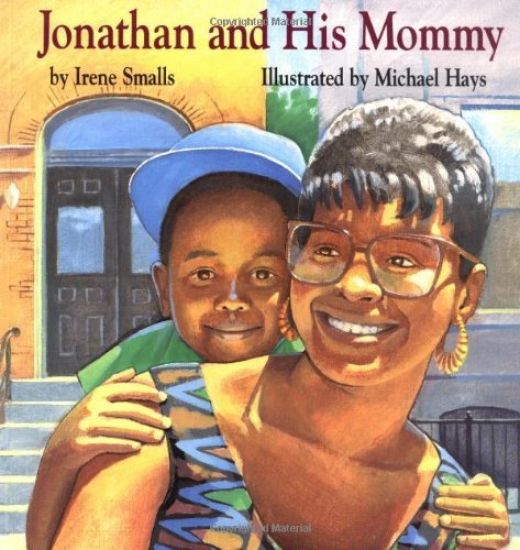
Jonathan and His Mommy

Jonathan and His Mommy

Irene Smalls

Little, Brown Books for Young Readers
1994
nidottu
A gentle celebration of the bond between mother and son, and a beautifully illustrated portrait of a lively urban neighborhood​. As a mother and son explore their area, they try various ways of walking--from giant steps and reggae steps to crisscross steps and backward steps. Whether they're racing down the street or moving as slow as molasses, Jonathan and Mommy go at their own pace and move to the beat of their love for each other.
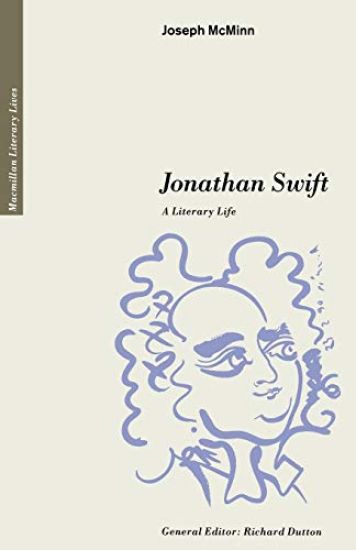
Jonathan Swift

Jonathan Swift

Joseph McMinn

Palgrave Macmillan
1991
sidottu
This biography emphasises the extraordinary versatility and resourcefulness of a lifetime spent serving the public interest with the pen. At the same time, it shows Swift's distinctive love of writing for personal entertainment and diversion, with little or no interest in publication. While remaining a fiercely committed writer, he always tried to preserve, especially in his poetry and letters, a literature dedicated to friendship. Swift's literary career comprises much more than the well-known satires.
Jonathan Swift

Jonathan Swift

McMinn Joseph

PALGRAVE MACMILLAN
1991
nidottu
This biography emphasises the extraordinary versatility and resourcefulness of a lifetime spent serving the public interest with the pen. At the same time, it shows Swift's distinctive love of writing for personal entertainment and diversion, with little or no interest in publication. While remaining a fiercely committed writer, he always tried to preserve, especially in his poetry and letters, a literature dedicated to friendship. Swift's literary career comprises much more than the well-known satires.
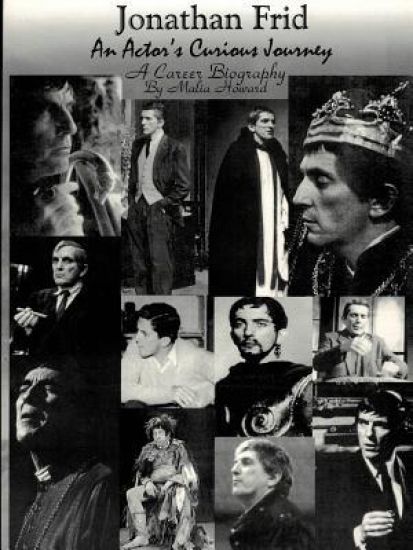
Jonathan Frid An Actor's Curious Journey, Commemorative Edition
Career biography of actor Jonathan Frid. This classically trained actor enjoyed a distinguished career on stage, in television and on film.He became American television's first matinee idol due to his spellbinding portrayal of "Barnabas Collins" on ABC Television's "Dark Shadows" in the late 1960s. He also enjoyed a highly successful run as the evil brother,Jonathan, in the national touring company of "Arsenic & Old Lace" in the late 1980s.In the latter stages of his career, he created a series of Reader's Theatre One-Man-Shows that toured the U.S. from coast to coast. Frid mesmerized audiences with his unique gift for interpreting the nuances of a wide array of characters, all while relying only on his own voice, facial expressions and his remarkable ability to inspire the imagination of his audiences. He viewed this part of his career as the most satisfying, as it allowed him to play numerous characters covering dark comedy, classic horror and the horrors of the mind.
Jonathan Z. Smith on Religion

Jonathan Z. Smith on Religion

Christopher I. Lehrich

Routledge
2020
sidottu
Jonathan Z. Smith (1938–2017) was unquestionably one of the most important and influential voices of critical reflection within the academic study of religion in the last century. His work explored the nature and history of religious phenomena across cultures—from ancient Jewish practices to Maori cults, from early Christianity to mass suicide in the twentieth century—while critiquing the assumptions underlying the very category of "religion."This important volume offers the first full critical assessment of the influence of Jonathan Z. Smith’s thought on the subject of religion. Christopher I. Lehrich systematically examines and develops a critical overview that will assist others in engaging more fully with Smith’s scholarship. This book is an essential reading for students and scholars interested in the work of Jonathan Z. Smith as well as the history of religion more broadly.
Jonathan Z. Smith on Religion

Jonathan Z. Smith on Religion

Christopher I. Lehrich

Routledge
2020
nidottu
Jonathan Z. Smith (1938–2017) was unquestionably one of the most important and influential voices of critical reflection within the academic study of religion in the last century. His work explored the nature and history of religious phenomena across cultures—from ancient Jewish practices to Maori cults, from early Christianity to mass suicide in the twentieth century—while critiquing the assumptions underlying the very category of "religion."This important volume offers the first full critical assessment of the influence of Jonathan Z. Smith’s thought on the subject of religion. Christopher I. Lehrich systematically examines and develops a critical overview that will assist others in engaging more fully with Smith’s scholarship. This book is an essential reading for students and scholars interested in the work of Jonathan Z. Smith as well as the history of religion more broadly.
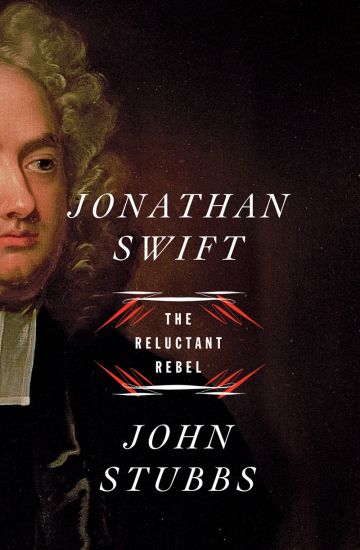
Jonathan Swift: The Reluctant Rebel

Jonathan Swift: The Reluctant Rebel

John Stubbs

W. W. Norton Company
2017
sidottu
One of Europe's most important literary figures, Jonathan Swift was also an inspired humorist, a beloved companion, and a conscientious Anglican minister--as well as a hoaxer and a teller of tales. His anger against abuses of power would produce the most famous satires of the English language: Gulliver's Travels as well as the Drapier Papers and the unparalleled Modest Proposal, in which he imagined the poor of Ireland farming their infants for the tables of wealthy colonists.John Stubbs's biography captures the dirt and beauty of a world that Swift both scorned and sought to amend. It follows Swift through his many battles, for and against authority, and in his many contradictions, as a priest who sought to uphold the dogma of his church; as a man who was quite prepared to defy convention, not least in his unshakable attachment to an unmarried woman, his "Stella"; and as a writer whose vision showed that no single creed holds all the answers.Impeccably researched and beautifully told, in Jonathan Swift Stubbs has found the perfect subject for this masterfully told biography of a reluctant rebel--a voice of withering disenchantment unrivaled in English.
The Essential Writings of Jonathan Swift

The Essential Writings of Jonathan Swift

Jonathan Swift

WW Norton Co
2009
nidottu
“Contexts” features a generous selection of contemporary materials, among them Swift's letters, autobiographical documents, and personal writings. “Criticism” provides readers with a wide chronological and thematic range of scholarly interpretations, divided into two sections. The first, “1745–1940,” includes assessments by Henry Fielding, Samuel Johnson, Samuel Taylor Coleridge, William Makepeace Thackeray, D. H. Lawrence, W. B. Yeats, F. R. Leavis, and André Breton, among others. The second, “After 1940,” is by subject and collects critical discussions of A Tale of the Tub, the poems, the English and Irish politics, and Gulliver’s Travels, by Hugh Kenner, Marcus Walsh, Irvin Ehrenpreis, Penelope Wilson, Derek Mahon, S. J. Connolly, George Orwell, R. S. Crane, Jenny Mezciems, Ian Higgins, and Claude Rawson. A Chronology and Selected Bibliography are also included.
Jonathan Swift
The Critical Heritage gathers together a large body of critical sources on major figures in literature. Each volume presents contemporary responses to a writer's work, enabling student and researcher to read the material themselves.
Jonathan Swift
The Critical Heritage gathers together a large body of critical sources on major figures in literature. Each volume presents contemporary responses to a writer's work, enabling student and researcher to read the material themselves.