Kirjojen hintavertailu. Mukana 11 244 527 kirjaa ja 12 kauppaa.

Kirjahaku

Etsi kirjoja tekijän nimen, kirjan nimen tai ISBN:n perusteella.

1000 tulosta hakusanalla Jonathan Wheeldon

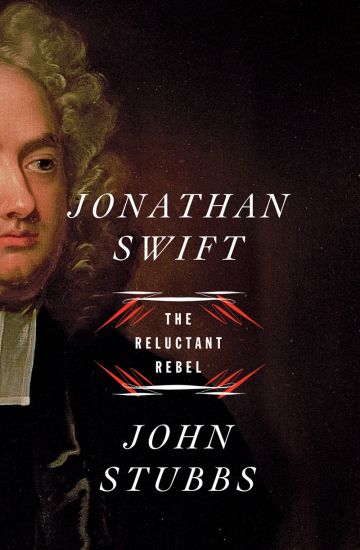
Jonathan Swift: The Reluctant Rebel

Jonathan Swift: The Reluctant Rebel

John Stubbs

W. W. Norton Company
2017
sidottu
One of Europe's most important literary figures, Jonathan Swift was also an inspired humorist, a beloved companion, and a conscientious Anglican minister--as well as a hoaxer and a teller of tales. His anger against abuses of power would produce the most famous satires of the English language: Gulliver's Travels as well as the Drapier Papers and the unparalleled Modest Proposal, in which he imagined the poor of Ireland farming their infants for the tables of wealthy colonists.John Stubbs's biography captures the dirt and beauty of a world that Swift both scorned and sought to amend. It follows Swift through his many battles, for and against authority, and in his many contradictions, as a priest who sought to uphold the dogma of his church; as a man who was quite prepared to defy convention, not least in his unshakable attachment to an unmarried woman, his "Stella"; and as a writer whose vision showed that no single creed holds all the answers.Impeccably researched and beautifully told, in Jonathan Swift Stubbs has found the perfect subject for this masterfully told biography of a reluctant rebel--a voice of withering disenchantment unrivaled in English.
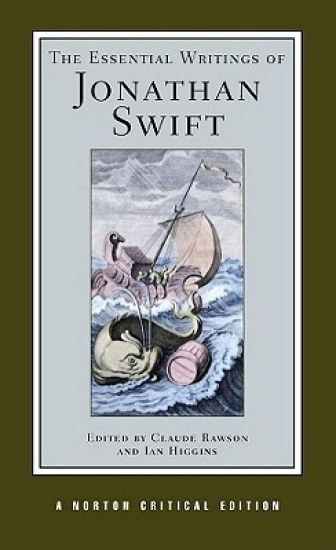
The Essential Writings of Jonathan Swift

The Essential Writings of Jonathan Swift

Jonathan Swift

WW Norton Co
2009
nidottu
“Contexts” features a generous selection of contemporary materials, among them Swift's letters, autobiographical documents, and personal writings. “Criticism” provides readers with a wide chronological and thematic range of scholarly interpretations, divided into two sections. The first, “1745–1940,” includes assessments by Henry Fielding, Samuel Johnson, Samuel Taylor Coleridge, William Makepeace Thackeray, D. H. Lawrence, W. B. Yeats, F. R. Leavis, and André Breton, among others. The second, “After 1940,” is by subject and collects critical discussions of A Tale of the Tub, the poems, the English and Irish politics, and Gulliver’s Travels, by Hugh Kenner, Marcus Walsh, Irvin Ehrenpreis, Penelope Wilson, Derek Mahon, S. J. Connolly, George Orwell, R. S. Crane, Jenny Mezciems, Ian Higgins, and Claude Rawson. A Chronology and Selected Bibliography are also included.
Jonathan Swift
The Critical Heritage gathers together a large body of critical sources on major figures in literature. Each volume presents contemporary responses to a writer's work, enabling student and researcher to read the material themselves.
Jonathan Swift
The Critical Heritage gathers together a large body of critical sources on major figures in literature. Each volume presents contemporary responses to a writer's work, enabling student and researcher to read the material themselves.
Jonathan Swift's Gulliver's Travels
An extremely complex, yet widely studied text, Jonathan Swift’s Gulliver’s Travels ranks as one of the most scathing satires of British and European society ever published. Students will therefore welcome the publication of Roger Lund’s sourcebook, which provides a clear way through the wealth of contextual and critical material that surounds the text. This indispensable guide presents: extensive introductory comment on the contexts and many interpretations of the text, from publication to present annotated extracts from key contextual documents, reviews, critical works and the text itself cross-references between documents and sections of the guide, in order to suggest links between texts, contexts and criticism suggestions for further reading.Part of the Routledge Gudies to Literature series, this volume is essential reading for all those beginning detailed study of Swift’s controversial novel.
Jonathan Swift's Gulliver's Travels
An extremely complex, yet widely studied text, Jonathan Swift’s Gulliver’s Travels ranks as one of the most scathing satires of British and European society ever published. Students will therefore welcome the publication of Roger Lund’s sourcebook, which provides a clear way through the wealth of contextual and critical material that surounds the text. This indispensable guide presents: extensive introductory comment on the contexts and many interpretations of the text, from publication to present annotated extracts from key contextual documents, reviews, critical works and the text itself cross-references between documents and sections of the guide, in order to suggest links between texts, contexts and criticism suggestions for further reading.Part of the Routledge Gudies to Literature series, this volume is essential reading for all those beginning detailed study of Swift’s controversial novel.
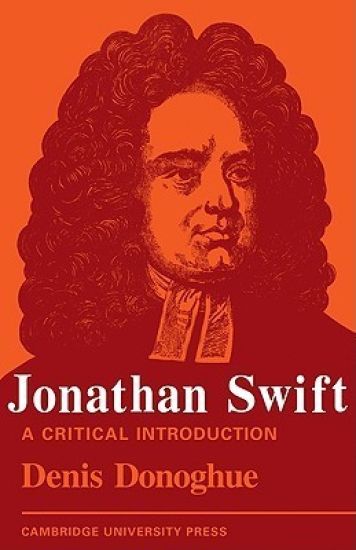
Jonathan Swift Critical Introduction

Jonathan Swift Critical Introduction

Denis Donoghue

Cambridge University Press
1969
sidottu
In this concise critical survey, Professor Donoghue looks at Swift's whole output, and expresses a fresh sense of his literary character. In particular, he questions the widespread view that Swift is to be understood in terms of irony, persona or mask. He points out, for instance, that Swift's irony is not continuous, and that his sense of form is not ours. We should not see him as producing elaborate artistic structures, but as meeting particular needs which forced themselves upon him. We need also to identify the 'gestures' through which Swift revealed his characteristic mental attitudes, and behind them to sense his general life-stance; to understand his devices - such as the choice and change of perspective; his deeper pre-occupations - such as the relationship between the body, the mind and the soul; his attitude to and use of language; his conception of the nature of humanity; the characteristics of his verse.
Jonathan Swift

Jonathan Swift

Denis Donoghue

Cambridge University Press
2010
pokkari
In this concise critical survey, Professor Donoghue looks at Swift's whole output, and expresses a fresh sense of his literary character. In particular, he questions the widespread view that Swift is to be understood in terms of irony, persona or mask. He points out, for instance, that Swift's irony is not continuous, and that his sense of form is not ours. We should not see him as producing elaborate artistic structures, but as meeting particular needs which forced themselves upon him. We need also to identify the 'gestures' through which Swift revealed his characteristic mental attitudes, and behind them to sense his general life-stance; to understand his devices - such as the choice and change of perspective; his deeper pre-occupations - such as the relationship between the body, the mind and the soul; his attitude to and use of language; his conception of the nature of humanity; the characteristics of his verse.
Jonathan Swift in Print and Manuscript

Jonathan Swift in Print and Manuscript

Stephen Karian

Cambridge University Press
2010
sidottu
The study of Jonathan Swift's works has most often focused on print publication, with less scholarly attention devoted to manuscript circulation. Based on extensive research into the manuscript versions of Swift's poetry, Stephen Karian's analysis suggests new ways of interpreting the different choices Swift made to circulate his texts in either print or manuscript form. He explains Swift's relationships with his publishers in England and Ireland; the ways in which his writings circulated in hand-written form; and the effect that political censorship had on the manner in which his most outspoken political poems were published. Working at the intersection of book history, bibliography, and textual and literary criticism, this book will open up new areas of study for Swift scholars, as well as developing an important methodology for the study of the distribution and reception of literary texts in the eighteenth century.