Kirjojen hintavertailu. Mukana 12 205 875 kirjaa ja 12 kauppaa.

Kirjahaku

Etsi kirjoja tekijän nimen, kirjan nimen tai ISBN:n perusteella.

1000 tulosta hakusanalla Jonathon Stuart Wright

Profile of the Gemini Serial Killer: Detective Jonathon Cratick Series
Book one of the Detective Jonathon Cratick series, Jon is specifically called in for a murder involving Steven Willis who was caught red handed moving a dead body. Jon thinks it's an open and shut case with a confession from the self-proclaimed serial killer. Steven starts dropping specific details about multiple murders he claims to have committed that are syncing up with missing case reports and unsolved murders. The killer takes Jonathon down a rabbit hole; baiting him with his confessions. Steven seems to have a specific agenda with Detective Cratick. Both are intertwined with a cold case that has been haunting Jon since the start of his career.

Profile of the Deca Serial Killer: Detective Jonathon Cratick Series
Book three of the Detective Jonathon Cratick series, a jogger comes across a skull alongside a dirt road in an open meadow. Upon investigation the local police department learn the site is a mass grave pertaining to a lot of missing children's cases.Detective Jonathon Cratick and Detective Parsons are called in to come up with a profile of the serial killer before another child goes missing.
Profile of the L.G.B.T. Serial Killer: Detective Jonathon Cratick Series
Book Two of the Detective Jonathon Cratick series, Jon is called upon to profile a new serial killer case.Bodies of transgenders keep popping up in motels, all murdered with the same unique M.O. Working alongside Detective Cassandra Parsons the case intertwines with an ongoing F.B.I investigation involving Human Trafficking.The two detectives are trying to catch the L.G.B.T. serial killer before they strike again.
Crooked Talk

Crooked Talk

Jonathon Green

Cornerstone
2016
pokkari
The language of crime has a long and venerable history - in fact, the first collection of words specifically used by criminals, Hye-Way to the Spittel House, dates from as early as 1531.
Divine Discontent

Divine Discontent

Jonathon S. Kahn

Oxford University Press Inc
2009
sidottu
W. E. B. Du Bois is an improbable candidate for a project in religion. His skepticism of and, even, hostility toward religion is readily established and canonically accepted. Indeed, he spent his career rejecting normative religious commitments to institutions and supernatural beliefs. In this book, Jonathon Kahn offers a fresh and controversial reading of Du Bois that seeks to overturn this view. Kahn contends that the standard treatment of Du Bois turns a deaf ear to his writings. For if we're open to their religious timbre, those writings-from his epoch-making The Souls of Black Folk to his unstudied series of parables that depict the lynching of an African American Christ-reveal a virtual obsession with religion. Du Bois's moral, literary, and political imagination is inhabited by religious rhetoric, concepts and stories. Divine Discontent recovers and introduces readers to the remarkably complex and varied religious world in Du Bois's writings. It's a world of sermons, of religious virtues such as sacrifice and piety, of jeremiads that fight for a black American nation within the larger nation. Unlike other African American religious voices at the time, however, Du Bois's religious orientation is distinctly heterodox--it exists outside the bounds of institutional Christianity. Kahn shows how Du Bois self-consciously marshals religious rhetoric, concepts, typologies, narratives, virtues, and moods in order to challenge traditional Christian worldview in which events function to confirm a divine order. Du Bois's antimetaphysical religious voice, he argues, places him firmly in the American tradition of pragmatic religious naturalism typified by William James. This innovative reading of Du Bois should appeal to scholars of American religion, intellectual history, African American Studies, and philosophy of religion.
Virtual Words

Virtual Words

Jonathon Keats

Oxford University Press Inc
2010
sidottu
The technological realm provides an unusually active laboratory not only for new ideas and products but also for the remarkable linguistic innovations that accompany and describe them. How else would words like qubit (a unit of quantum information), sock puppet (an illicit online alternate identity), or in vitro meat (chicken and beef grown in a laboratory) enter our language? In Virtual Words: Language from the Edge of Science and Technology, Jonathon Keats, author of Wired Magazine's monthly Jargon Watch column, investigates the interplay between words and ideas in our fast-paced tech-driven use-it-or-lose-it society. In 45 illuminating short essays, Keats examines how such words get coined, what relationship they have to their subject matter, and why some, like blog, succeed while others, like flog, fail. Divided into broad categories--such as euphemism, polemic, jargon, and slang, in addition to scientific and technological neologisms--chapters each consider one exemplary word, its definition, origin, context, and significance. Examples range from cybrid (a human-animal hybrid embryo) and unparticle (a form of matter lacking definite mass) to gene foundry (a laboratory where microbes are built) and blackhawk (a combative helicopter parent). Together these words provide not only a survey of technological invention and its consequences, but also a fascinating glimpse of novel language as it comes into being. No one knows this emerging lexical terrain better than Jonathon Keats, and in writing that is as inventive and engaging as the language it describes, Virtual Words offers endless delights for word-lovers, technophiles, and anyone intrigued by the essential human obsession with naming.
Slang

Slang

Jonathon Green

Oxford University Press
2016
nidottu
Slang, however one judges it, shows us at our most human. It is used widely and often, typically associated with the writers of noir fiction, teenagers, and rappers, but also found in the works of Shakespeare and Dickens. It has been recorded since at least 1500 AD, and today's vocabulary, taken from every major English-speaking country, runs to over 125,000 slang words and phrases. This Very Short Introduction takes readers on a wide-ranging tour of this fascinating sub-set of the English language. It considers the meaning and origins of the word 'slang' itself, the ideas that a make a word 'slang', the long-running themes that run through slang, and the history of slang's many dictionaries. ABOUT THE SERIES: The Very Short Introductions series from Oxford University Press contains hundreds of titles in almost every subject area. These pocket-sized books are the perfect way to get ahead in a new subject quickly. Our expert authors combine facts, analysis, perspective, new ideas, and enthusiasm to make interesting and challenging topics highly readable.
Managing Resource Abundance and Wealth

Managing Resource Abundance and Wealth

Jonathon W. Moses; Bjørn Letnes

Oxford University Press
2017
sidottu
Managing Resource Abundance and Wealth: The Norwegian Experience describes the sundry and significant challenges, both economic and political, facing petroleum-producing countries. The volume outlines the pitfalls that policymakers encounter in the aftermath of a major resource discovery, and what they can do to protect their countries from the most adverse consequences. These lessons are derived from two very different sources: The broader-if still underdeveloped-social science literature that examines the 'Paradox of Plenty' in its disparate forms; and the experience of a country that has successfully managed its natural resources over several decades. As a small country on the margins of Europe, Norway has stood up to powerful international interests in one of the world's most powerful industries. Norway has exerted sovereign control over its natural environment, and exploited its resources in a way that has delivered significant wealth to its citizens. This volume explains how Norway has largely avoided the 'Paradox of Plenty'. It aims to demonstrate the variety of policy tools that are available to states rich in natural resources, and how these tools can be adjusted to changing (domestic and international) contexts. It considers a number of questions, such as how countries need to administer and regulate the industry to consider the costs and benefits associated with various contract and licensing regimes, and fiscal arrangements; to maintain competitiveness and avoid becoming too dependent upon the sector; to maximize local content; and to protect the broader economy from the volatility of petroleum prices. The volume shows how the industry can be managed in a democratic, just, and ethical manner, and for the benefit of the general population.
You Belong to the Universe

You Belong to the Universe

Jonathon Keats

Oxford University Press Inc
2016
sidottu
A compelling call to apply Buckminster Fuller's creative problem-solving to present-day problems. A self-professed "comprehensive anticipatory design scientist," the inventor Buckminster Fuller (1895-1983) was undoubtedly a visionary. Fuller's creations often bordered on the realm of science fiction, ranging from the freestanding geodesic dome to the three-wheel Dymaxion car to a bathroom requiring neither plumbing nor sewage. Yet in spite of his brilliant mind and life-long devotion to serving mankind, Fuller's expansive ideas were often dismissed, and have faded from public memory since his death. You Belong to the Universe documents Fuller's six-decade quest to "make the world work for one hundred percent of humanity." Critic and experimental philosopher Jonathon Keats sets out to revive Fuller's unconventional practice of comprehensive anticipatory design, placing Fuller's philosophy in a modern context and dispelling much of the mythology surrounding Fuller's life. Keats argues that Fuller's life and ideas, namely doing "the most with the least," are now more relevant than ever as humanity struggles to meet the demands of an exploding world population with finite resources. Delving deeply into Buckminster Fuller's colorful world, Keats applies Fuller's most important concepts to present-day issues, arguing that his ideas are now not only feasible, but necessary. From transportation to climate change, urban design to education, You Belong to the Universe demonstrates that Fuller's holistic problem-solving techniques may be the only means of addressing some of the world's most pressing issues. Keats's timely book challenges each of us to become comprehensive anticipatory design scientists, providing the necessary tools for continuing Fuller's legacy of improving the world.
Understanding and Using Statistics for Criminology and Criminal Justice

Understanding and Using Statistics for Criminology and Criminal Justice

Jonathon A. Cooper; Peter A. Collins; Anthony Walsh

Oxford University Press
2015
nidottu
Understanding and Using Statistics for Criminology and Criminal Justice shows students how to critically examine the use and interpretation of statistics, covering not only the basics but also the essential probabilistic statistics that students will need in their future careers. Taking a conceptual approach, this unique text introduces students to the mindset of statistical thinking. It presents formulas in a step-by-step manner; explains the techniques using detailed, real-world examples; and encourages students to become insightful consumers of research. FEATURES * Assumes minimal knowledge of math and is accessible to students at all levels * Incorporates examples from real journals, showing how statistics are used in practice * Explains the purpose of hypothesis testing more clearly than any other text, clarifying the concept of probability and its relationship to statistics * Call-out boxes provide more in-depth explanations of concepts
Vulgar Tongue: Green's History of Slang

Vulgar Tongue: Green's History of Slang

Jonathon Green

Oxford University Press
2014
sidottu
Once the language of thieves and beggars, slang is an ever present part of today's culture for people across the strata. It allows us to connect to others, to express otherwise guarded thoughts, and to convey humor in the everyday. But how did slang escape its stigma as the language of the streets and integrate itself so seamlessly with "standard English?" The Vulgar Tongue tells the full story of English language slang, from its origins in early British beggar books to its spread in American and Australian culture in the eighteenth century. The aim is not to record the history of the over 125,000 English words that make up the lexis. Rather, the author focuses on the common, often profane themes that run through the word-list--crime, sex, bodily parts and functions, insults, and drink and drugs--and their scope and function throughout the various cultures and overlapping subcultures of English language history, from the sporting world to the university campus to ethnic communities. In tracing its development and trajectory throughout the English-speaking world, Jonathon Green offers an impassioned defence for its vitality, showing how slang has grown into a modern, versatile vocabulary that has nevertheless established its own role in contemporary English. Drawing on thirty years' worth of research, The Vulgar Tongue is a celebration of the words and phrases of an overlooked aspect of human language and interaction.
Divine Discontent

Divine Discontent

Jonathon S. Kahn

Oxford University Press Inc
2011
nidottu
W. E. B. Du Bois is an improbable candidate for a project in religion. His skepticism of and, even, hostility toward religion is readily established and canonically accepted. Indeed, he spent his career rejecting normative religious commitments to institutions and supernatural beliefs. In this book, Jonathon Kahn offers a fresh and controversial reading of Du Bois that seeks to overturn this view. Kahn contends that the standard treatment of Du Bois turns a deaf ear to his writings. For if we're open to their religious timbre, those writings-from his epoch-making The Souls of Black Folk to his unstudied series of parables that depict the lynching of an African American Christ-reveal a virtual obsession with religion. Du Bois's moral, literary, and political imagination is inhabited by religious rhetoric, concepts and stories. Divine Discontent recovers and introduces readers to the remarkably complex and varied religious world in Du Bois's writings. It's a world of sermons, of religious virtues such as sacrifice and piety, of jeremiads that fight for a black American nation within the larger nation. Unlike other African American religious voices at the time, however, Du Bois's religious orientation is distinctly heterodox--it exists outside the bounds of institutional Christianity. Kahn shows how Du Bois self-consciously marshals religious rhetoric, concepts, typologies, narratives, virtues, and moods in order to challenge traditional Christian worldview in which events function to confirm a divine order. Du Bois's antimetaphysical religious voice, he argues, places him firmly in the American tradition of pragmatic religious naturalism typified by William James. This innovative reading of Du Bois should appeal to scholars of American religion, intellectual history, African American Studies, and philosophy of religion.
Forged

Forged

Jonathon Keats

Oxford University Press Inc
2013
sidottu
According to Vasari, the young Michelangelo often borrowed drawings of past masters, which he copied, returning his imitations to the owners and keeping originals. Half a millennium later, Andy Warhol made a game of "forging" the Mona Lisa, questioning the entire concept of originality. Forged explores art forgery from ancient times to the present. In chapters combining lively biography with insightful art criticism, Jonathon Keats profiles individual art forgers and connects their stories to broader themes about the role of forgeries in society. From the Renaissance master Andrea del Sarto who faked a Raphael masterpiece at the request of his Medici patrons, to the Vermeer counterfeiter Han van Meegeren who duped the avaricious Hermann Göring, to the frustrated British artist Eric Hebborn, who began forging to expose the ignorance of experts, art forgers have challenged "legitimate" art in their own time, breaching accepted practices and upsetting the status quo. They have also provocatively confronted many of the present-day cultural anxieties that are major themes in the arts. Keats uncovers what forgeries--and our reactions to them--reveal about changing conceptions of creativity, identity, authorship, integrity, authenticity, success, and how we assign value to works of art. The book concludes by looking at how artists today have appropriated many aspects of forgery through such practices as street-art stenciling and share-and-share-alike licensing, and how these open-source "copyleft" strategies have the potential to make legitimate art meaningful again. Forgery has been much discussed--and decried--as a crime. Forged is the first book to assess great forgeries as high art in their own right.
The Unconverted Self – Jews, Indians, and the Identity of Christian Europe
Europe's formative encounter with its 'others' is still widely assumed to have come with its discovery of the people of the New World. But, as Jonathan Boyarin argues, long before 1492, Christian Europe imagined itself in distinction to the Jewish difference within. The presence and image of Jews in Europe afforded the Christian majority a foil against which it could refine and maintain its own identity. In fundamental ways this experience, along with the ongoing contest between Christianity and Islam, shaped the rhetoric, attitudes, and policies of Christian colonizers in the New World. "The Unconverted Self" proposes that questions of difference inside Christian Europe not only are inseparable from the painful legacy of colonialism but also reveal Christian domination to be a fragile construct. Boyarin compares the Christian efforts aimed toward European Jews and toward indigenous people of the New World, bringing into focus the intersection of colonial expansion with the Inquisition and adding significant nuance to the entire question of the colonial encounter. Revealing the crucial tension between the Jews as 'others within' and the Indians as 'others without', "The Unconverted Self" is a major reassessment of early modern European identity.
War of Words, War of Stones

War of Words, War of Stones

Jonathon Glassman

Indiana University Press
2011
pokkari
The Swahili coast of Africa is often described as a paragon of transnational culture and racial fluidity. Yet, during a brief period in the 1960s, Zanzibar became deeply divided along racial lines as intellectuals and activists, engaged in bitter debates about their nation's future, ignited a deadly conflict that spread across the island. War of Words, War of Stones explores how violently enforced racial boundaries arose from Zanzibar's entangled history. Jonathon Glassman challenges explanations that assume racial thinking in the colonial world reflected only Western ideas. He shows how Africans crafted competing ways of categorizing race from local tradition and engagement with the Atlantic and Indian Ocean worlds.
Stress Scripting

Stress Scripting

Jonathon C. Smith

Praeger Publishers Inc
1990
sidottu
Stress Scripting presents a unique and tested program of stress management. Its basic idea is that writing thought and action scripts for stress situations can enhance effective coping. Comprehensive, scholarly, and very accessible, it is unlike any other stress management book. With a focus on assertiveness training, coginitive restructuring, stress inoculation training, and relaxation, this book is an extremely versatile tool for therapy, workshops, university instruction, business consultation, and self-help groups. Innovative topics include: the link between assertiveness, defense, and coping; the similarity of problem solving and negotiation; relapse prevention; the phases of stress and stress inoculation training coping philosophies; and cognitive-behavioral relaxation training.Divided into four parts, Stress Scripting is carefully designed to be used either in its entirety, or each chapter separately. Part I presents the basic ideas of stress scripting: defense and coping, assertiveness, thinking and stress, cues, reinforcement, and the phases of stress. It concludes with an option to contract for behavior change. Concentrating on behavior change, Part II introduces assertiveness scripts, relapse prevention, problem solving and negotiation, desensitization, and the coping philosophy. Part III presents an optional cognitive-behavioral relaxation training program. Stress Scripting can be integrated with whatever approach the user prefers. Part IV concludes this volume with an extensive series of individual and group exercises.
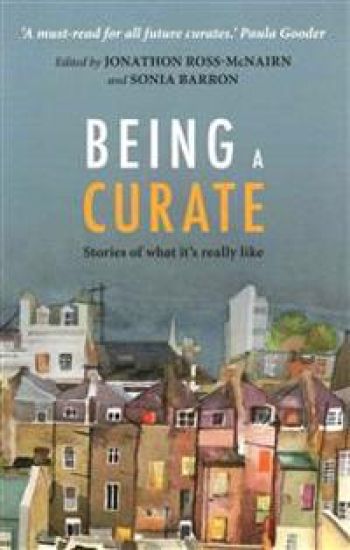
Being a Curate

Being a Curate

Jonathon Ross-McNairn

SPCK Publishing
2014
nidottu
Focusing mainly on stories about being a curate in a variety of church traditions and contexts (both stipendiary and self-supporting), this engrossing book is inclusive in terms of age, ethnicity and gender. Over twenty contributors offer honest, grounded reflections on their experiences, through a mix of anecdotes, humour, practical advice and theology. As well as considering training, ordination and first steps in a curacy, Being a Curate looks at what makes a successful curacy; the relationship between the curate and the training incumbent; the transition from curate to incumbent; dealing with thorny issues, and the value of sharing stories.
Fifteen Gifted

Fifteen Gifted

Jonathon Rodriguez

Lulu.com
2019
nidottu
Told by three protagonists, Fifteen Gifted has dark secrets, unexpected turns, and one final great twist that could possibly lead to another book. Sarah Lightwell finds out that her mom didn't die from a car accident. She was murdered by satanic witches. Although Sarah is set out to seek the truth behind her mother's death, the truth will change everything, even her own identity. James Lightwell wants a normal life, but soon discovers about his newfound power and the prophecy. To make things worse, his father Michael shows up after fourteen years, and the devil gave him new information that makes James question who he is. Michelle Lightwell comes to her hometown after two years in LA. She thinks that finding out her family legacy is worse but finding out that her dark past comes to haunt her when her abusive ex followed her is another level.