Kirjojen hintavertailu. Mukana 11 213 693 kirjaa ja 12 kauppaa.

Kirjahaku

Etsi kirjoja tekijän nimen, kirjan nimen tai ISBN:n perusteella.

1000 tulosta hakusanalla Joseph Butler

The Analogy of Religion, Natural and Revealed, to the Constitution and Course of Nature. to Which Are Added, Two Brief Dissertations
The 18th century was a wealth of knowledge, exploration and rapidly growing technology and expanding record-keeping made possible by advances in the printing press. In its determination to preserve the century of revolution, Gale initiated a revolution of its own: digitization of epic proportions to preserve these invaluable works in the largest archive of its kind. Now for the first time these high-quality digital copies of original 18th century manuscripts are available in print, making them highly accessible to libraries, undergraduate students, and independent scholars.The Age of Enlightenment profoundly enriched religious and philosophical understanding and continues to influence present-day thinking. Works collected here include masterpieces by David Hume, Immanuel Kant, and Jean-Jacques Rousseau, as well as religious sermons and moral debates on the issues of the day, such as the slave trade. The Age of Reason saw conflict between Protestantism and Catholicism transformed into one between faith and logic -- a debate that continues in the twenty-first century.++++The below data was compiled from various identification fields in the bibliographic record of this title. This data is provided as an additional tool in helping to insure edition identification: ++++British LibraryT116202With a final advertisement leaf.London: printed for J.F. and C. Rivington, and G. and T. Wilkie; and S. Hayes, 1788. lxvii, 13],477, 3]p.; 8
Several Letters to the Reverend Dr. Clarke, From a Gentleman in Glocestershire, Relating to the First Volume of the Sermons Preached at Mr Boyle's Lecture; With the Dr's Answers Thereunto
The 18th century was a wealth of knowledge, exploration and rapidly growing technology and expanding record-keeping made possible by advances in the printing press. In its determination to preserve the century of revolution, Gale initiated a revolution of its own: digitization of epic proportions to preserve these invaluable works in the largest archive of its kind. Now for the first time these high-quality digital copies of original 18th century manuscripts are available in print, making them highly accessible to libraries, undergraduate students, and independent scholars.The Age of Enlightenment profoundly enriched religious and philosophical understanding and continues to influence present-day thinking. Works collected here include masterpieces by David Hume, Immanuel Kant, and Jean-Jacques Rousseau, as well as religious sermons and moral debates on the issues of the day, such as the slave trade. The Age of Reason saw conflict between Protestantism and Catholicism transformed into one between faith and logic -- a debate that continues in the twenty-first century.++++The below data was compiled from various identification fields in the bibliographic record of this title. This data is provided as an additional tool in helping to insure edition identification: ++++British LibraryT047997A gentleman in Glocestershire = Joseph Butler. P.19 misnumbered 91. With a final advertisement leaf.London: printed for James Knapton, at the Crow in St. Paul's Church-Yard, 1716. 42, 2] p.; 8
The Analogy of Religion Natural and Revealed, to the Constitution and Course of Nature. To Which are Added two Brief Dissertations
The 18th century was a wealth of knowledge, exploration and rapidly growing technology and expanding record-keeping made possible by advances in the printing press. In its determination to preserve the century of revolution, Gale initiated a revolution of its own: digitization of epic proportions to preserve these invaluable works in the largest archive of its kind. Now for the first time these high-quality digital copies of original 18th century manuscripts are available in print, making them highly accessible to libraries, undergraduate students, and independent scholars.The Age of Enlightenment profoundly enriched religious and philosophical understanding and continues to influence present-day thinking. Works collected here include masterpieces by David Hume, Immanuel Kant, and Jean-Jacques Rousseau, as well as religious sermons and moral debates on the issues of the day, such as the slave trade. The Age of Reason saw conflict between Protestantism and Catholicism transformed into one between faith and logic -- a debate that continues in the twenty-first century.++++The below data was compiled from various identification fields in the bibliographic record of this title. This data is provided as an additional tool in helping to insure edition identification: ++++National Library of ScotlandN002553Glasgow: printed for Robert Urie, 1764. 8],356p.; 12
A Sermon Preached Before the Right Honourable the Lord-Mayor, the Court of Aldermen, the Sheriffs, and the Governors of the Several Hospitals of the City of London, at the Parish Church of St. Bridget, 1740
The 18th century was a wealth of knowledge, exploration and rapidly growing technology and expanding record-keeping made possible by advances in the printing press. In its determination to preserve the century of revolution, Gale initiated a revolution of its own: digitization of epic proportions to preserve these invaluable works in the largest archive of its kind. Now for the first time these high-quality digital copies of original 18th century manuscripts are available in print, making them highly accessible to libraries, undergraduate students, and independent scholars.The Age of Enlightenment profoundly enriched religious and philosophical understanding and continues to influence present-day thinking. Works collected here include masterpieces by David Hume, Immanuel Kant, and Jean-Jacques Rousseau, as well as religious sermons and moral debates on the issues of the day, such as the slave trade. The Age of Reason saw conflict between Protestantism and Catholicism transformed into one between faith and logic -- a debate that continues in the twenty-first century.++++The below data was compiled from various identification fields in the bibliographic record of this title. This data is provided as an additional tool in helping to insure edition identification: ++++British LibraryT003245'A true report of the great number of poor children, and other poor people, maintain'd in the several hospitals, ..' is on pp.26-30; and 'London work-house. A true account ..' is on pp.30-32.London: printed for John and Paul Knapton, 1740. 32p.; 4
The Analogy of Religion Natural and Revealed, to the Constitution and Course of Nature. to Which Are Added Two Brief Dissertations
The 18th century was a wealth of knowledge, exploration and rapidly growing technology and expanding record-keeping made possible by advances in the printing press. In its determination to preserve the century of revolution, Gale initiated a revolution of its own: digitization of epic proportions to preserve these invaluable works in the largest archive of its kind. Now for the first time these high-quality digital copies of original 18th century manuscripts are available in print, making them highly accessible to libraries, undergraduate students, and independent scholars.The Age of Enlightenment profoundly enriched religious and philosophical understanding and continues to influence present-day thinking. Works collected here include masterpieces by David Hume, Immanuel Kant, and Jean-Jacques Rousseau, as well as religious sermons and moral debates on the issues of the day, such as the slave trade. The Age of Reason saw conflict between Protestantism and Catholicism transformed into one between faith and logic -- a debate that continues in the twenty-first century.++++The below data was compiled from various identification fields in the bibliographic record of this title. This data is provided as an additional tool in helping to insure edition identification: ++++British LibraryT063910London: printed for Robert Horsfield, 1765. 12],467, 1]p.; 8
The Analogy of Religion, Natural and Revealed, to the Constitution and Course of Nature. To Which are Added, two Brief Dissertations
The 18th century was a wealth of knowledge, exploration and rapidly growing technology and expanding record-keeping made possible by advances in the printing press. In its determination to preserve the century of revolution, Gale initiated a revolution of its own: digitization of epic proportions to preserve these invaluable works in the largest archive of its kind. Now for the first time these high-quality digital copies of original 18th century manuscripts are available in print, making them highly accessible to libraries, undergraduate students, and independent scholars.The Age of Enlightenment profoundly enriched religious and philosophical understanding and continues to influence present-day thinking. Works collected here include masterpieces by David Hume, Immanuel Kant, and Jean-Jacques Rousseau, as well as religious sermons and moral debates on the issues of the day, such as the slave trade. The Age of Reason saw conflict between Protestantism and Catholicism transformed into one between faith and logic -- a debate that continues in the twenty-first century.++++The below data was compiled from various identification fields in the bibliographic record of this title. This data is provided as an additional tool in helping to insure edition identification: ++++Library of CongressW011620Dedicated to the Right Honourable Charles Lord Talbot, Baron of Hensol. Prefatory dedication to Dr. Thomas Balguy dated 12 May, 1786. Boston, Mass.]: Printed at Boston by Manning and Loring, for David West, no. 36, Marlborough-Street, MDCCXCIII. 1793]. liii, 2], 56-385, 1] p.; 8
A Sermon Preached in the Parish-church of Christ-Church, London; on Thursday May the 9th, 1745, Being the Time of the Yearly Meeting of the Children Educated in the Charity-schools
The 18th century was a wealth of knowledge, exploration and rapidly growing technology and expanding record-keeping made possible by advances in the printing press. In its determination to preserve the century of revolution, Gale initiated a revolution of its own: digitization of epic proportions to preserve these invaluable works in the largest archive of its kind. Now for the first time these high-quality digital copies of original 18th century manuscripts are available in print, making them highly accessible to libraries, undergraduate students, and independent scholars.The Age of Enlightenment profoundly enriched religious and philosophical understanding and continues to influence present-day thinking. Works collected here include masterpieces by David Hume, Immanuel Kant, and Jean-Jacques Rousseau, as well as religious sermons and moral debates on the issues of the day, such as the slave trade. The Age of Reason saw conflict between Protestantism and Catholicism transformed into one between faith and logic -- a debate that continues in the twenty-first century.++++The below data was compiled from various identification fields in the bibliographic record of this title. This data is provided as an additional tool in helping to insure edition identification: ++++British LibraryT047899The 'Account' has its own titlepage; pagination and register are continuous.- Final unnumbered leaf contains 'An account of the rates of cloathing'.London: printed by J. Oliver; and sold by B. Dod, 1745. 101, 3]p.; 4
Five Sermons

Five Sermons

Joseph Butler

SMK Books
2018
sidottu
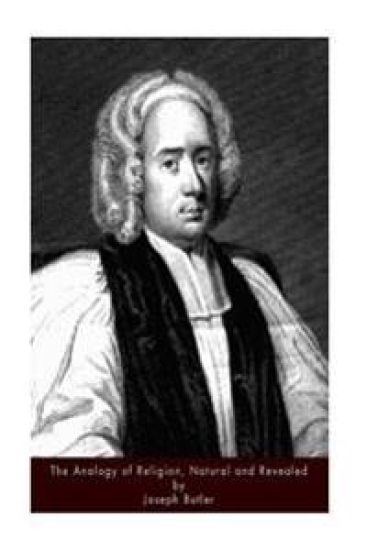
Joseph Butler was an English bishop, theologian, apologist, and philosopher. He was born in Wantage in the English county of Berkshire. He is known, among other things, for his critique of Thomas Hobbes's egoism and John Locke's theory of personal identity. During his life and after his death, Butler influenced many philosophers, including David Hume, Thomas Reid, and Adam Smith
The Analogy of Religion to the Constitution and Course of Nature (Large Print): To Which are Added Two Brief Dissertations: I. On Personal Identity.?I
Originally published in 1873. CONTENTS of The Analogy of Religion to the Constitution and Course of Nature Editor's Introduction Editor's Preface. CONSPECTUS OF THE AUTHOR'S INTRODUCTION. I. What is probable evidence? II. The use and application of probabilities. III. The force of this use of Analogy. IV. General scope of the book. CONSPECTUS OF THE ANALOGY. PART I. CHAPTER I. A FUTURE LIFE. CHAPTER II. THE GOVERNMENT OF GOD BY REWARDS AND PUNISHMENTS. CHAPTER III. MORAL GOVERNMENT OF GOD. CHAPTER IV. OF A STATE OF PROBATION. CHAPTER V. PROBATION INTENDED FOR MORAL DISCIPLINE AND IMPROVEMENT. CHAPTER VI. OF NECESSITY AS INFLUENCING CONDUCT. CHAPTER VII. DIVINE GOVERNMENT A SCHEME IMPERFECTLY COMPREHENDED. PART II. CHAPTER I. IMPORTANCE OF CHRISTIANITY. CHAPTER II. PRESUMPTIONS AGAINST A REVELATION, CONSIDERED AS MIRACULOUS. CHAPTER III. OUR INCAPACITY OF JUDGING WHAT SHOULD BE EXPECTED IN A REVELATION FROM GOD. CHAPTER IV. CHRISTIANITY A SCHEME IMPERFECTLY UNDERSTOOD. CHAPTER V. OF A MEDIATOR, AND REDEMPTION BY HIM. CHAPTER VI. SUPPOSED LACK OF PROOF OF REVELATION, AND ITS WANT OF UNIVERSALITY. CHAPTER VII. POSITIVE EVIDENCES OF CHRISTIANITY. CHAPTER VIII. OBJECTIONS AGAINST THE ANALOGICAL ARGUMENT. Advertisement prefixed to the First Edition. INTRODUCTION. THE ANALOGY OF RELIGION. PART I. Natural Religion. CHAPTER I. A FUTURE LIFE. 27] CHAPTER II. THE GOVERNMENT OF GOD BY REWARDS AND PUNISHMENTS. CHAPTER III. 59] THE MORAL GOVERNMENT OF GOD. CHAPTER IV. PROBATION, AS IMPLYING TRIAL, DIFFICULTIES, AND DANGER. 84] CHAPTER V. PROBATION, AS INTENDED FOR MORAL DISCIPLINE AND IMPROVEMENT. CHAPTER VI. THE OPINION OF NECESSITY, CONSIDERED AS INFLUENCING PRACTICE. CHAPTER VII. THE GOVERNMENT OF GOD, CONSIDERED AS A SCHEME OR CONSTITUTION, IMPERFECTLY COMPREHENDED. PART II. Revealed Religion. CHAPTER I. THE IMPORTANCE OF CHRISTIANITY. 137] CHAPTER II. SUPPOSED PRESUMPTION AGAINST A REVELATION CONSIDERED AS MIRACULOUS. CHAPTER III. OUR INCAPACITY OF JUDGING, WHAT WERE TO BE EXPECTED IN A REVELATION; AND THE CREDIBILITY, FROM ANALOGY, THAT IT MUST CONTAIN THINGS LIABLE TO OBJECTIONS. CHAPTER IV. CHRISTIANITY, CONSIDERED AS A SCHEME OR CONSTITUTION, IMPERFECTLY COMPREHENDED. CHAPTER V. THE PARTICULAR SYSTEM OF CHRISTIANITY; THE APPOINTMENT OF A MEDIATOR, AND THE REDEMPTION OF THE WORLD BY HIM. CHAPTER VI. THE WANT OF UNIVERSALITY IN REVELATION; AND THE SUPPOSED DEFICIENCY IN THE PROOF OF IT. CHAPTER VII. THE PARTICULAR EVIDENCE FOR CHRISTIANITY. CHAPTER VIII. OBJECTIONS AGAINST ARGUING FROM THE ANALOGY OF NATURE, TO RELIGION. DISSERTATIONS. DISSERTATION I. Personal Identity. DISSERTATION II. The Nature of Virtue. FOOTNOTES