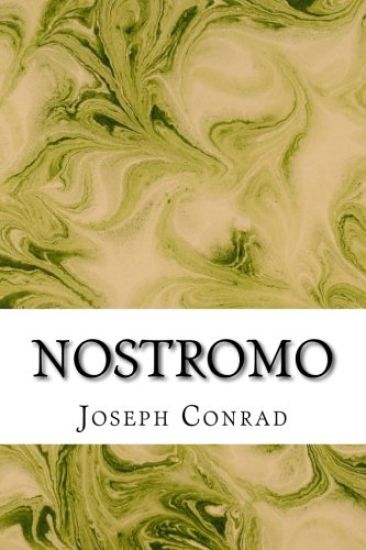
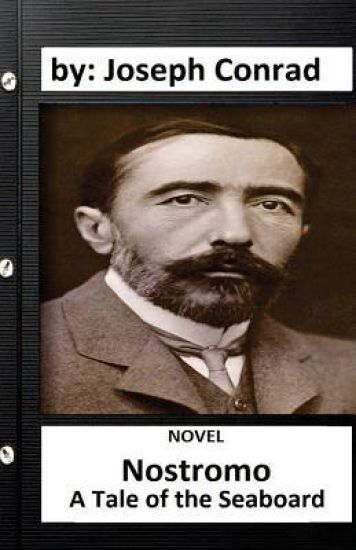
Nostromo (full title Nostromo: A Tale of the Seaboard) is a 1904 novel by Joseph Conrad, set in the fictitious South American republic of "Costaguana". It was originally published serially in two volumes of T.P.'s Weekly. In 1998, the Modern Library ranked Nostromo 47th on its list of the 100 best English-language novels of the 20th century. F. Scott Fitzgerald said, "I'd rather have written Nostromo than any other novel. Nostromo is often regarded as Conrad's best novel Nostromo is set in the South American country of Costaguana, and more specifically in that country's Occidental Province and its port city of Sulaco. Though Costaguana is a fictional nation, its geography as described in the book resembles real-life Colombia. Costaguana has a long history of tyranny, revolution and warfare, but has recently experienced a period of stability under the dictator Ribiera. Charles Gould is a native Costaguanero of English descent who owns an important silver-mining concession near the key port of Sulaco. He is tired of the political instability in Costaguana and its concomitant corruption, and uses his wealth to support Ribiera's government, which he believes will finally bring stability to the country after years of misrule and tyranny by self-serving dictators. Instead, Gould's refurbished silver mine and the wealth it has generated inspires a new round of revolutions and self-proclaimed warlords, plunging Costaguana into chaos. Among others, the forces of the revolutionary General Montero invade Sulaco after securing the inland capital; Gould, adamant that his silver should not become spoil for his enemies, orders Nostromo, the trusted "capataz de los cargadores" (head longshoreman) of Sulaco, to take it offshore so it can be sold into international markets. Nostromo is an Italian expatriate who has risen to his position through his bravery and daring exploits. ("Nostromo" is Italian for "shipmate" or "boatswain", but the name could also be considered a corruption of the Italian phrase "nostro uomo," meaning "our man.") Nostromo's real name is Giovanni Battista Fidanza-Fidanza meaning "trust" in archaic Italian. Nostromo is a commanding figure in Sulaco, respected by the wealthy Europeans and seemingly limitless in his abilities to command power among the local population. He is, however, never admitted to become a part of upper-class society, but is instead viewed by the rich as their useful tool. He is believed by Charles Gould and his own employers to be incorruptible, and it is for this reason that Nostromo is entrusted with removing the silver from Sulaco to keep it from the revolutionaries. Accompanied by the young journalist Martin Decoud, Nostromo sets off to smuggle the silver out of Sulaco. However, the lighter on which the silver is being transported is struck at night in the waters off Sulaco by a transport carrying the invading revolutionary forces under the command of Colonel Sotillo. Nostromo and Decoud manage to save the silver by transporting it to a smaller lifeboat. Decoud and the silver are deposited on the deserted island of Great Isabel in the expansive bay off Sulaco, while Nostromo manages to swim back to shore. Back in Sulaco, Nostromo's power and fame continues to grow as he daringly rides over the mountains to summon the army which ultimately saves Sulaco's powerful leaders from the revolutionaries and ushers in the independent state of Sulaco. In the meantime, left alone on the deserted island, Decoud eventually loses his mind. He takes the small lifeboat out to sea and there shoots himself, after first weighing his body down with some of the silver ingots so that he would sink into the sea.
Almayer's Folly, published in 1895, is Joseph Conrad's first novel. Set in the late 19th century, it centers on the life of the Dutch trader Kaspar Almayer in the Borneo jungle and his relationship to his mixed heritage daughter Nina Almayer's Folly is about a poor businessman who dreams of finding a hidden gold mine and becoming very wealthy. He is a white European, married to a native Malayan; they have one daughter named Nina. He fails to find the goldmine, and comes home saddened. Previously, he had heard that the British were to conquer the Pantai River, and he had built a large, lavish house near where he resided at the time, in order to welcome the invading country to the native land. However, the conquest never took place, and the house remained unfinished. Some passing Dutch seamen had called the house "Almayer's Folly". Now, Almayer continually goes out for long trips, but eventually he stops doing so and stays home with his hopeless daydreams of riches and splendor. His native wife loathes him for this. One day, a Malayan prince, Dain Maroola, came to see Almayer about trading, and while there he falls in love with Nina. Mrs. Almayer kept arranging meetings for Nina and Dain. She wanted them to marry so her daughter could stay native, because she was highly distrustful of the white men and their ways. Dain left but vowed to return to help Almayer find the gold mine. When he does return, he goes straight to Lakamba, a Malayan rajah, and told him that he found the gold mine and that some Dutchmen had captured his ship. The rajah tells him to kill Almayer before the Dutch arrive because he is not needed to find the gold now. The following morning, an unidentifiable native corpse is found floating in the river, wearing an ankle bracelet very similar to Dain's. Almayer was distraught because Dain was his only chance at finding the secret mine. (The corpse was actually of his slave, who had died when a canoe overturned. Mrs. Almayer suggested that Dain put his anklet and ring on the body.) Mrs. Almayer planned to smuggle Dain away from the Dutch, so he would not be arrested. She snuck Nina away from her father, who was drinking with the Dutch. When he awoke from his drunken stupor, a native slave girl told him where Nina had run away to, and Almayer tracked her to Dain's hiding place. Nina refused to go back to avoid the slurs of all the white society. During all this arguing, the slave girl had informed the Dutch of Dain's whereabouts. Almayer said that he could never forgive Nina but would help them escape by taking them to the mouth of the river, where a canoe would rescue them from the Dutch. After they had escaped, Almayer erased the lover's footprints, and went back to his house. Mrs. Almayer ran away to the rajah for protection, taking all Dain's dowry with her. All alone, Almayer broke all his furniture in his home office, piled it in the center of the room, and burned it, along with his entire house, to the ground. He spent the rest of his days in " His] Folly", where he began smoking opium to forget his daughter. He eventually died there.
The Arrow of Gold is a novel by Joseph Conrad, published in 1919. It was originally titled "The Laugh" and published serially in Lloyd's Magazine from December 1918 to February 1920. The story is set in Marseille in the 1870s during the Third Carlist War. The characters of the novel are supporters of the Spanish Pretender Carlos, Duke of Madrid. Curiously, the novel features a person referred to as "Lord X", whose activities as arms smuggler resemble those of the Carlist politician Tirso de Olaz bal y Lardiz bal, Count of Arbelaiz. The narrator of The Arrow of Gold has considerable involvement in the story and is unnamed, though some assume he is Conrad's regular narrator, Charles Marlow. The principal theme is a love triangle which comprises the young narrator, Do a Rita and the Confederate veteran Captain Blunt (named for Simon F. Blunt.Do a Rita finances the operations of the narrator's vessel, Tremolino which smuggles ammunition to the Carlist army. Nautical operations are detailed in the Tremolino chapters of The Mirror of the Sea rather than in this novel.
Joseph Conrad born J zef Teodor Konrad Korzeniowski; 3 December 1857 - 3 August 1924) was a Polish-British writer regarded as one of the greatest novelists to write in the English language. He joined the British merchant marine in 1878, and was granted British nationality in 1886. Though he did not speak English fluently until he was in his twenties, he was a master prose stylist who brought a non-English sensibility into English literature. He wrote stories and novels, many with a nautical setting, that depict trials of the human spirit in the midst of an impassive, inscrutable universe. Conrad is considered an early modernist, though his works still contain elements of 19th-century realism. His narrative style and anti-heroic characters have influenced many authors, including T. S. Eliot, William Faulkner, Graham Greene, and Salman Rushdie.Many films have been adapted from, or inspired by, Conrad's works. Writing in the heyday of the British Empire, Conrad drew on, among other things, his native Poland's national experiences, and his personal experiences in the French and British merchant navies, to create short stories and novels that reflect aspects of a European-dominated world - including imperialism and colonialism - while profoundly exploring human psycholog Joseph Conrad was born on 3 December 1857 in Berdychiv, in a part of Ukraine that had belonged to the Kingdom of Poland before 1793 and was at the time of his birth under Russian rule. He was the only child of Apollo Korzeniowski and his wife Ewa Bobrowska. His father was a writer, translator, political activist, and would-be revolutionary. Conrad was christened J zef Teodor Konrad after his maternal grandfather J zef, his paternal grandfather Teodor, and the heroes (both named "Konrad") of two poems by Adam Mickiewicz, Dziady and Konrad Wallenrod. He was subsequently known to his family as "Konrad", rather than "J zef".
Joseph Conrad (Polish pronunciation: born J zef Teodor Konrad Korzeniowski; 3 December 1857 - 3 August 1924) was a Polish-British writer regarded as one of the greatest novelists to write in the English language. He joined the British merchant marine in 1878, and was granted British nationality in 1886. Though he did not speak English fluently until he was in his twenties, he was a master prose stylist who brought a non-English sensibility into English literature. He wrote stories and novels, many with a nautical setting, that depict trials of the human spirit in the midst of an impassive, inscrutable universe. Conrad is considered an early modernist, though his works still contain elements of 19th-century realism. His narrative style and anti-heroic characters have influenced many authors, including T. S. Eliot, William Faulkner, Graham Greene, and Salman Rushdie. note 3] Many films have been adapted from, or inspired by, Conrad's works. Writing in the heyday of the British Empire, Conrad drew on, among other things, his native Poland's national experiences, note 4] and his personal experiences in the French and British merchant navies, to create short stories and novels that reflect aspects of a European-dominated world - including imperialism and colonialism - while profoundly exploring human psychology
Joseph Conrad (Polish pronunciation: born J zef Teodor Konrad Korzeniowski; 3 December 1857 - 3 August 1924) was a Polish-British writer regarded as one of the greatest novelists to write in the English language. He joined the British merchant marine in 1878, and was granted British nationality in 1886. Though he did not speak English fluently until he was in his twenties, he was a master prose stylist who brought a non-English sensibility into English literature. He wrote stories and novels, many with a nautical setting, that depict trials of the human spirit in the midst of an impassive, inscrutable universe. Conrad is considered an early modernist, though his works still contain elements of 19th-century realism. His narrative style and anti-heroic characters have influenced many authors, including T. S. Eliot, William Faulkner, Graham Greene, and Salman Rushdie. Many films have been adapted from, or inspired by, Conrad's works.