Kirjojen hintavertailu. Mukana 12 459 402 kirjaa ja 12 kauppaa.

Kirjahaku

Etsi kirjoja tekijän nimen, kirjan nimen tai ISBN:n perusteella.

1000 tulosta hakusanalla Joseph Davis

Story of Joseph, The

Story of Joseph, The

Erin Davis

Moody Publishers
2025
nidottu
The hope of redemption--for your family and mine.Family. Few words stir as much affection, and as much angst. You have hopes and dreams for your family. Everyone does. And yet each family tree holds gnarled branches of sin, disappointment, rebellion, and grief. There is brokenness in every family, but because no brokenness is too big for God, God can do a redemptive work in every family. In this 8-week study, Bible teacher Erin Davis guides you through the genealogy of Joseph. It's a messy story to be sure. But, ultimately, it's a shining example of beautiful, lasting, God-ordained redemption.As you dig into Joseph's family tree, you'll discover that even in the face of dysfunction, deceit, and deep pain, God is at work. He has a good plan.Family is God's idea. He wants to bless your family from generation to generation. As you gather with your family or friends and participate in this study, you'll find strength and hope--the Lord is building a beautiful family for His glory.
An Analysis of Natalie Zemon Davis's The Return of Martin Guerre
Few stories are more captivating than the one told by Natalie Zemon Davis in The Return of Martin Guerre. Basing her research on records of a bizarre court case that occurred in 16th-century France, she uses the tale of a missing soldier – whose disappearance threatens the livelihood of his peasant wife – to explore complex social issues. Davis takes rich material – dramatic enough to have been the basis of two major films – and uses it to explore issues of identity, women's role in peasant society, the interior lives of the poor, and the structure of village society, all of them topics that had previously proved difficult for historians to grapple with. Davis displays fine qualities of reasoning throughout – not only in constructing her own narrative, but also in persuading her readers of her point of view. Her work is also a fine example of good interpretation – practically every document in the case needs to be assessed for issues of meaning.
An Analysis of Natalie Zemon Davis's The Return of Martin Guerre
Few stories are more captivating than the one told by Natalie Zemon Davis in The Return of Martin Guerre. Basing her research on records of a bizarre court case that occurred in 16th-century France, she uses the tale of a missing soldier – whose disappearance threatens the livelihood of his peasant wife – to explore complex social issues. Davis takes rich material – dramatic enough to have been the basis of two major films – and uses it to explore issues of identity, women's role in peasant society, the interior lives of the poor, and the structure of village society, all of them topics that had previously proved difficult for historians to grapple with. Davis displays fine qualities of reasoning throughout – not only in constructing her own narrative, but also in persuading her readers of her point of view. Her work is also a fine example of good interpretation – practically every document in the case needs to be assessed for issues of meaning.
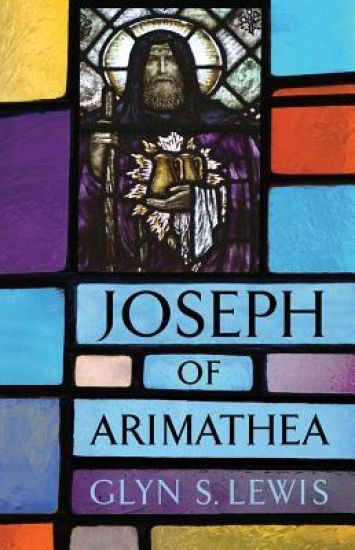
The Life of Joseph of Arimathea

The Life of Joseph of Arimathea

Glyn Davis

Westholme Publishing, U.S.
2017
sidottu
The name Joseph of Arimathea is generally well known, either from the accounts in each of the New Testament Gospels that tell of his providing a tomb for the burial of Jesus; from his depictions in medieval and Renaissance art; from his associations with the Holy Grail that later found greater expression in Medieval Arthurian stories; and even from the story that has endured in western Britain that as a trader in tin, copper, and lead, he had traveled often to the region-and with him came the Christian religion. These stories are strongly rooted, despite the lack of impeccable source material-so much so that Elizabeth I used Joseph of Arimathea as proof that the Church of England predated the Catholic church in her country. In Joseph of Arimathea Glyn S. Lewis brings these fragments together in order to provide as full as is possible what we can infer about this first-century apostle. The author first discusses Arimathea, a town that has yet to be positively identified. He then reviews the accounts of Joseph's entombment of Jesus that appear in each of the four Gospels. From these earliest references, the author next consults the literary and oral tradition evidence of Joseph's passage by ship to the south of France among a group of fugitives escaping persecution for being Christians, and his early visits to Britain as a trader in precious ores. These voyages are said to have brought him to the area around Glastonbury, which became a flourishing monastery in the Middle Ages. Whether or not Joseph of Arimathea visited Britain, his story remains an enthralling and fascinating mystery.
The Ancestry of Joseph Neal, 1769-c.1835, of Litchfield, Maine

The Ancestry of Joseph Neal, 1769-c.1835, of Litchfield, Maine

Walter Goodwin 1885-1966 Davis

Hassell Street Press
2021
sidottu
This work has been selected by scholars as being culturally important and is part of the knowledge base of civilization as we know it.This work is in the public domain in the United States of America, and possibly other nations. Within the United States, you may freely copy and distribute this work, as no entity (individual or corporate) has a copyright on the body of the work.Scholars believe, and we concur, that this work is important enough to be preserved, reproduced, and made generally available to the public. To ensure a quality reading experience, this work has been proofread and republished using a format that seamlessly blends the original graphical elements with text in an easy-to-read typeface.We appreciate your support of the preservation process, and thank you for being an important part of keeping this knowledge alive and relevant.
The Ancestry of Joseph Waterhouse, 1754-1837, of Standish, Maine

The Ancestry of Joseph Waterhouse, 1754-1837, of Standish, Maine

Walter Goodwin 1885-1966 Davis

Hassell Street Press
2021
sidottu
This work has been selected by scholars as being culturally important and is part of the knowledge base of civilization as we know it.This work is in the public domain in the United States of America, and possibly other nations. Within the United States, you may freely copy and distribute this work, as no entity (individual or corporate) has a copyright on the body of the work.Scholars believe, and we concur, that this work is important enough to be preserved, reproduced, and made generally available to the public. To ensure a quality reading experience, this work has been proofread and republished using a format that seamlessly blends the original graphical elements with text in an easy-to-read typeface.We appreciate your support of the preservation process, and thank you for being an important part of keeping this knowledge alive and relevant.
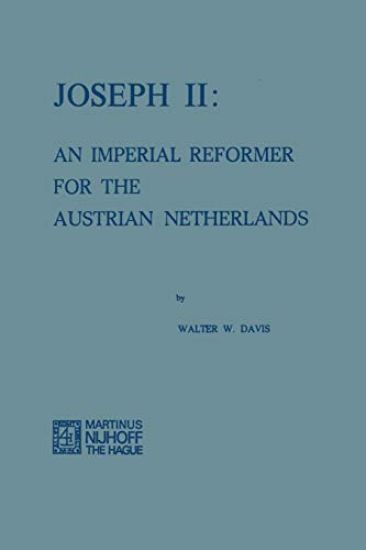
Joseph II: An Imperial Reformer for the Austrian Netherlands
It has been said that never has a monarch so narrowly missed "greatness" as did the Holy Roman Emperor Joseph II. An idealistic, sincere, and hardworking monarch whose ultilitarian bent, humanitarian instincts, and ambitious programs of reform in every area of public concern have prompted historians to term him an "enlightened despot," "revolutionary Emperor," "philosopher on a throne," and a ruler ahead of his time, Joseph has also been condemned for being insensitive to the phobias and follies of his subjects, essentially unrealistic, almost utopian, in establishing his goals, and dogmatic and overly precipitous in trying to achieve them. Efforts to analyze and explain the actions of this complex and controversial personality have involved a number of savants in investigations of "Josephinism" (or as I prefer to call it, "Josephism"), dealing in great detail with the motiva­ tions, substance, and influence of his innovations. The roots of Josephism run deep, but can be observed emerging here and there from the intellectual and political soil that nourished them, before joining the central trunk of the system formulated during the latter years of Maria Theresa's reign to grow to an ephemeral and stunted maturity under Joseph II.
Joseph II

Joseph II

Walter W. Davis

Springer
1974
nidottu
It has been said that never has a monarch so narrowly missed "greatness" as did the Holy Roman Emperor Joseph II. An idealistic, sincere, and hardworking monarch whose ultilitarian bent, humanitarian instincts, and ambitious programs of reform in every area of public concern have prompted historians to term him an "enlightened despot," "revolutionary Emperor," "philosopher on a throne," and a ruler ahead of his time, Joseph has also been condemned for being insensitive to the phobias and follies of his subjects, essentially unrealistic, almost utopian, in establishing his goals, and dogmatic and overly precipitous in trying to achieve them. Efforts to analyze and explain the actions of this complex and controversial personality have involved a number of savants in investigations of "Josephinism" (or as I prefer to call it, "Josephism"), dealing in great detail with the motiva­ tions, substance, and influence of his innovations. The roots of Josephism run deep, but can be observed emerging here and there from the intellectual and political soil that nourished them, before joining the central trunk of the system formulated during the latter years of Maria Theresa's reign to grow to an ephemeral and stunted maturity under Joseph II.