Kirjojen hintavertailu. Mukana 11 699 587 kirjaa ja 12 kauppaa.

Kirjahaku

Etsi kirjoja tekijän nimen, kirjan nimen tai ISBN:n perusteella.

1000 tulosta hakusanalla Joseph Strong

Three Bricks and Three Brothers: The Story of the Nantucket Whale-Oil Merchant Joseph Starbuck
""Three Bricks and Three Brothers: The Story of the Nantucket Whale-Oil Merchant Joseph Starbuck"" is a biographical book written by Will Gardner. The book tells the story of Joseph Starbuck, a successful whale-oil merchant from Nantucket, Massachusetts, and his family. The title of the book refers to a legend that says Joseph Starbuck started his business with only three bricks and three brothers.The book begins with the history of Nantucket and the whaling industry, providing context for Joseph Starbuck's life and career. It then goes on to detail Joseph's childhood, his early career in the whaling industry, and his eventual rise to success as a merchant. The book also explores the Starbuck family's involvement in the abolitionist movement and their efforts to end slavery.Throughout the book, Gardner provides a vivid and detailed account of Joseph Starbuck's life, drawing on primary sources such as letters, journals, and business records. The book is well-researched and provides a fascinating glimpse into the world of 19th-century whaling and commerce.Overall, ""Three Bricks and Three Brothers"" is a compelling biography of a fascinating historical figure. It is recommended for anyone interested in the history of Nantucket, the whaling industry, or American commerce in the 19th century.This scarce antiquarian book is a facsimile reprint of the old original and may contain some imperfections such as library marks and notations. Because we believe this work is culturally important, we have made it available as part of our commitment for protecting, preserving, and promoting the world's literature in affordable, high quality, modern editions, that are true to their original work.
The Strange Short Fiction of Joseph Conrad

The Strange Short Fiction of Joseph Conrad

Daphna Erdinast-Vulcan

Oxford University Press
1999
sidottu
This study engages with the troubled question of authorial subjectivity and ethics in Modernism in general and in Conrad's short fiction in particular, and offers an original theoretical perspective, inspired by the work of Derrida and the early philosophical writings of M. M. Bakhtin. Part One of the book focuses on the relational dynamics in 'Under Western Eyes' and 'The Secret Sharer', and develops a 'heterobiographical' reading matrix, which serves as a psycho-textual and philosophical approach to modes of authorial presence in the text. Part Two offers close readings of ten short stories spanning the whole of Conrad's career and clustered into five chapters--'Writing and Fratricide', 'The Pathos of Authenticity', 'The Poetics of Cultural Despair', 'The Romantic paradox', and 'Addressing the Woman'. This part of the book engages with the interpretative problems posed by these stories through a cultural-historical perspective, linking Conrad's essentially Romantic sensibility and his unique position on the threshold of Modernism with some of the issues that have emerged from the 'Postmodern turn': the relationship between metaphysics and subjectivity, the conception of inter-subjectivity as prior to and constitutive of subjectivity; the permeability of textual and psychological boundary-lines; and the desire for subjective aesthetization. These issues, which can all be traced back to the cultural crisis of the turn of the century, are still with us at the close of the millennium.
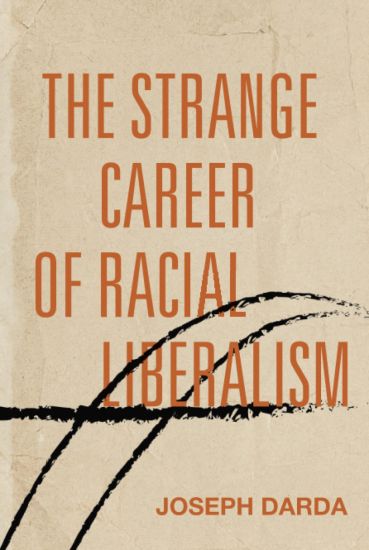
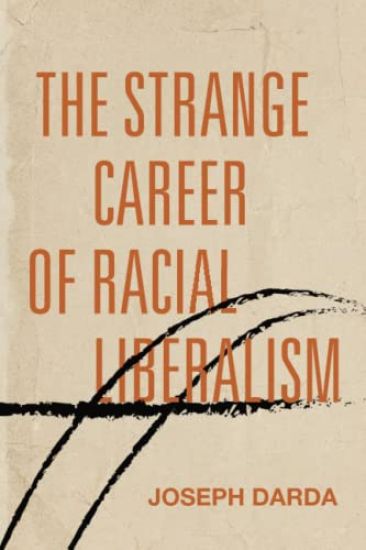
The Strange Career of Racial Liberalism

The Strange Career of Racial Liberalism

Joseph Darda

STANFORD UNIVERSITY PRESS
2022
sidottu
How Americans learned to wait on time for racial change What if, Joseph Darda asks, our desire to solve racism—with science, civil rights, antiracist literature, integration, and color blindness—has entrenched it further? In The Strange Career of Racial Liberalism, he traces the rise of liberal antiracism, showing how reformers' faith in time, in the moral arc of the universe, has undercut future movements with the insistence that racism constitutes a time-limited crisis to be solved with time-limited remedies. Most historians attribute the shortcomings of the civil rights era to a conservative backlash or to the fracturing of the liberal establishment in the late 1960s, but the civil rights movement also faced resistance from a liberal "frontlash," from antiredistributive allies who, before it ever took off, constrained what the movement could demand and how it could demand it. Telling the stories of Ruth Benedict, Kenneth Clark, W. E. B. Du Bois, John Howard Griffin, Pauli Murray, Lillian Smith, Richard Wright, and others, Darda reveals how Americans learned to wait on time for racial change and the enduring harm of that trust in the clock.
The Strange Career of Racial Liberalism

The Strange Career of Racial Liberalism

Joseph Darda

STANFORD UNIVERSITY PRESS
2022
pokkari
How Americans learned to wait on time for racial change What if, Joseph Darda asks, our desire to solve racism—with science, civil rights, antiracist literature, integration, and color blindness—has entrenched it further? In The Strange Career of Racial Liberalism, he traces the rise of liberal antiracism, showing how reformers' faith in time, in the moral arc of the universe, has undercut future movements with the insistence that racism constitutes a time-limited crisis to be solved with time-limited remedies. Most historians attribute the shortcomings of the civil rights era to a conservative backlash or to the fracturing of the liberal establishment in the late 1960s, but the civil rights movement also faced resistance from a liberal "frontlash," from antiredistributive allies who, before it ever took off, constrained what the movement could demand and how it could demand it. Telling the stories of Ruth Benedict, Kenneth Clark, W. E. B. Du Bois, John Howard Griffin, Pauli Murray, Lillian Smith, Richard Wright, and others, Darda reveals how Americans learned to wait on time for racial change and the enduring harm of that trust in the clock.