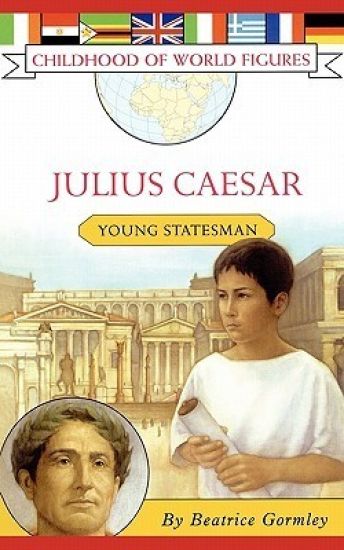
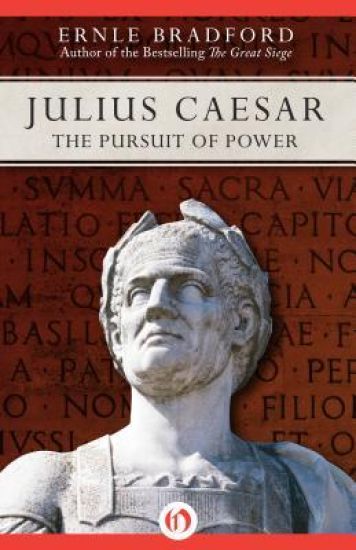
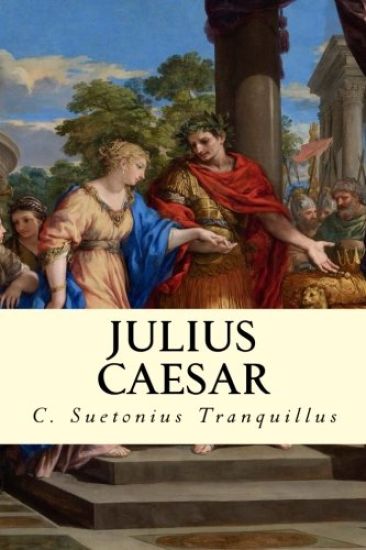
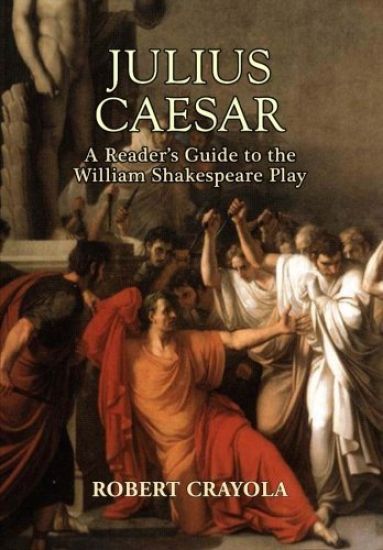
Paints a vivid portrait of the life and times of Julius Caesar, known for his bravery in battle, by tracing the childhood and military career of this powerful man who transformed the Roman republic into an empire. Original.
Curating material from Applause's Shakescenes: Shakespeare for Two, Once More unto the Speech, Dear Friends, The Applause Shakespeare Library, and Applause First Folio Editions, we've created the must-have workbook series for Shakespeare plays. Along with tips on approaching and working on the play and tackling the speeches, each volume includes highlighted essential passages.First titles available in the series: Applause Shakespeare Workbook: Romeo and JulietApplause Shakespeare Workbook: Julius CaesarApplause Shakespeare Workbook: MacbethApplause Shakespeare Workbook: OthelloApplause Shakespeare Workbook: A Midsummer Night’s DreamApplause Shakespeare Workbook: The Tempest
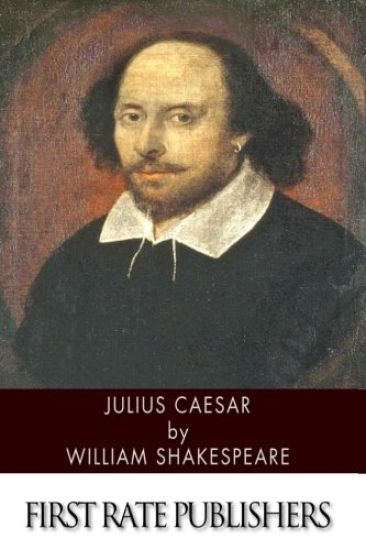
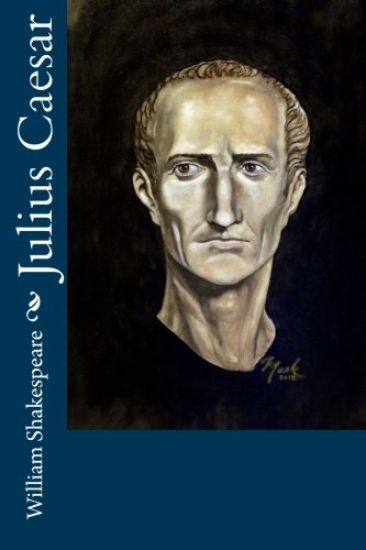
William Shakespeare is almost universally considered the English language's most famous and greatest writer. In fact, the only people who might dispute that are those who think he didn't write the surviving 38 plays, 154 sonnets, two long narrative poems, and several other poems still attributed to him. Even people who never get around to reading his works in class are instantly familiar with titles like King Lear, Othello, Hamlet, Macbeth, and Romeo & Shakespeare. Shakespeare's drama about Caesar is one of his most famous plays, and it couldn't have been about a more interesting historical figure. While Caesar's life story was known by Shakespeare's contemporaries, his play was so influential that it has popularized certain aspects, especially people's belief that Caesar cried out "Et tu, Brute" as Brutus stabbed him. Shakespeare's retelling of Antony's funeral oration is also instantly recognizable.
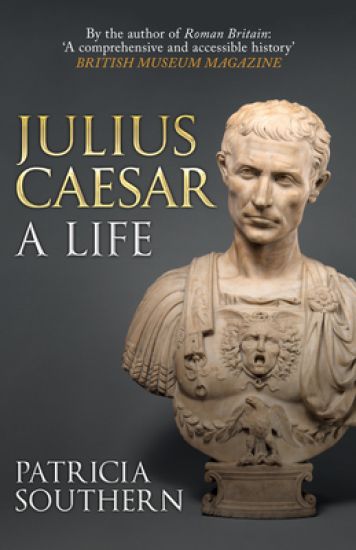
The epic life story of the Roman statesman, military commander, and dictator, from the bestselling author of Thermopylae. Born to Roman aristocracy in 100 BC, Julius Caesar became one of the most powerful men in history. He was a military genius, a fierce politician, and a brilliant writer and orator. When he formed an alliance with Pompey and Crassus, the triumvirate of officials took control of the Roman Republic. But Caesar’s quest for power was only beginning. As proconsul, he went to war against the Gallic tribes of the north, extending Roman territory into Gaul, Belgium, Germany, and Britain. When the Gallic Wars ended, the Roman senate called on Caesar to return to private life. But rather than relinquish his title, Caesar led his legion into a civil war that would spell the end of the Roman Republic and the beginning of the Roman Empire. In this thrilling and thoroughly researched biography, Ernle Bradford cuts through the legends in order to present a truthful and nuanced portrait of a man whose pursuit of power knew no bounds.
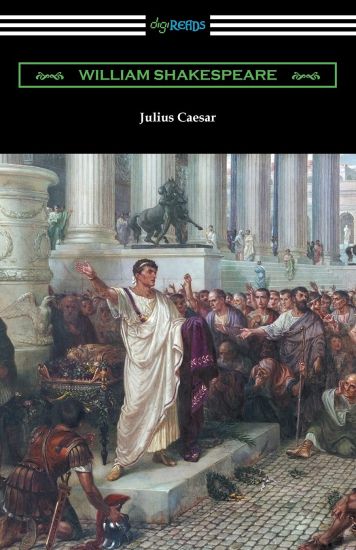
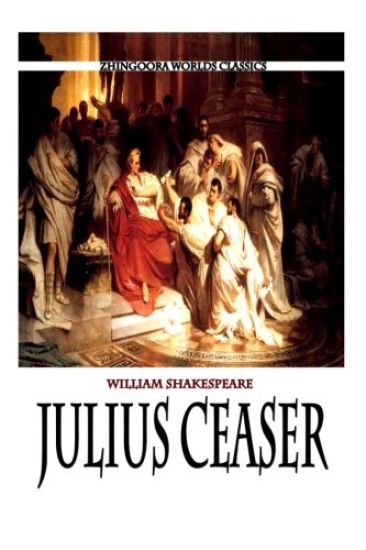
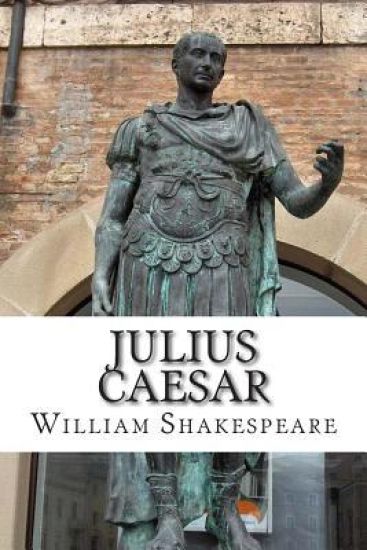
The Tragedy of Julius Caesar is a tragedy by William Shakespeare, believed to have been written in 1599. It portrays the 44 BC conspiracy against the Roman dictator Julius Caesar, his assassination and the defeat of the conspirators at the Battle of Philippi. It is one of several plays written by Shakespeare based on true events from Roman history, which also include Coriolanus and Antony and Cleopatra. The play opens with two tribunes discovering the commoners of Rome celebrating Julius Caesar's triumphant return from defeating the sons of his military rival, Pompey. The tribunes, insulting the crowd for their change in loyalty from Pompey to Caesar, attempt to end the festivities and break up the commoners, who return the insults. During the feast of Lupercal, Caesar holds a victory parade and a soothsayer warns him to "Beware the ides of March", which he ignores. Meanwhile, Cassius attempts to convince Brutus to join his conspiracy to kill Caesar. Although Brutus, friendly towards Caesar, is hesitant to kill him, he agrees that Caesar may be abusing his power. They then hear from Casca that Mark Antony has offered Caesar the crown of Rome three times and that each time Caesar refused it with increasing reluctance. On the eve of the ides of March, the conspirators meet and reveal that they have forged letters of support from the Roman people to tempt Brutus into joining. Brutus reads the letters and, after much moral debate, decides to join the conspiracy, thinking that Caesar should be killed to prevent him from doing anything against the people of Rome if he were ever to be crowned. After ignoring the soothsayer, as well as his wife Calpurnia's own premonitions, Caesar goes to the Senate. The conspirators approach him with a fake petition pleading on behalf of Metellus Cimber's banished brother. As Caesar predictably rejects the petition, Casca and the others suddenly stab him; Brutus is last. At this point, Caesar utters the famous line "Et tu, Brute?" 2] ("And you, Brutus?", i.e. "You too, Brutus?"), concluding with "Then fall, Caesar " The conspirators make clear that they committed this murder for the good of Rome, not for their own purposes, and do not attempt to flee the scene. Brutus delivers an oration defending his own actions, and for the moment, the crowd is on his side. However, Mark Antony makes a subtle and eloquent speech over Caesar's corpse, beginning with the much-quoted "Friends, Romans, countrymen, lend me your ears " 3] In this way, he deftly turns public opinion against the assassins by manipulating the emotions of the common people, in contrast to the rational tone of Brutus's speech, yet there is method in his rhetorical speech and gestures: he reminds them of the good Caesar had done for Rome, his sympathy with the poor, and his refusal of the crown at the Lupercal, thus questioning Brutus's claim of Caesar's ambition; he shows Caesar's bloody, lifeless body to the crowd to have them shed tears and gain sympathy for their fallen hero; and he reads Caesar's will, in which every Roman citizen would receive 75 drachmas. Antony, even as he states his intentions against it, rouses the mob to drive the conspirators from Rome. Amid the violence, an innocent poet, Cinna, is confused with the conspirator Lucius Cinna and is taken by the mob, which kills him for such "offenses" as his bad verses. Brutus next attacks Cassius for supposedly soiling the noble act of regicide by having accepted bribes. ("Did not great Julius bleed for justice' sake? / What villain touch'd his body, that did stab, / And not for justice?" 4]) The two are reconciled, especially after Brutus reveals that his beloved wife committed suicide under the stress of his absence from Rome; they prepare for a civil war against Mark Antony and Caesar's adopted son, Octavius, who have formed a triumvirate in Rome with Lepidus. That night, Caesar's ghost appears to Brutus with a warning of defeat.
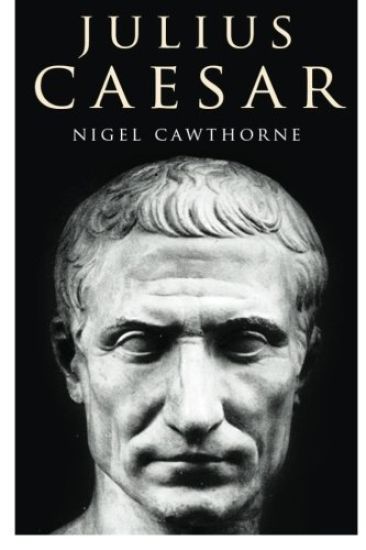
Gaius Julius Caesar (13 July 100 BC 1] - 15 March 44 BC), usually called Julius Caesar, was a Roman politician and general who played a critical role in the events that led to the demise of the Roman Republic and the rise of the Roman Empire. He is also known as a notable author of Latin prose. In 60 BC, Julius Caesar, Crassus and Pompey formed a political alliance that dominated Roman politics for several years. Their attempts to amass power as Populares were opposed by the Optimates within the Roman Senate, among them Cato the Younger with the frequent support of Cicero. Caesar's victories in the Gallic Wars, completed by 51 BC, extended Rome's territory to the English Channel and the Rhine. Julius Caesar became the first Roman general to cross both the Channel and the Rhine, when he built a bridge across the Rhine and crossed the Channel to invade Britain. These achievements granted him unmatched military power and threatened to eclipse the standing of Pompey, who had realigned himself with the Senate after the death of Crassus in 53 BC. With the Gallic Wars concluded, the Senate ordered Caesar to step down from his military command and return to Rome. Julius Caesar found himself with no other options, but to cross the Rubicon with the 13th Legion, leaving his province and illegally entering Roman Italy under arms. Civil war resulted and Caesar's victory in the war put him in an unrivalled position of power and influence. After assuming control of government, Julius Caesar began a programme of social and governmental reforms, including the creation of the Julian calendar. He gave citizenship to many residents of far regions of the Roman Empire. He initiated land reform and support for veterans. He centralised the bureaucracy of the Republic and was eventually proclaimed "dictator in perpetuity", giving him additional authority. His populist and authoritarian reforms angered the elites, who began to conspire against him. On the Ides of March (15 March) 44 BC Julius Caesar was assassinated by a group of rebellious senators led by Gaius Cassius Longinus, Marcus Junius Brutus and Decimus Junius Brutus. A new series of civil wars broke out and the constitutional government of the Republic was never fully restored. Caesar's adopted heir Octavian, later known as Augustus, rose to sole power after defeating his opponents in the civil war. Octavian set about solidifying his power and the era of the Roman Empire began. Much of Julius Caesar's life is known from his own accounts of his military campaigns and from other contemporary sources, mainly the letters and speeches of Cicero and the historical writings of Sallust. The later biographies of Caesar by Suetonius and Plutarch are also major sources. Caesar is considered by many historians to be one of the greatest military commanders in history.
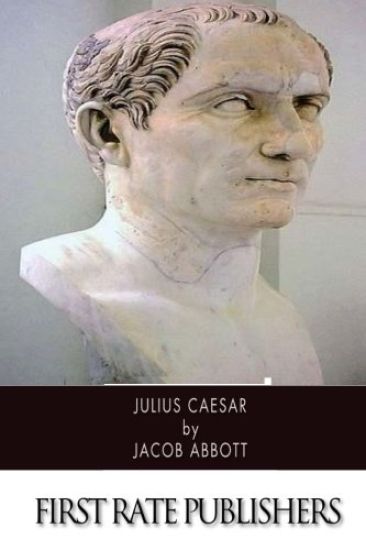
Jacob Abbott was a well-known 19th century historian who wrote biographies on various leaders and famous individuals, including this one about Julius Caesar. Possibly the most important man of antiquity, and even all of history, was Julius Caesar. Alexander Hamilton, the famous American patriot, once remarked that "the greatest man who ever lived was Julius Caesar". Such a tribute, coming from one of the Founding Fathers of the quintessential modern democracy in reference to a man who destroyed the Roman Republic, is testament to the enduring mark that Caesar left upon the world. The ultimate conqueror, statesman, dictator, visionary, and opportunist, during his time in power Caesar expanded the borders of Rome to almost twice their previous size, revolutionized the infrastructure of the Roman state, and destroyed the Roman Republic for good, leaving a line of emperors in its place. His legacy is so strong that his name has become, in many languages, synonymous with power: the Emperors of Austria and Germany bore the title Kaiser, and the Czars of Russia also owe the etymology of their title to Caesar. His name also crept further eastward out of Europe, even cropping up in Hindi and Urdu, where the term for "Emperor" is Kaisar. Even in his time, Caesar was in many ways larger than life, and because of his legacy as virtual founder of the Roman Empire, much of what was written about - and by - him during his life and immediately after his assassination was politically motivated. His successor, Octavian Augustus, had a strong interest in ensuring that Caesar's life be painted in a favorable light, while Caesar's political enemies attempted to paint him as a corrupt, undemocratic dictator who was destroying the old order of the Republic. This makes it exceedingly difficult to separate historical fact from apocryphal interjection, as the writings of Cicero (a rival of Caesar's) and the later biographies of Suetonius and Plutarch can be misleading. Nonetheless, along with Caesar's De Bello Gallico, his famous notes on his campaign against the Gauls, they remain our chief sources for Caesar's life - a life everyone agreed was nothing short of remarkable and changed the course of history forever.
Julius Caesar is one of Shakespeare's greatest and most performed plays. With this new guide, you will have an even better understanding of the story. Included in this guide: a biography of author William Shakespeare, a look at the play's context, its literary elements, detailed scene summaries, character analysis, and much more. This is the definitive guide to Julius Caesar, concise, easy to understand, and guaranteed to add to your enjoyment of this classic play.