
Kirjahaku
Etsi kirjoja tekijän nimen, kirjan nimen tai ISBN:n perusteella.
1000 tulosta hakusanalla Karl S. Ryll
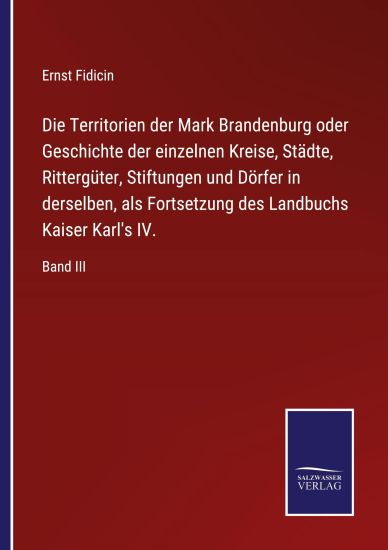
Die Territorien der Mark Brandenburg oder Geschichte der einzelnen Kreise, Städte, Rittergüter, Stiftungen und Dörfer in derselben, als Fortsetzung des Landbuchs Kaiser Karl's IV.
Ernst Fidicin
Salzwasser-Verlag
2022
pokkari
Unver nderter Nachdruck der Originalausgabe von 1860.
Die Territorien der Mark Brandenburg oder Geschichte der einzelnen Kreise, Städte, Rittergüter, Stiftungen und Dörfer in derselben, als Fortsetzung des Landbuchs Kaiser Karl's IV.
Ernst Fidicin
Salzwasser-Verlag
2022
sidottu
Unver nderter Nachdruck der Originalausgabe von 1860.
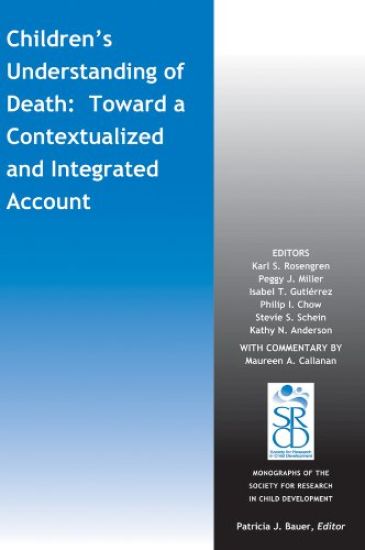
Children's Understanding of Death
Karl S. Rosengren; Peggy J. Miller; Isabel T. Gutiérrez; Philip I. Chow; Stevie S. Schein; Kathy N. Anderson
John Wiley Sons Inc
2014
nidottu
In this monograph we (1) provide an account of young children's socialization with respect to death and (2) develop a conception of children’s understanding of death that encompasses affective and cognitive dimensions. Conducted in a small city in the Midwest, the project involved several component studies employing quantitative and qualitative methods. Middle-class, European American children (3-6 years, N = 101) were interviewed about their cognitive/affective understandings of death; their parents (N = 71) completed questionnaires about the children's experiences and their own beliefs and practices. Other data included ethnographic observations, interviews, focus groups, and analyses of children's books. Parents and teachers shared a dominant folk theory, believing that children should be shielded from death because they lack the emotional and cognitive capacity to understand or cope with death. Even the youngest children knew basic elements of the emotional script for death, a script that paralleled messages available across socializing contexts. Similarly, they showed considerable understanding of the subconcepts of death, providing additional evidence that young children's cognitive understanding is more advanced than previously thought, and contradicting the dominant folk theory held by most parents. Although children's default model of death was biological, many children and parents used coexistence models, mixing scientific and religious elements. A preliminary study of Mexican American families (children: N = 27, parents: N = 17) cast the foregoing fi ndings in relief, illustrating a different set of socializing beliefs and practices. Mexican American children’s understanding of death differed from their European American counterparts' in ways that mirrored these differences.

A close look at Günter Blobel’s transformative contributions to molecular cell biology. The difficulty of reconciling chemical mechanisms with the functions of whole living systems has plagued biologists since the development of cell theory in the nineteenth century. As Karl S. Matlin argues in Crossing the Boundaries of Life, it is no coincidence that this longstanding knot of scientific inquiry was loosened most meaningfully by the work of a cell biologist, the Nobel laureate Günter Blobel. In 1975, using an experimental setup that did not contain any cells at all, Blobel was able to target newly made proteins to cell membrane vesicles, enabling him to theorize how proteins in the cell distribute spatially, an idea he called the signal hypothesis. Over the next twenty years, Blobel and other scientists were able to dissect this mechanism into its precise molecular details. For elaborating his signal concept into a process he termed membrane topogenesis—the idea that each protein in the cell is synthesized with an "address" that directs the protein to its correct destination within the cell—Blobel was awarded the Nobel Prize in Physiology or Medicine in 1999. Matlin argues that Blobel’s investigative strategy and its subsequent application addressed a fundamental unresolved dilemma that had bedeviled biology from its very beginning—the relationship between structure and function—allowing biology to achieve mechanistic molecular explanations of biological phenomena. Crossing the Boundaries of Life thus uses Blobel’s research and life story to shed light on the importance of cell biology for twentieth-century science, illustrating how it propelled the development of adjacent disciplines like biochemistry and molecular biology.

A close look at Günter Blobel’s transformative contributions to molecular cell biology. The difficulty of reconciling chemical mechanisms with the functions of whole living systems has plagued biologists since the development of cell theory in the nineteenth century. As Karl S. Matlin argues in Crossing the Boundaries of Life, it is no coincidence that this longstanding knot of scientific inquiry was loosened most meaningfully by the work of a cell biologist, the Nobel laureate Günter Blobel. In 1975, using an experimental setup that did not contain any cells at all, Blobel was able to target newly made proteins to cell membrane vesicles, enabling him to theorize how proteins in the cell distribute spatially, an idea he called the signal hypothesis. Over the next twenty years, Blobel and other scientists were able to dissect this mechanism into its precise molecular details. For elaborating his signal concept into a process he termed membrane topogenesis—the idea that each protein in the cell is synthesized with an "address" that directs the protein to its correct destination within the cell—Blobel was awarded the Nobel Prize in Physiology or Medicine in 1999. Matlin argues that Blobel’s investigative strategy and its subsequent application addressed a fundamental unresolved dilemma that had bedeviled biology from its very beginning—the relationship between structure and function—allowing biology to achieve mechanistic molecular explanations of biological phenomena. Crossing the Boundaries of Life thus uses Blobel’s research and life story to shed light on the importance of cell biology for twentieth-century science, illustrating how it propelled the development of adjacent disciplines like biochemistry and molecular biology.

-- Choice

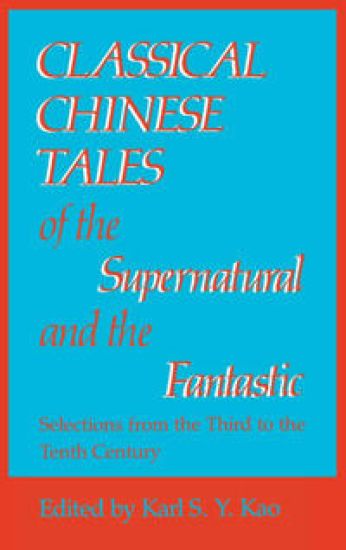
Classical Chinese Tales of the Supernatural and the Fantastic
Karl S.Y. Kao
Indiana University Press
1985
sidottu
In Chinese literary history, the Six Dynasties (317-588) and the T'ang (618-906) were the great creative times for the production of supernatural and fantastic stories in the classical language. This major collection of ninety-six stories, most of them newly translated, represents the very best of this tradition. These are all basically fictional narratives or stories, but unlike Western supernatural stories, are considered more or less as records of observable facts and have the effect of giving the fantastic a rootedness in historical reality. Underlying the recording of these supernatual stories is a belief in supernaturalism and magic and, above all, the acceptance of the unnatural and the supernormal on their face value as factual.
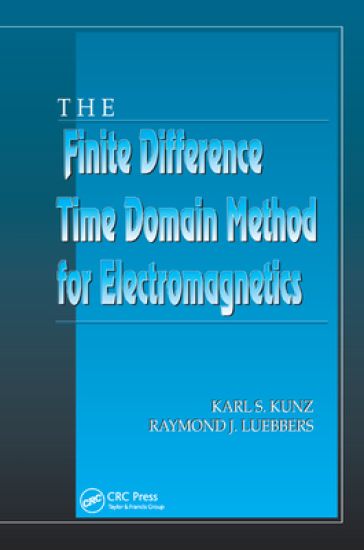
The Finite Difference Time Domain Method for Electromagnetics
Karl S. Kunz; Raymond J. Luebbers
CRC Press
2019
nidottu
The Finite-Difference Time-domain (FDTD) method allows you to compute electromagnetic interaction for complex problem geometries with ease. The simplicity of the approach coupled with its far-reaching usefulness, create the powerful, popular method presented in The Finite Difference Time Domain Method for Electromagnetics. This volume offers timeless applications and formulations you can use to treat virtually any material type and geometry. The Finite Difference Time Domain Method for Electromagnetics explores the mathematical foundations of FDTD, including stability, outer radiation boundary conditions, and different coordinate systems. It covers derivations of FDTD for use with PEC, metal, lossy dielectrics, gyrotropic materials, and anisotropic materials. A number of applications are completely worked out with numerous figures to illustrate the results. It also includes a printed FORTRAN 77 version of the code that implements the technique in three dimensions for lossy dielectric materials. There are many methods for analyzing electromagnetic interactions for problem geometries. With The Finite Difference Time Domain Method for Electromagnetics, you will learn the simplest, most useful of these methods, from the basics through to the practical applications.
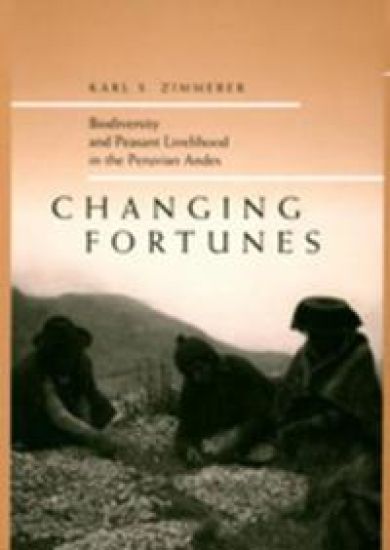
Two of the world's most pressing needs--biodiversity conservation and agricultural development in the Third World--are addressed in Karl S. Zimmerer's multidisciplinary investigation in geography. Zimmerer challenges current opinion by showing that the world-renowned diversity of crops grown in the Andes may not be as hopelessly endangered as is widely believed. He uses the lengthy history of small-scale farming by Indians in Peru, including contemporary practices and attitudes, to shed light on prospects for the future. During prolonged fieldwork among Peru's Quechua peasants and villagers in the mountains near Cuzco, Zimmerer found convincing evidence that much of the region's biodiversity is being skillfully conserved on a de facto basis, as has been true during centuries of tumultuous agrarian transitions. Diversity occurs unevenly, however, because of the inability of poorer Quechua farmers to plant the same variety as their well-off neighbors and because land use pressures differ in different locations. Social, political, and economic upheavals have accentuated the unevenness, and Zimmerer's geographical findings are all the more important as a result. Diversity is indeed at serious risk, but not necessarily for the same reasons that have been cited by others. The originality of this study is in its correlation of ecological conservation, ethnic expression, and economic development.
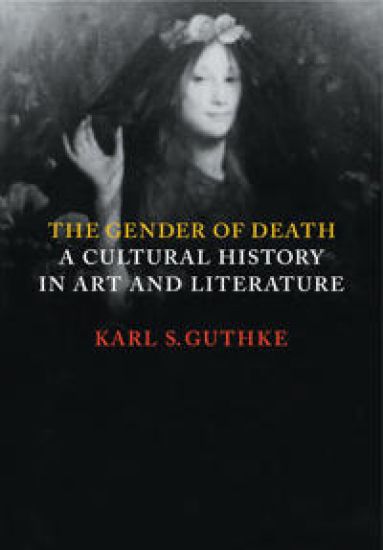
Why is it that in some cultures and times, literature, folklore, and art commonly represent death as a man, in others as a woman? Karl S. Guthke shows that these choices, which often contradict the grammatical gender of the word ‘death’ in the language concerned, are neither arbitrary nor accidental. In earlier centuries, the gender of the figure of death contributed to the interpretation of biblical narrative - in particular, whether the original sin was that of Adam or Eve - and also reflected the importance of the classical figure of Thanatos. More recently, the gender of death as angel, lover, or bride - whether terrifying or welcome - has carried powerful psychological and social connotations. Tracing the gender of representations of death in art and literature from medieval times to the present day, Guthke offers astonishing new insights into the nature and perception of the Western self in its cultural, intellectual, and literary context.
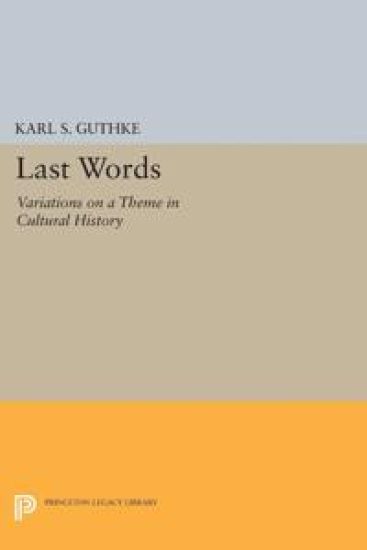
Whether Goethe actually cried "More light!" on his deathbed, or whether Conrad Hilton checked out of this world after uttering "Leave the shower curtain on the inside of the tub," last words, regardless of authenticity, have long captured the imagination of Western society. In this playfully serious investigation based on factual accounts, anecdotes, literary works, and films, Karl Guthke explores the cultural importance of those words spoken at the border between this world and the next. The exit lines of both famous and ordinary people embody for us a sense of drama and truthfulness and reveal much about our thoughts on living and dying. Why this interest in last words? Presenting statements from such figures as Socrates, Nathan Hale, Marie Antoinette, and Oscar Wilde ("I am dying as I have lived, beyond my means"), Guthke examines our fascination in terms of our need for closure, our desire for immortality, and our attraction to the mystique of death scenes. The author considers both authentic and invented final statements as he looks at the formation of symbols and legends and their function in our culture. Last words, handed down from generation to generation like cultural heirlooms, have a good chance of surviving in our collective memory. They are shown to epitomize a life, convey a sense of irony, or play to an audience, as in the case of the assassinated Mexican revolutionary Pancho Villa, who is said to have died imploring journalists: "Don't let it end like this. Tell them I said something." Originally published in 1992. The Princeton Legacy Library uses the latest print-on-demand technology to again make available previously out-of-print books from the distinguished backlist of Princeton University Press. These editions preserve the original texts of these important books while presenting them in durable paperback and hardcover editions. The goal of the Princeton Legacy Library is to vastly increase access to the rich scholarly heritage found in the thousands of books published by Princeton University Press since its founding in 1905.

Whether Goethe actually cried "More light!" on his deathbed, or whether Conrad Hilton checked out of this world after uttering "Leave the shower curtain on the inside of the tub," last words, regardless of authenticity, have long captured the imagination of Western society. In this playfully serious investigation based on factual accounts, anecdotes, literary works, and films, Karl Guthke explores the cultural importance of those words spoken at the border between this world and the next. The exit lines of both famous and ordinary people embody for us a sense of drama and truthfulness and reveal much about our thoughts on living and dying. Why this interest in last words? Presenting statements from such figures as Socrates, Nathan Hale, Marie Antoinette, and Oscar Wilde ("I am dying as I have lived, beyond my means"), Guthke examines our fascination in terms of our need for closure, our desire for immortality, and our attraction to the mystique of death scenes. The author considers both authentic and invented final statements as he looks at the formation of symbols and legends and their function in our culture. Last words, handed down from generation to generation like cultural heirlooms, have a good chance of surviving in our collective memory. They are shown to epitomize a life, convey a sense of irony, or play to an audience, as in the case of the assassinated Mexican revolutionary Pancho Villa, who is said to have died imploring journalists: "Don't let it end like this. Tell them I said something." Originally published in 1992. The Princeton Legacy Library uses the latest print-on-demand technology to again make available previously out-of-print books from the distinguished backlist of Princeton University Press. These editions preserve the original texts of these important books while presenting them in durable paperback and hardcover editions. The goal of the Princeton Legacy Library is to vastly increase access to the rich scholarly heritage found in the thousands of books published by Princeton University Press since its founding in 1905.
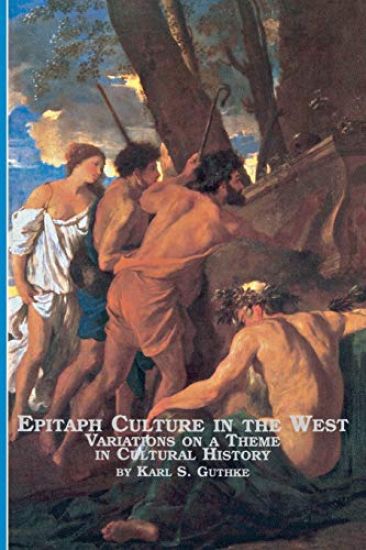
Epitaph Culture in the West Variations on a Theme in Cultural History
Karl S Guthke
Em Texts
2003
pokkari
The Finite Difference Time Domain Method for Electromagnetics
Karl S. Kunz; Raymond J. Luebbers
CRC Press Inc
1993
sidottu
The Finite-Difference Time-domain (FDTD) method allows you to compute electromagnetic interaction for complex problem geometries with ease. The simplicity of the approach coupled with its far-reaching usefulness, create the powerful, popular method presented in The Finite Difference Time Domain Method for Electromagnetics. This volume offers timeless applications and formulations you can use to treat virtually any material type and geometry. The Finite Difference Time Domain Method for Electromagnetics explores the mathematical foundations of FDTD, including stability, outer radiation boundary conditions, and different coordinate systems. It covers derivations of FDTD for use with PEC, metal, lossy dielectrics, gyrotropic materials, and anisotropic materials. A number of applications are completely worked out with numerous figures to illustrate the results. It also includes a printed FORTRAN 77 version of the code that implements the technique in three dimensions for lossy dielectric materials. There are many methods for analyzing electromagnetic interactions for problem geometries. With The Finite Difference Time Domain Method for Electromagnetics, you will learn the simplest, most useful of these methods, from the basics through to the practical applications.

This work has been selected by scholars as being culturally important and is part of the knowledge base of civilization as we know it.This work is in the public domain in the United States of America, and possibly other nations. Within the United States, you may freely copy and distribute this work, as no entity (individual or corporate) has a copyright on the body of the work.Scholars believe, and we concur, that this work is important enough to be preserved, reproduced, and made generally available to the public. To ensure a quality reading experience, this work has been proofread and republished using a format that seamlessly blends the original graphical elements with text in an easy-to-read typeface.We appreciate your support of the preservation process, and thank you for being an important part of keeping this knowledge alive and relevant.
This work has been selected by scholars as being culturally important and is part of the knowledge base of civilization as we know it.This work is in the public domain in the United States of America, and possibly other nations. Within the United States, you may freely copy and distribute this work, as no entity (individual or corporate) has a copyright on the body of the work.Scholars believe, and we concur, that this work is important enough to be preserved, reproduced, and made generally available to the public. To ensure a quality reading experience, this work has been proofread and republished using a format that seamlessly blends the original graphical elements with text in an easy-to-read typeface.We appreciate your support of the preservation process, and thank you for being an important part of keeping this knowledge alive and relevant.
Correlated Inheritance of Quantitative and Qualitative Characters in Oats; 202
Karl S. Quisenberry
Hassell Street Press
2021
nidottu
This work has been selected by scholars as being culturally important and is part of the knowledge base of civilization as we know it.This work is in the public domain in the United States of America, and possibly other nations. Within the United States, you may freely copy and distribute this work, as no entity (individual or corporate) has a copyright on the body of the work.Scholars believe, and we concur, that this work is important enough to be preserved, reproduced, and made generally available to the public. To ensure a quality reading experience, this work has been proofread and republished using a format that seamlessly blends the original graphical elements with text in an easy-to-read typeface.We appreciate your support of the preservation process, and thank you for being an important part of keeping this knowledge alive and relevant.