Kirjojen hintavertailu. Mukana 11 699 587 kirjaa ja 12 kauppaa.

Kirjahaku

Etsi kirjoja tekijän nimen, kirjan nimen tai ISBN:n perusteella.

1000 tulosta hakusanalla Katrin Fricke

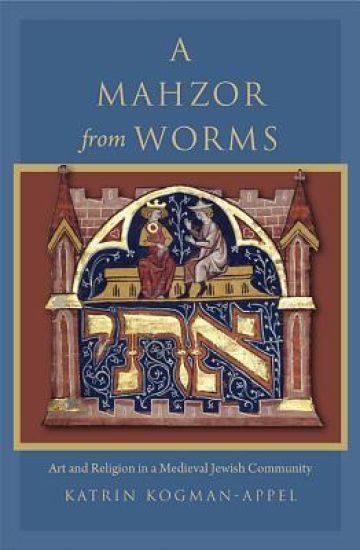
A Mahzor from Worms

A Mahzor from Worms

Katrin Kogman-Appel

Harvard University Press
2012
sidottu
The Leipzig Mahzor is one of the most lavish Hebrew illuminated manuscripts of all time. A prayer book used during Jewish holidays, it was produced in the Middle Ages for the Jewish community of Worms in the German Rhineland. Though Worms was a vibrant center of Judaism in the eleventh and twelfth centuries and drew celebrated rabbis, little is known about the city’s Jews in the later Middle Ages. In the pages of its famous book, Katrin Kogman-Appel discovers a portal into the life of this fourteenth-century community.Medieval mahzorim were used only for special services in the synagogue and “belonged” to the whole congregation, so their visual imagery reflected the local cultural associations and beliefs. The Leipzig Mahzor pays homage to one of Worms’s most illustrious scholars, Eleazar ben Judah. Its imagery reveals how his Ashkenazi Pietist worldview and involvement in mysticism shaped the community’s religious practice. Kogman-Appel draws attention to the Mahzor’s innovations, including its strategy for avoiding visual representation of God and its depiction of customs such as the washing of dishes before Passover, something less common in other mahzorim. In addition to decoding its iconography, Kogman-Appel approaches the manuscript as a ritual object that preserved a sense of identity and cohesion within a community facing a wide range of threats to its stability and security.This book was published with the support of the Israel Science Foundation.

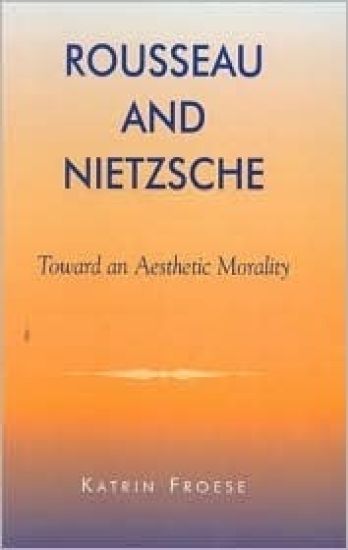
Rousseau and Nietzsche

Rousseau and Nietzsche

Katrin Froese

Lexington Books
2002
sidottu
Rousseau and Nietzsche: Toward an Aesthetic Morality offers a vivid depiction of the problems and potential of modernity through the words of two of its most poignant voices. The book focuses upon the modern self's desire to individuate while facing the ethical responsibility to integrate into the world. Katrin Froese elegantly juxtaposes Nietzsche's drive for extraordinary individualism with Rousseau's call for the dependable citizen, demonstrating that where Nietzsche's aestheticism embraces the limitless and irreconcilable longings of a divided being, Rousseau's approach emphasizes the imposition of limits to ensure that harmony and contentment prevail. Going beyond conventional scholarship, the work emphasizes the similarities at the heart of Rousseau's notion of morality and Nietzsche's aestheticism: the moral vision that underlies Nietzsche's notion of art and the aesthetic understanding prevalent in Rousseau's moral system. This stunning new work of political philosophy will be of great use to scholars of political thought and readers seeking to understand what made Rousseau and Nietzsche's thought so decidedly modern.
Rousseau and Nietzsche

Rousseau and Nietzsche

Katrin Froese

Lexington Books
2002
nidottu
Rousseau and Nietzsche: Toward an Aesthetic Morality offers a vivid depiction of the problems and potential of modernity through the words of two of its most poignant voices. The book focuses upon the modern self's desire to individuate while facing the ethical responsibility to integrate into the world. Katrin Froese elegantly juxtaposes Nietzsche's drive for extraordinary individualism with Rousseau's call for the dependable citizen, demonstrating that where Nietzsche's aestheticism embraces the limitless and irreconcilable longings of a divided being, Rousseau's approach emphasizes the imposition of limits to ensure that harmony and contentment prevail. Going beyond conventional scholarship, the work emphasizes the similarities at the heart of Rousseau's notion of morality and Nietzsche's aestheticism: the moral vision that underlies Nietzsche's notion of art and the aesthetic understanding prevalent in Rousseau's moral system. This stunning new work of political philosophy will be of great use to scholars of political thought and readers seeking to understand what made Rousseau and Nietzsche's thought so decidedly modern.
Freedom

Freedom

Katrin Flikschuh

Polity Press
2007
sidottu
In this engaging new book, Katrin Flikschuh offers an accessible introduction to divergent conceptions of freedom in contemporary liberal political philosophy. Beginning with a discussion of Isaiah Berlin's seminal distinction between negative and positive liberty, the book goes on to consider Gerald MacCallums alternative proposal of freedom as a triadic concept. The abiding influence of Berlin's argument on the writings of contemporary liberal philosophers such as Robert Nozick, Hillel Steiner, Ronald Dworkin and Joseph Raz, is fully explored in subsequent chapters. Flikschuh shows that, instead of just one negative and one positive freedom tradition, contemporary liberal thinkers articulate the meaning and significance of liberal freedom in many different and often conflicting ways. What should we make of such diversity and disagreement? Should it undermine our confidence in the coherence of liberal freedom? Should we strive towards greater conceptual and normative unity? Flikschuh argues that moral and political disagreement about freedom can often be traced back to differences in underlying metaphysical presuppositions and commitments. Yet these differences do not show liberal freedom debates to be confused or incoherent. On the contrary, they demonstrate the centrality of this philosophically elusive idea to the continued vitality of liberal political thinking.
Freedom

Freedom

Katrin Flikschuh

Polity Press
2007
nidottu
In this engaging new book, Katrin Flikschuh offers an accessible introduction to divergent conceptions of freedom in contemporary liberal political philosophy. Beginning with a discussion of Isaiah Berlin's seminal distinction between negative and positive liberty, the book goes on to consider Gerald MacCallums alternative proposal of freedom as a triadic concept. The abiding influence of Berlin's argument on the writings of contemporary liberal philosophers such as Robert Nozick, Hillel Steiner, Ronald Dworkin and Joseph Raz, is fully explored in subsequent chapters. Flikschuh shows that, instead of just one negative and one positive freedom tradition, contemporary liberal thinkers articulate the meaning and significance of liberal freedom in many different and often conflicting ways. What should we make of such diversity and disagreement? Should it undermine our confidence in the coherence of liberal freedom? Should we strive towards greater conceptual and normative unity? Flikschuh argues that moral and political disagreement about freedom can often be traced back to differences in underlying metaphysical presuppositions and commitments. Yet these differences do not show liberal freedom debates to be confused or incoherent. On the contrary, they demonstrate the centrality of this philosophically elusive idea to the continued vitality of liberal political thinking.
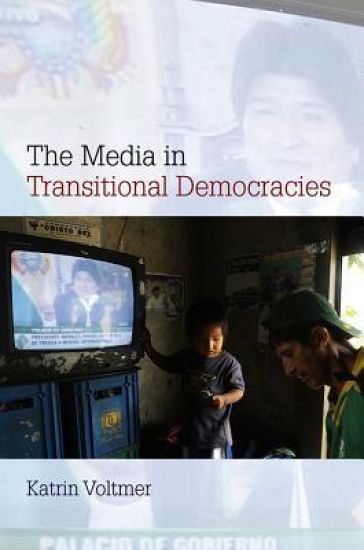
The Media in Transitional Democracies

The Media in Transitional Democracies

Katrin Voltmer

Polity Press
2013
sidottu
The last quarter of a century has seen an unprecedented wave of democratization around the globe. In these transitions from authoritarian rule to a more democratic order, the media have played a key role both by facilitating, but frequently also inhibiting, democratic practices to take root. This book provides an accessible and systematic introduction to the media in transitional democracies. It analyses the problems that occur when transforming the media into independent institutions that are able to inform citizens and hold governments to account. The book covers the following topics: normative conceptions of media and democracy;the role of the past in the transition process;the internet as a new space for democratic change;the persistence of political interference in emerging democracies;the interlocking power of media markets and political ownership;the challenges to journalistic professionalism in post-authoritarian contexts;the role of the media in divided societies; The book takes a global view by exploring the interplay of political and media transitions in different pathways of democratization that have taken place in Eastern Europe, Latin America, Africa and Asia. It will be of interest to advanced students and scholars who want a better understanding of the media outside established Western democracies. The book will also be of great value to policymakers and activists who are involved in strengthening the media in transitional democracies.
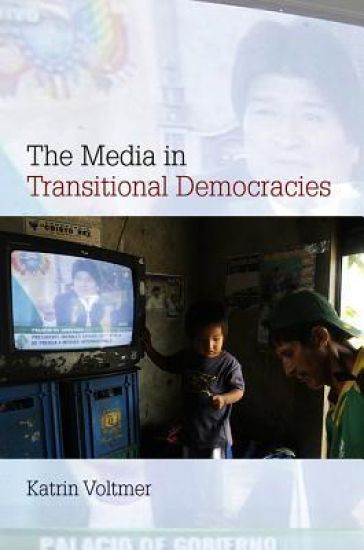
The Media in Transitional Democracies

The Media in Transitional Democracies

Katrin Voltmer

Polity Press
2013
nidottu
The last quarter of a century has seen an unprecedented wave of democratization around the globe. In these transitions from authoritarian rule to a more democratic order, the media have played a key role both by facilitating, but frequently also inhibiting, democratic practices to take root. This book provides an accessible and systematic introduction to the media in transitional democracies. It analyses the problems that occur when transforming the media into independent institutions that are able to inform citizens and hold governments to account. The book covers the following topics: normative conceptions of media and democracy;the role of the past in the transition process;the internet as a new space for democratic change;the persistence of political interference in emerging democracies;the interlocking power of media markets and political ownership;the challenges to journalistic professionalism in post-authoritarian contexts;the role of the media in divided societies; The book takes a global view by exploring the interplay of political and media transitions in different pathways of democratization that have taken place in Eastern Europe, Latin America, Africa and Asia. It will be of interest to advanced students and scholars who want a better understanding of the media outside established Western democracies. The book will also be of great value to policymakers and activists who are involved in strengthening the media in transitional democracies.
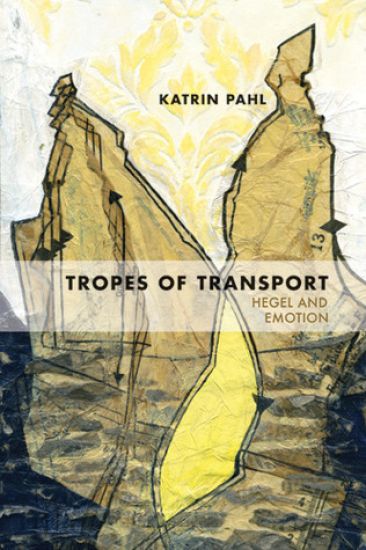
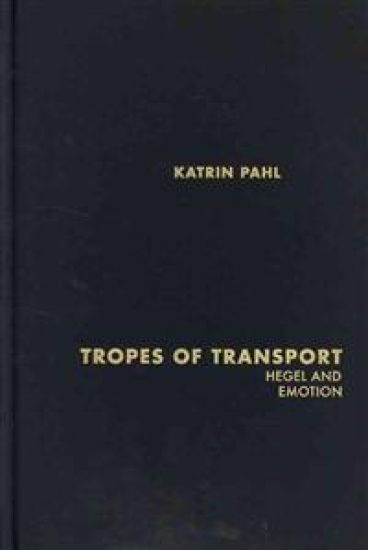
Tropes of Transport

Tropes of Transport

Katrin Pahl

Northwestern University Press
2012
nidottu
Intervening in the multidisciplinary debate on emotion, Tropes of Transport offers a fresh analysis of Hegel's work that becomes an important resource for Pahl's cutting-edge theory of emotionality. If it is usually assumed that the sincerity of emotions and the force of affects depend on their immediacy, Pahl explores to what extent mediation--and therefore a certain degree of manipulation but also of sympathy--is constitutive of emotionality. Hegel serves as a particularly helpful interlocutor not only because he offers a sophisticated analysis of mediation, but also because, rather than locating emotion in the heart, he introduces impersonal tropes of transport, such as trembling, release, and shattering.
Tropes of Transport

Tropes of Transport

Katrin Pahl

Northwestern University Press
2012
sidottu
Intervening in the multidisciplinary debate on emotion, Tropes of Transport offers a fresh analysis of Hegel's work that becomes an important resource for Pahl's cutting-edge theory of emotionality. If it is usually assumed that the sincerity of emotions and the force of affects depend on their immediacy, Pahl explores to what extent mediation--and therefore a certain degree of manipulation but also of sympathy--is constitutive of emotionality. Hegel serves as a particularly helpful interlocutor not only because he offers a sophisticated analysis of mediation, but also because, rather than locating emotion in the heart, he introduces impersonal tropes of transport, such as trembling, release, and shattering.
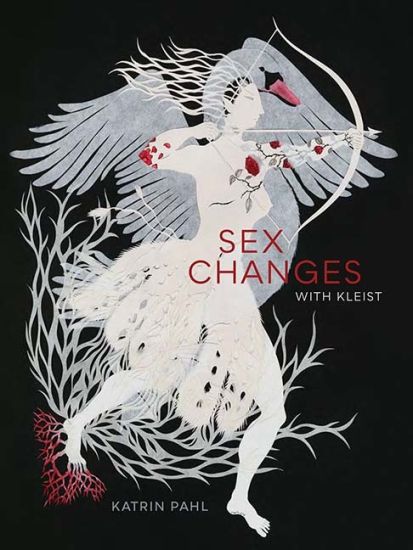
Sex Changes with Kleist

Sex Changes with Kleist

Katrin Pahl

Northwestern University Press
2019
nidottu
Sex Changes with Kleist analyzes how the dramatist and poet Heinrich von Kleist (1777–1811) responded to a change in the conception of sex and gender that occurred between 1790 and 1810. Specifically, Katrin Pahl shows that Kleist resisted the shift from a one-sex to the two-sex and complementary gender system that is still prevalent today. With creative close readings engaging all eight of his plays, Pahl probes Kleist’s appreciation for incoherence, his experimentation with alternative symbolic orders, his provocative understanding of emotion, and his camp humor. Pahl demonstrates that rather than preparing modern homosexuality, Kleist puts an end to modern gender norms even before they take hold and refuses the oppositional organization of sexual desire into homosexual and heterosexual that sprouts from these norms.Focusing on the theatricality of Kleist’s interventions in the performance of gender, sexuality, and emotion and examining how his dramatic texts unhinge major tenets of classical European theater, Sex Changes with Kleist is vital reading for anyone interested in queer studies, feminist studies, performance studies, literary studies, or emotion studies. This book changes our understanding of Kleist and breathes new life into queer thought.
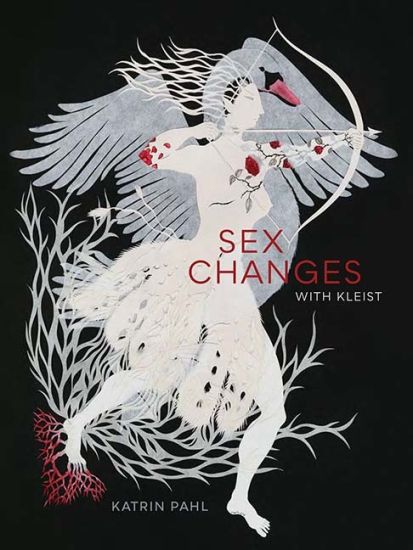
Sex Changes with Kleist

Sex Changes with Kleist

Katrin Pahl

Northwestern University Press
2019
sidottu
Sex Changes with Kleist analyzes how the dramatist and poet Heinrich von Kleist (1777–1811) responded to a change in the conception of sex and gender that occurred between 1790 and 1810. Specifically, Katrin Pahl shows that Kleist resisted the shift from a one-sex to the two-sex and complementary gender system that is still prevalent today. With creative close readings engaging all eight of his plays, Pahl probes Kleist’s appreciation for incoherence, his experimentation with alternative symbolic orders, his provocative understanding of emotion, and his camp humor. Pahl demonstrates that rather than preparing modern homosexuality, Kleist puts an end to modern gender norms even before they take hold and refuses the oppositional organization of sexual desire into homosexual and heterosexual that sprouts from these norms. Focusing on the theatricality of Kleist’s interventions in the performance of gender, sexuality, and emotion and examining how his dramatic texts unhinge major tenets of classical European theater, Sex Changes with Kleist is vital reading for anyone interested in queer studies, feminist studies, performance studies, literary studies, or emotion studies. This book changes our understanding of Kleist and breathes new life into queer thought.
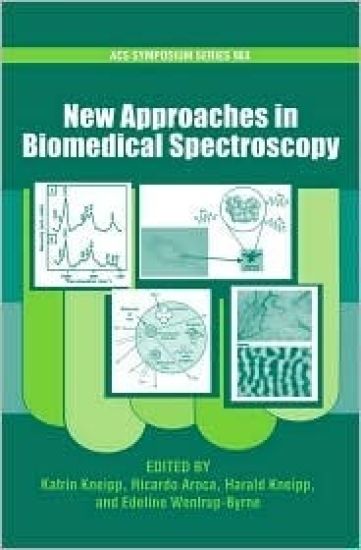
New Approaches in Biomedical Spectroscopy

New Approaches in Biomedical Spectroscopy

Katrin Kneipp; Ricardo Aroca; Harald Kneipp; Edeline Wentrup-Byrne

Oxford University Press Inc
2007
sidottu
Developing innovative efficient and sensitive spectroscopic and optical techniques for studying biomedically relevant molecules, structures and processes in vitro and in vivo is a field of rapidly growing interest. This symposium book covers novel and exciting approaches in biomedical spectroscopy. Several chapters deal with infrared and Raman spectroscopy. These complimentary vibrational spectroscopic techniques are capable of monitoring molecular structures as well as structural changes. Such studies are of interest for understanding diseases at a molecular level as well as for developing techniques for efficient early diagnosis based on molecular structural information. The chapters demonstrate also applications vibrational spectroscopy in proteomics and the characterization of micro organisms. The second section of the book introduces surface enhanced Raman scattering (SERS), demonstrates the application of the effect in the biomedical field and develops the concept of multifunctional nanosensors. The measurement of intrinsic optical signals from biological objects such as nerve tissue are discussed in the next section of the book. Chapters deal also with Coherent anti-Stokes Raman scattering (CARS) and fluorescence fluctuation spectroscopy. Other chapters illustrate how photons of very different energies, in the Terahertz and in the ultra violet range, can be used to retrieve molecular structural information from native biomolecules. The electrical properties of protein molecules adsorbed onto a gold substrate are studied by using a scanning Kelvin nanoprobe in a microarray format. The final chapters in the book demonstrate the powerful combination of different spectroscopic techniques for the characterization of biomolecules as well as native and engineered biomaterials. These chapters combine information from Raman and Inelastic Neutron Scattering, optical absorbance and energy dispersive X-ray analysis, positron annihilation lifetime spectroscopy (PALS), 1H NMR, and 129Xe NMR X-ray diffraction and fluorescence resonance energy transfer.
Just This

Just This

Katrin Horowitz

Quadra Books
2018
nidottu
Michelle is a poet who waffles between envy and anger as she watches her former best friend, now a famous broadcast journalist, shape the news into ever more right-wing narratives. Until finally Michelle arrives at a gleeful moment of poetic justice: Cynthia, who has succeeded through a combination of backstabbing and talent, is exposed as a fraud on the front page of The New York Times-and her jowls, 'those sad pouches of defeated flesh, ' are on display for all to judge. An exploration of friendship and envy, politics and poetry, television and justice and what's gone wrong with America, starting in the fifties when Michelle and Cynthia are little and ending more than sixty years later. At the close of each decade, the story jumps to a Friday in 2015 where we find Cynthia struggling to cope with her new-found infamy, while Michelle gloats, and worries, and hosts a dinner party.
The Cultural Politics of Art in Iran

The Cultural Politics of Art in Iran

Katrin Nahidi

Cambridge University Press
2025
pokkari
Modernist Iranian art represents a highly diverse field of cultural production deeply involved in discussing questions of modernity and modernization as practiced in Iran. This book investigates how artistic production and art criticism reflected upon the discourse about gharbzadegi (westoxification), the most substantial critique of Iran's adaptation of Western modernity, and ultimately proved to be a laboratory for the negotiation of an anti-colonial concept of an Iranian artistic modernity, which artists and critics envisioned as a significant other to Western colonial modernity. In this book, Katrin Nahidi revisits Iranian modernist art, aiming to explore a political and contextualized interpretation of modernism. Based on extensive fieldwork, interviews, and archival research, Nahidi provides a history of modernist art production since the 1950s and reveals the complex political agency underlying art historiographical processes. Offering a key contribution to postcolonial art history, Nahidi shows how Iranian artistic modernity was used to flesh out anti-colonial concepts and ideas around Iranian national identity.
The Cultural Politics of Art in Iran

The Cultural Politics of Art in Iran

Katrin Nahidi

Cambridge University Press
2023
sidottu
Modernist Iranian art represents a highly diverse field of cultural production deeply involved in discussing questions of modernity and modernization as practiced in Iran. This book investigates how artistic production and art criticism reflected upon the discourse about gharbzadegi (westoxification), the most substantial critique of Iran's adaptation of Western modernity, and ultimately proved to be a laboratory for the negotiation of an anti-colonial concept of an Iranian artistic modernity, which artists and critics envisioned as a significant other to Western colonial modernity. In this book, Katrin Nahidi revisits Iranian modernist art, aiming to explore a political and contextualized interpretation of modernism. Based on extensive fieldwork, interviews, and archival research, Nahidi provides a history of modernist art production since the 1950s and reveals the complex political agency underlying art historiographical processes. Offering a key contribution to postcolonial art history, Nahidi shows how Iranian artistic modernity was used to flesh out anti-colonial concepts and ideas around Iranian national identity.
Twenty-Five Women Who Shaped the Early Modern Holy Roman Empire
Challenging the conception that only men shaped the Holy Roman Empire, this book provides students and general readers with biographies of preachers, nuns, princesses, businesswomen, artists, scientists, writers, and social movers who exercised agency in the Holy Roman Empire.Who was Maria Theresia Paradis, and have you ever heard of Empress Eleonora Magdalena? Numerous women achieved prominence or made important contributions to the life of the early modern Holy Roman Empire, but they are only gradually being rediscovered. Generations of historians had assumed that princely women were essentially limited to childbearing, or townswomen to running the household. And although it took a long time for higher education to become attainable to women, they also made their voices heard in the sciences, arts, and religion. Indeed, a closer look reveals that the history of the empire was also a history of the interaction of men and women and a history of women's self-empowerment. This book offers a biographical perspective on that past, as well as a fascinating panorama of women who left their mark on the Holy Roman Empire.This book is the perfect introduction to anyone wishing to broaden their knowledge of women’s history, the Holy Roman Empire, and early modern Europe.