

Kirjahaku
Etsi kirjoja tekijän nimen, kirjan nimen tai ISBN:n perusteella.
1000 tulosta hakusanalla Keith A. Neuber
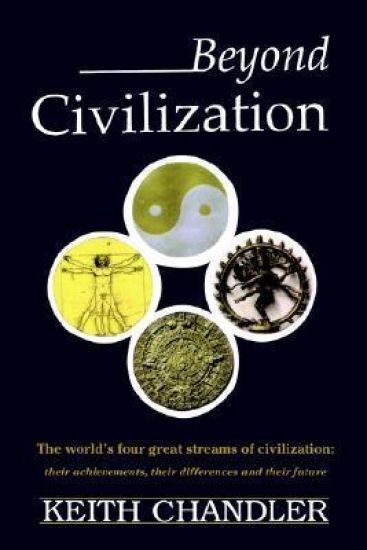
The indispensable classic for understanding the origin and nature of civilization and why Western, Indian, Chinese and Mesoamerican societies developed such virtually incompatible worldviews.









How does performing affect those who perform? Starting from observation of the intergenerational tradition of performing the Song of Moses (Deuteronomy 32.1–43), Keith Stone explores ways in which the Song contributes to Deuteronomy’s educational program through the dynamics of reenactment that operate in traditions of performance.Performers of the Song are transformed as they reenact not only characters within the Song but also those who came before them in the history of the Song’s performance—particularly YHWH and Moses, whom Deuteronomy depicts as that tradition’s founders. In support of this thesis, Stone provides a close reading of the text of the Song as preserved in Deuteronomy and as informed by the account of its origins and subsequent history. He examines how the persona of the performer interacts with these reenacted personas in the moment of performance. He also argues that the various composers of Deuteronomy themselves participated in the tradition of performing the Song, citing examples throughout the book in which certain elements originally found in the Song have been adopted, elaborated, acted out, or simply mimicked.
Constructing the Stalinist Body brings together contemporary body theory with studies on Stalinist ideology and cultural mythology in order to elucidate the complex problem of individual authorship within the context of Stalinist ideology of the 1930s and '40s. Author Keith A. Livers examines the ways in which Andrei Platonov, Mikhail Zoshchenko, Lev Kassil' and other authors used corporeal imagery as a means of both resisting and furthering the idea of a Stalinist utopia and the ideologically purified body politic it aspired to produce. The final chapter of the book looks at collective and popular representations of the Moscow subway (completed in 1935), which was one of the most important construction projects of the 1930s and was at the same time portrayed as a microcosm of the ideal world of Socialism to come.


Since the mid-1950s, the international community has sought to ban all nuclear testing. In 1996, the Comprehensive Nuclear Test Ban Treaty emerged after three years of intense international negotiations. However, after nearly a decade, there is no sign that the treaty will ever enter into force. Despite the general support for and adherence to a series of national moratoria on nuclear explosive testing, it is important to understand why the effort to achieve a permanent ban on nuclear testing has experienced such difficulties and continues to travel such a problematic road. The author of this book is neither a promoter nor a critic of the Comprehensive Nuclear Test Ban Treaty, but rather he provides a brief historical and analytical understanding of the events surrounding its negotiation and implementation. The author's analysis, based on his personal involvement in the CTBT negotiations, provides one insider's view of how the critical events unfolded and how they are likely to affect future nonproliferation initiatives.
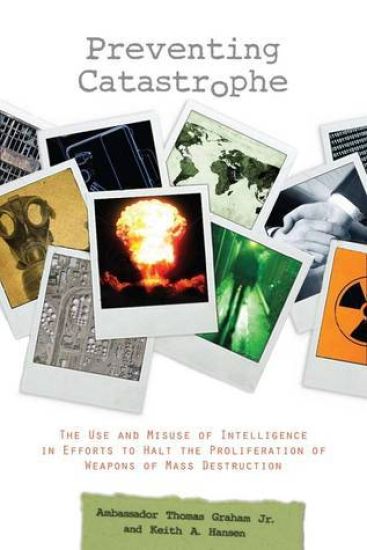
Preventing Catastrophe is written by two authors who are experienced "Washington hands" and who understand the interplay between intelligence and policymaking. Both have been personally involved, in the United States and overseas, in pursuing national and international measures to stop the proliferation of weapons of mass destruction. Their extensive experience is evident in this book, which puts the Iraqi WMD issue in proper perspective, explains the challenge of monitoring small clandestine programs, and explains how the effort to prevent terrorist acquisition and use of WMD differs from preventing their acquisition and use by nation states. At the same time, the authors are able to make a complex subject understandable to non-technical experts, making this book a useful teaching tool, especially for those who have little or no knowledge or experience in US national security decision making. "National intelligence and international inspections are necessary to create confidence that violations of non-proliferation commitments are detected in time to permit appropriate action. Both must be pursued with professionalism and critical minds avoiding poor intelligence or cosmetic inspections. The issues studied thoroughly and with good judgment in this welcome volume by Graham and Hansen were intensely controversial in the case of Iraq but remain central to international counter-proliferation efforts."—Hans Blix, Executive Chairman of the Weapons of Mass Destruction Commission
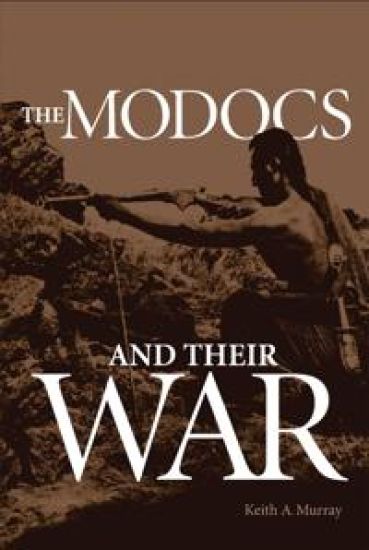
Along the shores of Tule Lake in northern California, in the fall of 1872 three small bands of Modoc Indians joined forces to hold off more than a thousand United States soldiers and settlers trying to dislodge them from their ancient refuge in the lava beds. In these caves and crevasses, which the army called ""The Stronghold,"" the 160-odd Indians, led by Captain Jack, fought five battles and several skirmishes aginst the whites, inclicting more casualties on their enemies than their own total strength.Toward the end of the war, when these Indians felt the ignominy of defeat and mistrusted their shaman's medicine, they separated into their original bands and moved into the hills. Within a few days all but two or three Modocs were in the army's hands. But the victory was less the army's doing than the failure of the Modoc spiritual leader.Keith A. Murray presents the Modocs as they appear in history, their habits, their location, and the beliefs that led them to plunge into their war. He not only gives the history of the war, but also explains the concepts and religious beliefs behind some of the Modocs' most surprising moves.

Shape of Congruence Lattices
Keith A. Kearnes; Emil W. Kiss
AMERICAN MATHEMATICAL SOCIETY
2013
pokkari
"March 2013, volume 222, number 1046 (fifth of 5 numbers)."

"Reviews a wide range of methods for soil physical analysis. Considers applications, accuracy, measurement time, and cost of equipment. Provides examples of applications."

What Every Engineer Should Know about Microcomputer Software
Keith A. Wehmeyer
CRC Press Inc
1984
sidottu
This book covers the entire scope of computer programming and Structured Program Design, from problem identification to maintaining existing programs. It is intended for two audiences: beginning programmers and experienced programmers seeking ways to improve the quality of their software.

Molecular Physical Chemistry: A Concise Introduction focuses on two main aspects of physical chemistry: thermodynamics and reaction dynamics. By looking at the properties of the atoms and molecules that constitute matter, it makes use of results from modern experiments conducted on small numbers of molecules. These molecular properties allow the behaviour of larger groups of molecules to be predicted. This is in contrast to conventional approaches which are based upon how the subjects have developed historically. It attempts to show how some basic concepts can be easily applied to give verifiable results in simple systems before extending them to more complicated scenarios. The text is intended as an aid to understanding these central topics of physical chemistry, rather than an introduction to them, and some familiarity with them is assumed throughout. Worked examples and problems are given at the end of each chapter. Molecular Physical Chemistry: A Concise Introduction will be welcomed by graduate and advanced undergraduate students, as well as lecturers. Upon completion of this book the reader will see its subject matter as an integral part of their whole approach to chemistry. "Professor McLauchlin is certainly owed a debt of gratitude by the chemical community for this effort to bring enjoyment and understanding to the future generation. It will be interesting to see if this experiment helps students replace the fear of physical chemistry by an appreciation of its power and beauty." Professor William Klemperer, University of Harvard