The late Sir John Templeton once said: "To buy when others are despondently selling and to sell when others are avidly buying requires the greatest fortitude." Many investors get caught in popular investment themes. They enthusiastically buy near the top, then fearfully sell near the bottom when the market corrects its excess. Conversely, the greatest investment returns in history have been made by betting against the crowd during those times of extreme investor sentiment. But how do we know when the market has reached an opportunistic inflection point? Keith Richards' newest book, Smart Money, Dumb Money, Beating the Crowd Through Contrarian Investing provides a bevy of contrarian analysis tools designed to help you identify an overbought and euphoric market. These same tools can help you profit by buying into an oversold market that has reached its capitulation stage. As with Keith's other books, the final chapter of the book provides a complete road-map to incorporating contrarian investment analysis into a logical trading strategy.
In recent years, a movement stressing a causal relationship between spirituality and good health has captured the public imagination. Told that research demonstrates that people of strong faith are healthier, physicians and clergy alike urge us to become more religious. The religion and health movement, as it has become known, has attracted its fair share of sceptics. While most root their criticism in science or secularism, the authors of Heal Thyself, one a theological ethicist, the other a physician, instead challenge the basic precepts of the movement from the standpoint of Christian theology. Heal Thyself argues that popular culture's fascination with the health benefits of religion reflects not the renaissance of religious tradition but the powerful combination of consumer capitalism and self-interested individualism. A faith-for-health exchange misrepresents and devalues the true meaning of faith. For Christians, being religious does not mean enlisting faith as a vehicle to get what we want-be it health or wealth-but rather learning by faith to want the right things at the right time, and to live with a spirit of gratitude and hope.
At the dawn of a new century, the third sector has become increasingly embedded in the business of government in Canada. What is the nature of this relationship? What does it forecast for Canadian public policy? This collection of essays, the second in the Public Policy and the Third Sector series, analyses the role of the nonprofit sector and its links with both the state and society in Canada. The Nonprofit Sector and Government in a New Century captures the complexities and contradictions in the relationship between the nonprofit sector and government, and highlights the struggles of nonprofit organizations to respond to an environment defined by increased expectations and constrained resources. Contributors include Keith Banting, Kathy Brock, Jack Quarter (OISE), Caroline Andrew (University of Ottawa), James Rice (McMaster University), Darcy Mitchell (Mitchell Consulting), Joesph Tindale (University of Guelph), and Luc Theriault (University of Regina).
The cases explored here include internet regulation and privacy legislation, conservation efforts and biodiversity, the savings behaviour of NPOs, the breast cancer policy community, and voluntary sector-government compacts. Contributors include Kathy Brock, Philippe Barla (Universite Laval), Malcolm Grieve (Acadia), Femida Handy (York University), Alison Li (York University), Agnes Meinhard and Mary Foster (Ryerson University), and Susan Phillips (Carleton University).
The cases explored here include internet regulation and privacy legislation, conservation efforts and biodiversity, the savings behaviour of NPOs, the breast cancer policy community, and voluntary sector-government compacts. Contributors include Kathy Brock, Philippe Barla (Universite Laval), Malcolm Grieve (Acadia), Femida Handy (York University), Alison Li (York University), Agnes Meinhard and Mary Foster (Ryerson University), and Susan Phillips (Carleton University).
This book provides a one-stop shop for coastal and marine scientists to understand processes that generate atmospheric circulation as integrated with terrestrial and oceanic circulation processes to create an Earth-ocean-atmosphere climate system. It uses the process approach in the first half of the book to set the stage for understanding circulation systems and then for explaining the circulation processes themselves, with the second half of the book dedicated to showing how these processes play themselves out across the Earth's terrestrial and marine surface. The processes explained in the first half of the book assume no prior knowledge of meteorology or oceanography. The regional section includes the major continents or subcontinents, along with their surrounding ocean environs. It begins with the area with which many/most readers are likely most familiar —the USA and Canada. From there, the tour of the world continues, beginning with the places that have atmospheric and oceanic circulation features that are most similar to the USA and Canada, all in the Northern Hemisphere—Europe, Southwestern Asia, and then East Asia. From there, the discussion builds on principles illustrated in the first half of the book and demonstrated in the beginning of the regional section of the book, while also adding concepts and principles of importance in the tropical and subtropical latitudes, by describing circulation features of South and Southeast Asia. This discussion carries forward naturally for a discussion of Africa, which experiences similar features of subtropical and tropical latitudes. From there, previous material can be applied and built upon further in the discussion of Latin America and the Caribbean. Australia and Oceania are the next area covered, followed by the polar latitudes. The book concludes with a brief review of the major atmospheric and oceanic circulation features around the world and with a reminder of the cascading primary and secondary impacts of the climate system. The book is intended to fill a niche as both a textbook and a reference source for non-atmospheric specialists. Its purpose is to help coastal, environmental, engineering, and planning professionals to get “up to speed” regarding atmospheric and oceanic circulations and their impacts around the world. This would allow more effective communication with climate modelers, atmospheric and marine environmental consultants, and media. Our book-writing experience allows us to implement “best practices” based on cognitive theory to facilitate learning in the geosciences.
Includes Case Studies from a Range of Event SitesIntroduction to Crowd Science examines the growing rate of crowd-related accidents and incidents around the world. Using tools, methods, and worked examples gleaned from over 20 years of experience, this text provides an understanding of crowd safety. It establishes how crowd accidents and incidents (specifically mass fatalities in crowded spaces) can occur. The author explores the underlying causes and implements techniques for crowd risk analysis and crowd safety engineering that can help minimize and even eliminate occurrences altogether. Understand Overall Crowd Dynamics and Levels of Complex StructureThe book outlines a simple modeling approach to crowd risk analysis and crowds safety in places of public assembly. With consideration for major events, and large-scale urban environments, the material focuses on the practical elements of developing the crowd risk analysis and crowd safety aspects of an event plan. It outlines a range of modeling techniques, including line diagrams that represent crowd flow, calculations of the speed at which a space can fill, and the time it takes for that space to reach critical and crush density. It also determines what to consider during the event planning and approval (licensing/permitting) phases of the event process.Introduction to Crowd Science addresses key questions and presents a systematic approach to managing crowd risks in complex sites. It provides an understanding of the complexity of a site, that helps you plan for crowds in public places.
Includes Case Studies from a Range of Event Sites Introduction to Crowd Science examines the growing rate of crowd-related accidents and incidents around the world. Using tools, methods, and worked examples gleaned from over 20 years of experience, this text provides an understanding of crowd safety. It establishes how crowd accidents and incidents (specifically mass fatalities in crowded spaces) can occur. The author explores the underlying causes and implements techniques for crowd risk analysis and crowd safety engineering that can help minimize and even eliminate occurrences altogether. Understand Overall Crowd Dynamics and Levels of Complex StructureThe book outlines a simple modeling approach to crowd risk analysis and crowds safety in places of public assembly. With consideration for major events, and large-scale urban environments, the material focuses on the practical elements of developing the crowd risk analysis and crowd safety aspects of an event plan. It outlines a range of modeling techniques, including line diagrams that represent crowd flow, calculations of the speed at which a space can fill, and the time it takes for that space to reach critical and crush density. It also determines what to consider during the event planning and approval (licensing/permitting) phases of the event process. Introduction to Crowd Science addresses key questions and presents a systematic approach to managing crowd risks in complex sites. It provides an understanding of the complexity of a site, that helps you plan for crowds in public places.
"Stranger on the Plains: A Spiritual Journey" by G. Keith Gunderson is a moving blend of memoir, theological reflection, and poetic prose set against the backdrop of the Great Plains in North and South Dakota. Through vivid personal stories, family history, rural Americana, and interwoven biblical narratives-especially those echoing the Passion of Christ-the author meditates on themes of faith, loss, belonging, memory, and hope. The book moves gracefully between Gunderson's own life and the spiritual landscape of the Dakotas, confronting questions of suffering, identity, and redemption, often drawing parallels to biblical psalms and figures. Its lyrical chapters touch on family traditions, rural hardships, spiritual awakenings, and the profound beauty and harshness of prairie life, culminating in a message of enduring faith and grace. Publisher: BookFuel
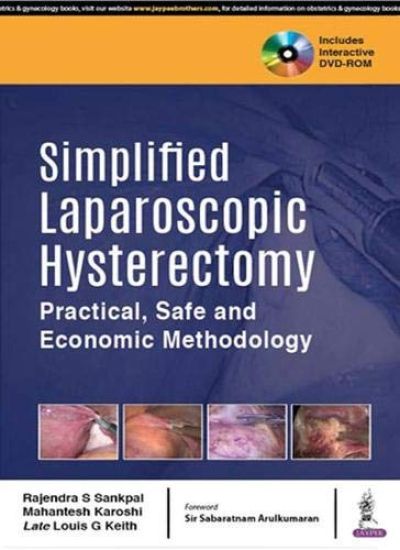
This book is a practical guide to the latest laparoscopic hysterectomy techniques for practising gynaecologists. Divided into four sections, the book begins with detail on preparing the operating theatre covering patient selection, theatre set up, patient positioning, instrumentation, and anaesthetic considerations. The next chapters discuss preparation for surgery, followed by step by step procedural instruction. The final section explains postoperative care. Authored by recognised experts in the field, this concise reference is enhanced by clinical photographs and figures. The accompanying DVD ROM features 16 videos covering all aspects of laparoscopic hysterectomy, also highlighting key points from the text. Key points Practical guide to laparoscopic hysterectomy proceduresProvides step by step guidance from pre-surgical preparation, to operative techniques and postoperative careIncludes DVD ROM demonstrating all aspects of laparoscopic hysterectomyFeatures clinical photographs and figures to enhance learning
This book has been considered by academicians and scholars of great significance and value to literature. This forms a part of the knowledge base for future generations. So that the book is never forgotten we have represented this book in a print format as the same form as it was originally first published. Hence any marks or annotations seen are left intentionally to preserve its true nature.
The New Jerusalem is a 1920 book written by British writer G. K. Chesterton. Dale Ahlquist calls it a "philosophical travelogue" of Chesterton's journey across Europe to Palestine. *Quotes* "On the road to Cairo one may see twenty groups exactly like that of the Holy Family in the pictures of the Flight into Egypt; with only one difference. The man is riding on the ass." "The real mistake of the Muslims is something much more modern in its application than any particular passing persecution of Christians as such. It lay in the very fact that they did think they had a simpler and saner sort of Christianity, as do many modern Christians. They thought it could be made universal merely by being made uninteresting. Now a man preaching what he thinks is a platitude is far more intolerant than a man preaching what he admits is a paradox. It was exactly because it seemed self-evident, to Muslims as to Bolshevists, that their simple creed was suited to everybody, that they wished in that particular sweeping fashion to impose it on everybody."....... Gilbert Keith Chesterton, KC*SG (29 May 1874 - 14 June 1936), better known as G. K. Chesterton, was an English writer, poet, philosopher, dramatist, journalist, orator, lay theologian, biographer, and literary and art critic. Chesterton is often referred to as the "prince of paradox". Time magazine has observed of his writing style: "Whenever possible Chesterton made his points with popular sayings, proverbs, allegories-first carefully turning them inside out." Chesterton is well known for his fictional priest-detective Father Brown, and for his reasoned apologetics. Even some of those who disagree with him have recognised the wide appeal of such works as Orthodoxy and The Everlasting Man.Chesterton, as a political thinker, cast aspersions on both Progressivism and Conservatism, saying, "The whole modern world has divided itself into Conservatives and Progressives. The business of Progressives is to go on making mistakes. The business of the Conservatives is to prevent the mistakes from being corrected."Chesterton routinely referred to himself as an "orthodox" Christian, and came to identify this position more and more with Catholicism, eventually converting to Catholicism from High Church Anglicanism. George Bernard Shaw, Chesterton's "friendly enemy" according to Time, said of him, "He was a man of colossal genius."Biographers have identified him as a successor to such Victorian authors as Matthew Arnold, Thomas Carlyle, Cardinal John Henry Newman, and John Ruskin.
Manalive (1912) is a book by G. K. Chesterton detailing a popular theme both in his own philosophy, and in Christianity, of the "holy fool", such as in Dostoevsky's The Idiot and Cervantes' Don Quixote.This is a book in two parts. The first, "The Enigma of Innocent Smith", concerns the arrival of a new tenant at Beacon House, a London boarding establishment. Like Mary Poppins, this man (who is tentatively identified by lodger Arthur Inglewood as an ex-schoolmate named Innocent Smith) is accompanied by a great wind, and he breathes new life into the household with his games and antics. During his first day in residence the eccentric Smith creates the High Court of Beacon; arranges to elope with Mary Gray, paid companion to heiress Rosamund Hunt; inspires Inglewood to declare his love for Diana Duke, the landlady's niece; and prompts a reconciliation between jaded journalist Michael Moon and Rosamund. However, when the household is at its happiest two doctors appear with awful news: Smith is wanted on charges of burglary, desertion of a spouse, polygamy, and attempted murder. The fact that Smith almost immediately fires several shots from a revolver at Inglewood's friend Dr. Herbert Warner seems to confirm the worst. Before Smith can be taken to a jail or an asylum, Michael Moon declares that the case falls under the purview of the High Court of Beacon and suggests that the household investigate the matter before involving the authorities or the press. The second part, "The Explanations of Innocent Smith", follows the trial. The prosecution consists of Moses Gould, a merrily cynical Jew who lives at Beacon House and considers Smith at best a fool and at worst a scoundrel, and Dr. Cyrus Pym, an American criminal specialist called in by Dr. Warner; Michael Moon and Arthur Inglewood act for the defense. The evidence consists of correspondence from people who witnessed or participated in the exploits that led to the charges against Smith. In every case, the defendant is revealed to be, as his first name states, innocent. He fires bullets near people to make them value life; the house he breaks into is his own; he travels around the world only to return with renewed appreciation for his house and family; and the women he absconded with are actually his wife Mary, posing as a spinster under different aliases so they may repeatedly re-enact their courtship. Smith is, needless to say, acquitted on all charges.... Gilbert Keith Chesterton, KC*SG (29 May 1874 - 14 June 1936), better known as G. K. Chesterton, was an English writer, poet, philosopher, dramatist, journalist, orator, lay theologian, biographer, and literary and art critic. Chesterton is often referred to as the "prince of paradox."Time magazine has observed of his writing style: "Whenever possible Chesterton made his points with popular sayings, proverbs, allegories-first carefully turning them inside out." 4] Chesterton is well known for his fictional priest-detective Father Brown, and for his reasoned apologetics. Even some of those who disagree with him have recognized the wide appeal of such works as Orthodoxy and The Everlasting Man.Chesterton, as a political thinker, cast aspersions on both Progressivism and Conservatism, saying, "The whole modern world has divided itself into Conservatives and Progressives. The business of Progressives is to go on making mistakes. The business of the Conservatives is to prevent the mistakes from being corrected."Chesterton routinely referred to himself as an "orthodox" Christian, and came to identify this position more and more with Catholicism, eventually converting to Catholicism from High Church Anglicanism. George Bernard Shaw, Chesterton's "friendly enemy" according to Time, said of him, "He was a man of colossal genius."Biographers have identified him as a successor to such Victorian authors as Matthew Arnold, Thomas Carlyle, Cardinal John Henry Newman, and John Ruskin...