Kirjojen hintavertailu. Mukana 11 342 296 kirjaa ja 12 kauppaa.

Kirjahaku

Etsi kirjoja tekijän nimen, kirjan nimen tai ISBN:n perusteella.

1000 tulosta hakusanalla Kelley Perry

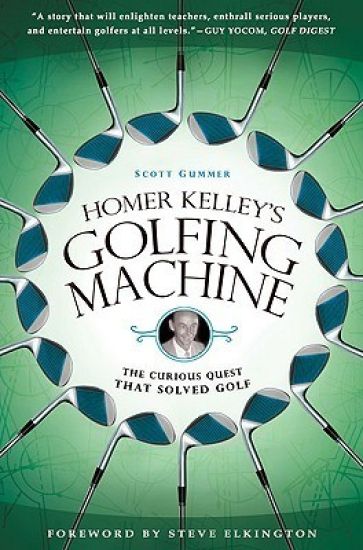
Homer Kelley's Golfing Machine

Homer Kelley's Golfing Machine

Scott Gummer

Gotham Books
2010
nidottu
The remarkable true story of a lone genius whose quest to unlock the science behind the perfect swing changed golf forever In 1939, Homer Kelley played golf for the first time and scored 116. Frustrated, he did not play again for six months; when he did he carded a 77. Determined to understand why he was able to shave nearly 40 strokes off his score, Kelley spent three decades of trial and error to unlock the answer and to recapture that one wonderful day when golf was easy and enjoyable. In 1969, Kelley self- published his findings in The Golfing Machine: The Computer Age Approach to Golfing Perfection. The bestselling instruction books of the day required golfers to conform their swings to the author's ideals, but Homer Kelley configured swings to fit every golfer. He found an enthusiastic disciple in a Seattle teaching pro named Ben Doyle, who in turn found an eager student in 13-year-old prodigy Bobby Clampett. Clampett's initial success in amateur golf shined a bright spotlight on Homer Kelley and The Golfing Machine, but when the young star suffered a painfully public collapse and faltered as a pro, critics were quick to blast Kelley and his complex and controversial ideas. With exclusive access to Homer Kelley's archives, author Scott Gummer paints a fascinating picture of the man behind the machine, the ultimate outsider who changed the game once and for all of us.

Guilty by Social Media the Boo Kelley Story

Guilty by Social Media the Boo Kelley Story

Barbara Kelley

Independently Published
2018
nidottu
Boo is Determined to prove her truth in the cruel world of social media fighting the scandal of a lifetime she is torn down by trolls as she is stalked her life is being monitored everyday and her relationship is put in the public eye all because his Baby mother cant take rejection she has harassed and bullied woman for years but when she noticed Boo wasn't a pushover she became obsessed with Boo and began to spread a Lie that will change lives forever. Will she prosper from all her demonic actions and this will be the end of Boo or will this be thing that puts her own life own display for laughter and likes. After years of defending herself against the most vial things being said about her on Social Media Boo is forced to take matters in her own hands and stand up for herself but with the backlash and exposure will she survive this or will this be her final demise.
Mike Kelley

Mike Kelley

John Miller

Afterall Publishing
2015
pokkari
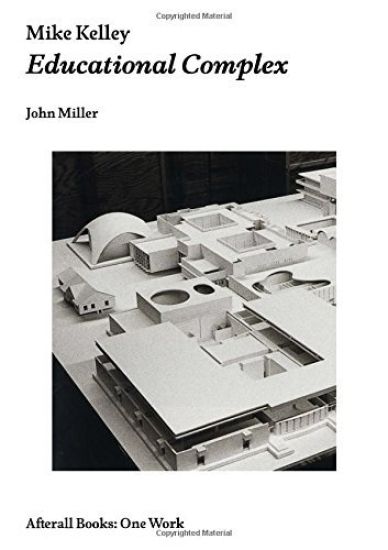
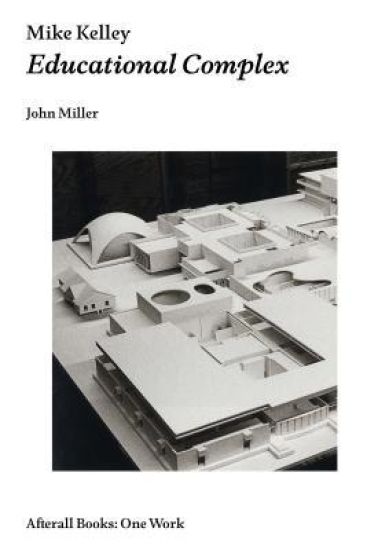
An illustrated examination of a 1995 work by Mike Kelley that marked a significant change in his work.One of the most influential artists of our time, Mike Kelley (1954-2012) produced a body of innovative work mining American popular culture as well as modernist and postmodernist art-relentless examinations of subjectivity and of society that are both sinister and ecstatic. With a wide range of media, Kelley's work explores themes as varied as post-punk politics, religious systems, social class, and repressed memory. Using architectural models to represent schools he attended, his 1995 work, Educational Complex, presents forgotten spaces as frames for private trauma, real or imagined. The work's implications are at once miniature and massive. In this book, John Miller offers an illustrated examination of this milestone work that marked a significant change in Kelley's practice.A "complex" can mean an architectural configuration, a psychological syndrome, or a political apparatus, and Miller approaches Educational Complex through corresponding lines of inquiry, considering the making of the work, examining it in terms of education and trauma (sexual or otherwise), and investigating how it tests the ideological horizon of art as an institution. Miller shows that in Educational Complex, Kelley expands his political and aesthetic focus, including not only such artifacts as generic forms of architecture but (inspired by the infamous McMartin Preschool case) popular fantasies associated with ritual sex abuse and false memory syndrome. Through this archaeology of the contemporary, Miller argues, Kelley examines the mandate for education and the liberal democratic premises underpinning it.
Mike Kelley

Mike Kelley

John Miller

Afterall Publishing
2015
sidottu
An illustrated examination of a 1995 work by Mike Kelley that marked a significant change in his work.One of the most influential artists of our time, Mike Kelley (1954-2012) produced a body of innovative work mining American popular culture as well as modernist and postmodernist art-relentless examinations of subjectivity and of society that are both sinister and ecstatic. With a wide range of media, Kelley's work explores themes as varied as post-punk politics, religious systems, social class, and repressed memory. Using architectural models to represent schools he attended, his 1995 work, Educational Complex, presents forgotten spaces as frames for private trauma, real or imagined. The work's implications are at once miniature and massive. In this book, John Miller offers an illustrated examination of this milestone work that marked a significant change in Kelley's practice.A "complex" can mean an architectural configuration, a psychological syndrome, or a political apparatus, and Miller approaches Educational Complex through corresponding lines of inquiry, considering the making of the work, examining it in terms of education and trauma (sexual or otherwise), and investigating how it tests the ideological horizon of art as an institution. Miller shows that in Educational Complex, Kelley expands his political and aesthetic focus, including not only such artifacts as generic forms of architecture but (inspired by the infamous McMartin Preschool case) popular fantasies associated with ritual sex abuse and false memory syndrome. Through this archaeology of the contemporary, Miller argues, Kelley examines the mandate for education and the liberal democratic premises underpinning it.
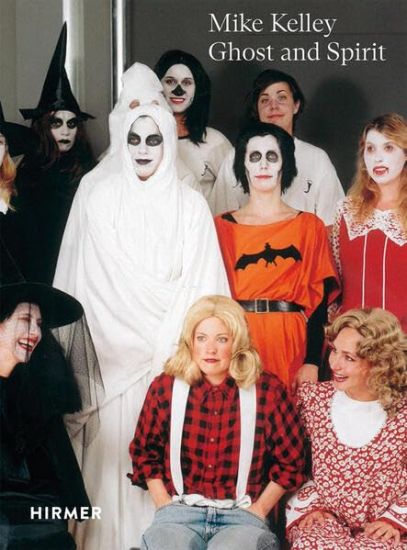
Mike Kelley: Ghost and Spirit
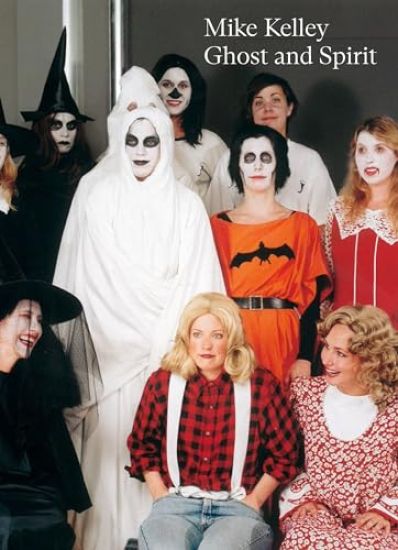
Mike Kelley (1954–2012) is widely considered one of the most influential artists of our time, with an irreverent and visionary practice that spanned and mixed performance, installation, drawing, painting, video, photography, sound, text and sculpture. ?Ghost and Spirit looks at his dense and colourful body of work, from early performances, to his iconic stuffed toy works, and on to his explorations of history, memory and trauma as they haunt our experiences of school or family. Asking prescient questions about how to exist among a world of media images, about the role of art and the artist, and about embodiment, Kelley adopted different personas and mediums, deliberately deflating his own status, and from his own position as a white, heterosexual man in postmodern, capitalist America, he challenged assumptions about identity, class and institutional authority. Bringing together a range of diverse perspectives which summon his ‘lingering influence’ (to paraphrase the artist), this book captures the complexity and persistent relevance of Kelley’s extraordinary practice.
Mike Kelley: Ghost and Spirit
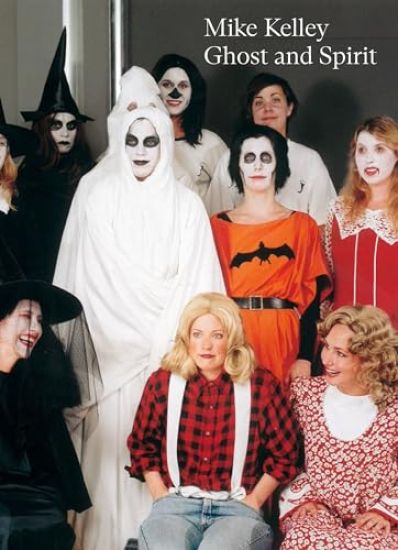
Mike Kelley (1954–2012) is widely considered one of the most influential artists of our time, with an irreverent and visionary practice that spanned and mixed performance, installation, drawing, painting, video, photography, sound, text and sculpture. Ghost and Spirit looks at his dense and colourful body of work, from early performances, to his iconic stuffed toy works, and on to his explorations of history, memory and trauma as they haunt our experiences of school or family. Asking prescient questions about how to exist among a world of media images, about the role of art and the artist, and about embodiment, Kelley adopted different personas and mediums, deliberately deflating his own status, and from his own position as a white, heterosexual man in postmodern, capitalist America, he challenged assumptions about identity, class and institutional authority. Bringing together a range of diverse perspectives which summon his ‘lingering influence’ (to paraphrase the artist), this book captures the complexity and persistent relevance of Kelley’s extraordinary practice.
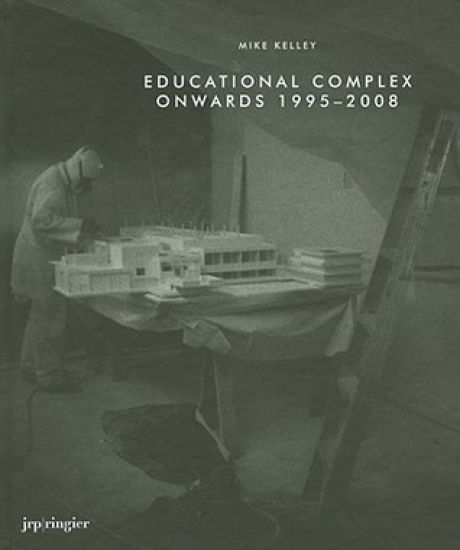
Mike Kelley: Educational Complex Onwards 1995-2008
In 1995, Mike Kelley devised the Educational Complex, an amalgam of every school he attended and of the house he grew up in, "with all the parts I couldn't remember left out"--a total environment, "sort of like the model of a Modernist community college." The blind spots in this model represent forgotten ("repressed") zones, and so are reconceived by Kelley as sites of institutional abuse, for which specific traumas were devised (each having their own video and sculptural component). For Kelley, this work marks the beginning of a series of projects in which pseudo-autobiography, repressed-memory syndrome and the reinterpretation of previous pieces become the tools for a poetic deconstruction of such complexes and the way we interact with and narrate them. Educational Complex Onwards, 1995-2008 is the first book to collect these works. Each project within the series is extensively documented by artist's texts and reference material, while essays by Diedrich Diederichsen, Howard Singerman and Anne Pontegnie examine the place of this body of work within Kelley's oeuvre.
Mike Kelley: Timeless Painting
An exploration of Mike Kelley's unique approach to painting as a conceptual medium and his enduring relevance as an artist through responses by various artists that range from art historical analysis to epistolary ode.Published on the occasion of the eponymous 2019–20 exhibition at Hauser & Wirth New York, Mike Kelley: Timeless Painting the publication reproduces twelve series of paintings from 1994 through 2009 alongside responses to Kelley’s work by a diverse group of artists that Porter has invited to contribute: Edgar Arceneaux with Kurt Forman, Carroll Dunham, Daniel Guzmán, Richard Hawkins, Jay Heikes, Jamian Juliano-Villani, Christina Quarles, Mary Reid Kelley, and Laurie Simmons. In writing that ranges from personal anecdote to art historical analysis, cento poem to epistolary ode, these artists consider the enduring relevance of Kelley’s practice both as a painter and as an artist more broadly.
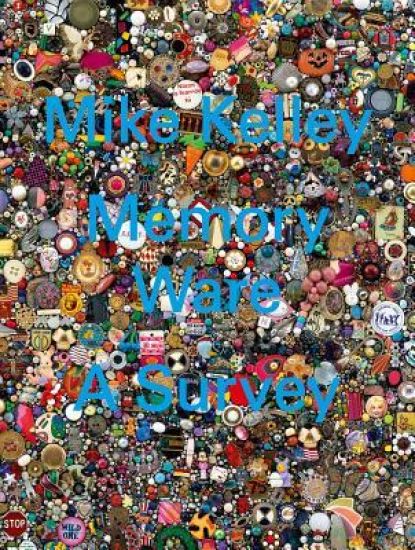
Mike Kelley: Memory Ware
A survey of Mike Kelley's 'Memory Ware' series which occupies a prominent place in Kelley’s materially and conceptually complex output. Over the course of his four-decade career, Mike Kelley (1954 - 2012) created a rich oeuvre that critically questioned aesthetic conventions and examined all forms of culture. The approximately one hundred 'Memory Ware' and associated works were made during the first decade of the 21st century, all of which are reproduced in this catalogue following the exhibition at Hauser & Wirth New York from November to December 2016.Co-published with the Mike Kelley Foundation for the Arts.
Mike Kelley: Materialist Aesthetics
Mike Kelley is best known as one of the most influential visual artists of his generation. But he was also an insightful theorist who wrote profusely about his work as well as on aesthetics in the 1980s, 1990s, and 2000s, an epoch marked, in his view, by victim culture and the pop psychology phenomenon known as repressed memory syndrome. Mike Kelley: Materialist Aesthetics and Memory Illusions presents the artist in a new light, almost as an empirical philosopher delivering his position through art as well as writing. In a meticulous and transdisciplinary approach, Laura López Paniagua presents Kelley’s oeuvre as a stance in materialist aesthetics and weaves thoughtful relations between the artist’s critique, statements, and comments and the theories of thinkers such as Georges Bataille, Walter Benjamin, Pierre Bourdieu, Sigmund Freud, Jacques Lacan, and Maurice Merleau-Ponty. López Paniagua focuses on Kelley’s artistic production between 1995 and his death in 2012, analyzing these works vis-à-vis the concept of memory, one of the artist’s obsessions and leitmotivs throughout his career.
Mary Reid Kelley

Mary Reid Kelley

Daniel Belasco; Corinna Ripps Schaming; Sara J. Pasti; Janet Riker

Samuel Dorsky Museum of Art
2014
pokkari
Celebrates the first exhibition devoted to the finely crafted and researched costumes, objects, and drawings that Mary Reid Kelley creates for her visually and intellectually stimulating videos made in collaboration with Patrick Kelley.Mary Reid Kelley celebrates the first museum exhibition devoted to the finely crafted and researched costumes, objects, and drawings that Mary Reid Kelley creates for her visually and intellectually stimulating videos. An essay by curator Daniel Belasco analyzes the sources and significance of the working objects in how they promote the "unreality effect" of Mary Reid Kelley's videos, which combine both the analog and digital and the personal and historical. A conversation between Corinna Ripps Schaming and Mary Reid Kelley and her long-time collaborator Patrick Kelley reveals insights into their working process. For the first time, the full range of the artist's costumes, props, drawings, furniture, and accessories are photographed and presented as unique works of art.
Radical Action: A Colt Kelley Thriller

Radical Action: A Colt Kelley Thriller

James D. Kellogg

James D. Kellogg
2013
nidottu
E-Force lurks in the Colorado Rockies, unleashing destruction at prominent ski resorts. While the media validates the extremists' radical action, Colt Kelley, a disillusioned environmentalist, finds himself inescapably linked to their crimes. When people close to Colt start dying, a dark conspiracy below the eco-terrorist fa ade thrusts him into the cross hairs of merciless killers and an organization with unfathomable power. In a race against time and ruthless evil, Colt is the only obstacle between E-Force and a terrible hidden purpose. To stop both, Colt must take his own radical action...or die trying.