Kirjojen hintavertailu. Mukana 12 540 981 kirjaa ja 12 kauppaa.

Kirjahaku

Etsi kirjoja tekijän nimen, kirjan nimen tai ISBN:n perusteella.

1000 tulosta hakusanalla Kenneth C. Davis

OscilloTheorem

OscilloTheorem

Kenneth C. Fish

Fishing Hole Books
2008
pokkari
Poetry is a condition for which there is no cure. OscilloTheorem is a collection of keepsakes, of objects discovered, pored over, of paths crossed, tangled, sorted, re-sorted. This is a collection of poems that takes into consideration the fact that witnessing anything leaves you tied, in one way or another, to that which you've witnessed and that connection alters forever the witness and the witnessed.
Bone Health Made Easy: Why Most People Should Have an Ultrasound Bone Density Test Done, AND Why Most, Now, Should Do So More Often Than Ever
Why most should consider having an Ultrasound Bone Density Test NOW, and why they should have it done more so now than ever before. What remedies really, really work Dr. Howayeck himself has personally screened thousands, and has made a point over the years to directly ask many as to what apparently had WORKED to create bone density improvement for them and, for others, why they seemed to have WORSENED instead Learn what--in the field of bone health--is "real", and what is absolute nonsense. Get an understanding of what we REALLY need to know about these things, without all the needless complexities, untruths, and ambiguity that exists around the issue of osteoporosis, its management, and its prevention
Our Seasons in the Sun: High School Memories

Our Seasons in the Sun: High School Memories

Kenneth C. Mitchell

SEAGULL PRESS
2018
nidottu
This is a very personal account of the author's high school days. Each of us has our own story of that transformational period. Yours may be very different from his. But there are also many similarities. Ask anyone who has attended a reunion. Ken's interviews with former Lanphier High School classmates and teachers, together with insights gained over time, create a memoir that will resonate with anyone who has ever gone to a Homecoming Dance, had a hopeless crush, struggled with math, or aspired to college.
Exploring Perceptions of Mentor Relationships in Doctoral Programs: A Qualitative Exploratory Multiple-Case Study
The purpose of this qualitative, exploratory, multiple-case study was to explore mentoring relationships and student compatibility in doctoral programs. This design offered and explained an in-depth understanding of what creates a mentor relationship for mentors and doctoral students. The knowledge gained from this study will assist institutional leaders to focus on continuously developing effective strategies to help bridge the gap of failed mentoring relationships between doctoral candidates and their mentors. This book is a must read for doctoral chairs, academic deans, and provosts at colleges and universities that have doctoral programs as a guideline to institute, improve, and enhance mentoring relationships between organizational, doctoral-level mentors and doctoral candidate students. Key Search Terms: academic institutions, academic leaders, academic performance, advisor, career success, coach, communication skills, compatibility, cultural compatibility, developmental stages, doctoral chairs, doctoral mentors, doctoral programs, doctoral students, Emotional Intelligence (EI), emotional stability, enrollments, face-to-face mentoring, faculty members, formal mentoring process / formal mentoring program, higher education leaders, identity development, interpersonal relationships, leaders, leadership, Leadership development, matching process, mental attitudes, mentees, mentor programs, mentor training system, mentor/mentee relationship, mentoring, mentoring models, mentoring practices, mentoring relationships, mentors, mentorship practices, mentorship training, non-traditional mentoring, professional relationship, prot g s, relationship building, role model, self-awareness, self-efficacy, sense of belonging, theory and model of mentoring
Lutheran Confessions

Lutheran Confessions

Kenneth C Wagener

Concordia Publishing House
2005
pokkari
This revised and expanded study offers a 13-session examination of the Augsburg Confession and Its Apology as found in Concordia: The Lutheran Confessions. Leaders notes for The Augsburg Confession and Its Aplogy are available in the Leader Guide.Each session highlights the Law and Gospel and helps participants grow in their knowledge and understanding of the teachings of the Lutheran Church and its relevance to everyday life. This study can be used by groups or for individual study.More about the Lutheran Confessions seriesThe Lutheran Confession series presents a comprehensive introduction to major Lutheran writings. It is designed to be a convenient study for use by more advanced students, or small groups who want to take an in-depth look at the teachings of the Lutheran Church. For ease of use and study, each book in this series includes excerpts from the relevant confessional document. These is no need for students--or instructors--to purchase a complete set of catechisms, or copies of the Augsburg Confessions or Book of Concord in order to enjoy and benefit from these studies.
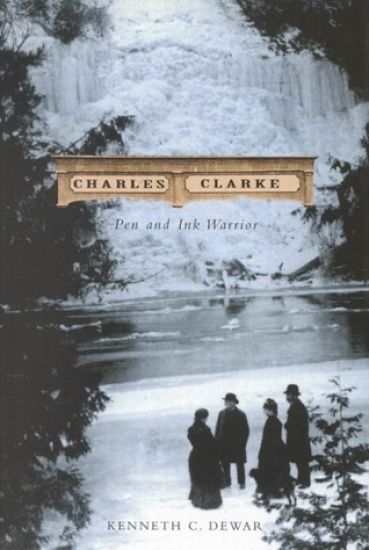
Charles Clarke, Pen and Ink Warrior

Charles Clarke, Pen and Ink Warrior

Kenneth C. Dewar

McGill-Queen's University Press
2002
sidottu
When Charles Clarke settled in Elora, Ontario, in 1848 he joined the ranks of the province's radical reformers, becoming a vigorous critic of everything in Canada that smacked of the old regime - rank, privilege, and monopoly - and an enthusiastic supporter of everything promised by the new - equity, democracy, and individual opportunity. He played a prominent role in drafting the "Clear Grit" platform of 1851, supporting such ideas as a householder's suffrage, the secret ballot, and representation by population. He later espoused the two great causes of nineteenth-century Anglo-Canadian liberalism - provincial rights in Canada and Irish Home Rule in Britain. Equally involved in local affairs - from the Sons of Temperance to the Natural History Society - Clarke tirelessly promoted the natural beauties of Elora and tried to protect the environment of the Grand River gorge from the ravages of industry and human carelessness. Using Clarke's journalistic writings, his private diary, and a memoir he wrote later in life, Kenneth Dewar paints a vivid picture of Clarke's evolving sense of himself and his world in an age of profound transformation.
Charles Clarke, Pen and Ink Warrior

Charles Clarke, Pen and Ink Warrior

Kenneth C. Dewar

McGill-Queen's University Press
2004
nidottu
When Charles Clarke settled in Elora, Ontario, in 1848 he joined the ranks of the province's radical reformers, becoming a vigorous critic of everything in Canada that smacked of the old regime - rank, privilege, and monopoly - and an enthusiastic supporter of everything promised by the new - equity, democracy, and individual opportunity. He played a prominent role in drafting the "Clear Grit" platform of 1851, supporting such ideas as a householder's suffrage, the secret ballot, and representation by population. He later espoused the two great causes of nineteenth-century Anglo-Canadian liberalism - provincial rights in Canada and Irish Home Rule in Britain. Equally involved in local affairs - from the Sons of Temperance to the Natural History Society - Clarke tirelessly promoted the natural beauties of Elora and tried to protect the environment of the Grand River gorge from the ravages of industry and human carelessness. Using Clarke's journalistic writings, his private diary, and a memoir he wrote later in life, Kenneth Dewar paints a vivid picture of Clarke's evolving sense of himself and his world in an age of profound transformation.
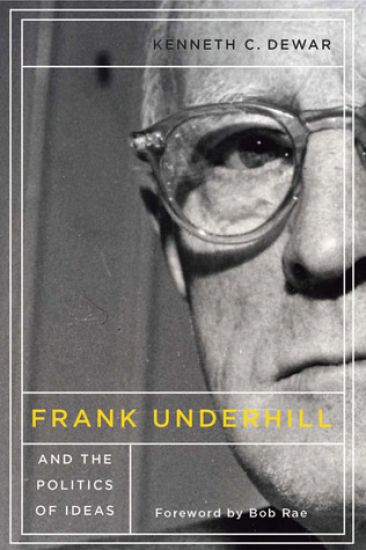
Frank Underhill and the Politics of Ideas

Frank Underhill and the Politics of Ideas

Kenneth C. Dewar

McGill-Queen's University Press
2015
sidottu
Frank Underhill (1889-1971) practically invented the role of public intellectual in English Canada through his journalism, essays, teaching, and political activity. He became one of the country's most controversial figures in the middle of the twentieth century by confronting the central political issues of his time and by actively working to reform the Canadian political landscape. His propagation of socialist ideas during the Great Depression and his criticism of the British Empire and British foreign policy almost cost him his job at the University of Toronto. In Frank Underhill and the Politics of Ideas, Kenneth Dewar demonstrates how Underhill's thought evolved from his days as a student at Toronto and Oxford, to his drafting of the Regina Manifesto - the founding platform of the leftist Co-operative Commonwealth Federation - to his support of his long-time friend Lester Pearson's Liberals in the 1960s. Not willing to be bound by partisan loyalties, his later shift toward the political centre dismayed many of his former allies. The various issues Underhill confronted, Dewar argues, were connected by the pioneering role he played as an intellectual and by his social democratic vision of politics. Dewar also reassesses Underhill's historical work, focusing on how it differed from the new professional history practised by his younger colleagues. Intelligently written and thoroughly researched, Frank Underhill and the Politics of Ideas delivers important insights into twentieth-century political life and innumerable lessons for twenty-first century Canada.
Frank Underhill and the Politics of Ideas

Frank Underhill and the Politics of Ideas

Kenneth C. Dewar

McGill-Queen's University Press
2015
nidottu
Frank Underhill (1889-1971) practically invented the role of public intellectual in English Canada through his journalism, essays, teaching, and political activity. He became one of the country's most controversial figures in the middle of the twentieth century by confronting the central political issues of his time and by actively working to reform the Canadian political landscape. His propagation of socialist ideas during the Great Depression and his criticism of the British Empire and British foreign policy almost cost him his job at the University of Toronto. In Frank Underhill and the Politics of Ideas, Kenneth Dewar demonstrates how Underhill's thought evolved from his days as a student at Toronto and Oxford, to his drafting of the Regina Manifesto - the founding platform of the leftist Co-operative Commonwealth Federation - to his support of his long-time friend Lester Pearson's Liberals in the 1960s. Not willing to be bound by partisan loyalties, his later shift toward the political centre dismayed many of his former allies. The various issues Underhill confronted, Dewar argues, were connected by the pioneering role he played as an intellectual and by his social democratic vision of politics. Dewar also reassesses Underhill's historical work, focusing on how it differed from the new professional history practised by his younger colleagues. Intelligently written and thoroughly researched, Frank Underhill and the Politics of Ideas delivers important insights into twentieth-century political life and innumerable lessons for twenty-first century Canada.
Judges and Ruth

Judges and Ruth

Kenneth C. Way; Mark Strauss; John Walton

Baker Academic, Div of Baker Publishing Group
2016
nidottu
Focused Biblical Scholarship to Teach the TextThe Teach the Text Commentary Series utilizes the best of biblical scholarship to provide the information a pastor needs to communicate the text effectively. The carefully selected preaching units and focused commentary allow pastors to quickly grasp the big idea and key themes of each passage of Scripture. Each unit of the commentary includes the big idea and key themes of the passage and sections dedicated to understanding, teaching, and illustrating the text.The newest Old Testament release in this innovative commentary series is Kenneth C. Way's treatment of Judges and Ruth.
Gun-Dog Training Spaniel and Retrievers

Gun-Dog Training Spaniel and Retrievers

Kenneth C. Roebuck; Ramon M. (PHT) Rustia; David G. (PHT) Roebuck

Stackpole Books
2011
pokkari
"This is the first book to give specific information on training retrievers for upland work. no gimmicks, tricks or shortcuts, just a sensible program for the hunter who wants to train his own dog and do it right." --"Sports Afield" ""Gun-Dog Training Spaniels and Retrievers" by Ken Roebuck is well worth consideration by a new dog owner who is facing up to training a springer spaniel, a Labrador retriever or one of the other flushing and fetching breeds." --Dave Duffey, "Gun Dog" Classic now available as a PB and ebook The first gun dog book devoted exclusively to the flushing breeds The first gun-dog book to cover training retrievers for upland game work
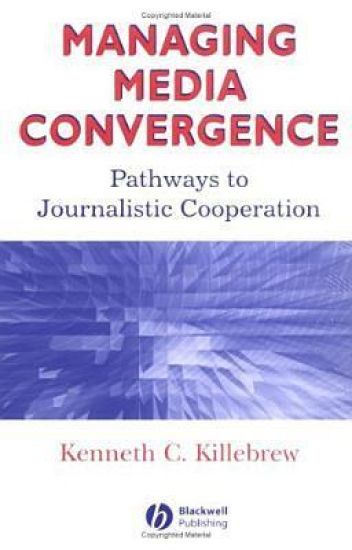
Managing Media Convergence

Managing Media Convergence

Kenneth C. Killebrew

Iowa State University Press
2004
nidottu
From newsrooms to sales departments to Internet sites and converged “information platforms,” the business of information has changed and continues to change dramatically. In Managing Media Convergence: Pathways to Journalistic Cooperation, author Kenneth Killebrew examines media management from a fresh perspective, exploring how to best manage creative people in times of change. This new addition to Blackwell Publishing’s Media and Technology series discusses the role of the journalist/broadcaster and other creative people charged with providing information in newly emerging cross-platform environments of converged media. By investigating creativity – coupled with notions of power, convergence, the changing work environment and traditional management methods – Managing Media Convergence unravels the dilemma of how to retain highly creative people. The necessary skill sets to achieve in a converged media world – of those who would manage and those who would be managed – are clarified and contrasted against traditional organizational approaches. Managerial expediency, efficiency, and effectiveness are considered through discussions of best practices and case studies. With the bottom-line focus of today’s media management on increasing profits and cash flow, Managing Media Convergence shows how workers and managers can successfully meet the challenges of the new media workplace.
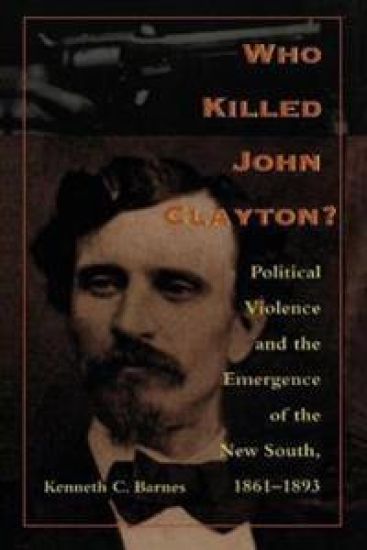
Who Killed John Clayton?

Who Killed John Clayton?

Kenneth C. Barnes

Duke University Press
1998
sidottu
In 1888 a group of armed and masked Democrats stole a ballot box from a small town in Conway County, Arkansas. The box contained most of the county’s black Republican votes, thereby assuring defeat for candidate John Clayton in a close race for the U.S. Congress. Days after he announced he would contest the election, a volley of buckshot ripped through Clayton’s hotel window, killing him instantly. Thus began a yet-to-be-solved, century-old mystery. More than a description of this particular event, however, Who Killed John Clayton? traces patterns of political violence in this section of the South over a three-decade period. Using vivid courtroom-type detail, Barnes describes how violence was used to define and control the political system in the post-Reconstruction South and how this system in turn produced Jim Crow. Although white Unionists and freed blacks had joined under the banner of the Republican Party and gained the upper hand during Reconstruction, during these last decades of the nineteenth century conservative elites, first organized as the Ku Klux Klan and then as the revived Democratic Party, regained power-via such tactics as murdering political opponents, lynching blacks, and defrauding elections.This important recounting of the struggle over political power will engage those interested in Southern and American history.
Who Killed John Clayton?

Who Killed John Clayton?

Kenneth C. Barnes

Duke University Press
1998
pokkari
In 1888 a group of armed and masked Democrats stole a ballot box from a small town in Conway County, Arkansas. The box contained most of the county’s black Republican votes, thereby assuring defeat for candidate John Clayton in a close race for the U.S. Congress. Days after he announced he would contest the election, a volley of buckshot ripped through Clayton’s hotel window, killing him instantly. Thus began a yet-to-be-solved, century-old mystery. More than a description of this particular event, however, Who Killed John Clayton? traces patterns of political violence in this section of the South over a three-decade period. Using vivid courtroom-type detail, Barnes describes how violence was used to define and control the political system in the post-Reconstruction South and how this system in turn produced Jim Crow. Although white Unionists and freed blacks had joined under the banner of the Republican Party and gained the upper hand during Reconstruction, during these last decades of the nineteenth century conservative elites, first organized as the Ku Klux Klan and then as the revived Democratic Party, regained power-via such tactics as murdering political opponents, lynching blacks, and defrauding elections.This important recounting of the struggle over political power will engage those interested in Southern and American history.
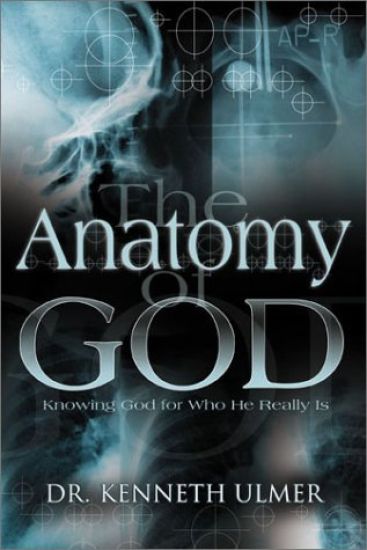
The Anatomy of God

The Anatomy of God

Kenneth C. Ulmer

Whitaker House,U.S.
2001
nidottu
Get to know God As the deer pants for the water brooks, so pants my soul for You, O God. --Psalm 42:1 Does this describe you? Has your thirst for more intimate contact with God caused you to reach for anything and everything that w