Kirjojen hintavertailu. Mukana 11 342 296 kirjaa ja 12 kauppaa.

Kirjahaku

Etsi kirjoja tekijän nimen, kirjan nimen tai ISBN:n perusteella.

1000 tulosta hakusanalla Kenneth E. Bailey

Professionals in Western Film and Fiction

Professionals in Western Film and Fiction

Kenneth E. Hall

McFarland Co Inc
2019
pokkari
? In American Westerns, the main characters are most often gunfighters, lawmen, ranchers and dancehall girls. Civil professionals such as doctors, engineers and journalists have been given far less representation, usually appearing as background characters in most films and fiction. In Westerns about the 1910 Mexican Revolution, however, civil professionals also feature prominently in the narrative, often as members of the intelligentsia--an important force in Mexican politics. This book compares the roles of civil professionals in most American Westerns to those in films on the 1910 Mexican Revolution. Included are studies on the Santiago Toole novels by Richard Wheeler, Strange Lady in Town with Greer Garson and La sombra del Caudillo by Martin Luis Guzman.
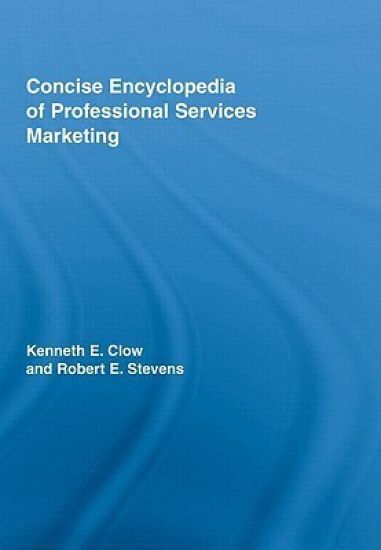
Concise Encyclopedia of Professional Services Marketing

Concise Encyclopedia of Professional Services Marketing

Kenneth E. Clow; Robert E Stevens

Routledge Member of the Taylor and Francis Group
2008
sidottu
Concise Encyclopedia of Professional Services Marketing provides readers with a detailed account of the concepts and strategies necessary to successfully market professional services and grow a business. Complete with practical information relevant to a wide range of professionals--including accountants, architects, attorneys, consultants, dentists, engineers, and physicians--this guidebook is an indispensable reference for anyone looking to learn the concepts and applications needed to market professional services. In addition to essay-length articles arranged from A to Z, and detailed expositions of both the theories and practical techniques necessary to formulating and executing a successful marketing plan, Concise Encyclopedia of Professional Services Marketing contains an appendix of information on launching a multimedia advertising campaign, with special focus on effective website design and other contemporary media formats. For anyone creating their own business or looking to expand an already existing one, Concise Encyclopedia of Professional Services Marketing is a comprehensive and vital reference.
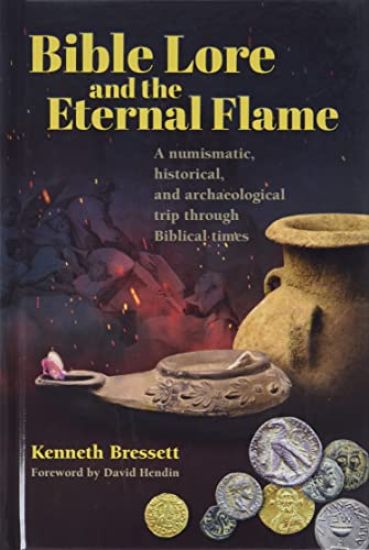
Bible Lore and the Eternal Flame: A Numismatic, Historical, and Archeological Trip Through Biblical Times
The Parable of the Lost Coin. The widow's mite. The coin in the fish's mouth. Money has always played a major role in the Greatest Story Ever Told. And thousands of years later, the coins and artifacts left behind continue to guide us to a greater understanding of ancient civilizations and Biblical truths.In Bible Lore and the Eternal Flame, author Ken Bressett creates an archaeological roadmap of the Old and New Testaments, from the earliest cuneiform writing to pottery, oil lamps, glass―and, of course, money. The Roman denarius, the Tyrian shekel, the first coin to feature an image of Jesus, and hundreds of other coins help provide a glimpse into daily life and trade, starting with ancient Israel and continuing through Jesus's lifetime to the early years of the Christian church.With large, beautiful images and a sweeping tour of thousands of years of history, Bible Lore will delight the Biblical scholar, the coin collector, and anyone who wants to know more about the historical foundations of the Christian faith.
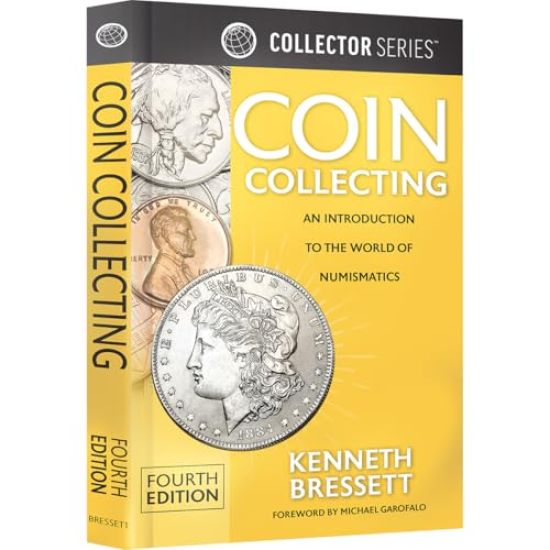
Coin Collecting: An Introduction to the World of Numismatics
Coin Collecting: An Introduction to the World of Numismatics, fourth edition is an up-to-date, comprehensive guide that explains everything a new collector should know about how to succeed in the "Hobby of Kings"--what to look for in a coin; mints and mintmarks; what makes a coin valuable; getting the most out of coin clubs, shows, and exhibits; how to find a trustworthy coin dealer; where to buy coins; how to care for and store your coins; understanding how coins are graded; the ins and outs of both buying and selling; commemorative coins; U.S. circulating coinage from 1793 to date, plus other coin-related collectibles--and many other subjects.As the old saying goes, "Find a penny, pick it up, and all day long you'll have good luck." Now Kenneth Bressett, Editor Emeritus of A Guide Book of United States Coins (the "Red Book") and former president of the American Numismatic Association, has updated the definitive reference to finding just how lucky you can be as a coin collector.From how to get started in the hobby to how to care for a collection, with full explanations of grading techniques and standards, coin prices, and values, Coin Collecting: An Introduction to the World of Numismatics shows everything clearly and with easy-to-follow detail. Squarely aimed at newcomers to collecting, this is a guide that covers all the different aspects of coin collecting--and in doing so brings a fun and potentially lucrative hobby home to readers everywhere.Formerly titled Whitman Guide to Coin Collecting: An Introduction to the World of Coins and known by many as the "Yellow Book," this is the first title to be rebranded and published under the new Collector Series(TM)--your essential gateway into the fascinating world of collecting. This series provides comprehensive, up-to-date guidance on identifying, valuing, and caring for coins. Authored by industry experts, each book ensures enthusiasts can maximize both their enjoyment and investment.New features include: Expanded table of contents with more preview information. New foreword by long-time coin collector and numismatic author Michael Garofalo. Indexed with the type collector in mind, organized to help the reader who has taken an interest in one particular type across multiple denominations (e.g., Barber coinage, or the many variations on Bust coinage). Revised Chapter 8, now called "Collecting with a Stated Purpose," focuses on the newcomer who is ready to start building their collection, providing basic information on every circulating U.S. coin series, from early copper half cents and large cents to date. "A very important book that will help you begin your journey and learn what is important. It truly is a 'must have' when trying to find a good coin book that can help you get off on the right foot.'" --from the foreword by Michael Garofalo"An invaluable research tool for a novice and a standard reference to look back to once you have become a seasoned collector." -Rod Gillis, Education Director, American Numismatic Association
United States Currency

United States Currency

Kenneth E. Bressett

Whitman Publishing
2025
nidottu
United States Currency, now available in a revised ninth edition, tells the story of paper money in the United States from the 1800s to today. Whether you actively collect U.S. currency, or you simply have a few old notes you want to look up, you will find a wealth of valuable information inside.Features: Illustrations of large-size, fractional, and small-size currency Listings of every series, arranged by universally accepted Friedberg Number SystemTM Market values in up to seven collectible grades, based on the industry standard Greensheet(R) price guide Historical background on each series and denomination, from $1 to $10,000 New Foreword by Patrick Perez, Editor of CDN Monthly Greysheet and Greensheet Additional collector information such as Notes of the War of 1812, condition and grading explained, detecting counterfeits, and glossary of terms "This book is an excellent stepping-off point if you are just getting started in collecting currency and will be a valuable identification guide to help you understand the various note types that have been issued by the U.S. Treasury." -from the foreword by Patrick lan PerezThis is the second title in the former Whitman Guidebook Series to be rebranded and published under the new Collector Series--your essential gateway into the fascinating world of collecting. This series provides comprehensive, up-to-date guidance on identifying, valuing, and caring for coins. Authored by industry experts, each book ensures enthusiasts can maximize both their enjoyment and investment.
Three Faces of Power

Three Faces of Power

Kenneth E. Boulding

SAGE Publications Inc
1990
nidottu
Three Faces of Power offers the best of Kenneth Boulding: bold, innovative perspectives on past and present concepts. His creative analysis lays the groundwork for important future debates about power. Boulding explains that power can be divided into three major categories: threat power; economic power; and integrative power. Turning general deterrence theory on its head, he argues that the greatest error is to regard threat power as fundamental, for it is not effective unless it is reinforced by economic and integrative power. His conclusion has wide-ranging application to everything from the nuclear weapons debate to intimate personal relationships. Power. The word alone evokes images of great empires, of human misery, of personal triumphs and failures. Yet power has been--and continues to be--one of the most misunderstood concepts known to mankind. Now, in a fascinating new volume, Kenneth Boulding marshalls his remarkable intellectual talents to explore and analyze the nature of power. Three Faces of Power offers the best of Kenneth Boulding: bold, innovative perspectives on past and present concepts. His creative analysis lays the groundwork for important future debates about power. Boulding explains that power can be divided into three major categories: o Threat power, destructive in nature and applied particularly to political life. o Economic power, resting largely on the power to produce and exchange items--and on the constantly changing distribution of property ownership. o Integrative power, based on such relationships as legitimacy, respect, affection, love, community, and identity. Turning general deterrence theory on its head, Boulding argues that the greatest error is to regard threat power as fundamental, for it is not effective unless it is reinforced by economic and integrative power. His conclusion has wide-ranging application to everything from the nuclear weapons debate to intimate personal relationships. Three Faces of Power provides a refreshingly optimistic and challenging call to a world future secured through the power of human interaction and knowledge. It will prove essential reading for students and academics in all areas of the social sciences, especially peace studies, political science, sociology, family studies, communication, organizational studies, social psychology, and international relations. "With deft strokes of wit and delightfully apt analogies Boulding shares his profound insights into the most important component of human relations--power; its manifestations in brutal exploitation, in give and take relations among equals, and in mutually nurturing cooperating human beings. Boulding's inimitable charm shines through the plain language of common experience on every page of this book for everyone." --Anatol Rapoport, University of Toronto "Original, as always." --Future Survey "This book is vintage Boulding. Few people writing today in social science, much less in economics, give evidence of the broad erudition which Boulding invariably displays. He chooses examples of the points he wishes to make with breathtaking leaps through history and culture. The reader who dips into this book by Boulding is in for a challenging and thought-provoking experience." --The Journal of Economic Issues "Innovative and fascinating." --The Futurist "This is an immensely charming book, easily readable, written in a plain, almost folksy prose-style....It glides effortlessly over its topic." --Organization Studies "The value of reading this book is that of personal discovery. Besides the many glittering economic ideas and suggestions lying about like diamonds in a field, his essay provokes self-knowledge. You as an economist will know a lot more about yourself and the failures and successes of your profession after reading this book." --American Journal of Agricultural Economics "Three Faces of Power is Kenneth Boulding's innovative and thought-provoking study of power, in which he categorically rejects the traditional importance of threat (destructive) power. Instead, he offers a bold, new thesis: 'It is integrative power that is the most dominant and significant form of power, in the sense that neither threat power nor economic power can achieve very much in the absence of legitimacy, which is one of the more important aspects of integrative power.' . . . Well written and provocative, Three Faces of Power is both scholarly and down to earth. Undeniably, Three Faces of Power will stimulate much discussion about power, but, equally important, it is an eloquent plea for peace." --International Journal on World Peace
Archaeology of the Mid-Holocene Southeast

Archaeology of the Mid-Holocene Southeast

Kenneth E. Sassaman; Jerald T. Milanich; David G Anderson

University Press of Florida
1996
nidottu
From the foreword: "With this important volume, the editors serve notice that old characterizations of the cultures of the Archaic period have been buried under the back dirt of new excavations and new interpretations. . . . It places the Archaic cultures squarely at the forefront of archaeological theory."This volume summarizes our archaeological knowledge of natives who inhabited the American Southeast from 8,000 to 3,000 years ago and examines evidence of many of the native cultural expressions observed by early European explorers, including long-distance exchange, plant domestication, mound building, social ranking, and warfare. ContentsSection I. Mid-Holocene Environments1. Geoarchaeology and the Mid-Holocene Landscape History of the Greater Southeast, by Joseph Schuldenrein2. Mid-Holocene Forest History of Florida and the Coastal Plain of Georgia and South Carolina, by William A. Watts, Eric C. Grimm, and T. C. HusseySection II. Technology3. Changing Strategies of Lithic Technological Organization, by Daniel S. Amick and Philip J. Carr4. Technological Innovations in Economic and Social Contexts, by Kenneth E. Sassaman5. Middle and Late Archaic Architecture, by Kenneth E. Sassaman and R. Jerald LedbetterSection III. Subsistence and Health6. The Paleoethnobotanical Record for the Mid-Holocene Southeast, by Kristen J. Gremillion7. Mid-Holocene Faunal Exploitation in the Southeastern United States, by Bonnie W. Styles and Walter E. Klippel8. Biocultural Inquiry into Archaic Period Populations of the Southeast: Trauma and Occupational Stress, by Maria O. SmithSection IV. Regional Settlement Variation9. Approaches to Modeling Regional Settlement in the Archaic Period Southeast, by David G. Anderson10. Southeastern Mid-Holocene Coastal Settlements, by Michael Russo11. Accounting for Submerged Mid-Holocene Archaeological Sites in the Southeast: A Case Study from the Chesapeake Bay Estuary, Virginia, by Dennis B. BlantonSection V. Regional Integration and Organization12. The Emergence of Long-Distance Exchange Networks in the Southeastern United States, by Richard W. Jefferies13. A Consideration of the Social Organization of the Shell Mound Archaic, by Cheryl P. Claassen14. Southeastern Archaic Mounds, by Michael Russo15. Poverty Point and Greater Southeastern Prehistory: The Culture That Did Not Fit, by Jon L. GibsonKenneth E. Sassaman is archaeologist with the Savannah River Archaeological Research Program, South Carolina Institute of Archaeology and Anthropology, and instructor in the Department of History and Anthropology at Augusta College, Augusta, Georgia. He is the author of Early Pottery in the Southeast: Tradition and Innovation in Cooking Technology. David G. Anderson is archaeologist with the Southeast Archaeological Center, National Park Service, Tallahassee, Florida. He is the author of The Savannah River Chiefdoms: Political Change in the Late Prehistoric Southeast. They are coeditors of The Paleoindian and Early Archaic Southeast.
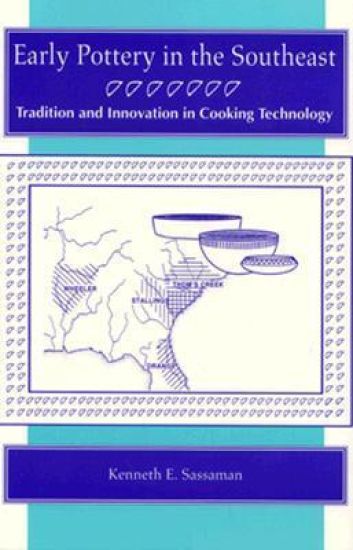
Early Pottery in the Southeast

Early Pottery in the Southeast

Kenneth E. Sassaman

The University of Alabama Press
1993
nidottu
Among Southeastern Indians, pottery was an innovation that enhanced the economic value of native foods and the efficiency of food preparation. But even though pottery was available in the Southeast as early as 4500 years ago, it took nearly two millennia before it was widely used. Why would an innovation of such economic value take so long to be adopted? The answer lies in the social and political contexts of traditional cooking technology. Sassaman's book questions the value of using technological traits alone to mark temporal and spatial boundaries of prehistoric cultures and shows how social process shapes the prehistoric archaeological record. This is a Dan Josselyn memorial publication.
Economics As a Science

Economics As a Science

Kenneth E. Boulding

University Press of America
1988
nidottu
Useful for early and intermediate level college economics classes, this book introduces those with some knowledge of economics to the larger scientific background of the subject. Specifically, it focuses on economics as a behavioral science, as a political science, a mathematical science, a moral science and finally it looks at the successes and failures of economics and what it portends for the future. Originally published in 1970 by McGraw-Hill, this edition contains an updated appendix and new preface.
The Meaning of the 20th Century

The Meaning of the 20th Century

Kenneth E. Boulding

University Press of America
1988
nidottu
As relevant today as when it was first published in 1965 by Harper and Row, this book looks at the 20th century as a critical era in the great transition from a civilized to a post-civilized society. The 20th century itself is seen as an ongoing evolutionary process. The author focuses on three "traps" which would prevent this transition from taking place: the "war trap", the "population trap", and the "entropy trap". And he outlines strategies for the 21st century for overcoming these traps.
Jimmy Carter, American Moralist

Jimmy Carter, American Moralist

Kenneth E. Morris

University of Georgia Press
1997
pokkari
Jimmy Carter has baffled the public from his first bid for elective office in racially divided rural Georgia through his postpresidential career as a global peacemaker and human rights activist. Is he a moral visionary or a well-meaning but sometimes misguided moralizer? More important, what might America learn about itself by examining the life and legacy of this enigmatic leader?In Jimmy Carter, American Moralist, the first full-scale biography of Carter since 1980, Kenneth E. Morris shows us that any conclusions about Carter's leadership and its adequacy to his challenges as president cannot ignore the moral quandary that vexed the nation not only under Carter but ever since. Through film and popular music, personality profiles and campaign summaries, poll findings and landmark court decisions, Morris sheds light on the cultural forces that shaped Carter and produced the troubled society that made him president.Carter's story is the moral story of our times, and in asking not whether Carter is "good" but whether he has been good for America, we see the promises and pitfalls of our common values.
Jimmy Carter, American Moralist

Jimmy Carter, American Moralist

Kenneth E. Morris

University of Georgia Press
2017
sidottu
Jimmy Carter has baffled the public from his first bid for elective office in racially divided rural Georgia through his postpresidential career as a global peacemaker and human rights activist. Is he a moral visionary or a well-meaning but sometimes misguided moralizer? More important, what might America learn about itself by examining the life and legacy of this enigmatic leader?In Jimmy Carter, American Moralist, the first full-scale biography of Carter since 1980, Kenneth E. Morris shows us that any conclusions about Carter's leadership and its adequacy to his challenges as president cannot ignore the moral quandary that vexed the nation not only under Carter but ever since. Through film and popular music, personality profiles and campaign summaries, poll findings and landmark court decisions, Morris sheds light on the cultural forces that shaped Carter and produced the troubled society that made him president.Carter's story is the moral story of our times, and in asking not whether Carter is "good" but whether he has been good for America, we see the promises and pitfalls of our common values.
Achieving Excellence in Business

Achieving Excellence in Business

Kenneth E. Ebel

CRC Press Inc
1991
sidottu
This book identifies basic quality precepts and provides succinct guidance on the process of developing effective quality management and a total quality culture of a business. It assists managers in ensuring the long-term success of their business.
Lubrication for Industry

Lubrication for Industry

Kenneth E. Bannister

Industrial Press Inc.,U.S.
2006
sidottu
With over 70 per cent of bearing failures attributed to ineffective lubrication practices, no one involved in asset management can afford to pass up this new edition! As a clear, concise, practical introduction to the world of industrial lubrication, the second edition dispels the myths surrounding lubrication and helps users develop a keen sense and understanding of how lubrication directly and indirectly impacts machine reliability, availability, and ultimately, the bottom line. What's more, it provides readers with practical advice that will allow them to put in place a viable lubrication management program and effectively troubleshoot lubrication related problems immediately, while offering essential information required to significantly reduce equipment downtime and increase life cycle management. It is a significant source that provides vital information and practical methods not currently taught in trade apprenticeship and engineering programs. Formatted in an easy to read style, it clarifies the subject matter that is often seen as a ""black art"", by dispelling its myths.It reviews how bearing, lubricant, and lubrication system manufacturers approach the world of lubrication in different ways, and how this affects the reader. It delivers easy to understand lubricant requirement calculations that are rarely disclosed by the lubrication companies; and explains in a step-by-step process for the first time, exactly how to consistently manually lubricate a bearing. It describes how to write an effective Preventive Maintenance job task in objective language to assure consistent work completion every time; and explains how lubrication is the cornerstone of perimeter based maintenance. It illustrates to the reader why the grease gun is responsible for so many bearing failures, and how the reader can dramatically increase bearing life with just a few simple steps.
The Economics of Human Betterment

The Economics of Human Betterment

Kenneth E. Boulding

State University of New York Press
1985
sidottu
The Economics of Human Betterment is a comparative look at economic change and social progress. It is about betterment-a change or process-and about institutions and countries as they evolve. It is about human betterment-and therefore concerned with perceived welfare and the identification of basic human needs. And it is about economics, but about means as means, not means as ends. This book asks in what way productive activities (whether free market or planned, whether in developed or in developing countries) influence and reflect basic human values.The essays contained herein represent some of the best up-to-date accounts available on such topics as the welfare state in Holland or the relationship between growth and betterment in Singapore. Other essays take in the United Kingdom, Japan, India, and the planned economy of the Soviet Union. The contributors are all well-known experts in their own field. And their essays reveal a common conviction that economics is about people first, and about things only in so far as they contribute to human betterment.
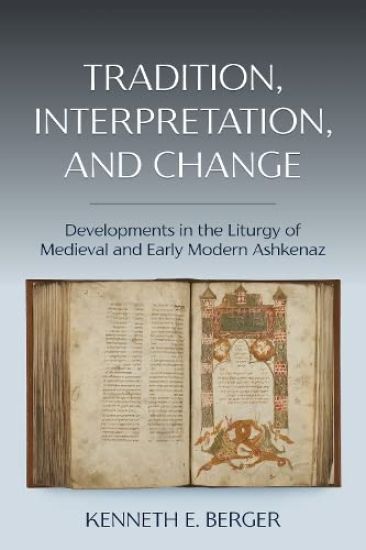
Tradition, Interpretation, and Change

Tradition, Interpretation, and Change

Kenneth E. Berger

Hebrew Union College Press,U.S.
2019
sidottu
Minhag (custom) played a far greater and far more important role in medieval Ashkenazic society than in any other Jewish community. In upholding the authority of a custom, halakhic authorities frequently asserted that "custom prevails over halakhah." Furthermore, Ashkenazic authorities asserted that Ashkenazic custom is more authentic than the customs of other Jewish communities, including those of Sepharad (Spain). Given the importance attributed to minhag and the influence of the siddur commentaries of the circle of Hassidei Ashkenaz, which emphasize the precise formulation of liturgical texts, one might assume that Ashkenazic Jewry was committed to preserving ancestral custom and opposed to liturgical change. However, the reality is that the liturgy of Ashkenaz was never static. From a very early time, new liturgies and liturgical practices were incorporated into the service, the inclusion of various prayers was challenged, and variant readings of prayers became standard. Tradition, Interpretation, and Change focuses on developments in the Ashkenazic rite, the liturgical rite of most of central and eastern European Jewry, from the eleventh century through the seventeenth. Kenneth Berger argues that how a prayer or practice was understood, or the rationale for its recitation or performance, often had a profound effect on whether and when it was to be recited, as well as on the specific wording of the prayer. In some cases, the formulation of new interpretations served a conservative function, as when rabbinic authorities sought to find new, alternative explanations which would justify the continued performance of practices whose original rationale no longer applied. In other cases, new understandings of a liturgical practice led to changes in that practice, and even to the development of new liturgies expressive of those interpretations. In Tradition, Interpretation, and Change, Berger draws upon a wide body of primary sources, including classical rabbinic and geonic works, liturgical documents found in the Cairo genizah, medieval codes, responsa, and siddur commentaries, minhag books, medieval siddur manuscripts, and early printed siddurim, as well as a wealth of secondary sources, to provide the reader with an in-depth account of the history and history of interpretation of many familiar and not-so-familiar prayers and liturgical practices. While emphasizing the role that the interpretation ascribed to various prayers and practices had in shaping the liturgy of medieval and early modern Ashkenaz, Berger illustrates the degree to which Sephardic and kabbalistic influences, concern for the fate of the dead, the fear of demons, and the desire for healing and divine protection from a variety of dangers shaped both liturgical practice and the way in which those practices were understood.
Redeemed from Poverty, Sickness, and Spiritual Death

Redeemed from Poverty, Sickness, and Spiritual Death

Kenneth E. Hagin

Faith Library Publications
1983
sidottu
The Blessings of Redemption Examined Abraham's Blessings Are Yours In Redeemed From Poverty, Sickness, and Spiritual Death, Rev. Kenneth E. Hagin explains in great detail how Jesus Christ redeemed us from the curse of the Old Testament Law and opened the way for us to instead enjoy the blessings of Abraham: financial prosperity, health, and spiritual redemption Teachings in this innovative book answer questions such as: - What is the curse of the Law? - Is it wrong to have money? - How do sin and wrongdoing open the door to sickness and disease? - Can mankind be saved from spiritual death by his conduct or good works? - How can I take advantage of what belongs to me in Christ?