Kirjojen hintavertailu. Mukana 11 213 693 kirjaa ja 11 kauppaa.

Kirjahaku

Etsi kirjoja tekijän nimen, kirjan nimen tai ISBN:n perusteella.

1000 tulosta hakusanalla Kenneth E. Perry

The Meaning of the 20th Century

The Meaning of the 20th Century

Kenneth E. Boulding

University Press of America
1988
nidottu
As relevant today as when it was first published in 1965 by Harper and Row, this book looks at the 20th century as a critical era in the great transition from a civilized to a post-civilized society. The 20th century itself is seen as an ongoing evolutionary process. The author focuses on three "traps" which would prevent this transition from taking place: the "war trap", the "population trap", and the "entropy trap". And he outlines strategies for the 21st century for overcoming these traps.
Jimmy Carter, American Moralist

Jimmy Carter, American Moralist

Kenneth E. Morris

University of Georgia Press
1997
pokkari
Jimmy Carter has baffled the public from his first bid for elective office in racially divided rural Georgia through his postpresidential career as a global peacemaker and human rights activist. Is he a moral visionary or a well-meaning but sometimes misguided moralizer? More important, what might America learn about itself by examining the life and legacy of this enigmatic leader?In Jimmy Carter, American Moralist, the first full-scale biography of Carter since 1980, Kenneth E. Morris shows us that any conclusions about Carter's leadership and its adequacy to his challenges as president cannot ignore the moral quandary that vexed the nation not only under Carter but ever since. Through film and popular music, personality profiles and campaign summaries, poll findings and landmark court decisions, Morris sheds light on the cultural forces that shaped Carter and produced the troubled society that made him president.Carter's story is the moral story of our times, and in asking not whether Carter is "good" but whether he has been good for America, we see the promises and pitfalls of our common values.
Jimmy Carter, American Moralist

Jimmy Carter, American Moralist

Kenneth E. Morris

University of Georgia Press
2017
sidottu
Jimmy Carter has baffled the public from his first bid for elective office in racially divided rural Georgia through his postpresidential career as a global peacemaker and human rights activist. Is he a moral visionary or a well-meaning but sometimes misguided moralizer? More important, what might America learn about itself by examining the life and legacy of this enigmatic leader?In Jimmy Carter, American Moralist, the first full-scale biography of Carter since 1980, Kenneth E. Morris shows us that any conclusions about Carter's leadership and its adequacy to his challenges as president cannot ignore the moral quandary that vexed the nation not only under Carter but ever since. Through film and popular music, personality profiles and campaign summaries, poll findings and landmark court decisions, Morris sheds light on the cultural forces that shaped Carter and produced the troubled society that made him president.Carter's story is the moral story of our times, and in asking not whether Carter is "good" but whether he has been good for America, we see the promises and pitfalls of our common values.
Achieving Excellence in Business

Achieving Excellence in Business

Kenneth E. Ebel

CRC Press Inc
1991
sidottu
This book identifies basic quality precepts and provides succinct guidance on the process of developing effective quality management and a total quality culture of a business. It assists managers in ensuring the long-term success of their business.
Jesus Through Middle Eastern Eyes: Cultural Studies in the Gospels
Beginning with Jesus' birth, Ken Bailey leads you on a kaleidoscopic study of Jesus throughout the four Gospels, examining the life and ministry of Jesus with attention to the Lord's Prayer, the Beatitudes, Jesus' relationship to women, and especially Jesus' parables. The work dispels the obscurity of Western interpretations with a stark vision of Jesus in his original context.
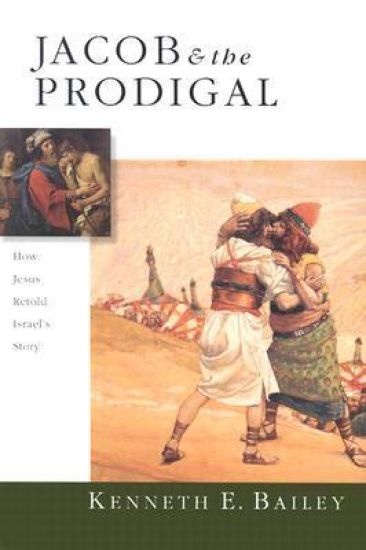
Jacob & the Prodigal – How Jesus Retold Israel`s Story

Jacob & the Prodigal – How Jesus Retold Israel`s Story

Kenneth E. Bailey

Inter-Varsity Press,US
2003
nidottu
Israel, the community to which Jesus belonged, took its name from their patriarch Jacob. His story of exile and return was their story as well. In the well-known tale of the prodigal son, Jesus reshaped the story in his own way and for his own purposes. In this work, Kenneth E. Bailey compares the Old Testament saga and the New Testament parable. He unpacks similarities freighted with theological significance and differences that often reveal Jesus' particular purposes. Drawing on a lifetime of study in both Middle Eastern culture and the Gospels, Bailey offers here a fresh view of how Jesus interpreted Israel's past, his present and their future.
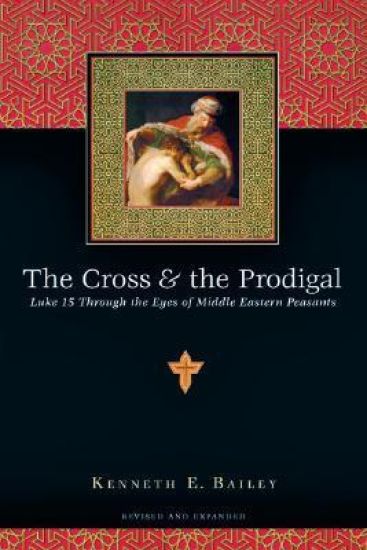
The Cross and the Prodigal – Luke 15 Through the Eyes of Middle Eastern Peasants
Preaching Magazine Year's Best Book for Preachers Where is the cross in the parable of the prodigal son? For centuries, Muslims have called attention to the father's forgiveness in this parable in order to question the need for a Mediator between humanity and God. In The Cross and the Prodigal, Kenneth E. Bailey--New Testament scholar and long-time missionary to the Middle East--undertakes to answer this question. Drawing on his extensive knowledge of both the New Testament and Middle Eastern culture, Bailey presents an interpretation of this parable from a Middle Eastern perspective and, in doing so, powerfully demonstrates its essentially Christian message. Here Bailey highlights the underlying tensions between law and love, servanthood and sonship, honor and forgiveness that grant this story such timeless spiritual and theological power.
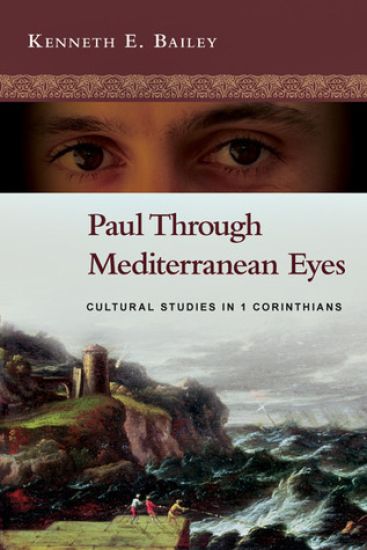
Paul Through Mediterranean Eyes

Paul Through Mediterranean Eyes

Kenneth E. Bailey

INTERVARSITY PRESS
2011
nidottu
Christianity Today Book Award winnerPaul was a Hebrew of the Hebrews, steeped in the learning of his people.But he was also a Roman citizen who widely traveled the Mediterranean basin, and was very knowledgeable of the dominant Greek and Roman culture of his day. These two mighty rivers of influence converge in Paul's first letter to the Corinthians.With razor-sharp attention to the text, Kenneth Bailey examines the cultural milieu and rhetorical strategies that shaped this pivotal epistle. He discovers the deep layers of the Hebraic prophetic tradition informing Paul's writing, linking the Apostle with the great prophets of the Old Testament.Throughout, Bailey employs his expert knowledge of Near Eastern and Mediterranean culture to deliver to readers a new understanding of Paul and his world. Familiar passages take on a new hue as they are stripped of standard Western interpretations and rendered back into their ancient setting.
The Good Shepherd

The Good Shepherd

Kenneth E. Bailey

IVP Academic
2014
nidottu
Logos Bookstores' Best Book"The Lord is my shepherd."Thus begins the most beloved of all Psalms--and thus begins a thousand-year journey through the Bible. Prophets, apostles and Jesus himself took up this image from David, reshaping it, developing it and applying it to their own situations and needs. Kenneth Bailey uses his celebrated insights into Middle Eastern culture and especially his familiarity with Middle Eastern shepherding customs to bring new light and life to our understanding of this central image of the Christian faith.With each of nine major Old and New Testament passages, Bailey reveals the literary artistry of the Biblical writers and summarizes their key theological features. His work is also enriched by his unique access to very early Middle Eastern commentaries on these passages, bringing fresh understanding from within the mindset of these ancient worlds. The Good Shepherd invites us to experience a rich, biblical feast of ethical, theological and artistic delights.
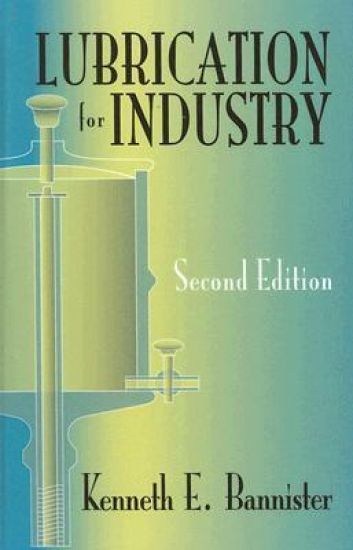
Lubrication for Industry

Lubrication for Industry

Kenneth E. Bannister

Industrial Press Inc.,U.S.
2006
sidottu
With over 70 per cent of bearing failures attributed to ineffective lubrication practices, no one involved in asset management can afford to pass up this new edition! As a clear, concise, practical introduction to the world of industrial lubrication, the second edition dispels the myths surrounding lubrication and helps users develop a keen sense and understanding of how lubrication directly and indirectly impacts machine reliability, availability, and ultimately, the bottom line. What's more, it provides readers with practical advice that will allow them to put in place a viable lubrication management program and effectively troubleshoot lubrication related problems immediately, while offering essential information required to significantly reduce equipment downtime and increase life cycle management. It is a significant source that provides vital information and practical methods not currently taught in trade apprenticeship and engineering programs. Formatted in an easy to read style, it clarifies the subject matter that is often seen as a ""black art"", by dispelling its myths.It reviews how bearing, lubricant, and lubrication system manufacturers approach the world of lubrication in different ways, and how this affects the reader. It delivers easy to understand lubricant requirement calculations that are rarely disclosed by the lubrication companies; and explains in a step-by-step process for the first time, exactly how to consistently manually lubricate a bearing. It describes how to write an effective Preventive Maintenance job task in objective language to assure consistent work completion every time; and explains how lubrication is the cornerstone of perimeter based maintenance. It illustrates to the reader why the grease gun is responsible for so many bearing failures, and how the reader can dramatically increase bearing life with just a few simple steps.
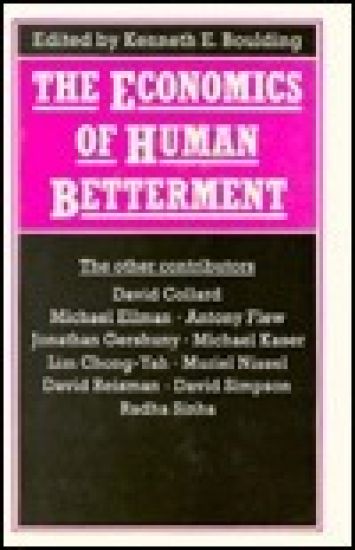
The Economics of Human Betterment

The Economics of Human Betterment

Kenneth E. Boulding

State University of New York Press
1985
sidottu
The Economics of Human Betterment is a comparative look at economic change and social progress. It is about betterment-a change or process-and about institutions and countries as they evolve. It is about human betterment-and therefore concerned with perceived welfare and the identification of basic human needs. And it is about economics, but about means as means, not means as ends. This book asks in what way productive activities (whether free market or planned, whether in developed or in developing countries) influence and reflect basic human values.The essays contained herein represent some of the best up-to-date accounts available on such topics as the welfare state in Holland or the relationship between growth and betterment in Singapore. Other essays take in the United Kingdom, Japan, India, and the planned economy of the Soviet Union. The contributors are all well-known experts in their own field. And their essays reveal a common conviction that economics is about people first, and about things only in so far as they contribute to human betterment.
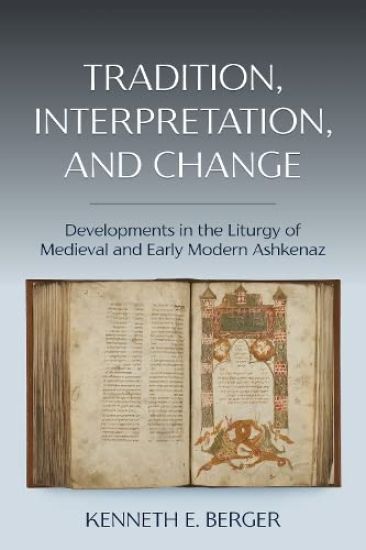
Tradition, Interpretation, and Change

Tradition, Interpretation, and Change

Kenneth E. Berger

Hebrew Union College Press,U.S.
2019
sidottu
Minhag (custom) played a far greater and far more important role in medieval Ashkenazic society than in any other Jewish community. In upholding the authority of a custom, halakhic authorities frequently asserted that "custom prevails over halakhah." Furthermore, Ashkenazic authorities asserted that Ashkenazic custom is more authentic than the customs of other Jewish communities, including those of Sepharad (Spain). Given the importance attributed to minhag and the influence of the siddur commentaries of the circle of Hassidei Ashkenaz, which emphasize the precise formulation of liturgical texts, one might assume that Ashkenazic Jewry was committed to preserving ancestral custom and opposed to liturgical change. However, the reality is that the liturgy of Ashkenaz was never static. From a very early time, new liturgies and liturgical practices were incorporated into the service, the inclusion of various prayers was challenged, and variant readings of prayers became standard. Tradition, Interpretation, and Change focuses on developments in the Ashkenazic rite, the liturgical rite of most of central and eastern European Jewry, from the eleventh century through the seventeenth. Kenneth Berger argues that how a prayer or practice was understood, or the rationale for its recitation or performance, often had a profound effect on whether and when it was to be recited, as well as on the specific wording of the prayer. In some cases, the formulation of new interpretations served a conservative function, as when rabbinic authorities sought to find new, alternative explanations which would justify the continued performance of practices whose original rationale no longer applied. In other cases, new understandings of a liturgical practice led to changes in that practice, and even to the development of new liturgies expressive of those interpretations. In Tradition, Interpretation, and Change, Berger draws upon a wide body of primary sources, including classical rabbinic and geonic works, liturgical documents found in the Cairo genizah, medieval codes, responsa, and siddur commentaries, minhag books, medieval siddur manuscripts, and early printed siddurim, as well as a wealth of secondary sources, to provide the reader with an in-depth account of the history and history of interpretation of many familiar and not-so-familiar prayers and liturgical practices. While emphasizing the role that the interpretation ascribed to various prayers and practices had in shaping the liturgy of medieval and early modern Ashkenaz, Berger illustrates the degree to which Sephardic and kabbalistic influences, concern for the fate of the dead, the fear of demons, and the desire for healing and divine protection from a variety of dangers shaped both liturgical practice and the way in which those practices were understood.
Redeemed from Poverty, Sickness, and Spiritual Death

Redeemed from Poverty, Sickness, and Spiritual Death

Kenneth E. Hagin

Faith Library Publications
1983
sidottu
The Blessings of Redemption Examined Abraham's Blessings Are Yours In Redeemed From Poverty, Sickness, and Spiritual Death, Rev. Kenneth E. Hagin explains in great detail how Jesus Christ redeemed us from the curse of the Old Testament Law and opened the way for us to instead enjoy the blessings of Abraham: financial prosperity, health, and spiritual redemption Teachings in this innovative book answer questions such as: - What is the curse of the Law? - Is it wrong to have money? - How do sin and wrongdoing open the door to sickness and disease? - Can mankind be saved from spiritual death by his conduct or good works? - How can I take advantage of what belongs to me in Christ?
What Faith Is

What Faith Is

Kenneth E. Hagin

Faith Library Publications
1983
nidottu
A Treasury of Faith Teaching The Bible tells us that without faith it is impossible to please God--but what is faith? Rev. Kenneth E. Hagin answers this and other questions in this invaluable treasury of faith teaching. In What Faith Is, Brother Hagin defines faith as: "Laying hold of the unrealities of hope and bringing them into the realm of reality." In this powerful book readers will discover: - How Brother Hagin discovered the secret of faith on his deathbed - Why getting faith in the present tense is to important in receiving God's many promises - The biblical difference between faith and hope, and how hope changed to faith brings results - Why faith is an act Chapters include: - The Difference Between Faith and Hope - Faith Is an Act - Faith Takes the Answer Now - Hope Changed to Faith Brings Results
Seven Vital Steps to Receiving the Holy Spirit

Seven Vital Steps to Receiving the Holy Spirit

Kenneth E. Hagin

Faith Library Publications
1980
nidottu
Every Believer Qualifies to Receive God's Spirit Believers can receive the precious gift of the baptism in the Holy Spirit by following the steps outlined in this book. People have the idea that they must do something to receive the gift of the Holy Spirit. But anything ceases to be a gift if you work for it. If you're saved, you're ready to receive the Holy Spirit. In addition to learning how you can receive the Spirit, Seven Steps to Receiving the Holy Spirit also shows you the benefits of the evidence of being filled--speaking with other tongues. Rev. Kenneth E. Hagin addresses questions such as: - Why should anybody want to speak in tongues? - Is the experience relative to today or did it cease at Pentecost? - Is this really for every Christian or just the favored few? Chapters include: - Seven Steps to Receiving the Holy Spirit - Ten Reason Why Every Believer Should Speak in Tongues - The Bible Way to Receive the Holy Spirit
Right and Wrong Thinking

Right and Wrong Thinking

Kenneth E. Hagin

Faith Library Publications
1986
nidottu
Renew Your Mind What you believe is the result of your thinking. If you think wrong, you will believe wrong. But meditation in the Word of God will straighten out your thinking In Right & Wrong Thinking, Rev. Kenneth E. Hagin explores the Scriptures and reveals how you can: - Tap into the powerful connection of thinking, believing, and confessing. - Renew your mind and line up your thinking with the Word of God. - Learn to distinguish the source of your thoughts. - Make the right confession and defeat the devil every time. - Follow scriptural steps to walk in victory in every area of life Chapters include: - Right and Wrong Thinking - Right and Wrong Believing - Right and Wrong Confessing
Prayer Secrets

Prayer Secrets

Kenneth E. Hagin

Faith Library Publications
1988
nidottu
Secrets to Answered Prayer In the first chapter of Prayer Secrets, Rev. Kenneth E. Hagin shares the invaluable revelation God gave him that led to his older brother's conversion. Rev. Hagin had prayed earnestly and faithfully for his brother for years--seemingly with no success. After using the "prayer secret" God showed him, his brother was born again in a matter of days. This "prayer secret" will be invaluable to you and your loved ones too. Along with solid teaching, Rev. Hagin shares inspiring anecdotes about great prayer warriors from the past: Charles Finney, George Whitfield, Smith Wigglesworth, P.C. Nelson, and John G. Lake.
How to Turn Your Faith Loose

How to Turn Your Faith Loose

Kenneth E. Hagin

Faith Library Publications
1983
nidottu
The Key to Faith The Bible teaches that if you believe with your heart and confess with your mouth, you shall have whatever you say. In How to Turn Your Faith Loose, Rev. Kenneth E. Hagin expounds upon that truth and clearly shows that "confession is faith's way of expressing itself." In this exciting slimline book, you will discover: - The three kinds of confession. - Why faith has to be exercised, released, or turned loose in order to work. - Why confession is the key to receiving from God. - How the right confession opens the door to God's supernatural blessings. - How to build a solid, positive faith life