Kirjojen hintavertailu. Mukana 11 717 486 kirjaa ja 12 kauppaa.

Kirjahaku

Etsi kirjoja tekijän nimen, kirjan nimen tai ISBN:n perusteella.

1000 tulosta hakusanalla Kenneth J. Arrow

America's Musical Pulse

America's Musical Pulse

Kenneth J. Bindas

Praeger Publishers Inc
1992
sidottu
Popular music may be viewed as primary documents of society, and America's Musical Pulse documents the American experience as recorded in popular sound. Whether jazz, blues, swing, country, or rock, the music, the impulse behind it, and the reaction to it reveal the attitudes of an era or generation. Always a major preoccupation of students, music is often ignored by teaching professionals, who might profitably channel this interest to further understandings of American social history and such diverse fields as sociology, political science, literature, communications, and business as well as music. In this interdisciplinary collection, scholars, educators, and writers from a variety of fields and perspectives relate topics concerning twentieth-century popular music to issues of politics, class, economics, race, gender, and the social context. The focus throughout is to place music in societal perspective and encourage investigation of the complex issues behind the popular tunes, rhythms, and lyrics.
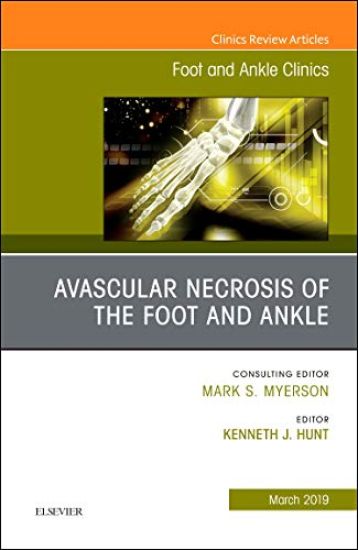
Avascular necrosis of the foot and ankle, An issue of Foot and Ankle Clinics of North America
This issue of Foot and Ankle Clinics, guest edited by Dr. Kenneth Hunt, will cover concepts surrounding Avascular Necrosis of the Foot and Ankle. Under the guidance of long-time series Consulting Editor Dr. Mark Myerson, Dr. Hunt and his contributing authors will explore topics of interest for practitioners in the field. Articles include, but are not limited to: Diagnostic Imaging for Avascular Necrosis of the Foot and Ankle; Natural History of AVN in the talus; Prevention of AVN in the talus; Avascular Necrosis of the Sesamoids; Kohlers disease and Avascular Necrosis of the Tarsal Navicular in the child; Management of Muller Weiss disease; Bone Grafting and Core Decompression for AVN of the Talus; AVN of the tibial plafond following rotational ankle fracture; Vascularized pedicle graft for talar AVN; Ankle arthrodesis for Talar AVN and arthrodesis non-union; Tibiotalar-Calcaneal Arthrodesis for Severe Talar AVN; and Total Talar Replacement Prosthesis.
Thinking Like a Lawyer

Thinking Like a Lawyer

Kenneth J. Vandevelde

Routledge
2019
sidottu
Law students, law professors, and lawyers frequently refer to the process of "thinking like a lawyer," but attempts to analyze in any systematic way what is meant by that phrase are rare. In his classic book, Kenneth J. Vandevelde defines this elusive phrase and identifies the techniques involved in thinking like a lawyer. Unlike most legal writings, which are plagued by difficult, virtually incomprehensible language, this book is accessible and clearly written and will help students, professionals, and general readers gain important insight into this well-developed and valuable way of thinking.Updated for a new generation of lawyers, the second edition features a new chapter on contemporary perspectives on legal reasoning. A useful new appendix serves as a survival guide for current and prospective law students and describes how to apply the techniques in the book to excel in law school.
Disciplinary Measures from the Metrical Psalms to Milton
Disciplinary Measures from the Metrical Psalms to Milton studies the relationship between English poetry and church discipline in four carefully chosen bodies of poetry written between the Reformation and the death of John Milton. Its primary goal is to fill a gap in the field of Protestant poetics, which has never produced a study focused on the way in which poetry participates in and reflects on the post-Reformation English Church's attempts to govern conduct. Its secondary goal is to revise the understandings of discipline which social theorists and historians have offered, and which literary critics have largely accepted. It argues that knowledge of the early modern culture of discipline illuminates some important poetic traditions and some major English poets, and it shows that this poetry in turn throws light on verbal and affective aspects of the disciplinary process that prove difficult to access through other sources, challenging assumptions about the means of social control, the structures of authority, and the practical implications of doctrinal change. More specifically, Disciplinary Measures argues that while poetry can help us to understand the oppressive potential of church discipline, it can also help us to recover a more positive sense of discipline as a spiritual cure.
Port Sudan

Port Sudan

Kenneth J Perkins

Routledge
2019
sidottu
In 1904, only the unimposing tomb of a local holy man occupied the site chosen by British officials for the construction of a modern seaport to facilitate the Anglo-Egyptian Sudan's expanded commerce. Built where no urban center had previously existed, Port Sudan was the quintessential colonial city, created and designed by Europeans, who organized its municipal services and devised the regulations for its day-to-day management. The advantages of a created city were clear: The colonial government did not need to accommodate an indigenous urban population with its own existing social structures, institutions, and cultural values. This study examines the efforts of Port Sudan's builders and early administrators to tailor the urban environment to their own notions of the ideal colonial city–how it should look, how it should function, and how its human components should interact. It then focuses on the inter-war period, describing how the rapid growth of Port Sudan and its harbor posed insurmountable challenges to the maintenance of this ideal. Although the Sudanese population within the city steadily increased, their exclusion from any meaningful participation in municipal affairs during these troubled years left them physically and psychologically isolated. The situation began to change after World War II, but, as the study reveals, conditions in the post-war era only compounded long-standing political, economic, and social problems in Port Sudan, ensuring that the city the Sudanese inherited in 1956 still bore the marks of its colonial origins.
Port Sudan

Port Sudan

Kenneth J Perkins

Routledge
2020
nidottu
In 1904, only the unimposing tomb of a local holy man occupied the site chosen by British officials for the construction of a modern seaport to facilitate the Anglo-Egyptian Sudan's expanded commerce. Built where no urban center had previously existed, Port Sudan was the quintessential colonial city, created and designed by Europeans, who organized its municipal services and devised the regulations for its day-to-day management. The advantages of a created city were clear: The colonial government did not need to accommodate an indigenous urban population with its own existing social structures, institutions, and cultural values. This study examines the efforts of Port Sudan's builders and early administrators to tailor the urban environment to their own notions of the ideal colonial city–how it should look, how it should function, and how its human components should interact. It then focuses on the inter-war period, describing how the rapid growth of Port Sudan and its harbor posed insurmountable challenges to the maintenance of this ideal. Although the Sudanese population within the city steadily increased, their exclusion from any meaningful participation in municipal affairs during these troubled years left them physically and psychologically isolated. The situation began to change after World War II, but, as the study reveals, conditions in the post-war era only compounded long-standing political, economic, and social problems in Port Sudan, ensuring that the city the Sudanese inherited in 1956 still bore the marks of its colonial origins.
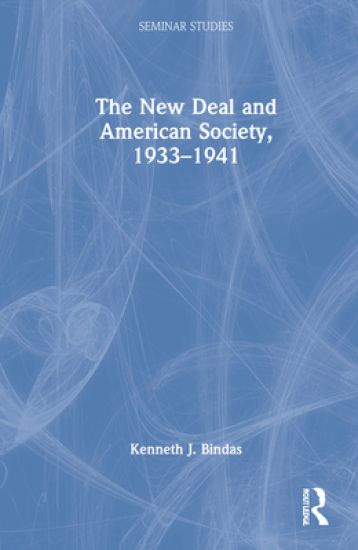
The New Deal and American Society, 1933–1941
The New Deal and American Society, 1933–1941 explores what some have labeled the third American revolution, in one concise and accessible volume. This book examines the emergence of modern America, beginning with the 100 Days legislation in 1933 through to the second New Deal era that began in 1935. This revolutionary period introduced sweeping social and economic legislation designed to provide the American people with a sense of hope while at the same time creating regulations designed to safeguard against future depressions. It was not without critics or failures, but even these proved significant in the ongoing discussions concerning the idea of federal power, social inclusion, and civil rights. Uncertainties concerning aggressive, nationalistic states like Italy, Germany, and Japan shifted the focus of FDR's administration, but the events of World War II solidified the ideas and policies begun during the 1930s, especially as they related to the welfare state. The legacy of the New Deal would resonate well into the current century through programs like Social Security, unemployment compensation, workers' rights, and the belief that the federal government is responsible for the economic well-being of its citizenry. The volume includes many primary documents to help situate students and bring this era to life.The text will be of interest to students of American history, economic and social history, and, more broadly, courses that engage social change and economic upheaval.
The New Deal and American Society, 1933–1941
The New Deal and American Society, 1933–1941 explores what some have labeled the third American revolution, in one concise and accessible volume. This book examines the emergence of modern America, beginning with the 100 Days legislation in 1933 through to the second New Deal era that began in 1935. This revolutionary period introduced sweeping social and economic legislation designed to provide the American people with a sense of hope while at the same time creating regulations designed to safeguard against future depressions. It was not without critics or failures, but even these proved significant in the ongoing discussions concerning the idea of federal power, social inclusion, and civil rights. Uncertainties concerning aggressive, nationalistic states like Italy, Germany, and Japan shifted the focus of FDR's administration, but the events of World War II solidified the ideas and policies begun during the 1930s, especially as they related to the welfare state. The legacy of the New Deal would resonate well into the current century through programs like Social Security, unemployment compensation, workers' rights, and the belief that the federal government is responsible for the economic well-being of its citizenry. The volume includes many primary documents to help situate students and bring this era to life.The text will be of interest to students of American history, economic and social history, and, more broadly, courses that engage social change and economic upheaval.
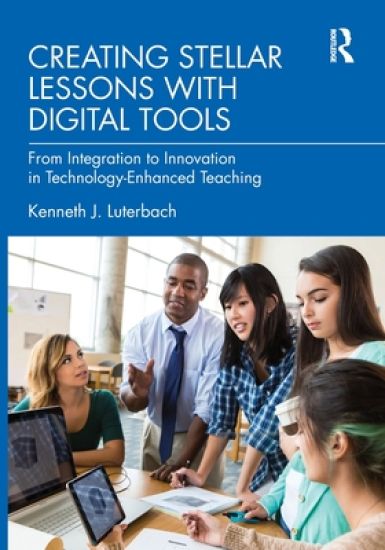
Creating Stellar Lessons with Digital Tools

Creating Stellar Lessons with Digital Tools

Kenneth J. Luterbach

TAYLOR FRANCIS LTD
2022
nidottu
Creating Stellar Lessons with Digital Tools prepares teachers in training and in-service teachers to use technologies for design and development activities with middle and high school students. While software, open resources, handheld devices, and other tools hold great potential to enhance learning experiences, teachers themselves must model technology use in ways that inspire students to become producers and leaders rather than consumers and followers. Featuring concrete applications in social studies, English, mathematics, and science scenarios, this book provides pre-service and in-service teachers with seven paths to creatively integrate and innovate with computational thinking, datasets, maker spaces, visual design, media editing, and other approaches.
Jane Carlyle

Jane Carlyle

Kenneth J. Fielding

Routledge
2019
nidottu
This new selection of the letters of Jane Welsh Carlyle presents a complete view of a remarkable Victorian woman, with a wide circle of friends, who enjoyed the company of distinguished thinkers, writers, politicians, feminists, eccentrics and radicals. This edition draws on many remarkable letters and papers not published before, in which she created a memorable epistolary voice - shrewd, vigorous, ironic, observant, humorous and passionate. Previous selections have often tamely followed the semi-mythical version of her life first given by Carlyle’s biographer, James Anthony Froude, showing her as the victimized angel in distress. This new selection gives a rounded picture of her complex character, showing her as a tormented yet forceful woman who was a strong personality in her own right. She now emerges as a self-conscious artist, adept at constructing images of herself that were designed to appeal to her particular correspondents. The account is written with close attention to Jane Carlyle's long-running jealousy of Lady Harriet Ashburton; and fresh letters include many to her mother and her vital response to her passionate lover or admirer Charlotte Cushman. Each letter is a tightly controlled performance, which justifies Thomas Carlyle’s belief that her letters equal and surpass whatever of best I know to exist in that kind.
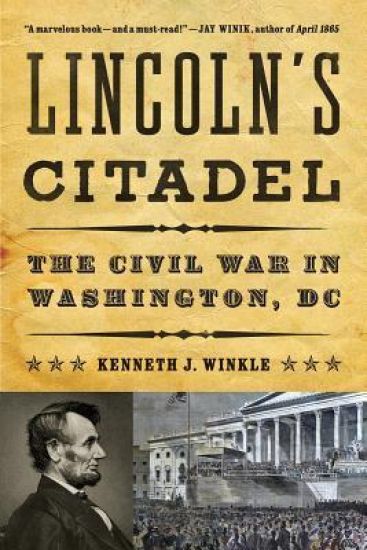
Lincoln's Citadel

Lincoln's Citadel

Kenneth J. Winkle

WW Norton Co
2014
nidottu
In the late 1840s, Representative Abraham Lincoln resided at Mrs. Sprigg’s boardinghouse on Capitol Hill. Known as Abolition House, Mrs. Sprigg’s hosted lively dinner-table debates of antislavery politics by the congressional boarders. The unusually rapid turnover in the enslaved staff suggested that there were frequent escapes north to freedom from Abolition House, likely a cog in the underground railroad. These early years in Washington proved formative for Lincoln. In 1861, now in the White House, Lincoln could gaze out his office window and see the Confederate flag flying across the Potomac. Washington, DC, sat on the front lines of the Civil War. Vulnerable and insecure, the capital was rife with Confederate sympathizers. On the crossroads of slavery and freedom, the city was a refuge for thousands of contraband and fugitive slaves. The Lincoln administration took strict measures to tighten security and established camps to provide food, shelter, and medical care for contrabands. In 1863, a Freedman’s Village rose on the grounds of the Lee estate, where the Confederate flag once flew. The president and Mrs. Lincoln personally comforted the wounded troops who flooded wartime Washington. In 1862, Lincoln spent July 4 riding in a train of ambulances carrying casualties from the Peninsula Campaign to Washington hospitals. He saluted the “One-Legged Brigade” assembled outside the White House as “orators,” their wounds eloquent expressions of sacrifice and dedication. The administration built more than one hundred military hospitals to care for Union casualties. These are among the unforgettable scenes in Lincoln’s Citadel, a fresh, absorbing narrative history of Lincoln’s leadership in Civil War Washington. Here is the vivid story of how the Lincoln administration met the immense challenges the war posed to the city, transforming a vulnerable capital into a bastion for the Union.
Cultural Anthropology Fieldwork Journal

Cultural Anthropology Fieldwork Journal

Kenneth J. Guest

WW Norton Co
2020
nidottu
Ethnographic fieldwork is one of the most fundamental tools for anthropological study. The step-by-step exercises in Ken Guest's Cultural Anthropology Fieldwork Journal encourage students to apply the concepts they are learning in class and observe, question and generate their own data about the places, relationships, and networks that they may take for granted in everyday life: from friendships, family dynamics and consumption habits to classrooms, places of worship, TV screens and their own homes.
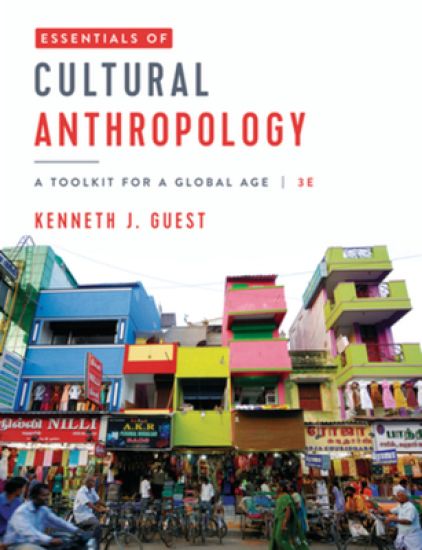
Essentials of Cultural Anthropology

Essentials of Cultural Anthropology

Kenneth J. Guest

WW Norton Co
2020
muu
From the book’s signature “toolkit” approach to the new chapter on the Environment and Sustainability to the accompanying videos and interactive learning tools, all aspects of Ken Guest’s Essentials of Cultural Anthropology work together to inspire students to use the tools of anthropology to see the world in a new way and to come to class prepared to have richer, more meaningful discussions about the big issues of our time. Are there more than two genders? How do white people experience race? What defines a family? Is there such a thing as a “natural” disaster? What causes some people to be wealthy while others live in poverty?
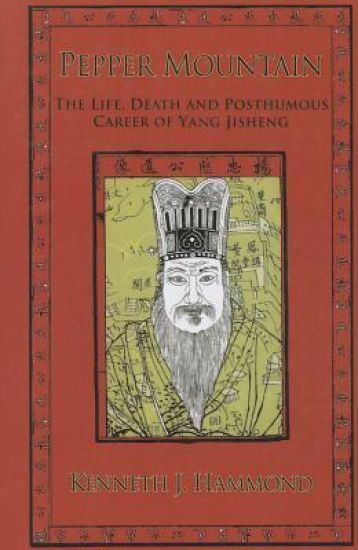
Pepper Mountain

Pepper Mountain

Kenneth J. Hammond

Routledge
2013
nidottu
First published in 2007. The political history of late imperial/early modern China and the relationship between China's traditional political culture and the rapidly changing political environment of China today, are examined through this study of the iconic figure of Yang Jisheng. Born in 1516, Yang had a brief and traumatic career as a junior official in the middle Ming dynasty, before being executed in 1555 for criticising the politics of the imperial state. After his death, Yang was held up as a martyr to Confucian political morality. Over the ensuing 450 years, a variety of constituencies within China have appropriated and deployed Yang's memory in different ways to promote their own political agendas. In recent years, as China has sought to come to grips with the ideological decline of socialism and the need for a new foundation for public morality, there has been a revival of interest in figures like Yang Jisheng. A series of events including the rebuilding of his ancestral shrine, the rededication of a school he founded, and the republication of his writings, show how his legacy is once again being taken up by actors on the contemporary political scene. This is an important study of the power of political myth in China, past and present.
Welfare Racism

Welfare Racism

Kenneth J. Neubeck; Noel A. Cazenave

Routledge
2001
nidottu
Welfare Racism analyzes the impact of racism on US welfare policy. Through historical and present-day analysis, the authors show how race-based attitudes, policy making, and administrative policies have long had a negative impact on public assistance programs. The book adds an important and controversial voice to the current welfare debates surrounding the recent legilation that abolished the AFDC.
When Welfare Disappears

When Welfare Disappears

Kenneth J. Neubeck

Routledge
2006
sidottu
This groundbreaking new book offers a history of welfare, an accurate portrayal of welfare recipients and an understanding of the diverse characteristics of lone-mother-headed families affected by welfare reform. Through detailed research, award-winning author Kenneth J. Neubeck offers a unique comparison of other industrialized nation's welfare policies compared to ours, and presents a new argument for curtailing the end of welfare as we know it: the case for respecting economic human rights.
When Welfare Disappears

When Welfare Disappears

Kenneth J. Neubeck

Routledge
2006
nidottu
This groundbreaking new book offers a history of welfare, an accurate portrayal of welfare recipients and an understanding of the diverse characteristics of lone-mother-headed families affected by welfare reform. Through detailed research, award-winning author Kenneth J. Neubeck offers a unique comparison of other industrialized nation's welfare policies compared to ours, and presents a new argument for curtailing the end of welfare as we know it: the case for respecting economic human rights.
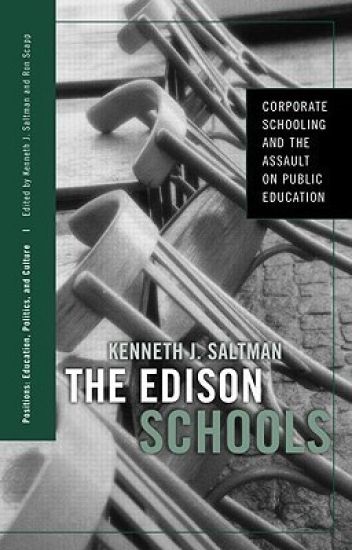
The Edison Schools

The Edison Schools

Kenneth J. Saltman

Routledge
2005
sidottu
The story of the Edison Schools is a gripping tale of money, kids, and greed. What began in the 1980s as an enterprise to transform public schools quickly became a troubled business battling falling test scores and dismal stock prices. How did the most ambitious for-profit education company in U.S. history lose respect, money, and credibility in such a short time?Revealing how American McEducation went from glory to crisis, TheEdison Schools tracks entrepreneur Christopher Whittle's plan to introduce a standardized nationwide curriculum and cut administrative waste. Education specialist Kenneth J. Saltman finds that the critics' predictions came true in Edison schools across the country: Experienced teachers left in droves, students were virtually given answers to standardized tests to drive up scores, and difficult students were "counselored" out.
The Edison Schools

The Edison Schools

Kenneth J. Saltman

Routledge
2005
nidottu
The story of the Edison Schools is a gripping tale of money, kids, and greed. What began in the 1980s as an enterprise to transform public schools quickly became a troubled business battling falling test scores and dismal stock prices. How did the most ambitious for-profit education company in U.S. history lose respect, money, and credibility in such a short time?Revealing how American McEducation went from glory to crisis, TheEdison Schools tracks entrepreneur Christopher Whittle's plan to introduce a standardized nationwide curriculum and cut administrative waste. Education specialist Kenneth J. Saltman finds that the critics' predictions came true in Edison schools across the country: Experienced teachers left in droves, students were virtually given answers to standardized tests to drive up scores, and difficult students were "counselored" out.
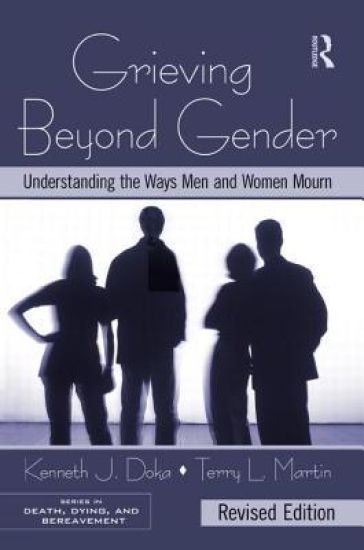
Grieving Beyond Gender

Grieving Beyond Gender

Kenneth J. Doka; Terry L. Martin

Routledge
2010
sidottu
Grieving Beyond Gender: Understanding the Ways Men and Women Mourn is a revision of Men Don’t Cry, Women Do: Transcending Gender Stereotypes of Grief. In this work, Doka and Martin elaborate on their conceptual model of "styles or patterns of grieving" – a model that has generated both research and acceptance since the publication of the first edition in 1999. In that book, as well as in this revision, Doka and Martin explore the different ways that individuals grieve, noting that gender is only one factor that affects an individual’s style or pattern of grief. The book differentiates intuitive grievers, where the pattern is more affective, from instrumental grievers, who grieve in a more cognitive and behavioral way, while noting other patterns that might be more blended or dissonant. The model is firmly grounded in social science theory and research. A particular strength of the work is the emphasis placed on the clinical implications of the model on the ways that different types of grievers might best be supported through individual counseling or group support.