How do the best organizations achieve and sustain innovative leadership? It is a question that has intrigued leaders in business and non-profit organizations in every culture and every era. It has spawned research, dissertations, rock-star consultancies and more, but organizations everywhere still struggle to make their mark and sustain their successes. Curiosity Keeps the Cat Alive introduces the Stellar Performance Model to help organizations perform at their peak. Ken Hekman draws from his consulting experience around the world to create a simple but elegant model that inspires leaders in every culture, time and industry.
At the Clinton Global Initiative annual meeting in 2008, a theme emerged that was shared by government representatives, NGO leaders, and philanthropists. It was the recognition that health services management capacity in developing countries must be expanded if sustainable advances are to be made in healthcare over the next decade. It was also acknowledged that inadequate attention and resources have been directed at this problem to date. Four Essential Disciplines offers leaders the knowledge keys for driving positive change for healthcare organizations around the globe. It presents basic principles in ways that allow readers to adapt to their own culture and context. It is an essential training guide for every healthcare leader and manager.
Physicians and other medical professionals today must acquire far more business knowledge than they did even a generation ago. Whether you are directly involved in a medical practice acquisition, sale or merger, or you are a consultant or hospital executive needing to know more about the acquisition process, you must understand how to arrive at a fair valuation, negotiate a sales price and complete a successful deal. To gain this knowledge, you need a comprehensive reference book that explains situations, provides helpful case studies and answers your questions. In Buying, Selling & Merging a Medical Practice, successful medical management consultant Kenneth Hekman has compiled an all encompassing sourcebook that contains the explanation, techniques and proficiencies necessary to send you to the negotiating table well-equipped to complete a successful deal. Hekman covers the entire subject of buying, selling and merging medical practices by presenting its component parts in clear, concise language.
Even after 150 years, Darwin’s theory of evolution by natural selection is irresistibly compelling. But how can this idea—in which competition prevails—be consistent with all that we know about the thoroughly cooperative nature of life at the genetic and cellular level? This book reconciles these discrepancies.Assembling a set of general principles, authors Kenneth Weiss and Anne Buchanan build a comprehensive, unified theory that applies on the evolutionary time scale but also on the developmental and ecological scales where daily life is lived, and cells, organisms, and species interact. They present this story through a diversity of examples spanning the fundamental challenges that organisms have faced throughout the history of life. This shows that even very complex traits can be constructed simply, based on these principles. Although relentless competitive natural selection is widely assumed to be the primary mover of evolutionary change, The Mermaid’s Tale shows how life more generally works on the basis of cooperation. The book reveals that the focus on competition and cooperation is largely an artifact of the compression of time—a distortion that dissolves when the nature and origins of adapted life are viewed primarily from developmental and evolutionary time scales.
With the discovery of a tiny fish in a soon-to-be-flooded stretch of the Little Tennessee River, construction on a dam that had already cost taxpayers $100 million came crashing to a halt. Thanks to the Endangered Species Act of 1973, the snail darter was instantly transformed into both an icon for species preservation and a despised symbol of the environmental movement's alleged excesses. The intense legal battle that ensued over its fate was contested all the way to the Supreme Court. The 1978 decision in TVA v. Hill, the Court's first decision interpreting the Endangered Species Act, remains one of the most instructive cases in American environmental law. Affirming an injunction that prohibited the Tennessee Valley Authority from completing the Tellico Dam because it would eliminate the snail darter's only known habitat, the Supreme Court resolved an intragovernmental dispute between the TVA and the Interior Department as well as the claims of the local opponents of the dam. Kenneth Murchison reveals that the snail darter case was just one part of a long struggle over whether the TVA should build the Tellico Dam. He traces disputes over the TVA's mission back to the 1930s and intertwines this with the emergence of federal environmental law in the 1960s and 1970s, culminating in the National Environmental Policy Act and Endangered Species Act, both of which provided a statutory basis for litigating against the dam builders. He continues with an exhaustive analysis of the arguments, deliberations, and decision of the Supreme Court, based largely on original sources, before concluding with a summary of the subsequent congressional actions and administrative proceedings that ultimately allowed the dam's completion. By plumbing the Court's deliberations, the politics behind the law, and the way that law spurred political responses, Murchison clarifies how the story of darter and dam came to exemplify the tensions and conflict between legislative and judicial action. Even though its players were left with only partial victories, TVA v. Hill helped to define the modern role of the TVA and remains an important chapter in the development of federal environmental law. Murchison helps us better understand this landmark decision, which drew the battle lines for current debates over the environment and the policies that protect or regulate its use.
With the discovery of a tiny fish in a soon-to-be-flooded stretch of the Little Tennessee River, construction on a dam that had already cost taxpayers $100 million came crashing to a halt. Thanks to the Endangered Species Act of 1973, the snail darter was instantly transformed into both an icon for species preservation and a despised symbol of the environmental movement's alleged excesses. The intense legal battle that ensued over its fate was contested all the way to the Supreme Court. The 1978 decision in TVA v. Hill, the Court's first decision interpreting the Endangered Species Act, remains one of the most instructive cases in American environmental law. Affirming an injunction that prohibited the Tennessee Valley Authority from completing the Tellico Dam because it would eliminate the snail darter's only known habitat, the Supreme Court resolved an intragovernmental dispute between the TVA and the Interior Department as well as the claims of the local opponents of the dam. Kenneth Murchison reveals that the snail darter case was just one part of a long struggle over whether the TVA should build the Tellico Dam. He traces disputes over the TVA's mission back to the 1930s and intertwines this with the emergence of federal environmental law in the 1960s and 1970s, culminating in the National Environmental Policy Act and Endangered Species Act, both of which provided a statutory basis for litigating against the dam builders. He continues with an exhaustive analysis of the arguments, deliberations, and decision of the Supreme Court, based largely on original sources, before concluding with a summary of the subsequent congressional actions and administrative proceedings that ultimately allowed the dam's completion. By plumbing the Court's deliberations, the politics behind the law, and the way that law spurred political responses, Murchison clarifies how the story of darter and dam came to exemplify the tensions and conflict between legislative and judicial action. Even though its players were left with only partial victories, TVA v. Hill helped to define the modern role of the TVA and remains an important chapter in the development of federal environmental law. Murchison helps us better understand this landmark decision, which drew the battle lines for current debates over the environment and the policies that protect or regulate its use.
This book provides careful readings of Aristophanes' Knights and Assemblywomen, and shows that in considering both plays as a pair each is better understood. While the Knights concerns the perfect democratic ruler, the Assemblywomen is about the perfect democratic law. The first close reading of these works and exploration of the connection between them, Aristophanes' Male and Female Revolutions not only illuminates these two plays, but also offers insight into questions at the core of political life. Kenneth De Luca's detailed analysis will be valuable to scholars of political philosophy, classical studies, and democratic theory.
A guide for women who are in relationships with "Mother-Enmeshed Men"--men who harbor deeply ingrained, unhealthy bonds with their mothers--offers compassionate advice based on true case stories to offer insight into what creates MEM relationships and how to assist a man's recovery. Original. 25,000 first printing.
A groundbreaking book detailing the unique issues experienced by adult children who grew up with a sexually addicted parent and offering a path to unburden their shameful legacy and embrace sexuality and intimacy without the intrusion or constraints from the past. Adult children who grew up with a parent who had a sexual addiction are left confused, ashamed, and mistrustful regarding the feelings and boundaries surrounding sex, love, and intimacy. Due to the inappropriate sexual behavior of one parent, and the subsequent impact of betrayal on the other parent, these adults carry sexual secrets, have divided loyalties, and are often caught in the middle of their parents’ struggles. Having witnessed (or known of) affairs, walked in on a parent masturbating or viewing pornography, received extreme or shameful messages regarding sexuality or gender, experienced sexualized remarks about their bodies, been neglected as a result of the addiction, or were modeled extreme moral values (either too permissive or shaming), these adult children of sex addicts (ACSAs) struggle with their sexuality and longings for love. ACSAs have not had their stories told in any significant way in the recovery literature. Intergenerational trauma is transmitted through the legacy of carried sexual shame—the burden of which is not theirs. Their shame and struggle has often been wedged under various umbrellas of identification: adult children of alcoholics, love avoidant, codependent, sex addict, love addict, and others. A Light in the Dark offers hope for unburdening ACSAs by sharing the experiences of others, as well as examining the characteristics, roles and recovery that point toward the freedom and joy they rightfully deserve.
Anyone involved in a leadership role, at one point or another, encounters the need for "prayer handles" -- prayers that can be used as written, or ones users can adapt for themselves. This collection of 377 prayers will give them plenty to "grab on to" for those occasions when plenty comes to mind, but little leaves the tongue. These prayers are not necessarily designed to take the place of one's own heartfelt prayers. Rather, they are intended to widen prayer horizons, spark prayer imagination, expand prayer language, and enrich personal encounter through prayer. Following each prayer is ample space for personal or pastoral notes. Also included is an exhaustive subject index. Keeping In Touch is also perfect for: - Personal devotion - Preparation for special events - A special prayer with a "care note" - Newsletters and pastoral letters Kenneth M. Johnson is a native of Randolph County, North Carolina. Educated at Davidson College, Duke Divinity School (M.Div.) and Drew University Theological School (D.Min.), he has served the United Methodist Church for over 43 years.
Using the example of the Eastern Algonkians, this book argues that Native Americans did not convert to Christianity, but rather made sense of Christianity in their own traditional ways and for their own social purposes.Arguing that Native Americans' religious life and history have been misinterpreted, author Kenneth M. Morrison reconstructs the Eastern Algonkians' world views and demonstrates the indigenous modes of rationality that shaped not only their encounter with the French but also their self-directed process of religious change. In reassessing controversial anthropological, historical, and ethnohistorical scholarship, Morrison develops interpretive strategies that are more responsive to the religious world views of the Eastern Algonkian peoples. He concludes that the Eastern Algonkians did not convert to Catholicism, but rather applied traditional knowledge and values to achieve a pragmatic and critical sense of Christianity and to preserve and extend kinship solidarity into the future. The result was a remarkable intersection of Eastern Algonkian and missionary cosmologies.
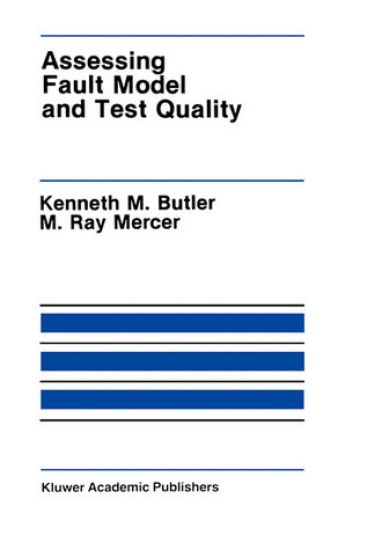
For many years, the dominant fault model in automatic test pattern gen eration (ATPG) for digital integrated circuits has been the stuck-at fault model. The static nature of stuck-at fault testing when compared to the extremely dynamic nature of integrated circuit (IC) technology has caused many to question whether or not stuck-at fault based testing is still viable. Attempts at answering this question have not been wholly satisfying due to a lack of true quantification, statistical significance, and/or high computational expense. In this monograph we introduce a methodology to address the ques tion in a manner which circumvents the drawbacks of previous approaches. The method is based on symbolic Boolean functional analyses using Or dered Binary Decision Diagrams (OBDDs). OBDDs have been conjectured to be an attractive representation form for Boolean functions, although cases ex ist for which their complexity is guaranteed to grow exponentially with input cardinality. Classes of Boolean functions which exploit the efficiencies inherent in OBDDs to a very great extent are examined in Chapter 7. Exact equa tions giving their OBDD sizes are derived, whereas until very recently only size bounds have been available. These size equations suggest that straight forward applications of OBDDs to design and test related problems may not prove as fruitful as was once thought.
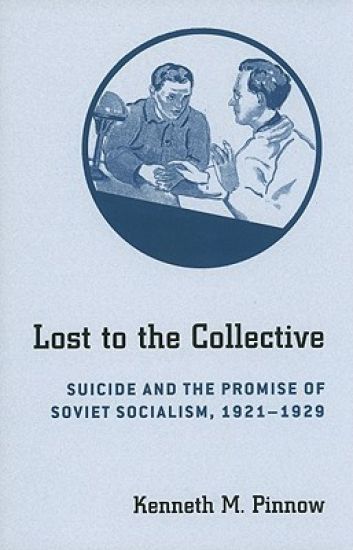
As an act of unbridled individualism, suicide confronted the Bolshevik regime with a dilemma that challenged both its theory and its practice and helped give rise to a social science state whose primary purpose was the comprehensive and rational care of the population. Labeled a social illness and represented as a vestige of prerevolutionary culture, suicide in the 1920s raised troubling questions about individual health and agency in a socialist society, provided a catalyst for the development of new social bonds and subjective outlooks, and became a marker of the country's incomplete move toward a collectivist society. Determined to eradicate the scourge of self-destruction, the regime created a number of institutions and commissions to identify pockets of disease and foster an integrated social order. The Soviet confrontation with suicide reveals with particular force the regime's anxieties about the relationship between the state and the individual. In Lost to the Collective, Kenneth M. Pinnow suggests the compatibility of the social sciences with Bolshevik dictatorship and highlights their illusory promises of control over the everyday life of groups and individuals. The book traces the creation of national statistical studies, the course of medical debates about causation and expert knowledge, and the formation of a distinct set of practices in the Bolshevik Party and Red Army that aimed to identify the suicidal individual and establish his or her significance for the rest of society. Arguing that the Soviet regime represents a particular response to the pressures and challenges of modernity, the book examines Soviet socialism—from its intense concern with the individual to its quest to build an integrated society—as one response to the larger question of human unity.
In this landmark book, suicide becomes an incredibly revealing lens through which to interpret how experts and Bolsheviks diagnosed the health of revolutionary society.
In this landmark book, suicide becomes an incredibly revealing lens through which to interpret how experts and Bolsheviks diagnosed the health of revolutionary society.
The development of American medical education involved a conceptual revolution in how medical students should be taught. With the introduction of laboratory and hospital work, students were expected to be active participants in their learning process, and the new goal of medical training was to foster critical thinking rather than the memorization of facts. In Learning to Heal, Kenneth Ludmerer offers the definitive account of the rise of the modern medical school and the shaping of the medical profession.
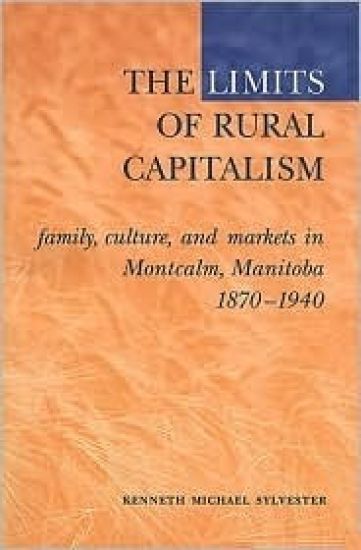
"The Limits of Rural Capitalism" is an important study of the social and economic development of the Municipality of Montcalm, a largely French-Canadian community in southern Manitoba. It challenges the view in prairie historiography that agriculture had commercialized before the west was opened to settlement, and that ethnic communities alone resisted the market's potential. Using a novel combination of demographic, financial, and legal evidence, Sylvester shows that both Ontario and Quebec migrants came west within family networks, and that neither economic individualism nor ethnic clustering overshadowed the importance of family strategies. In an environment where landed proprietorship was the norm, the demands of parents on the unpaid labour of their children constrained the growth of labour markets, and concerns for farm succession limited the accumulation of wealth. In the shadow of an industrializing and urbanizing world, these people, who came mainly from the District of Montreal and eastern Ontario, sometimes via New England, raised large families, drew largely on the unpaid labour of kin, owned their own farms, limited financial entanglements with outsiders, and established multiple heirs. While household autonomy diminished over time, the limits of rural capitalism persisted.