Kirjojen hintavertailu. Mukana 12 390 323 kirjaa ja 12 kauppaa.

Kirjahaku

Etsi kirjoja tekijän nimen, kirjan nimen tai ISBN:n perusteella.

1000 tulosta hakusanalla Kevin Thompson

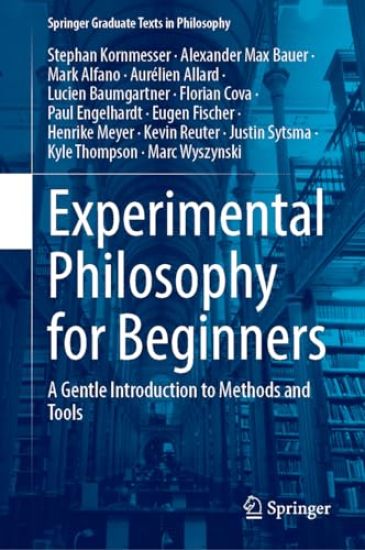
Experimental Philosophy for Beginners

Experimental Philosophy for Beginners

Stephan Kornmesser; Alexander Max Bauer; Mark Alfano; Aurélien Allard; Lucien Baumgartner; Florian Cova; Paul Engelhardt; Eugen Fischer; Henrike Meyer; Kevin Reuter; Justin Sytsma; Kyle Thompson; Marc Wyszynski

Springer International Publishing AG
2024
sidottu
This graduate textbook provides a basic introduction to experimental philosophy (x-phi). In nine chapters, different methods and tools used in X-Phi are explained, spanning quantitative vignette studies, interactive experiments, corpus analysis, psycholinguistic experiments as well as qualitative interview studies. Each chapter introduces a specific experimental method by means of a case study in an easily accessible way and covers the whole research process from the development of a research question to the interpretation of the data.
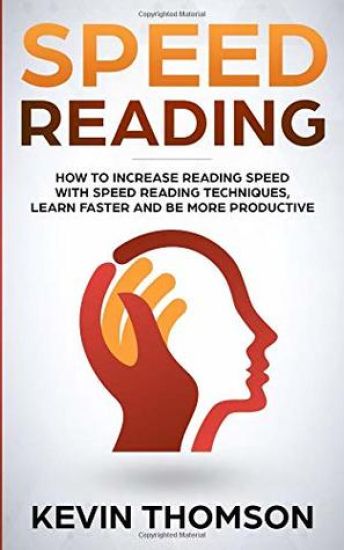
Speed Reading

Speed Reading

Kevin Thomson

Independently Published
2018
pokkari
Have you ever wished that you could read a book faster? Are you tired of not comprehending what you read?Well, look no further. This is the book you need. Speed reading is real and it can help you in nearly every aspect of your life. A lot of people think that speed reading takes away from the reading process, but it actually adds to it. Those who speed read understand more of what they read than average readers.This book will cover things such as: - The history of speed reading.- The benefits of speed reading.- How you can test your current reading speed.- Several speed reading techniques.- The way the human mind works.- Fixing any current problems you have with reading.Stop slowly making your way through books. Learn how to increase your reading speed and improve the way your mind works. Speed reading is a great skill to have; you never know when it is going to come in handy. Don't wait any longer. Get this book today and start reading faster now.Bonus: buy the paperback and get the kindle version free
The Life Of Lord Kelvin

The Life Of Lord Kelvin

Silvanus Phillips Thompson

Amer Mathematical Society
2004
sidottu
An important component of a biography of any great scientist is that the biographer also have deep scientific knowledge. This holds true for Silvanus P. Thompson, a scientist of distinction who authored this biography of Lord Kelvin. Thompson was a Fellow of the Royal Society, President of the Physical Society, President of the Institution of Electrical Engineers, and President of the Illuminating Engineering Society - all within a six year span. He also held the office of president for other scientific organizations. This biography was begun in 1906 and published in 1910. It was re-issued in 1976 by Chelsea Publishing. The work is considered the definitive biography of Lord Kelvin.It includes Kelvin's personal recollections and data. His death in 1907 affected the project by extending the scope of the original work. He left letters, diaries, and other documents that supplemented the existing information. These documents would allow Thompson to create a much more comprehensive account of Kelvin's career than was previously possible.From the Preface by Thompson: 'It has been the author's desire to let documents and letters speak as far as possible for themselves; and if he has not always been able to avoid letting his own views tinge these pages, he has at least endeavoured to avoid attributing to others that which is only his own.Doubtless there are many of Lord Kelvin's former pupils who will find gaps in the presentation of his life and character, as must needs be when the author can himself claim no nearer association than that of disciple. But the disciple of one who was himself conspicuously faithful in little things, must at least try to be faithful. The peculiar and affectionate admiration, amounting in some almost to worship, which characterizes those who had the high privilege of that more intimate association, spreads far beyond their circle to the disciple. Let it be hoped that the affectionate admiration which he too shares may not have warped his judgment'.
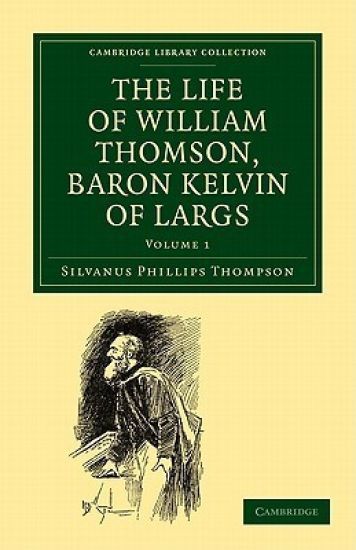
The Life of William Thomson, Baron Kelvin of Largs

The Life of William Thomson, Baron Kelvin of Largs

Silvanus Phillips Thompson

Cambridge University Press
2011
pokkari
The mathematician and physicist William Thomson, 1st Baron Kelvin, (1824–1907) was one of Britain's most influential scientists, famous for his work on the first and second laws of thermodynamics and for devising the Kelvin scale of absolute temperature. Silvanus P. Thompson (1851–1916) began this biography with the co-operation of Kelvin in 1906, but the project was interrupted by Kelvin's death the following year. Thompson, himself a respected physics lecturer and scientific writer, decided that a more comprehensive biography would be needed and spent several years reading through Kelvin's papers in order to complete these two volumes, published in 1910. Volume 1 covers Kelvin's life to 1871, including his student days, his election (aged 22) as professor in Glasgow, his ground-breaking theoretical research on thermodynamics, his applied work on telegraphs including the Atlantic cable, and his involvement in a geological controversy about the age of the earth.
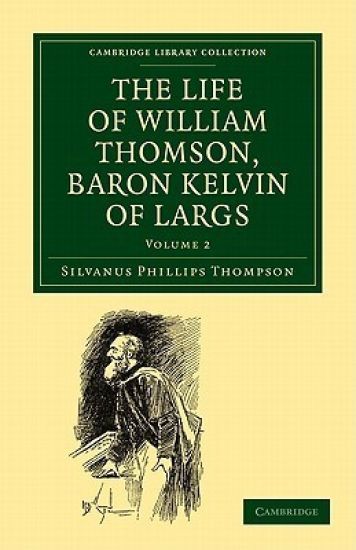
The Life of William Thomson, Baron Kelvin of Largs

The Life of William Thomson, Baron Kelvin of Largs

Silvanus Phillips Thompson

Cambridge University Press
2011
pokkari
The mathematician and physicist William Thomson, 1st Baron Kelvin, (1824–1907) was one of Britain's most influential scientists, famous for his work on the first and second laws of thermodynamics and for devising the Kelvin scale of absolute temperature. Silvanus P. Thompson (1851–1916) began this biography with the co-operation of Kelvin in 1906, but the project was interrupted by Kelvin's death the following year. Thompson, himself a respected physics lecturer and scientific writer, decided that a more comprehensive biography would be needed and spent several years reading through Kelvin's papers in order to complete these two volumes, published in 1910. Volume 2, beginning in 1871, covers not only Kelvin's mature research, but also more personal aspects of his life, including his love of music and sailing, his experiments with compasses and navigation, and the relationship between his scientific discoveries and his religious beliefs.
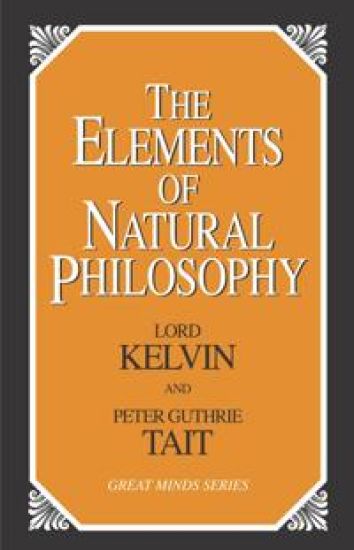
The Elements of Natural Philosophy

The Elements of Natural Philosophy

William Thompson; Lord Kelvin; Peter Guthrie Tait

Humanity Books
2002
pokkari
One of the most celebrated scientists of the 19th century, William Thomson, Lord Kelvin, was said to have more letters after his name than any man in the British Empire. His prodigious accomplishments included both theoretical insights and significant inventions. Among his contributions to theory were advances in hydrodynamics, an innovative synthesis of the mathematical relationship between electricity and heat, and major work in the second law of thermodynamics. In the practical realm he created the absolute temperature scale (which bears his name); worked on the development of the first transatlantic telegraph cable; and invented a telegraph receiver, a compass adopted by the British Admiralty, a form of analog computer for measuring tides, and sounding equipment. Always in the forefront of the leading scientists of the day, he collaborated with James Clerk Maxwell, Hermann von Helmholtz, James Prescott Joule, and Peter Guthrie Tait. The Elements of Natural Philosophy was done with Tait, a pioneering physicist and mathematician whose work in advanced algebra formed the basis of vector analysis and was instrumental in the later development of modern mathematical physics. An abridgement of their original Treatise on Natural Philosophy, this work was designed to be accessible to students with a basic knowledge of algebra, geometry, and trigonometry. As such it is a book that nonspecialists can still appreciate. Like Isaac Newton's great summation of "natural philosophy" in the late 17th century (The Principia Mathematica), this work remains of interest to historians of science because it represented a similar summation of the grand synthesis that scientists, building upon Newton's work, envisioned at the end of the 19th century. Not long after its publication, however, was the advent of relativity and quantum physics, which considerably changed and enlarged the picture of the natural world as conceived by earlier generations of scientists.
The Costs of the Common Agricultural Policy

The Costs of the Common Agricultural Policy

Allan E. Buckwell; David R. Harvey; Kenneth J. Thomson; Kevin A. Parton

Routledge
2019
sidottu
First published in 1982. Considerable public controversy surrounded the large amount of public expenditure devoted to agriculture under the European Community’s Common Agricultural Policy (CAP). There were serious disputes over how the farm support system operated and how it was financed. This book describes the CAP situation and summarises previous attempts to assess some of the economic and financial flows arising from its creation using a common framework of well-established economic theory and methods. The CAP turned out to have a number of ‘costs’, depending on the concept of ‘cost’ used, the alternative policies considered, and the various assumptions made. The bulk of the book presents the structure and results of a comprehensive model of European Community agricultural markets and the associated CAP support mechanisms. This model is validated against official Community budget figures and then run to simulate a number of policy options and their consequences. This title will be of interest to students of economics, geography and agriculture.
The Costs of the Common Agricultural Policy

The Costs of the Common Agricultural Policy

Allan E. Buckwell; David R. Harvey; Kenneth J. Thomson; Kevin A. Parton

Routledge
2021
nidottu
First published in 1982. Considerable public controversy surrounded the large amount of public expenditure devoted to agriculture under the European Community’s Common Agricultural Policy (CAP). There were serious disputes over how the farm support system operated and how it was financed. This book describes the CAP situation and summarises previous attempts to assess some of the economic and financial flows arising from its creation using a common framework of well-established economic theory and methods. The CAP turned out to have a number of ‘costs’, depending on the concept of ‘cost’ used, the alternative policies considered, and the various assumptions made. The bulk of the book presents the structure and results of a comprehensive model of European Community agricultural markets and the associated CAP support mechanisms. This model is validated against official Community budget figures and then run to simulate a number of policy options and their consequences. This title will be of interest to students of economics, geography and agriculture.
Baltimore Lectures on Molecular Dynamics and the Wave Theory of Light

Baltimore Lectures on Molecular Dynamics and the Wave Theory of Light

Baron Kelvin Thomson

Cambridge University Press
2010
pokkari
The mathematical physicist and engineer William Thomson, 1st Baron Kelvin (1824–1904) is best known for devising the Kelvin scale of absolute temperature and for his work on the first and second laws of thermodynamics. The lectures in this collection demonstrate an attempt by Baron Kelvin to formulate a physical model for the existence of ether. This concept of a medium for light propagation became prominent in the late nineteenth century, arising from the combination of Maxwell's equations stating that light is an electromagnetic wave with the demands of Newtonian physics that light must move in a unique reference frame. First published in 1904, Kelvin's lectures describe the difficulties inherent in this model. These problems with the concept of ether are credited for inspiring Einstein to devise the theory of special relativity and the photoelectric effect, both of which are central to modern physics.