

Kirjahaku
Etsi kirjoja tekijän nimen, kirjan nimen tai ISBN:n perusteella.
1000 tulosta hakusanalla Kimberley Freeman

The Siege of Kimberley: Its Humorous and Social Side
T. Phelan
Createspace Independent Publishing Platform
2014
nidottu

Bullet: ...my fearless kimberley mutt...
Roland Long
Createspace Independent Publishing Platform
2018
nidottu
BULLET. Set in the Kimberley in the 1980s and 90s, the central character being a Dog of indeterminate breed that we found up in the remote Isdell river. My wife and I never really wanted a Dog at the time. He was in such poor condition and close to death, I had decided to put him out of his misery with a bullet. He made a miraculous recovery and attached himself to our family. The Dog was Irascible, so we named him Bullet to remind him from time to time that when he was extremely naughty, we still had a bullet with his name on it This book is as much about the Kimberley, and the Characters we lived, worked, and came in contact with during our 17 years of living on Koolan Island, as a Tale about the dog himself. I wrote it from memory many years after leaving Koolan. Its written in the vernacular of that time and place, when Political Correctness was an unheard-of concept, and Men and women alike liberally used four letter words to stress a point in conversation. Bullet was a tough little Bush Dog with a voracious appetite for adventure or misadventure. He became quite a well-known character in the Kimberley due to his fearless tenacity to take on any beast whether it be bull, shark or crocodile. Also sharing some Poignant moments with him, like when we sat together at the precipitous edge of Mount Trafalgar sipping a beer and gazing in awe of Gods creation, and other times of sheer terror when I began to wonder what Bullet and I had done to annoy the big bloke upstairs. There are many Historical sections that are as accurate as available research allows. The journey of Philip Parker King, William Dampier, and George Grey, who went on to become Governor of South Australia. The ill-fated Settlers who tried to farm Cattle and Sheep in Camden Harbour, all interwoven in as integral parts of the book We also came in contact with many wonderful people of some renown, people such as Dick Smith who we helped in an Australian Geo project. We took Mike and Susan Cusack to Kunmunya, for their 'Year alone in the wilderness'. Dick also used his Jet Ranger to locate a Tourist who had overturned his boat in the Vicious, giant Whirlpools of Yule entrance. I became mates with Malcolm Douglass and helped him in the filming of some of his adventure films. I trapped problem Crocodiles around Koolan then flying them to his newly established Croc Farm in Broome. With a backdrop of Koolan and Cockatoo Island, and the hard working, hard drinking, and hard swearing Miners, readers will find the book Hilarious, exhilarating, and steeped in melancholy when BHP finally closed the Mines. Roland Long





Ist der Kimberley-Prozess gescheitert? Eine Fallbetrachtung am Beispiel des Diamantenhandels in Simbabwe
Anonymous
Grin Publishing
2012
pokkari



The Siege of Kimberley; Its Humorous and Social Side; Anglo-Boer War (1899-1902); Eighteen Weeks in Eighteen Chapters (Edition1)
W J Harding King
Alpha Editions
2024
nidottu
Mysteries of the Libyan Desert; A record of three years of exploration in the heart of that vast & waterless region, a classical book, has been considered important throughout the human history, and so that this work is never forgotten we at Alpha Editions have made efforts in its preservation by republishing this book in a modern format for present and future generations. This whole book has been reformatted, retyped and designed. These books are not made of scanned copies of their original work and hence the text is clear and readable.
Capital and Labour on the Kimberley Diamond Fields, 1871–1890
Robert Vicat Turrell
Cambridge University Press
2008
pokkari
This academic history of diamond mining in Kimberley is a major study of the beginning of South Africa's mineral revolution. It includes the first analysis of the formation of De Beers Consolidated Mines, one of the most successful companies ever to have been established in Africa. Based on documentary sources, notably in the Standard Bank Archive, the Rothschild Archive and the Philipson Stow Papers, it includes an interpretation of the Black Flag Revolt and of the celebrated amalgamation struggle between Cecil Rhodes and Barney Barnato for the control of the diamond-mining industry. It also contains a narrative and analysis of strikes in mines in South Africa and an extended treatment of the social and economic structure of illicit diamond buying. But at its heart lies the introduction of the compound system and the structural explanation of the role played by this institution in the accummulation of diamond-mining capital.
Capital and Labour on the Kimberley Diamond Fields, 1871–1890
Robert Vicat Turrell
Cambridge University Press
1987
sidottu
This first academic history of diamond mining in Kimberley is a major study of the beginning of South Africa’s mineral revolution. It includes the first analysis of the formation of De Beers Consolidated Mines, one of the most successful companies ever to have been established in Africa. Based on new documentary sources, notably in the Standard Bank Archive, the Rothschild Archive and the Philipson Stow Papers, it includes a new interpretation of the Black Flag Revolt and of the celebrated amalgamation struggle between Cecil Rhodes and Barney Barnato for the control of the diamond-mining industry. It also contains the first narrative and analysis of strikes in mines in South Africa and an extended treatment of the social and economic structure of illicit diamond buying. But at its heart lies the introduction of the compound system and the structural explanation of the role played by this institution in the accummulation of diamond-mining capital.


From Blood Diamonds to the Kimberley Process
Franziska Bieri
Ashgate Publishing Limited
2010
sidottu
In the late 1990s, several non-governmental organizations (NGOs) focused world attention on the issue of conflict diamonds which funded wars, massive death, and refugee crises across Central and West Africa. Several governments, NGOs, and key industry players engaged in negotiations under the so-called Kimberley Process (KP). A voluntary global agreement came into effect leading to a substantial decline in illicit diamond trade. Despite its importance in international affairs, the KP remains understudied in academia. Franziska Bieri's book provides the first comprehensive account of the KP and is the first to reveal how NGOs have become critical actors in their own right, possessing the ability to directly influence policies and to participate in the decision making and the implementation of global agreements. In developing this argument, Bieri explains: why the NGO campaign to raise awareness was successful; why a rapid and comprehensive resolution on such a complex global problem was possible; how the tripartite negotiations between states, NGOs, and industry developed during the implementation of the agreement, which is an on-going process. Based on extensive personal interviews with prominent campaigners, leading bureaucrats, and industry officials, hundreds of KP publications, official UN documents, industry news, and NGO reports, this timely book allows for a much needed engagement in contemporary debates about the campaign against conflict diamonds, the Kimberley Process, and the themes defining today's global governance arena.
A Catholic University in the Kimberley: Reflections on a Catholic Identity
Matthew C. Ogilvie
Lonergan Centre, Sydney
2018
nidottu
With specific reference to the mission and nature of a Catholic University that serves Western Australia's Kimberley region, this book deals with: questions about the identity of a Catholic University, the relationship between the Church and Aboriginal people, the place of social justice in a Catholic university and the Catholic Intellectual Tradition, the constitution of the University's faculty and staff as well as issues of academic freedom.
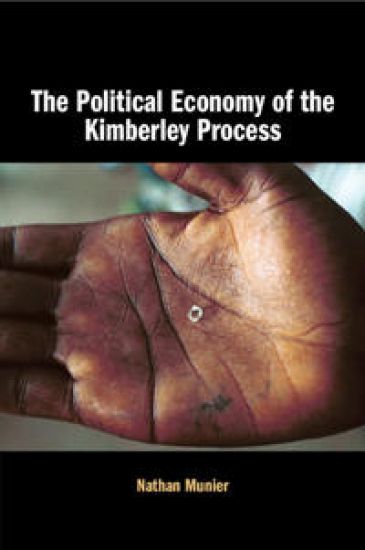
The Political Economy of the Kimberley Process
Nathan Munier
Cambridge University Press
2024
pokkari
In the late 1990s, the issue of diamonds contributing to conflict began to receive global attention. In response, the Kimberley Process, an international agreement drawn up in 2003, was implemented to reduce the trade of conflict diamonds and provide a way to certify the global diamond trade. This study looks at the political economy of resource-wealthy states in Africa to understand responses to the Kimberley Process, asking why some African states have higher levels of compliance and co-operation than others. Using cross-country comparisons to explain differing state policies and outcomes, Nathan Munier explores whether domestic, private economic actors matter in how international agreements operate. In doing so, he asks why states that regularly ignore international agreements will use scarce resources to raise their level of compliance with the Kimberley Process. Focusing on the domestic political economy of states, in contrast to past theories of state responses to international agreements, Munier finds that economic dependence and the preferences of private actors are essential in understanding the variation of state responses to international agreements.
The Political Economy of the Kimberley Process
Nathan Munier
Cambridge University Press
2020
sidottu
In the late 1990s, the issue of diamonds contributing to conflict began to receive global attention. In response, the Kimberley Process, an international agreement drawn up in 2003, was implemented to reduce the trade of conflict diamonds and provide a way to certify the global diamond trade. This study looks at the political economy of resource-wealthy states in Africa to understand responses to the Kimberley Process, asking why some African states have higher levels of compliance and co-operation than others. Using cross-country comparisons to explain differing state policies and outcomes, Nathan Munier explores whether domestic, private economic actors matter in how international agreements operate. In doing so, he asks why states that regularly ignore international agreements will use scarce resources to raise their level of compliance with the Kimberley Process. Focusing on the domestic political economy of states, in contrast to past theories of state responses to international agreements, Munier finds that economic dependence and the preferences of private actors are essential in understanding the variation of state responses to international agreements.
Activating God's power in Kimberley: Overcome and be transformed by accessing God's power.
Michelle Leslie
Michelle Leslie Publishing
2016
nidottu