

Kirjahaku
Etsi kirjoja tekijän nimen, kirjan nimen tai ISBN:n perusteella.
1000 tulosta hakusanalla Lawrence R. Goodman







My story involves two unlikely people, who fell in love, under most unusual circumstances. They both came from somewhat different childhood backgrounds. Both shared some of the same pain, knowing that they were different; caused by some painful wounds, both physical and psychological. Wounds which had been inflicted on them by others and yet, they somehow found in each other, compassion and an understanding, which developed into a life long love affair. One shunned society, choosing to live in the shadows while the other, sought approval from that same society, with it's fickle and judgmental, "better than thou," self-righteous attitude. Society looked upon them both, as being different, not seeing their inner beauty. Love will always find a way! By the author of The Lads and the O'Kelleher trilogy; Seanachie, To Shed a Tear, and The Wind is Rising.
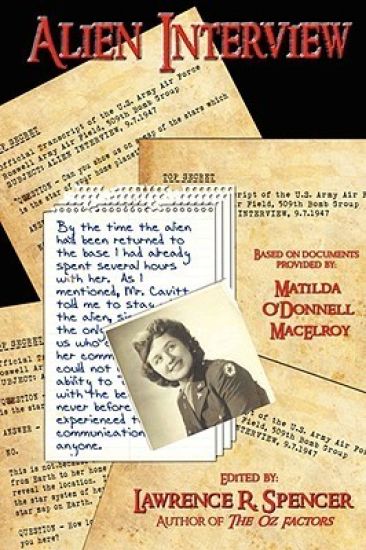
The content of this book is the letter, official Top Secret U.S. Army Air Force interview transcripts and personal notes I received from the late Matilda O'Donnell MacElroy. Her letter to me asserts that this material is based on a series of interviews she conducted with an extraterrestrial being as part of her official duty as a nurse in the U.S. Army Air Force. During July and August she interviewed a saucer pilot who crashed near Roswell, New Mexico on July 8th, 1947. The being identitied itself as an officer, pilot and engineer of The Domain Expeditionary Force, a race of beings who have been using the asteroid belt in our solar system as a intergalactic base of operations for the past 10,000 years.




Personality in Work Organizations
Lawrence R. (Robert) James; Michelle D. Mazerolle
SAGE Publications Inc
2002
nidottu
Why is there a resurgence of interest in personality in organizational research? Why have organizations turned to personality experts to assist in the early identification of employees who are likely to be motivated, conscientious, prosocial, and stable? Organizations are finding an ever-more-pressing need to select people with high probabilities of adjusting to and succeeding in work situations. To understand how and why individuals frame the same set of environmental factors differently, this thorough review of personality theory and measurement in work settings isolates the specific vital impacts on behavior in industrial and organizational settings. Topics addressed include: Job performance Leadership Team functioning Interdepartmental conflict Tardiness and attrition Mental and physical health MotivationIntegrity Personality at Work is an excellent resource for researchers, scholars, and advanced students.
New Directions in Group Communication takes as its mission the setting of the agenda for the study of group communication in the future. It does so by presenting work that scholars have not previously explored in the current small group communication literature. Part I focuses on new theoretical and conceptual directions, both presenting new views and extending current positions. Part II examines new research methodologies, while Part III looks at antecedent factors affecting group communication. Parts IV and V of the text provide insight into both group communication process and practices. Part VI covers different group communication contexts, including communication patterns in top management teams. An excellent companion to The Handbook of Group Communication Theory and Research, this volume sets the direction for future study for students and scholars alike.
New Directions in Group Communication takes as its mission the setting of the agenda for the study of group communication in the future. It does so by presenting work that scholars have not previously explored in the current small group communication literature. Part I focuses on new theoretical and conceptual directions, both presenting new views and extending current positions. Part II examines new research methodologies, while Part III looks at antecedent factors affecting group communication. Parts IV and V of the text provide insight into both group communication process and practices. Part VI covers different group communication contexts, including communication patterns in top management teams. An excellent companion to The Handbook of Group Communication Theory and Research, this volume sets the direction for future study for students and scholars alike.

New York City 1964: A Cultural History is, as the title makes clear, a cultural history of New York City in the year 1964. The book focuses on five seminal events that occurred in the city that pivotal year: (1) the ""British Invasion,"" i.e., arrival of The Beatles in New York in February; (2) the murder of Kitty Genovese in Queens in March; (3) the world's fair that ran in Queens between April and October; (4) the ""race riots"" in Brooklyn and Harlem in July; and (5) the world series in the Bronx between the New York Yankees and the St. Louis Cardinals. Via an exploration of these five events - the biggest (and to some most threatening) thing to happen in pop culture since Elvis's appearance on The Ed Sullivan Show, a shocking crime that reportedly went ignored, the last great world's fair, a key, disturbing moment of the civil rights movement and a legendary contest in sports that represented the end of an era - readers will have a much better understanding and appreciation of the social turbulence taking place in New York City and the United States in the mid-1960s.

“Psychology has stepped down from the university chair into the marketplace” was how the New York Times put it in 1926. Another commentator in 1929 was more biting. Psychoanalysis, he said, had over a generation, “converted the human scene into a neurotic.” Freud first used the word around 1895, and by the 1920s psychoanalysis was a phenomenon to be reckoned with in the United States. How it gained such purchase, taking hold in virtually every aspect of American culture, is the story Lawrence R. Samuel tells in Shrink, the first comprehensive popular history of psychoanalysis in America.Arriving on the scene at around the same time as the modern idea of the self, psychoanalysis has both shaped and reflected the ascent of individualism in American society. Samuel traces its path from the theories of Freud and Jung to the innermost reaches of our current me-based, narcissistic culture. Along the way he shows how the arbiters of culture, high and low, from public intellectuals, novelists, and filmmakers to Good Housekeeping and the Cosmo girl, mediated or embraced psychoanalysis (or some version of it), until it could be legitimately viewed as an integral feature of American consciousness.

American history is ubiquitous, underscoring everything from food to travel to architecture and design. It is also emotionally charged, frequently crossing paths with political and legal issues. In Remembering America, Lawrence R. Samuel examines the place that American history has occupied within education and popular culture and how it has continually shaped and reflected our cultural values and national identity. The story of American history, Samuel explains, is not a straight line but rather one filled with twists and turns and ups and downs, its narrative path as winding as that of the United States as a whole. Organized around six distinct eras of American history ranging from the 1920s to the present, Samuel shows that our understanding of American history has often generated struggle and contention as ideologically opposed groups battled over ownership of the past. As women and minorities gained greater power and a louder voice in the national conversation, our perspectives on American history became significantly more multicultural, bringing race, gender, and class issues to the forefront. These new interpretations of our history helped to reshape our identity on both a national and an individual level. Samuel argues that the fight for ownership of our past, combined with how those owners have imparted history to our youth, crucially affects who we are. Our interpretation and expression of our country’s past reflects how that self-identity has changed over the last one hundred years and created a strong sense of our collective history-one of the few things Americans all have in common.

A Stanford University Press classic.

Realist novels are usually seen as verisimilar representations of the world, and even when that verisimilitude is critically examined (as it has been by Marxist and feminist critics), the criticism has referred to extra-literary matters, such as bourgeois ideology or defects in the portrayal of women. This book takes as its thesis that the point defining realism is the point at which the processes of representation break down, a sort of black hole of textuality, a rent in the tissue. The author argues that our notions of continuity, of readability, of representability, or our ideas about unity and ideological shift—or even our notions of what is hidden, occulted, or absent—all come from the nineteenth-century realist model itself. Instead of assuming representability, the author argues that we should look at places where the texts do not continue the representationalist model, where there is a sudden falling off, an abyss. Instead of seeing that point as a shortcoming, the author argues that it is equal to the mimetic successes of representation. After an initial chapter dealing with the limits and ruptures of textuality, the book considers the work of Stendhal, from its early state as a precursor to the later realism to La Chartreuse de Parme, which shows how the act of communication for Stendhal is always made of silences, gaps, and interruptions. The author then reads several works of Balzac, showing how he, while setting up the praxes of continuity on which his oeuvre depends, ruptures the works at various strategic points. In a chapter entitled "Romantic Interruptions," works of Nerval and the younger Dumas, seemingly unrelated to the realist project, are shown to be marked by the ideological, representational, and semiotic assumptions that produced Balzac. The book concludes with Flaubert, looking both at how Flaubert incessantly makes things "unfit" and how critics, even the most perspicacious postmodern ones, often try to smooth over the permanent crisis of rupture that is the sign of Flaubert's writing.