Kirjojen hintavertailu. Mukana 11 699 587 kirjaa ja 12 kauppaa.

Kirjahaku

Etsi kirjoja tekijän nimen, kirjan nimen tai ISBN:n perusteella.

1000 tulosta hakusanalla Lorin-C

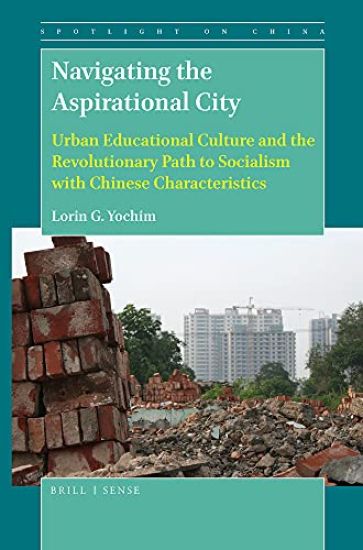
Navigating the Aspirational City: Urban Educational Culture and the Revolutionary Path to Socialism with Chinese Characteristics
The re-emergence of China as a world power promises to be the signal economic, political, cultural, and social development of the 21st century. In the face of its rise, fine grained accounts of the shape and texture of this new China are both timely and necessary. Navigating the Aspirational City forwards a theory of contemporary Chinese urban educational culture that focusses on the influence of dominant conceptions of "the good citizen" and the material environment upon parents as they pursue their childrearing projects. The book provides a description of the beliefs and practices of urban Chinese parents as they "educate" their children. These beliefs and practices are placed in relation to a historical chain of ideas about how to best educate children, as well as within the urban context in which they are produced and reproduced, renovated, and transformed. Beginning with a history of revolutionary "orders of worth" culminating in the "aspirational cit ," the book details the shifting standards that define the "human capital" conditions of possibility of a developed modern economy. It goes on to describe a set of policies and practices known as san nian da bianyang by which the whole of one particular city, Shijiazhuang, has been demolished, re-built, and re-ordered. Contemporary China is, the author contends, no less revolutionary than Mao's, noting that parents' beliefs and practices articulate with the present ideational and material context to produce what appears, at times, to be radical transformation and, at others, remarkable stability.
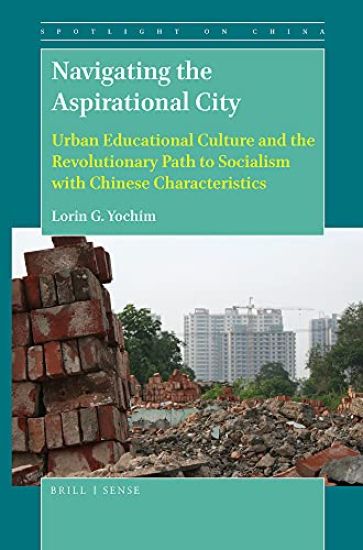
Navigating the Aspirational City
The re-emergence of China as a world power promises to be the signal economic, political, cultural, and social development of the 21st century. In the face of its rise, fine grained accounts of the shape and texture of this new China are both timely and necessary. Navigating the Aspirational City forwards a theory of contemporary Chinese urban educational culture that focusses on the influence of dominant conceptions of “the good citizen” and the material environment upon parents as they pursue their childrearing projects. The book provides a description of the beliefs and practices of urban Chinese parents as they “educate” their children. These beliefs and practices are placed in relation to a historical chain of ideas about how to best educate children, as well as within the urban context in which they are produced and reproduced, renovated, and transformed. Beginning with a history of revolutionary “orders of worth” culminating in the “aspirational cité,” the book details the shifting standards that define the “human capital” conditions of possibility of a developed modern economy. It goes on to describe a set of policies and practices known as san nian da bianyang by which the whole of one particular city, Shijiazhuang, has been demolished, re-built, and re-ordered. Contemporary China is, the author contends, no less revolutionary than Mao’s, noting that parents’ beliefs and practices articulate with the present ideational and material context to produce what appears, at times, to be radical transformation and, at others, remarkable stability.

Les Derniers Jours du Canada français

Les Derniers Jours du Canada français

Henri Lorin

Createspace Independent Publishing Platform
2017
nidottu
... Vers le milieu du XVIIIe si cle, le Canada ne comptait encore qu'une population de 60 70 000 mes, avec un petit nombre de villes; l'admirable route du Saint-Laurent, chemin creux for travers les Laurentides, avait t la voie suivie par la colonisation fran aise; Qu bec, au point o la nature a marqu la place de la citadelle du fleuve, Trois-Rivi res, Montr al, pos es en amont sur des confluents, taient les cit s principales, ou plut t les seules agglom rations urbaines; tout autour, des d frichements avaient fait reculer peu peu la foret s culaire; les environs de Qu bec, en particulier, taient couverts de paroisses rurales, o les habitants des c tes cultivaient les c r ales, levaient du b tail et vivaient sous une sorte de r gime f odal tr s large, autour de seigneurs et de cur s diff rant fort peu d'eux-m mes. Le Conseil souverain de Qu bec, compos de notables des plus distingu s, n'avait pas renonc l'habitude patriarcale de r gler ses travaux sur les loisirs de la vie des champs; les magistrats tenaient surveiller, peut- tre faire eux-m mes, leur moisson...