Kirjojen hintavertailu. Mukana 12 388 913 kirjaa ja 12 kauppaa.

Kirjahaku

Etsi kirjoja tekijän nimen, kirjan nimen tai ISBN:n perusteella.

676 tulosta hakusanalla Lucretius

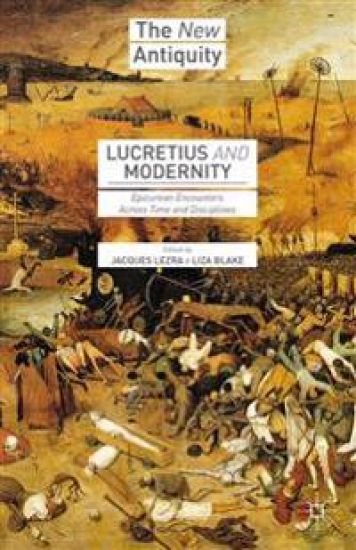
Lucretius and Modernity

Lucretius and Modernity

Palgrave Macmillan
2016
sidottu
Lucretius's long shadow falls across the disciplines of literary history and criticism, philosophy, religious studies, classics, political philosophy, and the history of science. The best recent example is Stephen Greenblatt's popular account of the Roman poet's De Rerum Natura (On the Nature of Things) rediscovery by Poggio Bracciolini, and of its reception in early modernity, winner of both a Pulitzer Prize and National Book Award. Despite the poem's newfound influence and visibility, very little cross-disciplinary conversation has taken place. This edited collection brings together essays by distinguished scholars to examine the relationship between Lucretius and modernity. Key questions weave this book's ideas and arguments together: What is the relation between literary form and philosophical argument? How does the text of De rerum natura allow itself to be used, at different historical moments and to different ends? What counts as reason for Lucretius? Together, these essays present a nuanced, skeptical, passionate, historically sensitive, and complicated account of what is at stake when we claim Lucretius for modernity.
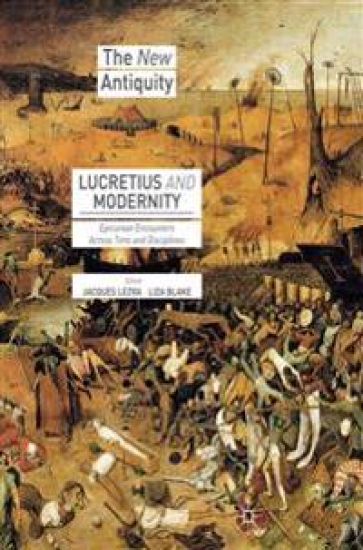
Lucretius and Modernity

Lucretius and Modernity

Palgrave Macmillan
2016
nidottu
Lucretius's long shadow falls across the disciplines of literary history and criticism, philosophy, religious studies, classics, political philosophy, and the history of science. The best recent example is Stephen Greenblatt's popular account of the Roman poet's De Rerum Natura (On the Nature of Things) rediscovery by Poggio Bracciolini, and of its reception in early modernity, winner of both a Pulitzer Prize and National Book Award. Despite the poem's newfound influence and visibility, very little cross-disciplinary conversation has taken place. This edited collection brings together essays by distinguished scholars to examine the relationship between Lucretius and modernity. Key questions weave this book's ideas and arguments together: What is the relation between literary form and philosophical argument? How does the text of De rerum natura allow itself to be used, at different historical moments and to different ends? What counts as reason for Lucretius? Together, these essays present a nuanced, skeptical, passionate, historically sensitive, and complicated account of what is at stake when we claim Lucretius for modernity.
Lucretius as Theorist of Political Life

Lucretius as Theorist of Political Life

J. Colman

Palgrave Macmillan
2015
nidottu
"John Colman has presented us with a profound and scrupulously detailed inquiry into how Lucretius understood the tensions between the philosophic life and the requirements and characteristics of the life of political action—tensions with which Lucretius had to deal in his endeavor to bring philosophy into Rome." – James H. Nichols, Jr., Professor of Government, Claremont McKenna College, USA"Lucretius has been drawing renewed attention for both the depth of his message and the beauty of his poem. Nevertheless, only a few commentators are attentive to the paradox of a philosophic teaching that reduces everything to matter in motion in the form of a beautiful poem. John Colman represents the even more rare case of someone who sees this paradox and explains it intelligently. He is able to show the way Lucretius addresses those interested in beauty and those interested in politics in a work that appears to reject both." – Christopher Kelly, Professorof Political Science, Boston College, USA"A careful study of Lucretius by a notable young scholar showing, not just assuming, that he had a politics. The result is to reveal how his politics compares with that in the Socratic tradition and how he was distorted by his modern students and interpreters." – Harvey C. Mansfield, Professor of Government at Harvard; Senior Fellow at the Hoover Institution, Stanford, USALucretius as Theorist of Political Life is an interpretation of Lucretius' poem On the Nature of Things as a defense of philosophy given the irremediable tension between the competing claims of the philosophic and political life. The central issue is the need for, and attempt by, philosophy to justify and defend its way of life to the political community. This work uncovers how Lucretius' conception of the philosophic life, and the reaction to the human, religious, and political implications of thediscovery of nature, distinguish his intention from the anti-theological animus that drives the politically and scientifically ambitious project of his modern appropriators.
Lucretius I

Lucretius I

Thomas Nail

Edinburgh University Press
2018
sidottu
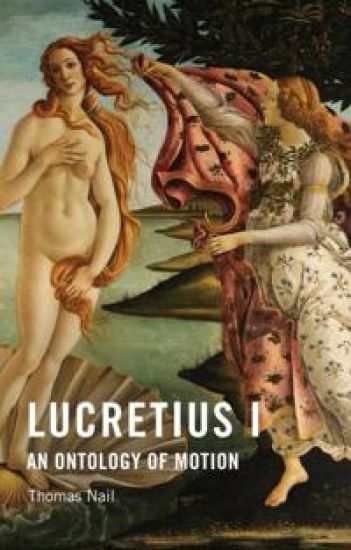
The most original and shocking interpretation of Lucretius in the last 40 yearsThomas Nail argues convincingly and systematically that Lucretius was not an atomist, but a thinker of kinetic flux. In doing so, he completely overthrows the interpretive foundations of modern scientific materialism, whose philosophical origins lie in the atomic reading of Lucretius' immensely influential book 'De Rerum Natura'.This means that Lucretius was not the revolutionary harbinger of modern science as Greenblatt and others have argued; he was its greatest victim. Nail re-reads 'De Rerum Natura' to offer us a new Lucretius a Lucretius for today.Key FeaturesA new materialist, quantum and feminist interpretation of LucretiusArgues the original and provocative thesis that Lucretius was not an atomist but rather the first philosopher of motionThe most profound revision of how we read Lucretius since Michel Serres' 'The Birth of Physics' (1977)
Lucretius I

Lucretius I

Thomas Nail

Edinburgh University Press
2018
nidottu
The most original and shocking interpretation of Lucretius in the last 40 yearsThomas Nail argues convincingly and systematically that Lucretius was not an atomist, but a thinker of kinetic flux. In doing so, he completely overthrows the interpretive foundations of modern scientific materialism, whose philosophical origins lie in the atomic reading of Lucretius' immensely influential book 'De Rerum Natura'.This means that Lucretius was not the revolutionary harbinger of modern science as Greenblatt and others have argued; he was its greatest victim. Nail re-reads 'De Rerum Natura' to offer us a new Lucretius a Lucretius for today.Key FeaturesA new materialist, quantum and feminist interpretation of LucretiusArgues the original and provocative thesis that Lucretius was not an atomist but rather the first philosopher of motionThe most profound revision of how we read Lucretius since Michel Serres' 'The Birth of Physics' (1977)
Lucretius III

Lucretius III

Thomas Nail

EDINBURGH UNIVERSITY PRESS
2022
sidottu
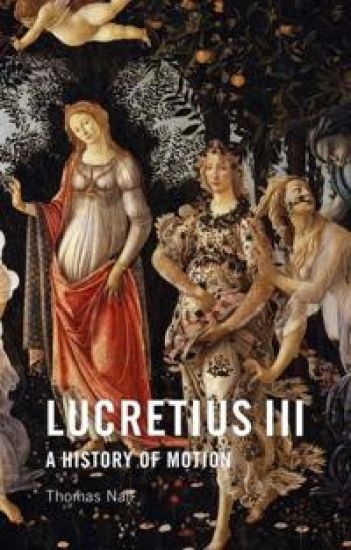
Offers a new theory of history through an original reading of Lucretius' De Rerum NaturaFor Lucretius, history means something surprisingly different than we ordinarily think. Instead of thinking of history in terms of time, he thought of it in terms of motion. This book unpacks the implications of this unique kinetic philosophy of history. In the final volume of his trilogy on De Rerum Natura, Thomas Nail argues that in books five and six, Lucretius described a world born to die. What does it mean to live in such a world? De Rerum Natura provides a guidebook to answering this question.
Lucretius III

Lucretius III

Thomas Nail

EDINBURGH UNIVERSITY PRESS
2022
nidottu
Offers a new theory of history through an original reading of Lucretius' De Rerum NaturaFor Lucretius, history means something surprisingly different than we ordinarily think. Instead of thinking of history in terms of time, he thought of it in terms of motion. This book unpacks the implications of this unique kinetic philosophy of history. In the final volume of his trilogy on De Rerum Natura, Thomas Nail argues that in books five and six, Lucretius described a world born to die. What does it mean to live in such a world? De Rerum Natura provides a guidebook to answering this question.
Lucretius II

Lucretius II

Thomas Nail

Edinburgh University Press
2020
sidottu
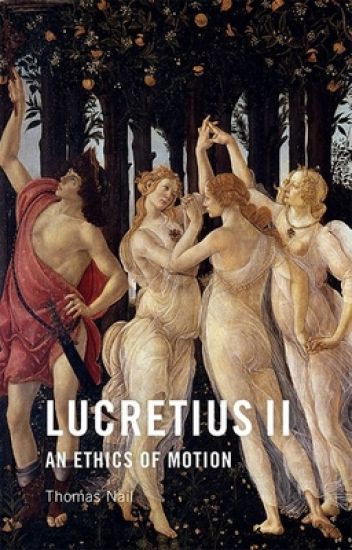
Human suffering, the fear of death, war, poverty, ecological destruction and social inequality: almost 2,000 ago Lucretius proposed an ethics of motion as simple and stunning solution to these ethical problems. Thomas Nail argues that Lucretius was the first to locate the core of all these ethical ills in our obsession with stasis, our fear of movement and our hatred of matter. Instead of trying to transcend nature with our minds, escape it with our immortal souls and dominate it with our technologies, Lucretius was perhaps the first in the Western tradition to forcefully argue for a completely materialist, immanent and naturalistic ethics based on moving well with and as nature. If we want to survive and live well on this planet, Lucretius taught us, our best chance is not to struggle against nature but to embrace it and facilitate its movement.
Lucretius II

Lucretius II

Thomas Nail

Edinburgh University Press
2020
nidottu
Human suffering, the fear of death, war, poverty, ecological destruction and social inequality: almost 2,000 ago Lucretius proposed an ethics of motion as simple and stunning solution to these ethical problems. Thomas Nail argues that Lucretius was the first to locate the core of all these ethical ills in our obsession with stasis, our fear of movement and our hatred of matter. Instead of trying to transcend nature with our minds, escape it with our immortal souls and dominate it with our technologies, Lucretius was perhaps the first in the Western tradition to forcefully argue for a completely materialist, immanent and naturalistic ethics based on moving well with and as nature. If we want to survive and live well on this planet, Lucretius taught us, our best chance is not to struggle against nature but to embrace it and facilitate its movement.