

Kirjahaku
Etsi kirjoja tekijän nimen, kirjan nimen tai ISBN:n perusteella.
1000 tulosta hakusanalla Ludwig Feuerbach

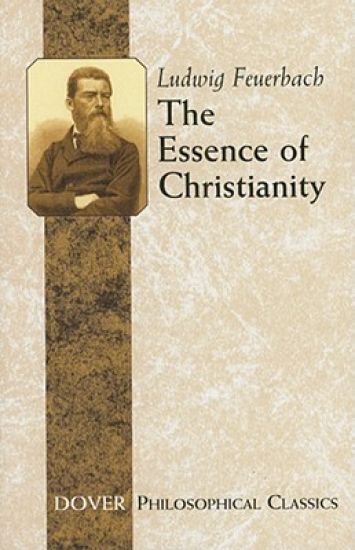
The most important work of the famed German philosopher, this 1841 polemic asserts that religion and divinity are outward projections of inner human nature. Feuerbach's critique of Hegelian idealism excited immediate international attention — Marx and Engels were particularly influenced. This acclaimed translation is by the celebrated English novelist George Eliot.
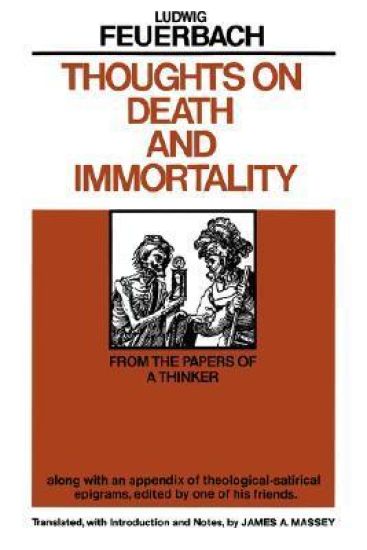
Never translated before, "Thoughts on Death and Immortality" was the first published work of Ludwig Feuerbach (1804-1872). The scandal created by portrayal of Christianity as an egoistic and inhumane religion cost the young Hegelian his job and, to some extent, his career. Joining philosophical argument to epigram, lyric, and satire, the work has three central arguments: first, a straightforward denial of the Christian belief in personal immortality; second, a plea for recognition of the inexhaustible quality of the only life we have; and third, a derisive assault on the posturings and hypocrisies of the professional theologians of nineteenth-century Germany.
In this, one of the most influential works of the post-Hegelian era, Feuerbach captures the synthesis that emerges from the dialectical process of a transcending Godhead and the rational and material world. In understanding the true nature of what it means to be fully human, Feuerbach contends that we come face to face with the essence of Christian theology: human beings investing ordinary concepts with divine meaning and significance. The true danger to humanity occurs when theology is given the force of dogma and doctrine. Losing sight of its anthropological underpinnings and dependence upon or emergence from human nature, it then acquires an existence separate from that of humankind. Feuerbach leaves nothing untouched: miracles, the Trinity, Creation, prayer, resurrection, immortality, faith and much more.
Darstellung, Entwicklung und Kritik der Leibnitz'schen Philosophie.
Ludwig Feuerbach
Hutson Street Press
2025
sidottu
Darstellung, Entwicklung und Kritik der Leibnitz'schen Philosophie.
Ludwig Feuerbach
Hutson Street Press
2025
pokkari
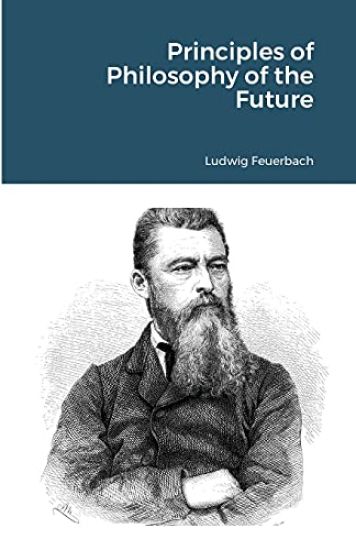
Ludwig Andreas von Feuerbach (1804 - 1872) was a German anthropologist and philosopher, best known for his book The Essence of Christianity, which provided a critique of Christianity that strongly influenced generations of later thinkers, including Charles Darwin, Karl Marx, Sigmund Freud, Friedrich Engels, Richard Wagner, and Friedrich Nietzsche. An associate of Left Hegelian circles, Feuerbach advocated atheism and anthropological materialism. Many of his philosophical writings offered a critical analysis of religion. His thought was influential in the development of historical materialism, where he is often recognized as a bridge between Hegel and Marx.

German speculative philosophy stands in direct contrast to the ancient Solomonic wisdom: Whereas the latter believes that there is nothing new under the sun, the former sees nothing that is not new under the sun; whereas oriental man loses sight of differences in his preoccupation with unity, occidental man forgets unity in his preoccupation with differences; whereas oriental man carries his indifference to the eternally identical to the point of an imbecilic apathy, occidental man heightens his sensibility for the manifold to the feverish heat of the imaginatio luxurians.
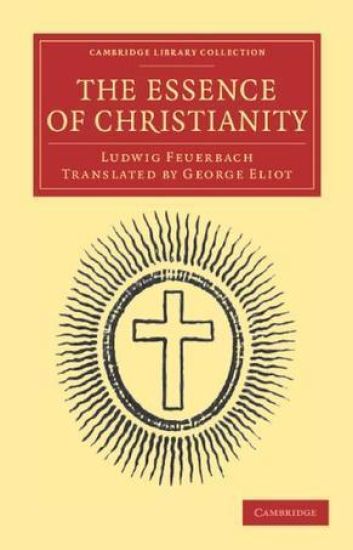
Ludwig Feuerbach (1804–72), the German philosopher and a founding member of the Young Hegelians, a group of radical thinkers influenced by G. W. F. Hegel (1770–1831), was an outspoken critic of religion, and the 1841 publication of this work established his reputation. In the first part of the book he examines what he calls the 'anthropological essence' of religion, and in the second he looks at its 'false or theological essence', arguing that the idea of God is a manifestation of human consciousness. These ideas provoked strong reactions in Germany, and soon other European intellectuals wanted to read Feuerbach's book. The 1843 second edition was translated by Marian Evans (1819–80) - who would become better known by her pen name of George Eliot - and published in Britain in 1854. Evans was influenced by Feuerbach's work, and many of his humanist ideas about religion are reflected in her novels.

Das Wesen des Christentums' (1841) ist das Hauptwerk des Philosophen Ludwig Feuerbach. Seine kritische Auseinandersetzung mit dem Christentum geht von der Frage aus, wozu sich die Menschen Religionen erschaffen haben. Ihnen m sse bewusst werden, so Feuerbach, dass sie in Gott 'das offenbare Innere, das ausgesprochene Selbst des Menschen' verehrten. An die Stelle der Theologie sollte daher die Anthropologie treten.
Das Wesen des Christentums' (1841) ist das Hauptwerk des Philosophen Ludwig Feuerbach. Seine kritische Auseinandersetzung mit dem Christentum geht von der Frage aus, wozu sich die Menschen Religionen erschaffen haben. Ihnen m sse bewusst werden, so Feuerbach, dass sie in Gott 'das offenbare Innere, das ausgesprochene Selbst des Menschen' verehrten. An die Stelle der Theologie sollte daher die Anthropologie treten. Feuerbachs scharfsinnig formulierte Positionen waren f r die Entwicklung der modernen Humanwissenschaften von immenser Bedeutung
Ludwig Feuerbachs Das Wesen des Christentums, zuerst erschienen 1841, gilt nicht nur als Klassiker der Religionskritik, sondern auch der junghegelianischen Hegel-Kritik. Der hier vorgelegte Kommentar erstreckt sich auf alle Textabschnitte des Buches sowie die Kontexte der Entstehungs- und Wirkungsgeschichte. Er wurde von 13 Forscherinnen und Forschern der Fachrichtungen Philosophie und Theologie aus Deutschland, Italien, Portugal, sterreich und den USA verfasst. Dabei wird deutlich, dass Feuerbach weniger eine Religionskritik als eine Kritik der Theologie im Auge hat und dabei weitgehend auf Hegels Religionsphilosophie zur ckgreift. Es handelt sich hier um eine umfassende Biographie und um den ersten vollst ndigen Kommentar zu Feuerbachs grundlegendem Werk, mit Einbeziehung der zeitgen ssischen Kontexte sowie der Entstehungs- und Wirkungsgeschichte. Feuerbachs Verh ltnis zur Religion und zu Hegel wird differenziert dargestellt, wodurch die Kontinuit t zur Klassischen Deutschen Philosophie sichtbar wird. Damit richtet sich der Titel besonders an Lehrende und Studierende in den F chern Philosophie, Theologie und Religionswissenschaften.
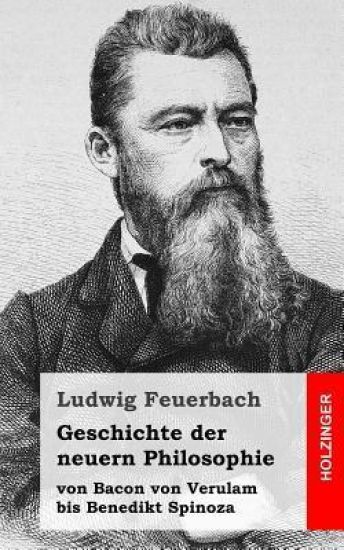
Geschichte der neuern Philosophie: von Bacon von Verulam bis Benedikt Spinoza
Ludwig Feuerbach
Createspace Independent Publishing Platform
2013
nidottu
Ludwig Feuerbach: Geschichte der neuern Philosophie von Bacon von Verulam bis Benedikt Spinoza Edition Holzinger. Taschenbuch Berliner Ausgabe, 2016, 4. Auflage Vollst ndiger, durchgesehener Neusatz mit einer Biographie des Autors bearbeitet und eingerichtet von Michael Holzinger Die Darstellung ging aus Vorlesungen hervor, die Feuerbach Anfang der drei iger Jahre in Erlangen gehalten hatte. Erstdruck: Ansbach 1833. Hier nach der 1847 publizierten Fassung letzter Hand: Ludwig Feuerbach's s mmtliche Werke, Bd. 4, Leipzig 1847. Textgrundlage ist die Ausgabe: Ludwig Feuerbach: Geschichte der neuern Philosophie von Bacon bis Spinoza. Herausgegeben von Joachim H ppner, Leipzig: Reclam, 1976. Herausgeber der Reihe: Michael Holzinger Reihengestaltung: Viktor Harvion Gesetzt aus der Minion Pro, 10 pt.
Towards a Critique of Hegel's Philosophy
Ludwig Feuerbach
Createspace Independent Publishing Platform
2013
nidottu