Kirjojen hintavertailu. Mukana 11 699 587 kirjaa ja 12 kauppaa.

Kirjahaku

Etsi kirjoja tekijän nimen, kirjan nimen tai ISBN:n perusteella.

1000 tulosta hakusanalla Ludwig Mittermaier

Ludwig's Applied Process Design for Chemical and Petrochemical Plants
The Fourth Edition of Applied Process Design for Chemical and Petrochemical Plants Volume 2 builds upon the late Ernest E. Ludwig’s classic chemical engineering process design manual. Volume Two focuses on distillation and packed towers, and presents the methods and fundamentals of plant design along with supplemental mechanical and related data, nomographs, data charts and heuristics. The Fourth Edition is significantly expanded and updated, with new topics that ensure readers can analyze problems and find practical design methods and solutions to accomplish their process design objectives.

Ludwig's Applied Process Design for Chemical and Petrochemical Plants
The fourth edition of Ludwig’s Applied Process Design for Chemical and Petrochemical Plants, Volume Three is a core reference for chemical, plant, and process engineers and provides an unrivalled reference on methods, process fundamentals, and supporting design data. New to this edition are expanded chapters on heat transfer plus additional chapters focused on the design of shell and tube heat exchangers, double pipe heat exchangers and air coolers. Heat tracer requirements for pipelines and heat loss from insulated pipelines are covered in this new edition, along with batch heating and cooling of process fluids, process integration, and industrial reactors. The book also looks at the troubleshooting of process equipment and corrosion and metallurgy.
Ludwig Wittgenstein - A Cultural Point of View

Ludwig Wittgenstein - A Cultural Point of View

William J. DeAngelis

Ashgate Publishing Limited
2007
sidottu
In the preface to his Philosophical Investigations Ludwig Wittgenstein expresses pessimism about the culture of his time and doubts as to whether his ideas would be understood in such a time: 'I make them public with doubtful feelings. It is not impossible that it should fall to the lot of this work, in its poverty and in the darkness of this time, to bring light into one brain or another - but, of course, it is not likely'. In this book William James DeAngelis develops a deeper understanding of Wittgenstein's remark and argues that it is an expression of a significant cultural component in Wittgenstein's later thought which, while latent, is very much intended. DeAngelis focuses on the fascinating connection between Wittgenstein and Oswald Spengler and in particular the acknowledged influence of Spengler's Decline of the West. His book shows in meticulous detail how Spengler's dark conception of an ongoing cultural decline resonated deeply for Wittgenstein and influenced his later work. In so doing, the work takes into account discussions of these matters by major commentators such as Malcolm, Von Wright, Cavell, Winch, and Clack among others. A noteworthy feature of this book is its attempt to link Wittgenstein's cultural concerns with his views on religion and religious language. DeAngelis offers a fresh and original interpretation of the latter.
Ludwig Boltzmann His Later Life and Philosophy, 1900–1906
2 But already he had done important work on thermal equilibrium which helped generalize Maxwell's distribution law. Indeed, there is part of a letter by James Clerk Maxwell to Loschmidt from this period which runs: "I am very pleased over the outstanding work of your student; in England experi­ mental physics is much neglected. Sir William Thomson has done the most in this connection, but you [in Austria] are ahead of us with your good example. "2 But while praise was fine, Boltzmann lusted after further travel. He wanted to know what other physicists were doing first hand. In 1870 he attended lectures by Bunsen and Konigsberger in Heid­ elberg, and in the same year went to Berlin only to scurry back to Vienna with the outbreak of the Franco-Prussian War, but Boltzmann was back in Berlin the next year attending lectures, visiting laboratories, and working on dielectricity more or less under the direction of Kirchhhoff and Helmholtz.
Ludwig Boltzmann: His Later Life and Philosophy, 1900-1906
After his failure to replace metaphysics by a linguistic approach, Ludwig Boltzmann came to identify the philosophy of science with methodology which, in turn, he considered to be part of science itself, and thus not part of philosophy at all. His definition of philosophy as metaphysics meant that, from his point of view, all philosophers were metaphysicians, himself included. Boltzmann the philosopher was advised on the improvement of his Weltanschauung by Franz Brentano; to such effect that, by the summer of 1905, Boltzmann appeared to be close to a form of critical realism. However, the stronger this realism became, the more inconsistent it seemed to be with his `Mach plus pictures' methodology of science. During this period, he planned to write a book, first on metaphysics and then later on what he called `A priori probability' and what he considered to be its shortcomings. Apparently, the book was never completed. All know Boltzmann the great physicist. Much less widely known is that he was an original philosopher: one who had a great impact on early 20th Century Viennese philosophy, beginning with Wittgenstein and the Vienna Circle and extending even to Popper and Feyerabend. Blackmore's delving into Boltzmann's correspondence, coupled with his unparalleled knowledge of Boltzmann's final years, allows him to present Boltzmann in an entirely new light to readers in the English language. For physicists, philosophers and historians.
Ludwig Wittgenstein: Half-Truths and One-and-a-Half-Truths
IF WITI'GENSTEIN COULD TALK, COULD WE UNDERSTAND HIM? Perusing the secondary literature on Wittgenstein, I have frequently experienced a perfect Brechtean Entfremdungseffekt. This is interesting, I have felt like saying when reading books and papers on Wittgenstein, but who is the writer talking about? Certainly not Ludwig Wittgenstein the actual person who wrote his books and notebooks and whom I happened to meet. Why is there this strange gap between the ideas of the actual philosopher and the musings of his interpreters? Wittgenstein is talking to us through the posthumous publication of his writings. Why don't philosophers understand what he is saying? A partial reason is outlined in the first essay of this volume. Wittgenstein was far too impatient to explain in his books and book drafts what his problems were, what it was that he was trying to get clear about. He was even too impatient to explain in full his earlier solutions, often merely referring to them casually as it were ina shorthand notation. For one important instance, in The Brown Book, Wittgenstein had explained in some detail what name-object relationships amount to in his view. There he offers both an explanation of what his problem is and an account of his own view illustrated by means of specific examples of language-games. But when he raises the same question again in Philosophical Investigations I, sec.
Ludwig Wittgenstein: Half-Truths and One-and-a-Half-Truths
IF WITI'GENSTEIN COULD TALK, COULD WE UNDERSTAND HIM? Perusing the secondary literature on Wittgenstein, I have frequently experienced a perfect Brechtean Entfremdungseffekt. This is interesting, I have felt like saying when reading books and papers on Wittgenstein, but who is the writer talking about? Certainly not Ludwig Wittgenstein the actual person who wrote his books and notebooks and whom I happened to meet. Why is there this strange gap between the ideas of the actual philosopher and the musings of his interpreters? Wittgenstein is talking to us through the posthumous publication of his writings. Why don't philosophers understand what he is saying? A partial reason is outlined in the first essay of this volume. Wittgenstein was far too impatient to explain in his books and book drafts what his problems were, what it was that he was trying to get clear about. He was even too impatient to explain in full his earlier solutions, often merely referring to them casually as it were ina shorthand notation. For one important instance, in The Brown Book, Wittgenstein had explained in some detail what name-object relationships amount to in his view. There he offers both an explanation of what his problem is and an account of his own view illustrated by means of specific examples of language-games. But when he raises the same question again in Philosophical Investigations I, sec.
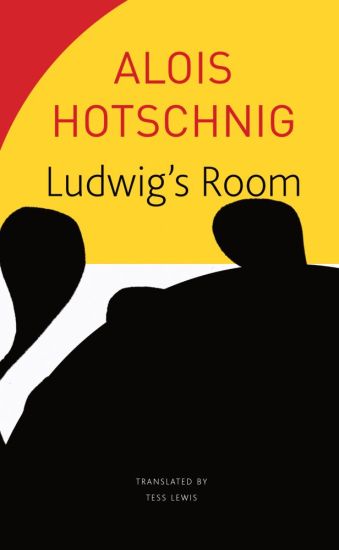
Ludwig's Room

Ludwig's Room

Alois Hotschnig

Seagull Books London Ltd
2021
nidottu
When Kurt Weber inherits his great-uncle’s lakeside house, he finds traces of the dark secrets of his family’s past. The early inhabitants of the house haunt his dreams nightly. And one day a ghostlike woman appears before him, hiding herself in a room that had been kept locked throughout his childhood. Inside, Kurt finds a hidden stash of photographs, letters, and documents. As he deciphers them, he gradually understands the degree of complicity in wartime horrors by his family and among his neighbors. As the story unfolds, it becomes clear that the entire village adheres to an old and widely understood agreement not to expose the many members in the community who had been involved with a nearby prison camp during World War II. This knowledge wraps the entire community—those involved, and those who know of the involvement—in inescapable guilt for generations. Translated from the original German by Tess Lewis, Ludwig’s Room is a story of love, betrayal, honor, and cowardice, as well as the burden of history and the moral demands of the present.
Ludwig Van Beethoven: Sheet Music for Piano
A passion for Beethoven? With fingerings clearly marked and designed for easy reading, these books are the ideal resource for any piano or keyboard player. Suited to every ability and helpfully grouped by level of difficulty - from Beginner, through Intermediate, to Advanced (covering Associated Board of the Royal Schools of Music Grades 5 to 8 and above) - each book contains pieces to delight lovers of the classical masterpieces. Ludwig Van Beethoven: Sheet Music for Piano includes everything from 'Fur Elise' to 'Pathetique'.
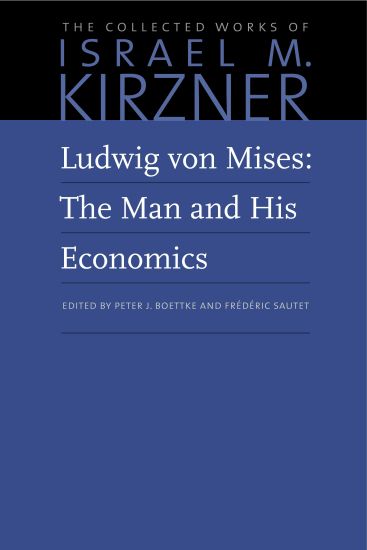
Ludwig von Mises

Ludwig von Mises

Israel M Kirzner

Liberty Fund Inc
2019
sidottu
Ludwig von Mises: The Man and His Economics is a collection of Israel M. Kirzners work regarding his mentor, including a monograph on Mises and his work as well as several articles detailing how he impacted the world of economics. Kirzner showcases Mises as not only a man with a sparkling, fresh, fundamentally new interpretation of the tenets espoused by the Austrian school of economics, but also as Kirzners mentor and academic compatriot. To this end, Kirzners essays on Mises elucidate the work of both men and convey Misess ideas with unparalleled brilliance. For Kirzner, Mises is a man with a mission: to reignite economists search for truth. It was this mission that led both Mises and Kirzner to champion economic science and its teachingi.e., the unhampered market and the system of free enterprisein response to the encroaching philosophical and economic shadow of socialism. As Kirzner put it, Mises saw the denial of economics as an alarming threat to a free society and to Western civilization. It is economics that is able to demonstrate the social advantages of the unhampered market. Misess work was fundamental in reviving classical-liberal ideas in Europe and the United States. He resurrected inquiry into the importance of entrepreneurial function and the science of human action at a time when many economists were turning away from it. Misess economics offers ammunition to those who understand that humans are ultimately made to live with freedom and dignity.
Ludwig von Mises

Ludwig von Mises

Israel M Kirzner

Liberty Fund Inc
2019
nidottu
This is a collection of Israel M Kirzners work regarding his mentor, including a monograph on Mises and his work as well as several articles detailing how he impacted the world of economics. Kirzner showcases Mises as not only a man with a sparkling, fresh, fundamentally new interpretation of the tenets espoused by the Austrian school of economics, but also as Kirzners mentor and academic compatriot. To this end, Kirzners essays on Mises elucidate the work of both men and convey Misess ideas with unparalleled brilliance. For Kirzner, Mises is a man with a mission: to reignite economists search for truth. It was this mission that led both Mises and Kirzner to champion economic science and its teaching ie: the unhampered market and the system of free enterprise -- in response to the encroaching philosophical and economic shadow of socialism. As Kirzner put it, Mises saw the denial of economics as an alarming threat to a free society and to Western civilisation. It is economics that is able to demonstrate the social advantages of the unhampered market. Misess work was fundamental in reviving classical-liberal ideas in Europe and the United States. He resurrected inquiry into the importance of entrepreneurial function and the science of human action at a time when many economists were turning away from it. Misess economics offers ammunition to those who understand that humans are ultimately made to live with freedom and dignity.
Ludwig & Mae

Ludwig & Mae

Louis Patrick Leroux

Talonbooks
2009
pokkari
La Litiere (1994), Rappel (1995) and Ressusciter (1996), published together here in English translation as Embedded, Apocalypse, and Resurrection respectively, make up a trilogy of plays featuring Gen-Xers Ludwig and Mae. Ludwig, trained as an engineer, hasn't been able to find work since graduating some time ago. The fact that he is sardonic, philosophically inclined and suicidal hasn't helped in this regard. Mae, on the other hand, is an actress who has never been out of work. Caught in a perverse relationship, she plays into Ludwig's constant mind games until one day she decides she's had enough. Embedded establishes their twisted Strindbergian relationship, while introducing the Philosopher-cum-Chinese Delivery Guy--the absurdist character who acts as a catalyst for the simmering emotional crisis about to explode. Apocalypse is a monodrama in which Ludwig stages his own suicidal ceremonial (along with unlikely allegorical characters such as a Pope, Giacometti's Cow and a Leather-Clad Muse). Resurrection is Mae's testimonial, where she confronts and reconciles herself with Ludwig's death, breaks the cycle of their co-dependency, and finally comes into her own.Together, these plays literally "stage" the internalized and therefore repressed failure of the search for an authentic life in art: the decorative nihilism of the post-modern ethos. Taking us on a cathartic journey from despair to exhilaration--at times perilous, comic, edgy and passionate--Ludwig & Mae releases its audiences from the artificial dark of the theatre into the liberating light of day, radiant with a new understanding: life does not imitate art, life makes art. This trilogy established Louis Patrick Leroux as a leading figure of the Franco-Ontarian artistic renaissance of the 1990s. Rappel Apocalypse, in particular, was quickly identified as a turning point from what had become a stultifying, identity-driven literary tradition, to a burgeoning of artistic freedom and formal exploration.
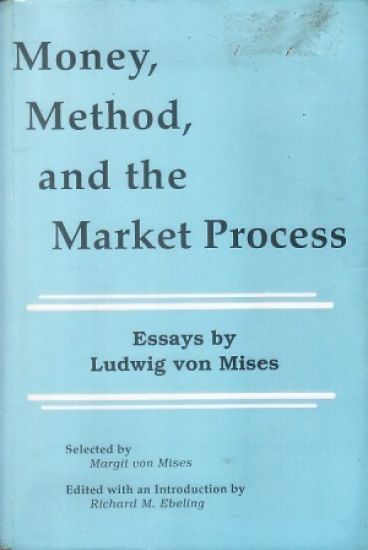
Money, Method, and the Market Process: Essays by Ludwig Von Mises
Edited by Richard M. EbelingThis volume might be called the Mises Reader, for it contains a wide sampling of his academic essays on money, trade, and economic systems. Some of them, like "Observations on the Cooperative Movement," have not been published previously. Others, like "The Idea of Liberty Is Western," have already made their mark on intellectual history.Brought together by Mrs. Mises after her husband's death, and edited with an introduction by Richard Ebeling, this volume fills an important gap in providing an overview of Ludwig von Mises's best academic work. For that reason, this book is already widely used in graduate courses and seminars on the resurgence of the Austrian School.
Ludwig Beethoven and the Chiming Tower Bells

Ludwig Beethoven and the Chiming Tower Bells

Opal Wheeler

Zeezok Publishing
2010
nidottu
Here is the story of Ludwig van Beethoven, greatest master of all, told with feeling and delicate skill for boys and girls. "Perhaps he, too, will become a musician, like all the Beethovens " said Father Johann...From then on, the four-year-old Ludwig was kept at the piano hour after hour until the long exercises were mastered. The chiming bells in the chapel tower comforted him and wonderful melodies crept into his mind as the twilight crept over the city... "So...then you are a composer, as well as an organist," said Herr Zenser, the chapel organist. "But Ludwig - this is very difficult music - much too difficult for your small hands to play " "Oh, that does not matter, Herr Zenser," answered the young Ludwig, "I will play it when I am bigger." "Surely he will be another Mozart some day," some said...Later he was to study with Mozart - go to Vienna - lead one of the finest orchestras in all the city - create great symphonies - until the name of Beethoven was spoken everywhere and eager visitors made their way to his door... This is his story...an inspiring story of his achievements against all odds...of his growing deafness..."Long live Beethoven " shouted the audience ..."But the master could not hear them, and as a singer turned him gently to face the audience, the noble head bowed low as he saw from the flutter of handkerchiefs, the applause that rained upon him."... Thus Opal Wheeler captures the superb quality of musical greatness of Beethoven and communicates it to boys and girls...a deeply stirring tribute to the greatest composer of all.
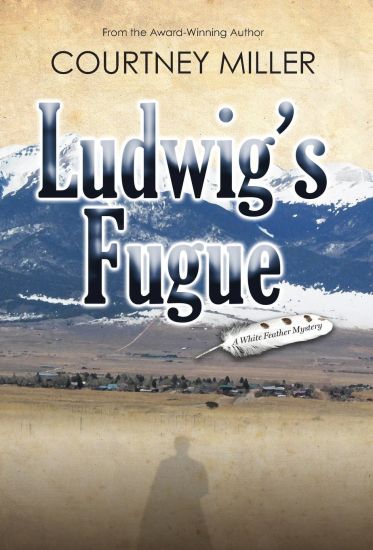
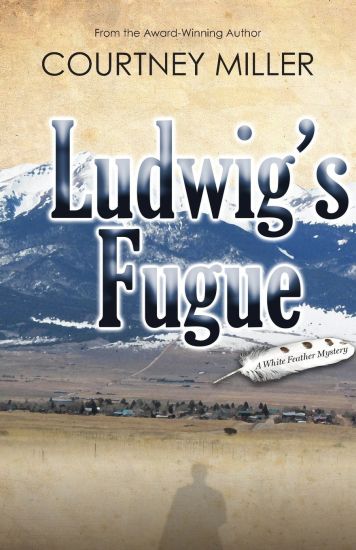
Ludwig's Fugue

Ludwig's Fugue

Courtney Miller

Courtney Miller
2017
sidottu
Can David Ludwig Emerge from His Fugue? Was He Set Up ... or Did He Murder His Family? The Wet Mountain Valley Sheriff's Office has its hands full when they must not only deal with solving a homicide, but, with limited resources, must call in the CBI and deal with an arrogant and closed-minded agent. White Feather, an old Cherokee medicine man, uses his unique skills to compete with the local Sheriff's Office to solve mysteries. He sometimes compliments but more often complicates the more traditional investigating methods of local law enforcement. Sam Morrison, fired from the Denver Police Homicide Division, accepts a job in the beautiful Wet Mountain Valley Sheriff's Office just in time to work on the Ludwig murders. Can he solve the crime? Will his personal life that caused his ex-wife to flee from him complicate his ability to work? And, will Sam be able to put his life and his family back together again? Set in the scenic, rural Wet Mountain Valley of southern Colorado, the White Feather Mysteries are a delightful cross between "Cozy Mystery" and "Geezer Lit". Multiple book award-winning author Courtney Miller will keep you guessing until the end "A cunningly crafted mystery. Take a triple homicide in a small, Colorado mountain town, add a cast of intriguing characters--almost none of whom are completely innocent--and you have Ludwig's Fugue. Courtney Miller sets this terrific plot into motion and doesn't let up until the final, spine-tingling surprise." --Margaret Coel, New York Times bestselling author of Winter's Child
Ludwig's Fugue: A White Feather Mystery

Ludwig's Fugue: A White Feather Mystery

Courtney Miller

Courtney Miller
2017
nidottu
Can David Ludwig Emerge from His Fugue? Was He Set Up ... or Did He Murder His Family? The Wet Mountain Valley Sheriff's Office has its hands full when they must not only deal with solving a homicide, but, with limited resources, must call in the CBI and deal with an arrogant and closed-minded agent. White Feather, an old Cherokee medicine man, uses his unique skills to compete with the local Sheriff's Office to solve mysteries. He sometimes compliments but more often complicates the more traditional investigating methods of local law enforcement. Sam Morrison, fired from the Denver Police Homicide Division, accepts a job in the beautiful Wet Mountain Valley Sheriff's Office just in time to work on the Ludwig murders. Can he solve the crime? Will his personal life that caused his ex-wife to flee from him complicate his ability to work? And, will Sam be able to put his life and his family back together again? Set in the scenic, rural Wet Mountain Valley of southern Colorado, the White Feather Mysteries are a delightful cross between "Cozy Mystery" and "Geezer Lit". Multiple book award-winning author Courtney Miller will keep you guessing until the end
Ludwig, James P., 1963-1964

Ludwig, James P., 1963-1964

James P. Ludwig

Hassell Street Press
2021
nidottu
This work has been selected by scholars as being culturally important and is part of the knowledge base of civilization as we know it.This work is in the public domain in the United States of America, and possibly other nations. Within the United States, you may freely copy and distribute this work, as no entity (individual or corporate) has a copyright on the body of the work.Scholars believe, and we concur, that this work is important enough to be preserved, reproduced, and made generally available to the public. To ensure a quality reading experience, this work has been proofread and republished using a format that seamlessly blends the original graphical elements with text in an easy-to-read typeface.We appreciate your support of the preservation process, and thank you for being an important part of keeping this knowledge alive and relevant.