Kirjojen hintavertailu. Mukana 11 699 587 kirjaa ja 12 kauppaa.

Kirjahaku

Etsi kirjoja tekijän nimen, kirjan nimen tai ISBN:n perusteella.

1000 tulosta hakusanalla M. K. Gupta

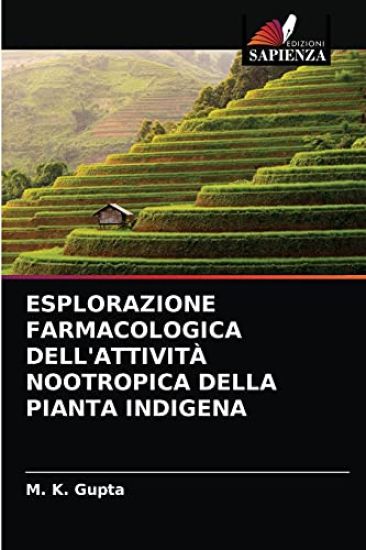
Esplorazione Farmacologica Dell'attività Nootropica Della Pianta Indigena
Plumbago zeylanica Linn e rizomi di Acorus calamus Linn sono stati selezionati per valutare il suo potenziale di miglioramento della memoria.Le radici di Plumbago zeylanica L. (Plumbaginaceae) sono incluse nel "Rasayana" - un antico sistema di medicina ayurvedica per il ringiovanimento. Contiene anche Plumbagin come costituente attivo che un alcaloide che pu agire come tonico nervino. Il metodo spettroscopico UV stato utilizzato per la stima del contenuto totale di fenolici, flavonoidi, tannini e alcaloidi per entrambe le piante. Il contenuto totale di flavonoidi stato riscontrato al massimo in Acorus calamus Linn era di circa l'88% e in Plumbago zeylanica Linn era del 50%. Utilizzando il grafico standard della quercetina (y = 0,005x-0,05 R = 0,997), il contenuto di flavonoidi di Acorus calamus Linn e di Plumbago zeylanica Linn., stato trovato rispettivamente 88 e 50 mg di quercetina equivalente / g di campione secco.

Exploração Farmacológica Da Atividade Nootropica Da Planta Indígena
Plumbago zeylanica Linn e rizomas de Acorus calamus Linn foram selecionados para avaliar seu potencial para melhorar a mem ria.As ra zes de Plumbago zeylanica L. (Plumbaginaceae) est o inclu das em "Rasayana" - um antigo sistema ayurv dico de medicina para o rejuvenescimento. Ele tamb m cont m Plumbagin como constituinte ativo que um alcal ide que pode atuar como t nico nervina. O m todo espectrosc pico de UV foi utilizado para estimar os teores de fen licos, flavon ides, taninos e alcal ides totais para ambas as plantas. O teor m ximo de flavon ides encontrados em Acorus calamus Linn foi de cerca de 88% e em Plumbago zeylanica Linn foi de 50%. Usando o gr fico padr o de quercetina (y = 0,005x-0,05 R = 0,997), o conte do de flavon ides de Acorus calamus Linn e em Plumbago zeylanica Linn., Verificou-se ser 88 e 50 mg equivalente de quercetina / g de amostra seca, respectivamente.
Birth of Nation

Birth of Nation

Lt Col M K Gupta Ray

Hindustan Publishing Corporation
2018
sidottu
On 3 December, 1971 India had sent her forces inside East Pakistan, part of a neighbouring state, to save the citizens (Bengali Muslims) from one of the most dreadful genocides, that was being perpetrated upon them by their own so-called ruling class from West Pakistan. This was one of the very few unique battles fought in the annals of the human history where a neighbouring country had ever sent its troops not to capture the country and subdue the people but to save them from their demoniac leaders. What can be more sublime employment of the Army? This book, in quest of the genesis of this war, has dug into the history of the subcontinent and narrated development of the events. The warring countries were once parts of the same country before the cruel hands of politics dissected it into two. The narration included advent of British Rule followed by political development which caused the partition, horror of partition, freedom struggle in Bangladesh, part of author's formative life leading to join army, events culminating into war and the war itself. Lastly each and every Indian showed undivided support to the government in taking proper action including employment of arms to free the poor East Bengalese from untold miseries.
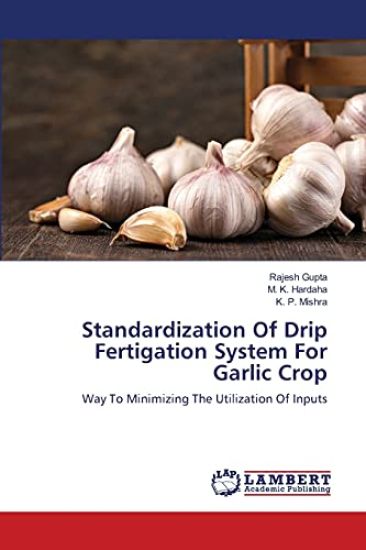
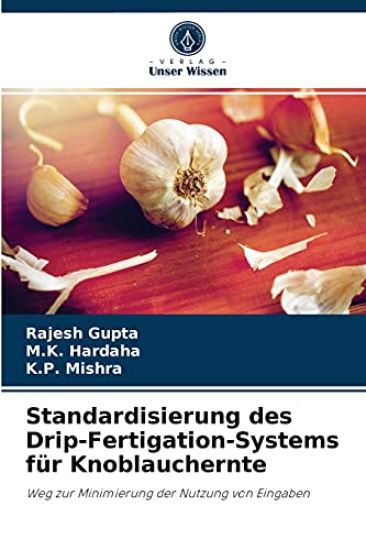
Standardisierung des Drip-Fertigation-Systems für Knoblauchernte

Standardisierung des Drip-Fertigation-Systems für Knoblauchernte

Rajesh Gupta; M K Hardaha; K P Mishra

Verlag Unser Wissen
2021
pokkari
Auf der Grundlage der Ergebnisse der vorliegenden Untersuchung werden die folgenden Schlussfolgerungen gezogen: Das Tropfsystem mit Bew sserung entsprechend dem Evapotranspirationsbedarf der Pflanzen (IW/ETc-Verh ltnis, 1,00) erbringt die beste Leistung in Bezug auf den Ernteertrag und die Qualit tsparameter von Knoblauch in der Region Malwa in Madhya Pradesh unter den Bedingungen von Bew sserungswasserknappheit. Die Wassernutzungseffizienz und die Wasserproduktivit t sind am besten, wenn die Bew sserungsmenge 60 % des Evapotranspirationsbedarfs der Pflanzen betr gt.2) Die D ngung mit 100:50:50:50 kg/ha (N: P: K: S) ist im Hinblick auf den Ertrag und die Qualit t des Knoblauchs bei Tropfbew sserung in der Region Malwa in Madhya Pradesh am besten.Die Tropfbew sserung mit einer Bew sserungsmenge von 100 % des Evapotranspirationsbedarfs der Pflanzen und einer Bew sserungsrate von 100:50:50:50 kg/ha (N: P: K: S) bringt den h chsten wirtschaftlichen Ertrag f r den Knoblauchanbau in der Region Malwa von Madhya Pradesh.
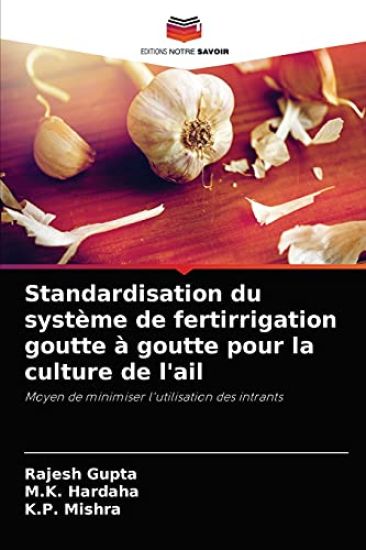
Standardisation du système de fertirrigation goutte à goutte pour la culture de l'ail

Standardisation du système de fertirrigation goutte à goutte pour la culture de l'ail

Rajesh Gupta; M K Hardaha; K P Mishra

Editions Notre Savoir
2021
pokkari
Sur la base des r sultats obtenus partir de la pr sente enqu te, les conclusions suivantes sont tir es: Le syst me de goutte goutte avec une irrigation en fonction de la demande d' vapotranspiration des cultures (ratio IW/ETc, 1,00) donne les meilleures performances en termes de rendement des cultures et des param tres de qualit de l'ail dans la r gion de Malwa de Madhya Pradesh dans une situation de p nurie d'eau d'irrigation. L'efficacit de l'utilisation de l'eau et la productivit de l'eau sont meilleures lorsque le montant de l'irrigation est de 60 % du besoin d' vapotranspiration de la culture.2) L'application d'engrais sous forme de fertigation un taux de 100:50:50:50 kg / ha (N: P: K: S) est le meilleur en termes de rendement des cultures et la qualit de l'ail sous fertigation goutte goutte dans la r gion de Malwa de Madhya Pradesh.3) Le traitement de fertigation goutte goutte avec une quantit d'irrigation de 100% de la demande d' vapotranspiration des cultures et la fertigation un taux de 100:50:50:50 kg / ha (N: P: K: S) donnent le rendement conomique le plus lev pour la culture de l'ail dans la r gion de Malwa de Madhya Pradesh.
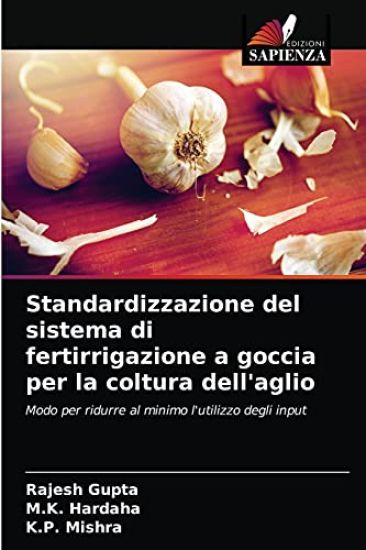
Standardizzazione del sistema di fertirrigazione a goccia per la coltura dell'aglio
Sulla base dei risultati ottenuti dalla presente indagine, sono state tratte le seguenti conclusioni: 1. Il sistema a goccia con irrigazione secondo la domanda di evapotraspirazione delle colture (rapporto IW/ETc, 1.00) sta dando le migliori prestazioni in termini di resa delle colture e parametri di qualit dell'aglio nella regione di Malwa del Madhya Pradesh in una situazione di carenza di acqua di irrigazione. L'efficienza nell'uso dell'acqua e la produttivit dell'acqua sono risultate migliori quando la quantit di irrigazione pari al 60% del fabbisogno di evapotraspirazione delle colture.2. L'applicazione di fertilizzante come fertirrigazione ad un tasso di 100:50:50:50 kg/ha (N: P: K: S) migliore in termini di resa e qualit dell'aglio sotto fertirrigazione a goccia nella regione di Malwa del Madhya Pradesh.3. Il trattamento di fertirrigazione a goccia con una quantit di irrigazione del 100% della domanda di evapotraspirazione delle colture e la fertirrigazione ad un tasso di 100:50:50:50 kg/ha (N: P: K: S) danno il pi alto ritorno economico per la coltivazione dell'aglio nella regione Malwa del Madhya Pradesh.
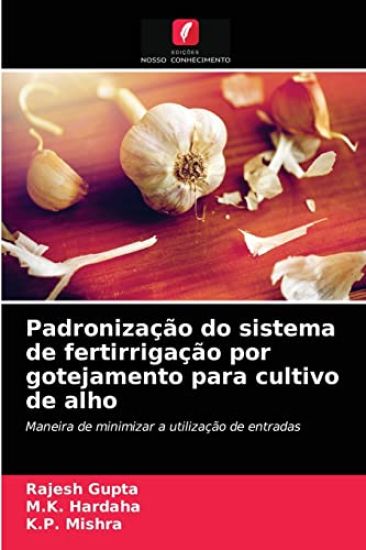
Padronização do sistema de fertirrigação por gotejamento para cultivo de alho

Padronização do sistema de fertirrigação por gotejamento para cultivo de alho

Rajesh Gupta; M K Hardaha; K P Mishra

Edicoes Nosso Conhecimento
2021
pokkari
Com base nos resultados obtidos com a presente investiga o, s o tiradas as seguintes conclus es: 1.O sistema de gotejamento com irriga o por demanda de evapotranspira o da cultura (raz o IW/ETc, 1,00) est dando melhor desempenho em termos de produtividade da cultura e par metros de qualidade do alho na regi o de Malwa, Madhya Pradesh, sob situa o de escassez de gua de irriga o. A efici ncia no uso de gua e produtividade da gua melhor quando a quantidade de irriga o 60% da necessidade de evapotranspira o da cultura.2.A aplica o de fertilizantes como fertirriga o a uma taxa de 100:50:50:50 kg/ha (N: P: K: S) melhor em termos de produtividade da cultura e qualidade do alho sob fertirriga o por gotejamento na regi o de Malwa, Madhya Pradesh.3.O tratamento de fertirriga o por gotejamento com 100% da demanda de evapotranspira o da cultura e fertirriga o a uma taxa de 100:50:50:50 kg/ha (N: P: K: S) d o maior retorno econ mico para o cultivo de alho na regi o de Madhya Pradesh em Malwa.
Advanced Electrical and Electronics Materials

Advanced Electrical and Electronics Materials

K. M. Gupta; Nishu Gupta

John Wiley Sons Inc
2015
sidottu
This comprehensive and unique book is intended to cover the vast and fast-growing field of electrical and electronic materials and their engineering in accordance with modern developments. Basic and pre-requisite information has been included for easy transition to more complex topics. Latest developments in various fields of materials and their sciences/engineering, processing and applications have been included. Latest topics like PLZT, vacuum as insulator, fiber-optics, high temperature superconductors, smart materials, ferromagnetic semiconductors etc. are covered. Illustrations and examples encompass different engineering disciplines such as robotics, electrical, mechanical, electronics, instrumentation and control, computer, and their inter-disciplinary branches. A variety of materials ranging from iridium to garnets, microelectronics, micro alloys to memory devices, left-handed materials, advanced and futuristic materials are described in detail.
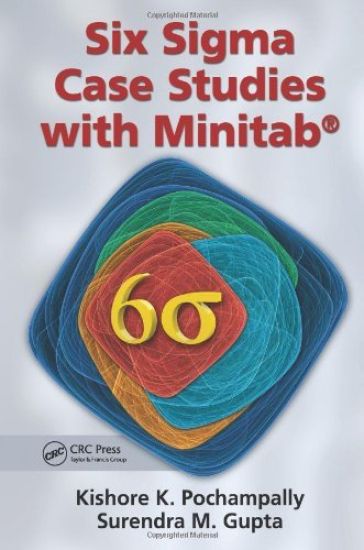
Six Sigma Case Studies with Minitab

Six Sigma Case Studies with Minitab

Kishore K. Pochampally; Surendra M. Gupta

Apple Academic Press Inc.
2014
sidottu
What happens when one of the most widely used quality improvement methodologies meets the world’s leading statistical software for quality improvement? Packed with case studies in a variety of sectors, including health care, manufacturing, airlines, and fast food restaurants, Six Sigma Case Studies with Minitab® shows you how to maximize the quality analysis and improvement tools available in Minitab® for your Six Sigma projects.Highly illustrated, the book includes detailed steps and more than 380 screenshots that explain how to use:Confidence Interval EstimationHypothesis TestingChi-Square AnalysisProcess Capability AnalysisBinary Logistic RegressionItem AnalysisCluster AnalysisMixture Design and Analysis of ExperimentsMultivariate AnalysisPareto ChartsCause-and-Effect DiagramGage Repeatability and Reproducibility AnalysisTaguchi Design and Analysis of ExperimentsFactorial Design and Analysis of ExperimentsStatistical Control ChartsThe case studies demonstrate the wide range of sectors and uses for Six Sigma and Minitab®. The screenshots provide exceptional detail and the book includes explanations for many Six Sigma terms and an appendix with the contents of the Minitab® worksheets that are referred to in most of the chapters. These features and more give you the tools to meet the challenges of continuous improvement expected in today’s marketplace.
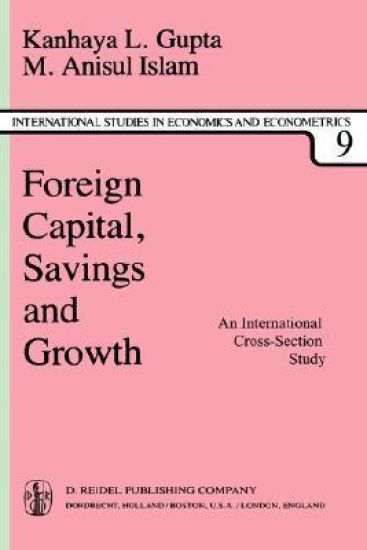
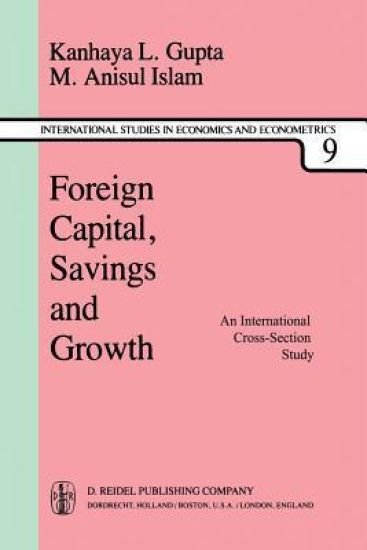
Foreign Capital, Savings and Growth

Foreign Capital, Savings and Growth

K. L. Gupta; M.A. Islam

Kluwer Academic Publishers
1982
sidottu
The growing disparity between the developed and the developing countries has once again rekindled the debate about the relative merits of foreign investment as means whereby the developed countries can help the devel­ oping countries in both achieving a reasonable rate of growth and also from preventing the widening gap between the North and the South from widening even further. This renewed interest in the debate was most sharply highlighted at the recently concluded North-South economic summit conference at Cancun, Mexico. There, the United States took the position that massive increases in foreign aid were neither practical nor the best means of ensuring continuing and satisfactory growth in the developing countries. Rather the solution was to be found in depending on a free market economy and on inflows of private foreign investment. Behind these views, of course lie the more fundamental questions: for example, what should be the role of multinational corporations in the developing countries since they constitute the main source of foreign private investment? Should there be greater cooperation between the public sectors of the North and the South? What is the best means of bridging the economic gap between the North and the South: through direct transfers of wealth from the North to the South or through raising South's growth rates via the transfer of technology and the inflow of investment by multinationals? These questions are of fundamental importance and have wide ranging implications, not only for the economic
Foreign Capital, Savings and Growth

Foreign Capital, Savings and Growth

K. L. Gupta; M.A. Islam

Springer
2011
nidottu
The growing disparity between the developed and the developing countries has once again rekindled the debate about the relative merits of foreign investment as means whereby the developed countries can help the devel­ oping countries in both achieving a reasonable rate of growth and also from preventing the widening gap between the North and the South from widening even further. This renewed interest in the debate was most sharply highlighted at the recently concluded North-South economic summit conference at Cancun, Mexico. There, the United States took the position that massive increases in foreign aid were neither practical nor the best means of ensuring continuing and satisfactory growth in the developing countries. Rather the solution was to be found in depending on a free market economy and on inflows of private foreign investment. Behind these views, of course lie the more fundamental questions: for example, what should be the role of multinational corporations in the developing countries since they constitute the main source of foreign private investment? Should there be greater cooperation between the public sectors of the North and the South? What is the best means of bridging the economic gap between the North and the South: through direct transfers of wealth from the North to the South or through raising South's growth rates via the transfer of technology and the inflow of investment by multinationals? These questions are of fundamental importance and have wide ranging implications, not only for the economic