Kirjahaku
Etsi kirjoja tekijän nimen, kirjan nimen tai ISBN:n perusteella.
1000 tulosta hakusanalla MICHAEL MOSS
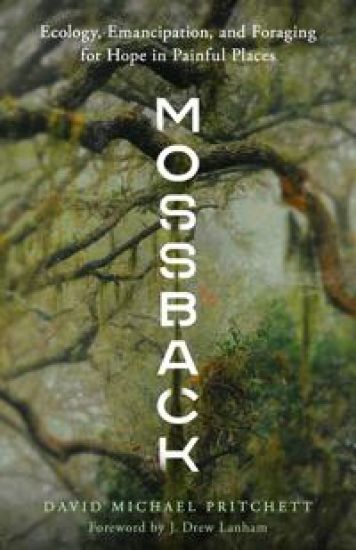
In Mossback, David Pritchett traverses geography, history, and genealogy to explore landscapes and mythologies at the intersection of environmental, indigenous, and social justice. This collection of a dozen essays searches terrain—from the heart of a swamp to the modern grid lines remaking our watersheds, to the tracks of the animals who share this earth, to the inner landscapes of the soul—to find glimpses of light in dark places and hope in painful legacies.Pritchett recounts a trip to Dismal Swamp, where he takes inspiration from the many enslaved people who found refuge there. Another piece offers two ways of seeing the landscape: the watershed as an ecological unit, and the grid as a colonial construct. Still another weaves personal narrative with the story of the Trail of Tears to describe how settler colonialism became an apocalypse for indigenous nations and ecologies. Pritchett explores an early apocalyptic story from the book of Daniel and considers new ways of relating to the land and its inhabitants. He focuses on the relationship between technology and trees to argue that humans have largely discarded ecological interrelationship in favor of extractive ways of living, and he travels the Ventura River, reflecting on waterways as being endangered but still operating as places of refuge for people and wildlife.The word “mossback” has been used to describe rural southerners who lived in swampy areas during colonial times and moved so slowly that moss grew on their clothing. It is also used to describe fish and turtles who show similar growth on their shells, Confederate deserters who refused to fight and, after the war, southerners who fought against the Ku Klux Klan. Pritchett reclaims the word to celebrate those who move deliberately through the natural world, protecting the land and the relations they depend on.
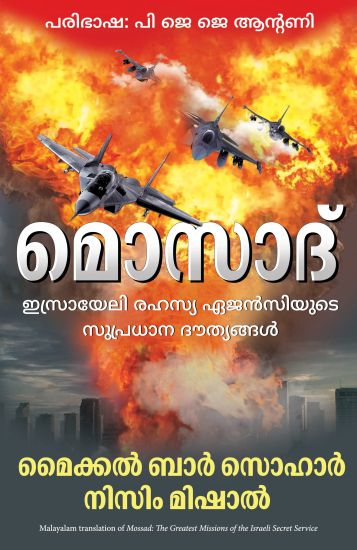
Reading books is a kind of enjoyment. Reading books is a good habit. We bring you a different kinds of books. You can carry this book where ever you want. It is easy to carry. It can be an ideal gift to yourself and to your loved ones. Care instruction keep away from fire.
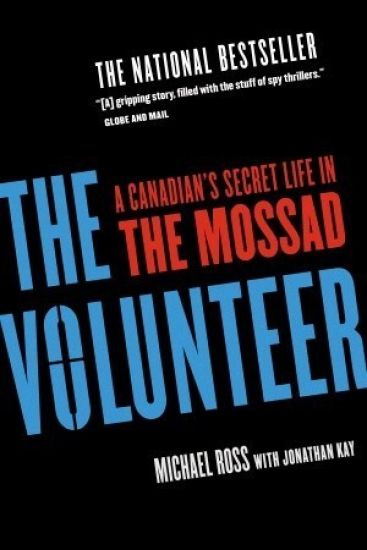
The Volunteer: A Canadian's Secret Life in the Mossad
Michael Ross; Jonathan Kay
McClelland Stewart
2008
nidottu
The riveting story of a Canadian who serves as a senior officer in Israel's legendary Mossad. In 1982 a young Michael Ross joins the legion of Canadian twenty-somethings backpacking in Europe. Through happenstance, he winds up working on a Kibbutz in Israel, where he falls in love with the land and its ancient, multi-layered history. He immerses himself in Israeli culture, converts to Judaism, and adopts his new country's struggle for survival as his own, joining the Israel Defence Force and eventually Mossad's most elite and storied covert-operations unit, Caesaria. For seven-and-a-half years, Ross worked as an undercover agent -- a classic spy. In The Volunteer, he describes his role in missions to foil attempts by Syria, Libya, and Iran to acquire advanced weapons technology. He tells of his part in the capture of three senior al Qaeda operatives who masterminded the 1998 attacks on American embassies in Kenya and Tanzania; a joint Mossad-FBI operation that uncovered a senior Hezbollah terrorist based in the United States; and a mission to South Africa in which he intercepted Iranian agents seeking to expand their country's military arsenal; and two-and-a-half years as Mossad's Counterterrorism Liaison Officer to the CIA and FBI. Many of the operations Ross describes have never before been revealed to the public. My first face-to-face encounter with the entity the world now knows as al Qaeda began on Friday, August 7, 1998, the day the group detonated truck bombs outside U.S. embassies in Nairobi, Kenya, and Dar es Salaam, Tanzania, killing 291 innocents, including 12 U.S. citizens, and injuring over 4,500 African bystanders. On August 7, I was at home in Israel, enjoying a rare day off, but soon after the blasts, my pager went off. It was an urgent request to call the Mossad's 24/7 communications center. I checked in by phone, then raced to HQ in my tiny Renault, running up the two flights of stairs to the counterterrorism department. There, I found Etti, an analyst in the "World Jihad" branch (known informally as the department of "awful Ahmeds") and a few others studying the cable traffic from our liaison station in Nairobi. I noticed Etti had a cigarette going -- despite the no-smoking policy at HQ, it was the sort of thing a tough old hand like Etti could get away with under these circumstances. She greeted me with her usual flurry of casual obscenities, and handed me a stack of reports that brought me up to speed.-- From The Volunteer
What is education, what is it for and what are its fundamental values? How do we understand knowledge and learning? What is our image of the child and the school? How does the ever more pressing need to develop a more just, creative and sustainable democratic society affect our responses to these questions?Addressing these fundamental issues, Fielding and Moss contest the current mainstream dominated by markets and competition, instrumentality and standardisation, managerialism and technical practice. They argue instead for a radical education with democracy as a fundamental value, care as a central ethic, a person-centred education that is education in the broadest sense, and an image of a child rich in potential. Radical education, they say, should be practiced in the ‘common school’, a school for all children in its local catchment area, age-integrated, human scale, focused on depth of learning and based on team working. A school understood as a public space for all citizens, a collective workshop of many purposes and possibilities, and a person-centred learning community, working closely with other schools and with local authorities. The book concludes by examining how we might bring such transformation about. Written by two of the leading experts in the fields of early childhood and secondary education, the book covers a wide vista of education for children and young people. Vivid examples from different stages of education are used to explore the full meaning of radical democratic education and the common school and how they can work in practice. It connects rich thinking and experiences from the past and present to offer direction and hope for the future. It will be of interest and inspiration to all who care about education - teachers and students, academics and policy makers, parents and politicians.
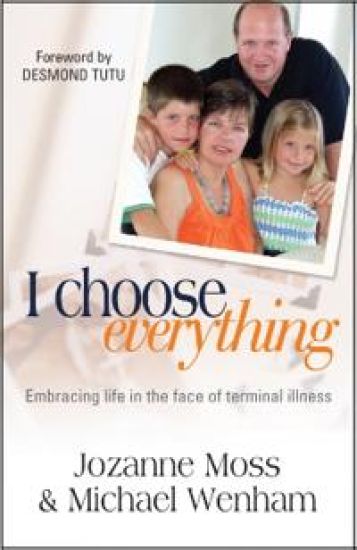
Jozanne Moss and Michael Wenham have only met by email. Both are dying of Motor Neurone Disease. Both are married to remarkable people who support and care for them. Through Jozanne's story they address the myth that pain and suffering are sent by dark powers, and that God is only responsible for the good bits. Michael explains: 'We receive from God everything, both light and shade, praising Him in every circumstance, seeing all of life as His gift from beginning to end.' Michael bases the book around Jozanne's story, telling it in her words and with his commentary. This allows him to address big questions such as 'Why does a good God, if there is one, allow all this pain in his world?' Michael comments: 'God has brought us together with the same illness and the same goal: to encourage and inspire others with the life God has purposed for us.' Their story is sombre yet wonderfully uplifting, made radiant by the faith of the two authors.
"It's not every day you investigate your own murder."When the police find a body that looks a lot like private investigator Joe Garrison, it's time for Joe to find out who did it and if he was the intended victim, before the police try to blame him for it.Follow Joe through a world of dirty thugs, dirtier cops, and treacherous dames in 1930s Portland, Oregon - a world where morality might be black and white but the truth is always a shade of gray and where Joe may find out along the way that Murder is Suicide.Murder is Suicide's Joe Garrison follows in the shadowy footsteps of Chandler's Philip Marlowe and Hammett's Sam Spade, but with his own cynical take on the world filtered through several glasses of whiskey, glaring personality flaws, and the piercing insight of the femme fatale he encounters. Garrison experiences historical events, circumstances, and locations of Portland, Oregon in 1937 while he seemingly investigates his own murder, mixed in with novel inventions for the sake of the narrative.
Set against the backdrop of a small coastal town in Newfoundland, this is the story of Patrick Kinny, a socially odd individual with little conversational skills, and Dylan Parks, an easy-going newcomer who befriends him. As they become friends, Dylan learns a shattering secret about his father's past, and he and Patrick join forces to stop a blackmailer and save his father from his own mistakes.
As seen in military documents, medical journals, novels, films, television shows, and memoirs, soldiers’ invisible wounds are not innate cracks in individual psyches that break under the stress of war. Instead, the generation of weary warriors is caught up in wider social and political networks and institutions—families, activist groups, government bureaucracies, welfare state programs—mediated through a military hierarchy, psychiatry rooted in mind-body sciences, and various cultural constructs of masculinity. This book offers a history of military psychiatry from the American Civil War to the latest Afghanistan conflict. The authors trace the effects of power and knowledge in relation to the emotional and psychological trauma that shapes soldiers’ bodies, minds, and souls, developing an extensive account of the emergence, diagnosis, and treatment of soldiers’ invisible wounds.
Sicher am Berg: Bergwandern
Gerhard Mössmer; Michael Larcher; Thomas Wanner
Tyrolia Verlagsanstalt Gm
2022
pokkari
Sicher am Berg: Hochtouren
Michael Larcher; Gerhard Mössmer; Lukas Fritz
Tyrolia Verlagsanstalt Gm
2022
pokkari
Sicher am Berg: Skitouren
Gerhard Mössmer; Michael Larcher; Walter Würtl
Tyrolia Verlagsanstalt Gm
2022
pokkari
Sicher am Berg: Sportklettern
Gerhard Mössmer; Markus Schwaiger; Michael Larcher
Tyrolia Verlagsanstalt Gm
2022
pokkari
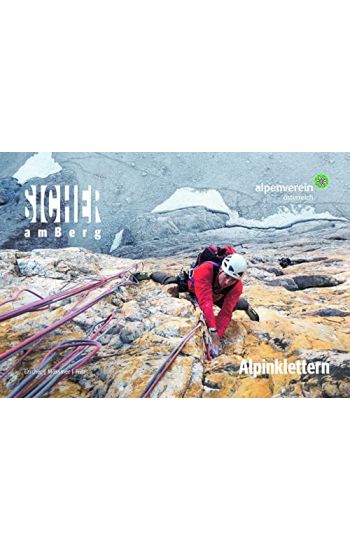
Sicher am Berg: Alpinklettern
Gerhard Mössmer; Lukas Fritz; Michael Larcher
Tyrolia Verlagsanstalt Gm
2022
pokkari
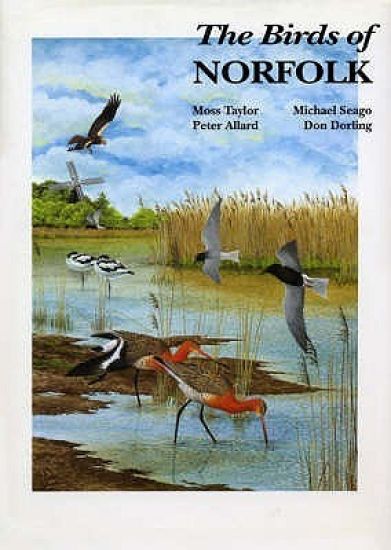
This is the standard avifauna for the county of Norfolk, and the first in the Helm series of county avifaunas.After extensive introductory chapters, the bulk of the book comprises the detailed species accounts, which give a comprehensive overview of the status of every species. This landmark volume was first published in hardback in 1999, and reprinted with revisions in paperback in 2000.This is a hardback reprint of the paperback edition.
Pressure Vessel Design Manual
Dennis R. Moss; Michael M. Basic
Butterworth-Heinemann Inc
2013
sidottu
Pressure vessels are closed containers designed to hold gases or liquids at a pressure substantially different from the ambient pressure. They have a variety of applications in industry, including in oil refineries, nuclear reactors, vehicle airbrake reservoirs, and more. The pressure differential with such vessels is dangerous, and due to the risk of accident and fatality around their use, the design, manufacture, operation and inspection of pressure vessels is regulated by engineering authorities and guided by legal codes and standards. Pressure Vessel Design Manual is a solutions-focused guide to the many problems and technical challenges involved in the design of pressure vessels to match stringent standards and codes. It brings together otherwise scattered information and explanations into one easy-to-use resource to minimize research and take readers from problem to solution in the most direct manner possible.
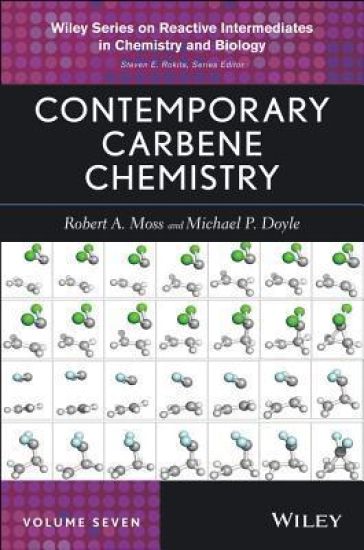
Presents the most innovative results in carbene chemistry, setting the foundation for new discoveries and applications The discovery of stable carbenes has reinvigorated carbene chemistry research, with investigators seeking to develop carbenes into new useful catalysts and ligands. Presenting the most innovative and promising areas of carbene research over the past decade, this book explores newly discovered structural, catalytic, and organometallic aspects of carbene chemistry, with an emphasis on new and emerging synthetic applications. Contemporary Carbene Chemistry features contributions from an international team of pioneering carbene chemistry researchers. Collectively, these authors have highlighted the most interesting and promising areas of investigation in the field. The book is divided into two parts: Part 1, Properties and Reactions of Carbenes, explores new findings on carbene stability, acid-base behavior, and catalysis. Carbenic structure and reactivity are examined in chapters dedicated to stable carbenes, carbodicarbenes, carbenes as guests in supramolecular hosts, tunneling in carbene and oxacarbene reactions, and ultrafast kinetics of carbenes and their excited state precursors. Theoretical concerns are addressed in chapters on computational methods and dynamics applied to carbene reactions.Part 2, Metal Carbenes, is dedicated to the synthetic dimensions of carbenes, particularly the reactions and catalytic properties of metal carbenes. The authors discuss lithium, rhodium, ruthenium, chromium, molybdenum, tungsten, cobalt, and gold. All the chapters conclude with a summary of the current situation, new challenges on the horizon, and promising new research directions. A list of key reviews and suggestions for further reading also accompanies every chapter. Each volume of the Wiley Series on Reactive Intermediates in Chemistry and Biology focuses on a specific reactive intermediate, offering a broad range of perspectives from leading experts that sets the stage for new applications and further discoveries.
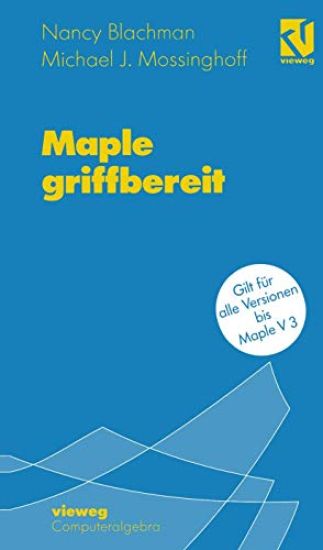
In diesem Buch finden Sie alles, was Sie als Maple-Anwender wissen mussen: Als Neueinsteiger finden Sie eine ausfuhrliche Einfuhrung in die Fahigkeiten des Systems. Als versierter Benutzer konnen Sie die genaue Bedeutung der verschiedenen Parameter und Optionen fur einen bestimmten Befehl nachschauen. Und als "Quereinsteiger" mit Mathematica-Kenntnissen konnen Sie nachschauen, wie die ihm bekannten Befehle in Maple heissen. Samtliche Befehle aller Maple-Versionen bis Maple V 3 sind hier sowohl systematisch als auch alphabetisch aufgelistet und erklart, Bezugs- und Informationsquellen sowie ein Glossar runden das Werk ab, das neben jedem Maple-Rechner liegen sollte.
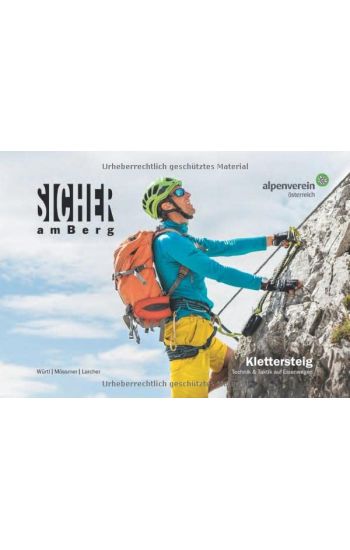
Sicher am Berg: Klettersteig
Walter Würtl; Gerhard Mössmer; Michael Larcher
Tyrolia Verlagsanstalt Gm
2022
pokkari