Kirjojen hintavertailu. Mukana 11 342 296 kirjaa ja 12 kauppaa.

Kirjahaku

Etsi kirjoja tekijän nimen, kirjan nimen tai ISBN:n perusteella.

1000 tulosta hakusanalla Machado Assis

O Alienista, de Machado de Assis

O Alienista, de Machado de Assis

Marcos Matias

Novas Edicoes Academicas
2019
pokkari
Ao dialogar com essas instigantes quest es relativas ao biopoder disciplinar, desenvolvido por Michel Foucault em A hist ria da sexualidade: vontade de saber (1976) Marcos Rocha n o apenas deduziu, neste livro, que o poder disciplinar, de forma imanente, constituiu-se como o novo s tio hist rico do poder soberano, no interior da modernidade, mas tamb m que o racismo de Estado o , ou pode s -lo, contra todos, posto que, se as duas institui es correcionais do biopoder disciplinar, a cadeia e o hosp cio, s por existirem, p e-nos a todos sob suspei o ( ou somos criminosos em pot ncia ou somos loucos), porque o direito de morte, de viol ncia, t pico da sociedade da soberania, no contexto disciplinar, n o deixou de vigorar, tendo se transformado em institucional. O biopoder disciplinar-institucional o novo lugar da soberania, dessa vez imanente, laica, cotidiana, corporal, subjetiva, na modernidade da sociedade burguesa. Por Lu s Eust quio Soares
Der Alienist, von Machado de Assis

Der Alienist, von Machado de Assis

Marcos Matias

Verlag Unser Wissen
2023
pokkari
Indem er sich mit den von Michel Foucault in Die Geschichte der Sexualit t entwickelten Ansto fragen zur disziplin ren Biomacht auseinandersetzte: Wille zum Wissen (1976) entwickelt hat, hat Marcos Rocha in diesem Buch nicht nur festgestellt, dass sich die Disziplinarmacht auf immanente Weise als neuer historischer Ort der souver nen Macht innerhalb der Moderne konstituiert, sondern auch, dass der staatliche Rassismus gegen alle gerichtet ist oder sein kann, denn wenn die beiden Strafanstalten der disziplin ren Biomacht, wenn die beiden Strafanstalten der disziplin ren Biomacht, das Gef ngnis und das Hospiz, uns alle allein durch ihre Existenz unter Verdacht stellen (entweder sind wir potenzielle Verbrecher oder wir sind verr ckt), dann deshalb, weil das Recht auf Tod, auf Gewalt, das f r die Gesellschaft der Souver nit t im disziplinarischen Kontext typisch ist, nicht aufgeh rt hat, in Kraft zu sein, sondern institutionell geworden ist. Die disziplin r-institutionelle Biomacht ist der neue Ort der Souver nit t, diesmal immanent, s kular, allt glich, leiblich, subjektiv, in der Modernit t der b rgerlichen Gesellschaft. Von Lu s Eust quio Soares.
The Alienist, by Machado de Assis

The Alienist, by Machado de Assis

Marcos Matias

Our Knowledge Publishing
2023
pokkari
By engaging in dialogue with these instigating questions relating to disciplinary biopower, developed by Michel Foucault in The History of Sexuality: Will to Know (1976) Marcos Rocha not only deduced, in this book, that disciplinary power, in an immanent way, constituted itself as the new historical site of sovereign power, within modernity, but also that State racism is, or can be, against everyone, since, if the two correctional institutions of disciplinary biopower, the prison and the hospice, just by existing, put us all under suspicion (either we are potential criminals or we are insane), it is because the right of death, of violence, typical of the society of sovereignty, in the disciplinary context, has not ceased to be in force, but has become institutional. Disciplinary-institutional biopower is the new place of sovereignty, this time immanent, secular, everyday, bodily, subjective, in the modernity of bourgeois society. By Lu s Eust quio Soares.
L'alienista, di Machado de Assis

L'alienista, di Machado de Assis

Marcos Matias

Edizioni Sapienza
2023
pokkari
Entrando in dialogo con queste domande stimolanti relative al biopotere disciplinare, sviluppate da Michel Foucault in Storia della sessualit Volont di sapere (1976) Marcos Rocha non solo ha dedotto, in questo libro, che il potere disciplinare, in modo immanente, si costituito come nuovo luogo storico del potere sovrano, all'interno della modernit , ma anche che il razzismo di Stato , o pu essere, contro tutti, poich , se le due istituzioni correzionali del biopotere disciplinare, il carcere e l'ospizio, per il solo fatto di esistere, ci mettono tutti in sospetto (o siamo potenziali criminali o siamo pazzi), perch il diritto di morte, di violenza, tipico della societ della sovranit , nel contesto disciplinare, non ha cessato di essere in vigore, ma diventato istituzionale. Il biopotere disciplinare-istituzionale il nuovo luogo della sovranit , questa volta immanente, secolare, quotidiana, corporea, soggettiva, nella modernit della societ borghese. Di Lu s Eust quio Soares.
L'Aliéniste, de Machado de Assis

L'Aliéniste, de Machado de Assis

Marcos Matias

Editions Notre Savoir
2023
pokkari
En dialoguant avec ces questions instigatrices relatives au biopouvoir disciplinaire, d velopp es par Michel Foucault dans L'histoire de la sexualit Will to Know (1976), Marcos Rocha a non seulement d duit, dans ce livre, que le pouvoir disciplinaire s'est constitu , de mani re immanente, comme le nouveau lieu historique du pouvoir souverain, au sein de la modernit , mais aussi que le racisme d' tat est, ou peut tre, contre tout le monde, puisque, si les deux institutions correctionnelles du biopouvoir disciplinaire, la prison et l'hospice, ne sont pas des lieux de pouvoir, elles ne sont pas des lieux de pouvoir, la prison et l'hospice, par leur seule existence, nous mettent tous en suspicion (soit nous sommes des criminels en puissance, soit nous sommes fous), c'est que le droit de mort, de violence, typique de la soci t de souverainet , dans le contexte disciplinaire, n'a pas cess d' tre en vigueur, mais s'est institutionnalis . Le biopouvoir disciplinaire-institutionnel est le nouveau lieu de la souverainet , cette fois-ci immanente, s culaire, quotidienne, corporelle, subjective, dans la modernit de la soci t bourgeoise. Par Lu s Eust quio Soares.
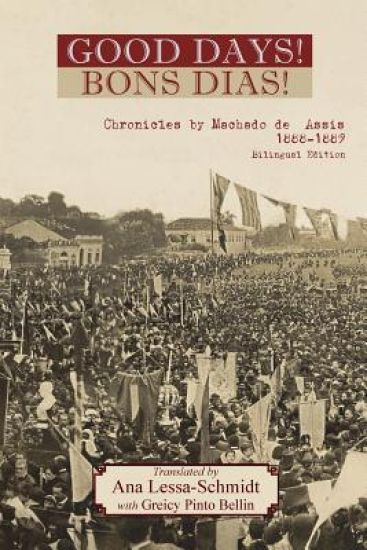
The Bons Dias! Chronicles of Machado de Assis: (1888-1889)
Brazil's most renowned writer wrote a series of newspaper chronicles in 1888 and 1889. In that first year, Brazil abolished slavery. In the second, Brazil ended its monarchy and became a republic. Machado applied his astute eye and unique writing style to what he observed during those crucial years. This bilingual edition presents the original Portuguese alongside the English translation. It is the only collection of all 50 known chronicles from Machado's Bons Dias series.
The Posthumous Memoirs of Brás Cubas

The Posthumous Memoirs of Brás Cubas

Machado De Assis; Dave Eggers

Penguin Classics
2021
pokkari
A revelatory new translation of the playful, incomparable masterpiece of one of the greatest Black authors in the AmericasMachado de Assis is not only Brazil's most celebrated writer but also a writer of world stature. In his masterpiece, the 1881 novel The Posthumous Memoirs of Brás Cubas (also translated as Epitaph of a Small Winner), the ghost of a decadent and disagreeable aristocrat decides to write his memoir. He dedicates it to the worms gnawing at his corpse and tells of his failed romances and half-hearted political ambitions, serves up hare-brained philosophies and complains with gusto from the depths of his grave. Wildly imaginative, wickedly witty and ahead of its time, the novel has been compared to works by Cervantes, Sterne, Joyce, Nabokov, Borges and Calvino, and has influenced generations of writers around the world.
Philosopher or Dog?

Philosopher or Dog?

Machado de Assis

Farrar, Straus and Giroux
1992
nidottu
"The intellectual invention here, the worldly perception, the ultimate resignation- all give this its special interest for a special market which the earlier book will have indicated." - Kirkus Reviews
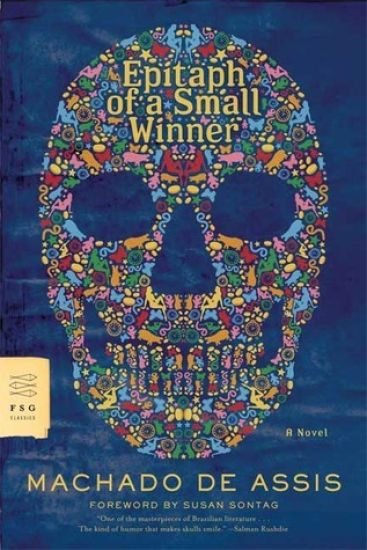
Epitaph of a Small Winner

Epitaph of a Small Winner

Machado de Assis

Farrar, Straus and Giroux
2008
nidottu
In these memoirs, Braz Cubas, a wealthy nineteenth-century Brazilian, examines (from beyond the grave) his rather undistinguished life in 160 short chapters that are filled with philosophical digressions and exuberant insights. A clear forerunner of Gabriel Garc a M rquez and Jorge Luis Borges, Epitaph for a Small Winner, first published in 1880, is one of the wittiest self-portraits in literary history as well as "one of the masterpieces of Brazilian literature" (Salman Rushdie).
The Psychiatrist and Other Stories

The Psychiatrist and Other Stories

Machado De Assis

University of California Press
2021
pokkari
This title is part of UC Press's Voices Revived program, which commemorates University of California Press’s mission to seek out and cultivate the brightest minds and give them voice, reach, and impact. Drawing on a backlist dating to 1893, Voices Revived makes high-quality, peer-reviewed scholarship accessible once again using print-on-demand technology. This title was originally published in 1963.
The Psychiatrist and Other Stories

The Psychiatrist and Other Stories

Machado De Assis

University of California Press
2021
sidottu
This title is part of UC Press's Voices Revived program, which commemorates University of California Press’s mission to seek out and cultivate the brightest minds and give them voice, reach, and impact. Drawing on a backlist dating to 1893, Voices Revived makes high-quality, peer-reviewed scholarship accessible once again using print-on-demand technology. This title was originally published in 1963.
Esau and Jacob

Esau and Jacob

Machado de Assis

University of California Press
2022
sidottu
Esau and Jacob is a novel by Machado de Assis that presents a richly layered narrative set in 19th-century Rio de Janeiro, blending comedy, allegory, and social commentary. The story centers around a pair of identical twins, Pedro and Paulo, who embody the political divide in Brazil between conservatives and liberals. Despite their physical similarities, their differing ideologies and the constant conflict between them represent the tension within Brazilian society during a pivotal historical period. The novel explores the formation of the Brazilian Republic, illustrating how historical events influence the lives of individuals, all while maintaining a subtle yet biting humor. Through the perspective of Ayres, an ex-diplomat, Assis weaves complex themes of destiny, identity, and societal roles, giving the narrative a timeless quality. The title itself, Esau and Jacob, connects to the Biblical story of sibling rivalry, which mirrors the ongoing conflict between Brazil's political factions, though the twins' quarrel lacks the grand theological significance of the Biblical reference. Assis cleverly infuses the novel with symbolism, using the title, epigraph, and characters to comment on the nature of Brazilian society at the time. The novel begins with the prophecy of a fortuneteller who predicts great things for the twins, but their destiny is paradoxically shaped by their inability to reconcile their differences. The narrative is filled with historical references, such as the fall of the monarchy and the rise of the Republic, while also providing a critique of the political, religious, and social structures in Brazil. The character Ayres, who narrates the story, provides an intellectual lens through which the reader can interpret the unfolding events, often making the reader an active participant in deciphering the deeper meanings of the text. Esau and Jacob is both a portrait of Brazil's historical moment and a philosophical reflection on human nature, destiny, and the cyclical nature of societal change. Through its blend of satire, wit, and allegorical depth, it remains a masterpiece of Latin American literature. This title is part of UC Press's Voices Revived program, which commemorates University of California Press's mission to seek out and cultivate the brightest minds and give them voice, reach, and impact. Drawing on a backlist dating to 1893, Voices Revived makes high-quality, peer-reviewed scholarship accessible once again using print-on-demand technology. This title was originally published in 1965.
Esau and Jacob

Esau and Jacob

Machado de Assis

University of California Press
2022
nidottu
Esau and Jacob is a novel by Machado de Assis that presents a richly layered narrative set in 19th-century Rio de Janeiro, blending comedy, allegory, and social commentary. The story centers around a pair of identical twins, Pedro and Paulo, who embody the political divide in Brazil between conservatives and liberals. Despite their physical similarities, their differing ideologies and the constant conflict between them represent the tension within Brazilian society during a pivotal historical period. The novel explores the formation of the Brazilian Republic, illustrating how historical events influence the lives of individuals, all while maintaining a subtle yet biting humor. Through the perspective of Ayres, an ex-diplomat, Assis weaves complex themes of destiny, identity, and societal roles, giving the narrative a timeless quality. The title itself, Esau and Jacob, connects to the Biblical story of sibling rivalry, which mirrors the ongoing conflict between Brazil's political factions, though the twins' quarrel lacks the grand theological significance of the Biblical reference. Assis cleverly infuses the novel with symbolism, using the title, epigraph, and characters to comment on the nature of Brazilian society at the time. The novel begins with the prophecy of a fortuneteller who predicts great things for the twins, but their destiny is paradoxically shaped by their inability to reconcile their differences. The narrative is filled with historical references, such as the fall of the monarchy and the rise of the Republic, while also providing a critique of the political, religious, and social structures in Brazil. The character Ayres, who narrates the story, provides an intellectual lens through which the reader can interpret the unfolding events, often making the reader an active participant in deciphering the deeper meanings of the text. Esau and Jacob is both a portrait of Brazil's historical moment and a philosophical reflection on human nature, destiny, and the cyclical nature of societal change. Through its blend of satire, wit, and allegorical depth, it remains a masterpiece of Latin American literature. This title is part of UC Press's Voices Revived program, which commemorates University of California Press's mission to seek out and cultivate the brightest minds and give them voice, reach, and impact. Drawing on a backlist dating to 1893, Voices Revived makes high-quality, peer-reviewed scholarship accessible once again using print-on-demand technology. This title was originally published in 1965.
Philosopher or Dog?

Philosopher or Dog?

Machado de Assis

Bloomsbury Publishing PLC
1997
pokkari
The rich and eccentric philosopher Quincas Borbas names his dog after himself because he knows his pet will outlive him. Quincas does die first, leaving his fortune to his friend Rube provided that he takes care for the dog. The dim-witted friend is hardly prepared for the life that awaits him.
A Chapter of Hats

A Chapter of Hats

Machado de Assis

Bloomsbury Publishing PLC
2009
nidottu
Machado de Assis (1839-1908) is the great Brazilian author of Philosopher or Dog? and Epitaph of a Small Winner, whose work is admired by writers as different as Salman Rushdie, Carlos Fuentes, Woody Allen and Susan Sontag. Taken from his mature period, these dazzling stories echo Poe and Gogol, anticipate Joyce, and have been compared to the writing of Chekhov, Maupassant and Henry James, yet his modern sensibility and clear-eyed humour remain utterly unique.