Kirjojen hintavertailu. Mukana 11 342 296 kirjaa ja 12 kauppaa.

Kirjahaku

Etsi kirjoja tekijän nimen, kirjan nimen tai ISBN:n perusteella.

1000 tulosta hakusanalla Marc Shapiro

Studies in Maimonides and His Interpreters

Studies in Maimonides and His Interpreters

Marc B. Shapiro

University of Scranton Press,U.S.
2008
nidottu
More than eight hundred years after his death, the figure of Maimonides - rabbi, philosopher, doctor, and communal leader - continues to fascinate. "Studies in Maimonides and His Interpreters" is the first book to unite the traditional rabbinic approach and the modern academic perspective to forge a new understanding of this iconic teacher. This groundbreaking work by Marc B. Shapiro, which includes an essay on Maimonides' approach to superstition in rabbinic literature and features three previously unpublished letters by Rabbi Joseph Kafih, will be essential reading for scholars and students of Jewish studies.
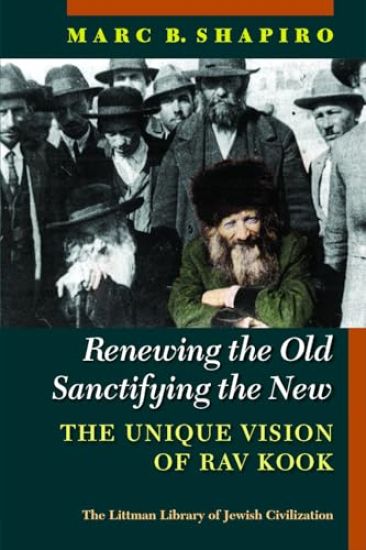
Renewing the Old, Sanctifying the New

Renewing the Old, Sanctifying the New

Marc B. Shapiro

LIVERPOOL UNIVERSITY PRESS
2025
sidottu
Rav Kook (1865–1935), the first chief rabbi of pre-state Israel, was a revered thinker whose ideas were in the vanguard of religious Zionist ideology. His theological positions have continued to mould the attitudes and beliefs of successive generations. Newly published writings, however, reveal ideas that have not yet entered mainstream consciousness. Marc Shapiro has grappled with the complexity of the language of these difficult Hebrew texts and identified themes he sees as of critical importance for modern Jewish Orthodoxy. His study will be welcomed as an attempt to make these teachings more broadly accessible despite the complexity of Kook’s exposition. A key development in Kook’s thinking is that he points to the religious significance of non-Jewish religions, and even raises the possibility that non-Jews may also have experienced their own religious revelations. This is a major departure from the traditional rabbinic approach. Another innovative concept is ‘valorization of the masses’, a view that recognizes that basic morality has been preserved in a purer form among the uneducated pious masses than among learned scholars. He similarly reconsiders the nature of heresy and dogma and develops the idea of the ‘unintentional heretic’, a category that could be said to include many in the modern world who are no longer tied to traditional religious understandings. Perhaps most controversially for Orthodox Jewish circles, he also presents an innovative understanding of the animal sacrifice of Temple ritual that allows for its abolition in messianic times. Taken together, these ideas will reverberate, foment much discussion, and shape new ideological directions in the world of religious Zionism.
Between the Yeshiva World and Modern Orthodoxy

Between the Yeshiva World and Modern Orthodoxy

Marc B. Shapiro

The Littman Library of Jewish Civilization
2002
nidottu
The span of Rabbi Jehiel Jacob Weinberg's life (1884-1966) illuminates the religious and intellectual dilemmas that traditional Jewry has faced over the past century. Rabbi Weinberg became a central ideologue of modern Orthodoxy because of his positive attitude to secular studies and Zionism and his willingness to respond to social change in interpreting the halakhah, despite his traditional training in a Lithuanian yeshiva. But Weinberg was an unusual man: even at a time when he was defending the traditional yeshiva against all attempts at reform, he always maintained an interest in the wider world. He left Lithuania for Germany at the beginning of the First World War, attended the University of Giessen, and increasingly identified with the Berlin school of German Orthodoxy. Although initially an apologist for the Nazi regime, he was soon recognized as German Orthodoxy's most eminent halakhic authority in its efforts to maintain religious tradition in the face of Nazi persecution. His approach, then and in his later halakhic writings, including the famous Seridei esh, derived from the conviction that the attempt to shore up Orthodoxy by increased religious stringency would only reduce its popular appeal. Using a great deal of unpublished material, including private correspondence, Marc Shapiro discusses many aspects of Weinberg's life. In doing so he elucidates many institutional and intellectual phenomena of the Jewish world, a number of which have so far received little scholarly attention: the yeshivas of Lithuania; the state of the Lithuanian rabbinate; the musar movement; the Jews of eastern Europe in Weimar Germany; the Torah im Derekh Eretz movement and its variants; Orthodox Jewish attitudes towards Wissenschaft des Judentums; and the special problems of Orthodox Jews in Nazi Germany. Throughout, he shows the complex nature of Weinberg's character and the inner struggles of a man being pulled in different directions. Compellingly and authoritatively written, his fascinating conclusions are quite different from those presented in earlier historical treatments of the period.
Changing the Immutable

Changing the Immutable

Marc B. Shapiro

The Littman Library of Jewish Civilization
2015
sidottu
Changing the Immutable focuses on how segments of Orthodox society have taken upon themselves to rewrite the past, by covering up and literally cutting out that which does not fit in with their contemporary world-view. For reasons ranging from theological considerations to internal religious politics to changing religious standards, such Jewish self-censorship abounds, and Marc Shapiro discusses examples from each category, In a number of cases the original text is shown alongside how it looked after it was censored, together with an explanation of what made the text problematic and how the issue was resolved. The author considers how some Orthodox historiography sees truth as entirely instrumental. Drawing on the words of leading rabbis, particularly from the haredi world, he shows that what is important is not historical truth, but a 'truth' that leads to observance and faith in the sages. He concludes with a discussion of the concept of truth in the Jewish tradition, and when this truth can be altered. Changing the Immutable also reflects on the paradox of a society that regards itself as traditional, but at the same time is uncomfortable with much of the inherited tradition and thus feels the need to create an idealized view of the past. It considers this practice in context, showing the precedents for this in Jewish history dating back to talmudic times. Since the subjects of censorship have included such figures as Maimonides, Bahya ibn Pakuda, Rashi, Naphtali Herz Wessely, Moses Mendelssohn, the Hatam Sofer, Samson Raphael Hirsch, the Lubavitcher Rebbe, A. I. Kook, and J. B. Soloveitchik, as well as issues such as Zionism, biblical interpretation, and attitudes to women and gentiles, Changing the Immutable also serves as a study in Jewish intellectual history and how the ideas of one era do not always find favour with future generations.
The Limits of Orthodox Theology

The Limits of Orthodox Theology

Marc B. Shapiro

The Littman Library of Jewish Civilization
2011
nidottu
It is commonly asserted that Maimonides' famous Thirteen Principles are the last word in Orthodox Jewish theology. This is a very popular notion, and is often repeated by scholars from all camps in Judaism. Yet such a position ignores the long history of Jewish theology in which Maimonides' Principles have been subject to great dispute. The book begins with a discussion of the significance of the Principles and illustrates how they assumed such a central place in traditional Judaism. Each principle is then considered in turn: the reasons underlying Maimonides' formulations are expounded and the disputes that have arisen concerning them are discussed in detail. Marc B. Shapiro's authoritative analysis makes it quite clear that the notion that Maimonides' Principles are the last word in traditional Jewish theology is a misconception, and that even Maimonides himself was not fully convinced of every aspect of his formulations. Although structured around Maimonides' Principles, this book can also be seen as an encyclopedia of traditional Jewish thought concerning the central issues of Jewish theology. The diversity of opinion in Jewish tradition on such issues as God, Creation, and the Revelation of the Torah is sure to surprise readers.
Lawtalk

Lawtalk

James E. Clapp; Elizabeth G. Thornburg; Marc Galanter; Fred R. Shapiro

Yale University Press
2012
sidottu
Not just for lawyers, these illuminating histories of popular law-related expressions will delight anyone fascinated by words, by history, or by law and law enforcement Law-related words and phrases abound in our everyday language, often without our being aware of their origins or their particular legal significance: boilerplate, jailbait, pound of flesh, rainmaker, the third degree. This insightful and entertaining book reveals the unknown stories behind familiar legal expressions that come from sources as diverse as Shakespeare, vaudeville, and Dr. Seuss. Separate entries for each expression follow no prescribed formula but instead focus on the most interesting, enlightening, and surprising aspects of the words and their evolution. Popular myths and misunderstandings are explored and exploded, and the entries are augmented with historical images and humorous sidebars.Lively and unexpected, Lawtalk will draw a diverse array of readers with its abundance of linguistic, legal, historical, and cultural information. Those readers should be forewarned: upon finishing one entry, there is an irresistible temptation to turn to another, and yet another . . .
Histoire de Chenôve, Près Dijon, Par Henri Marc. (24 Avril 1892.)
Histoire de Chenove, pres Dijon, par Henri Marc. (24 avril 1892.)Date de l'edition originale: 1893Sujet de l'ouvrage: Chenove (France)Ce livre est la reproduction fidele d'une oeuvre publiee avant 1920 et fait partie d'une collection de livres reimprimes a la demande editee par Hachette Livre, dans le cadre d'un partenariat avec la Bibliotheque nationale de France, offrant l'opportunite d'acceder a des ouvrages anciens et souvent rares issus des fonds patrimoniaux de la BnF.Les oeuvres faisant partie de cette collection ont ete numerisees par la BnF et sont presentes sur Gallica, sa bibliotheque numerique.En entreprenant de redonner vie a ces ouvrages au travers d'une collection de livres reimprimes a la demande, nous leur donnons la possibilite de rencontrer un public elargi et participons a la transmission de connaissances et de savoirs parfois difficilement accessibles.Nous avons cherche a concilier la reproduction fidele d'un livre ancien a partir de sa version numerisee avec le souci d'un confort de lecture optimal. Nous esperons que les ouvrages de cette nouvelle collection vous apporteront entiere satisfaction.Pour plus d'informations, rendez-vous sur www.hachettebnf.fr"
Marc

Marc

Jürgen May

Books on Demand
2022
pokkari
Nach Helmuts Tod findet Stefan nur langsam zur ck ins Leben. Dabei trifft er auf Marc und eine turbulente Irrfahrt der Gef hle beginnt. Die Dorfgemeinde entfacht einen Skandal. Die Familie ist emp rt und Stefan verliert den Boden unter den F en. Davon, wie leidenschaftlich aber auch zerst rerisch eine Liebe sein kann, erz hlt dieser Roman. Und von der Erkenntnis, dass die vermeintlich un berwindbaren H rden des Lebens jene sind, die man selbst aufstellt.
Marc

Marc

Susanna Partsch

Taschen GmbH
2016
sidottu
Printmaker, landscape painter, and cofounder of Der Blaue Reiter (“The Blue Rider”), Franz Marc (1880–1916) left an exceptional legacy in German Expressionism. His work absorbed influences including Paul Gauguin, van Gogh, Picasso, Henri Matisse, and Robert Delaunay to galvanize a new vocabulary of form and color.Especially keen on depictions of animals, Marc’s work began emphasizing cubist, semiabstracted shapes; frenetic, whirling compositions; and in his paintings, a new vocabulary of color. Marc located spiritual values in different shades. Blue was spirituality and masculinity. Yellow depicted femininity and joy. Red hues correlated to anger and violence.It was with his friend and peer Wassily Kandinsky that Marc founded Der Blaue Reiter, a loose band of artists connected by a shared interest in woodcuts and prints, the symbolic values of color, and spontaneous approaches to painting. The group was short-lived, dissolving with the onset of the First World War—which would also claim Marc’s life in 1916—but it set an Expressionist standard that would flourish for decades.In this new edition in TASCHEN’s popular Basic Art series, we meet this pivotal figure of German art and explore his short but hugely accomplished career, which at once defined an era and set an enduring point of Expressionist reference.About the seriesBorn back in 1985, the Basic Art Series has evolved into the best-selling art book collection ever published. Each book in TASCHEN’s Basic Art series features:a detailed chronological summary of the life and oeuvre of the artist, covering his or her cultural and historical importancea concise biographyapproximately 100 illustrations with explanatory captions
Marc Blitzstein

Marc Blitzstein

Pollack Howard

Oxford University Press Inc
2015
nidottu
A composer and lyricist of enormous innovation and influence, Marc Blitzstein remains one of the most versatile and fascinating figures in the history of American music, his creative output running the gamut from films scores and Broadway operas to art songs and chamber pieces. A prominent leftist and social maverick, Blitzstein constantly pushed the boundaries of convention in mid-century America in both his work and his life. Award-winning music historian Howard Pollack's new biography covers Blitzstein's life in full, from his childhood in Philadelphia to his violent death in Martinique at age 58. The author describes how this student of contemporary luminaries Nadia Boulanger and Arnold Schoenberg became swept up in the stormy political atmosphere of the 1920s and 1930s and throughout his career walked the fine line between his formal training and his populist principles. Indeed, Blitzstein developed a unique sound that drew on everything contemporary, from the high modernism of Stravinsky and Hindemith to jazz and Broadway show tunes. Pollack captures the astonishing breadth of Blitzstein's work—from provocative operas like The Cradle Will Rock, No for an Answer, and Regina, to the wartime Airborne Symphony composed during his years in service, to lesser known ballets, film scores, and stage works. A courageous artist, Blitzstein translated Bertolt Brecht and Kurt Weill's The Threepenny Opera during the heyday of McCarthyism and the red scare, and turned it into an off-Broadway sensation, its "Mack the Knife" becoming one of the era's biggest hits. Beautifully written, drawing on new interviews with friends and family of the composer, and making extensive use of new archival and secondary sources, Marc Blitzstein presents the most complete biography of this important American artist.
Marc Blitzstein

Marc Blitzstein

Pollack Howard

Oxford University Press Inc
2012
sidottu
A composer of enormous musical innovation and influence, Marc Blitzstein remains one of the most versatile and fascinating figures in the history of American music, his creative works running the gamut from Broadway musicals and film scores to concert and chamber pieces. As an open homosexual and a prominent leftist, Blitzstein constantly pushed the boundaries of acceptability in mid-century America in both his music and his life. Award-winning music historian Howard Pollack's new biography is the first to put Blitzstein's music on equal footing with his politics, theatrical innovation, and other aspects of the composer's life. Pollack covers Blitzstein's life in full, from his childhood in Philadelphia to his violent death in Martinique at age 58. The author describes how this student of contemporary luminaries Arnold Schoenberg and Nadia Boulanger became swept up in the stormy political atmosphere of the 1920s and 1930s and throughout his career walked the fine line between his formal training and his populist principles in his composition. Indeed, Blitzstein developed a unique sound that drew on everything contemporary, from the high modernism of Schoenberg to swing and jazz. Pollack captures the astonishing breadth of Blitzstein's musical language—?from politically scandalous Broadway musicals like The Cradle Will Rock and No for an Answer, to the patriotic Airborne Symphony, to lesser known early pieces, film scores, and chamber works. A fearless artist, Blitzstein translated Bertolt Brecht and Kurt Weill's The Threepenny Opera during the heyday of McCarthyism and the red scare, and, with Leonard Bernstein and Lotte Lenya, turned it into an off-Broadway sensation. Beautifully written, drawing on new interviews with friends and family of the composer, and making extensive use of new archival and secondary sources, Marc Blitzstein presents the most complete biography of this quintessentially American composer.
Marc Blitzstein

Marc Blitzstein

Leonard Lehrman

Praeger Publishers Inc
2005
sidottu
Marc Blitzstein was one of the 20th century's most important American composers, lyricists, and critics, often credited with having virtually invented opera in the American vernacular. Called the father of American opera in the vernacular by luminaries Aaron Copland and Leonard Bernstein, Blitzstein was a masterful pianist, coach, and accompanist, though, ironically, he made more money on the lyrics to one song—Mack the Knife—than on everything else he ever did. Blitzstein's brilliant career was cut short in 1964 when he died at the age of 58. This book catalogs Blitzstein's own writings and writings about him, followed by detailed listings (chronological, alphabetical, and genre), analysis, a comprehensive performance history, and summaries of all known critiques of his 128 original musical works and 18 texts set to the music of others. Shown in detail are the ways in which Blitzstein took music from his earlier works and developed it in later works, a process that Lehrman utilized in completing (with Bernstein's and the Estate's approval) 20 Blitzstein works for performance, including The Cradle Will Rock, I've Got the Tune, No for an Answer, Idiots First, and Sacco and Vanzetti, which Blitzstein believed would be his magnum opus. The book provides a unique and full perspective on the works of one of America's greatest composers—one who deserves to be better known.
Marc Chagall

Marc Chagall

Fred Dallmayr

Routledge India
2020
sidottu
This book follows Chagall’s life through his art and his understanding of the role of the artist as a political being. It takes the reader through the different milieus of the nineteenth and twentieth centuries – including the World Wars and the Holocaust – to present a unique understanding of Chagall’s artistic vision of peace in an age of extremes. At a time when all identities are being subsumed into a “national” identity, this book makes the case for a larger understanding of art as a way of transcending materiality. The volume explores how Platonic notions of truth, goodness, and beauty are linked and mutually illuminating in Chagall’s work. A “spiritual-humanist” interpretation of his life and work renders Chagall’s opus more transparent and accessible to the general reader.It will be essential reading for students of art and art history, political philosophy, political science, and peace studies.
Marc Chagall

Marc Chagall

Fred Dallmayr

Routledge India
2020
nidottu
This book follows Chagall’s life through his art and his understanding of the role of the artist as a political being. It takes the reader through the different milieus of the nineteenth and twentieth centuries – including the World Wars and the Holocaust – to present a unique understanding of Chagall’s artistic vision of peace in an age of extremes. At a time when all identities are being subsumed into a “national” identity, this book makes the case for a larger understanding of art as a way of transcending materiality. The volume explores how Platonic notions of truth, goodness, and beauty are linked and mutually illuminating in Chagall’s work. A “spiritual-humanist” interpretation of his life and work renders Chagall’s opus more transparent and accessible to the general reader.It will be essential reading for students of art and art history, political philosophy, political science, and peace studies.
Marc Jacobs: Unseen

Marc Jacobs: Unseen

Robert Fairer

Thames Hudson Ltd
2018
sidottu
The first publication dedicated to Marc Jacobsâ??s highly influential creations â?? the epitome of downtown New York cool â?? captured behind the scenes by American Vogue photographer Robert Fairer in inspiring, never-before-seen images.
Marc Riboud

Marc Riboud

Marc Riboud

Thames Hudson Ltd
2016
nidottu
A member of Magnum, Marc Riboud has travelled the world, from Europe to the Middle East and from Vietnam to the United States. Repelled by violence, indifferent to the pursuit of ‘events’, yet irresistibly drawn by the desire to see, he is a reporter under the spell of life itself. Whether covering the Cultural Revolution or the Soviet Union before perestroika, he waits for the inner truth to ‘rise to the surface of things’. These photographs reveal his intense awareness of the innate power of each image.
Marc Bloch

Marc Bloch

Carole Fink

Cambridge University Press
1989
sidottu
This is the first biography of Marc Bloch (1886–1944), historian, soldier in both world wars, and leader of the Resistance, who was captured, tortured, and died a heroic death. Based largely on Bloch's private letters, diaries and papers, as well as on other unpublished documents, it traces the remarkable life of this French-Jewish patriot under the Third Republic. As an historian, Bloch is perhaps best known for The Historian's Craft, an inspiring set of meditations on his life's work, and as co-founder of the now legendary journal Annales, which gave rise to a major school of historical writing. Profoundly influenced by the dark events that shaped his era - world wars, anti-semitism, and totalitarianism - Bloch has become something of an intellectual hero of our century, his life an epitome of the endeavour to uphold, in the face of such events, the spirit of unfettered critical enquiry.
Marc Bloch

Marc Bloch

Carole Fink

Cambridge University Press
1991
pokkari
This is the first biography of Marc Bloch (1886–1944), historian, soldier in both world wars, and leader of the Resistance, who was captured, tortured, and died a heroic death. Based largely on Bloch's private letters, diaries and papers, as well as on other unpublished documents, it traces the remarkable life of this French-Jewish patriot under the Third Republic. As an historian, Bloch is perhaps best known for The Historian’s Craft, an inspiring set of meditations on his life’s work, and as co-founder of the now legendary journal Annales, which gave rise to a major school of historical writing. Profoundly influenced by the dark events that shaped his era - world wars, anti-semitism, and totalitarianism - Bloch has become something of an intellectual hero of our century, his life an epitome of the endeavour to uphold, in the face of such events, the spirit of unfettered critical enquiry.