Kirjojen hintavertailu. Mukana 11 627 220 kirjaa ja 12 kauppaa.

Kirjahaku

Etsi kirjoja tekijän nimen, kirjan nimen tai ISBN:n perusteella.

1000 tulosta hakusanalla Marcus Bell

Marcus Aurelius

Marcus Aurelius

John Sellars

Routledge
2020
sidottu
In this new study, John Sellars offers a fresh examination of Marcus Aurelius’ Meditations as a work of philosophy by placing it against the background of the tradition of Stoic philosophy to which Marcus was committed. The Meditations of Marcus Aurelius is a perennial bestseller, attracting countless readers drawn to its unique mix of philosophical reflection and practical advice. The emperor is usually placed alongside Seneca and Epictetus as one of three great Roman Stoic authors, but he wears his philosophy lightly, not feeling the need to state explicitly the ideas standing behind the reflections that he was writing for himself. As a consequence, his standing as a philosopher has often been questioned. Challenging claims that Marcus Aurelius was merely an eclectic thinker, that the Meditations do not fit the model of a work of philosophy, that there are no arguments in the work, and that it only contains superficial moral advice, Sellars shows that he was in constant dialogue with his Stoic predecessors, engaging with themes drawn from all three parts of Stoicism: logic, physics, and ethics. The image of Marcus Aurelius that emerges is of a committed Stoic, engaging with a wide range of philosophical topics, motivated by the desire to live a good life. This volume will be of interest to scholars and students of both Classics and Philosophy.
Marcus Aurelius

Marcus Aurelius

John Sellars

Routledge
2020
nidottu
In this new study, John Sellars offers a fresh examination of Marcus Aurelius’ Meditations as a work of philosophy by placing it against the background of the tradition of Stoic philosophy to which Marcus was committed. The Meditations of Marcus Aurelius is a perennial bestseller, attracting countless readers drawn to its unique mix of philosophical reflection and practical advice. The emperor is usually placed alongside Seneca and Epictetus as one of three great Roman Stoic authors, but he wears his philosophy lightly, not feeling the need to state explicitly the ideas standing behind the reflections that he was writing for himself. As a consequence, his standing as a philosopher has often been questioned. Challenging claims that Marcus Aurelius was merely an eclectic thinker, that the Meditations do not fit the model of a work of philosophy, that there are no arguments in the work, and that it only contains superficial moral advice, Sellars shows that he was in constant dialogue with his Stoic predecessors, engaging with themes drawn from all three parts of Stoicism: logic, physics, and ethics. The image of Marcus Aurelius that emerges is of a committed Stoic, engaging with a wide range of philosophical topics, motivated by the desire to live a good life. This volume will be of interest to scholars and students of both Classics and Philosophy.
Marcus and Magnificent Margo Farmers Market Dogs
The regular dogs at the farmers market are appalled by the behavior of Marcus, a new dog at the market. Marcus doesn't appear to have a regular home, he doesn't have humans taking care of him, nor any idea about the rules for dogs at the market. He is a little dog with a big attitude. But the more Marcus reappears at the market, the better understanding the other farmers market dogs have about his life. He isn't a pampered pooch. He is a survivor of the perilous life of a dog without a regular home. Young readers and adults will learn about diversity, inclusion and acceptance of our differences. Enjoy the sights, sounds and aromas with Marcus, the Magnificent Margo and the other farmers market dogs.
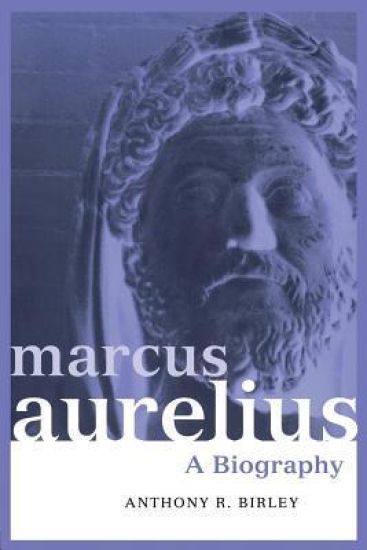
Marcus Aurelius

Marcus Aurelius

Anthony R Birley

Routledge
1993
nidottu
Marcus Aurelius, the philosopher-emperor who ruled the Roman Empire between AD 161 and 180, is one of the best recorded individuals from antiquity. Even his face became more than usually familiar: the imperial coinage displayed his portrait for over 40 years, from the clean-shaven young heir of Antonius to the war-weary, heavily bearded ruler who died at his post in his late fifties.His correspondence with his tutor Fronto, and even more the private notebook he kept for his last ten years, the Meditations, provides a unique series of vivid and revealing glimpses into the character and peoccupations of this emporer who spent many years in terrible wars against northern tribes.In this accessible and scholarly study, Professor Birley paints a portrait of an emporer who was human and just - an embodiment of the pagan virtues of Rome.
Marcus Off Duty: The Recipes I Cook at Home

Marcus Off Duty: The Recipes I Cook at Home

Samuelsson Marcus

Houghton Mifflin Harcourt Publishing Company
2014
nidottu
For two decades, Marcus Samuelsson has captivated food lovers with his brilliant culinary interpretations. Born in Ethiopia, raised in Sweden, and trained in European kitchens, he is a world citizen turned American success story. Not only was Samuelsson the youngest chef ever to receive three stars from the New York Times, he is also a five-time James Beard Award recipient, a winner of Top Chef Masters, and a judge on Chopped. Chosen by President Obama to cook the first state dinner, he is now a charismatic TV host. In this book, the chef who former President Bill Clinton says "has reinvigorated and reimagined what it means to be American" serves up the dishes he makes at his Harlem home for his wife and friends. The recipes blend a rainbow of the flavours he experienced in his travels - Ethiopian, Swedish, Mexican, Caribbean, Italian, and Southern soul. His eclectic, casual food includes dill-spiced salmon; coconut-lime curried chicken; mac, cheese, and greens; chocolate pie spiced with Indian garam masala; and for kids, peanut noodles with slaw. This is an inside glimpse into how one of the world's top chefs cooks in his home kitchen for those nearest and dearest to him.
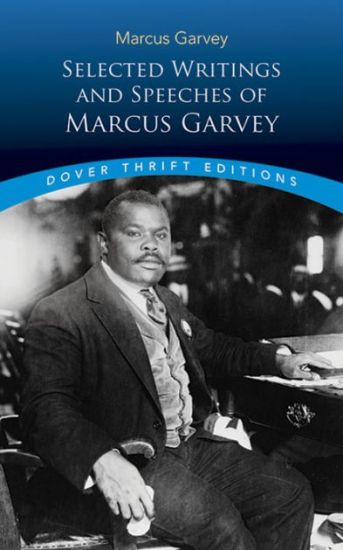
Selected Writings and Speeches of Marcus Garvey

Selected Writings and Speeches of Marcus Garvey

Marcus Garvey

Dover Publications Inc.
2005
nidottu
A controversial figure in the history of race relations around the world, Marcus Garvey amazed his enemies as much as he dazzled his admirers. This anthology contains some of the African-American rights advocate's most noted writings and speeches, including "Declaration of the Rights of the Negro Peoples of the World" and "Africa for the Africans."
The Marcus Garvey and Universal Negro Improvement Association Papers, Vol. I
Marcus Mosiah Garvey (1887- 1940) led an extraordinary mass movement of black social protest. His Universal Negro Improvement Association and his "back to African" program of racial nationalism introduced many ideas that emerged again during the Black Power years of the 1960s: pride in black roots, pride in black physical features and African culture, and rejection of assimilation into white America. Yet the charismatic black Jamaican who roared his credo before huge audiences on the st reet corners of Harlem remains an enigma. His image as an honest idealist urging blacks to build their own nation has been clouded by accusations that he was a con man who, in the name of black pride, perpetrated one of history's greatest swindles. The Marcus Garvey And Universal Negro Improvement Association Papers clarifies the Garvey phenomenon. This is the first volume in a monumental ten-volume survey of thirty thousand archival documents and original manuscripts from widely separated sources, brought together by editor Robert A. Hill to provide a compelling picture of the evolution, spread, and influence of the UNIA. Letters, pamphlets, vital records, intelligence reports, newspaper articles, speeches, legal records, and diplomatic dispatches are enhanced by Hill's descriptive source notes, explanatory footnotes, and comprehensive introduction. Of the over three hundred items included in Volume I, only very few have ever been published or reprinted before. Volume I begins with the earliest mentions in 1826 of the Garvey family in Jamaica's slave records, and closes with Garvey's triumphant address at Carnegie Hall on August 25, 1919. The information is fascinating and often startling, tracing Garvey's early career in Jamaica, Central America, Europe, and the United States, and detailing the first stirrings of what was to become an international mass movement. Hill presents complete documentation of the first official surveillance of the UNIA, which prepared the way for the beginning of the criminal and civil litigation that engulfed Garvey and his movement, as American and European governments reacted to the perceived threat with repressive policies. The documents also record the internal structure and political splits during the early years of the UNIA, and provide the financial history of Garvey's controversial Black Star Line steamship venture, one of the schemes that ultimately led to the financial collapse of his movement. The first volume and the following five focus on America, the seventh and eighth on Mrica, and the last two on the Caribbean. The information Hill has compiled goes far beyond preoccupation with a single intriguing historical figure to document the growth and demise of a mass social phenomenon, an Mro-American protest movement with strong links to African and Caribbean nationalism in the first decades of the twentieth century.
The Marcus Garvey and Universal Negro Improvement Association Papers, Vol. II
This second volume of Robert A. Hill's monumental ten-volume survey of Marcus Mosiah Garvey's extraordinary mass movement of black social protest covers a period of rapid growth. The Universal Negro Improvement Association, with its "Africa for the Africans" program of racial nationalism, rapidly gained in strength in the aftermath of Garvey's successful meeting in Carnegie Hall in August 1919, and culminated in its spectacular First International Convention of the Negro Peoples of the World in 1920. Hill has compiled a wealth of archival documents and original manuscripts, with descriptive source notes and explanatory footnotes. He provides a fascinating account of the spread of Garvey's movement, which was seen-and feared-by officials in America, Europe, and colonial governments in Africa and the Caribbean as the major ideological force promoting radical consciousness among blacks. Hill continues the comprehensive outline begun in Volume I of Garvey's Black Star Line, the all-black merchant marine, and documents the beginnings of Garvey's proposals for massive loans to the Liberian government. These controversial financial schemes led to Garvey's reputation as a swindler, and Volume II details the first charges of fraud. The federal investigation of Garvey broadened and deepened during 1919--1920, with J. Edgar Hoover--then an assistant to the attorney general--continuing to search tor grounds to deport Garvey. Included here are numerous repons from government agents and informers, which provide a valuable ponrait of day-to-day UNIA operations. Volume II ends with the UNIA's 1920 convention, presented by Garvey as a turning point in the history of black-white relations. The legislation and the elective offices produced by that convention were intended to form a virtual government in exile for Africa, fulfilling Garvey's ambition to practice statecraft and create the symbols of black nationhood and sovereignty. This volume is the second of six that focus on America; the seventh and eighth focus on Africa, and the last two on the Caribbean. Hill has brought together far more than a portrait of a single intriguing historical figure. Garvey's movement was a mass social phenomenon, an Afro-American protest movement with strong links to African and Caribbean nationalism in the first decades of the twentieth century.
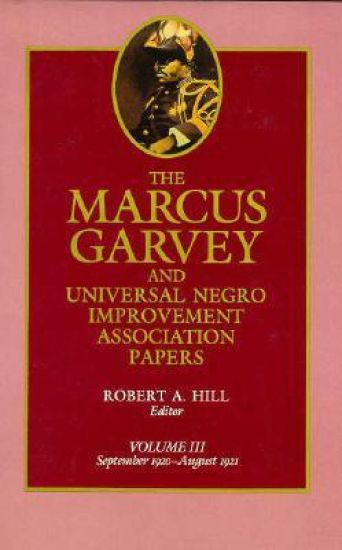
The Marcus Garvey and Universal Negro Improvement Association Papers, Vol. III
This is the third volume of Robert A. Hill's massive ten-volume survey of Marcus Mosiah Garvey and the extraordinary mass movement of black social protest he inspired. Hill brings together a wealth of original documents-speeches, letters, newspaper articles, intelligence reports, pamphlets, and diplomatic dispatches--to provide a record of the period between the first and second international conventions of the Universal Negro Improvement Association. The success of the August 1920 convention, as documented in Volume II, justified Garvey's expanded emphasis on African redemption and established his movement's substantial following in black communities around the world. And by the time of the August 1921 convention, the UNIA was the major political force among blacks in the postwar world. As Volume III reveals, however, there arose signs of crisis in the movement. Garvey's lieutenants began to doubt both the financial health of the Black Star Line and the wisdom of Garvey's methods of raising money for his Liberian colonization and trade scheme. Soon the entire Black Star Line enterprise hovered on the brink of bankruptcy and a steep decline in the shipping business made prospects for the Black Star Line even less promising. But Garvey capitalized on the momentum gathered at the August 1920 convention and spent much of his time in a new round of promotional tours devoted to selling Black Star Line stock, shoring up weak UNIA divisions, and chartering new ones. This gave J. Edgar Hoover his long-awaited opportunity to remove Garvey from the Afro-American political scene. When Garvey embarked on a promotional tour of the West Indies and Central America in February 1921, the United States government, with some assistance from the British, attempted to keep Garvey from returning to the country. Garvey's trip was to mark a turning point in the history of the UNIA. Garvey's lieutenants, who were charged with running the UNIA during his absence, frequently clashed over unclear lines of authority. This also created severe difficulties for the Black Star Line and the UNIA's Liberian project. Under these circumstances, Garvey asked for and received, from the 1921 convention, control over all UNIA and Black Star Line finances as a means of centralizing all authority in his hands. At the same time Garvey launched an attack at the convention against those black leaders, including W. E. B. Du Bois, whom he perceived as opponents of the UNIA. He further initiated a controversial campaign to label these political opponents as advocates of "social equality" between the races, while offering as an alternative his philosophy of "racial purity." This volume is the third of six that focus on America; the seventh and eighth focus on Africa, and the last two on the Caribbean. In Volume III, Robert Hill documents the complexities and turmoil of the Garvey movement from 1920 to 1921, as an unfolding drama emerges that pits American and European political, diplomatic, and economic interests against the first comprehensive expression of the modern black struggle for freedom.
The Marcus Garvey and Universal Negro Improvement Association Papers, Vol. IV
The fourth volume of the Marcus Garvey and Universal Negro Improvement Association Papers marks the period of deepening crisis in the UNIA's political and economic fortunes. After September of 1921, membership declined and morale in the UNIA began to weaken. Underlying it all, however, was the final failure of the Black Star Line that resulted when negotiations with the United States Chipping Board for the purchase of the long proposed African ship collapsed in March 1922. The movement also suffered a major setback when the first Liberian colonization plan aborted in the summer of 1921. On the political front, Garvey's African program had to compete with W.E.B. Du Bois's Second Pan-African Congress. The were also major shifts in Garvey's political strategy during this period, his speeches reflecting a desire to placate the U.S. government, while simultaneously assailing his lef-wing critics for promoting "social equality." This disavowal of radicalism earned him further enemies on the left. One of his chief black critics, Cyril V. Briggs, the leader of the African Blood Brotherhood, unwittingly supplied federal investigators with evidence that led to Garvey's indictment on charges of mail fraud in February 1922. By prosecuting him, however, the Department of Justice did not discredit Garvey in the eyes of his followers; rather, it temporarily strengthened his hold over the movement as the appearance of persecution intensified the loyalty of the UNIA membership. But later in 1922 Garvey did lose favor among many of his followers when it was disclosed that he had met secretly in Atlanta with the Acting Imperial Wizard of the Ku Klux Klan. What Garvey had thought was a diplomatic triumph proved instead to be anathema to most blacks. At the Third UNIA Convention in 1922, Garvey repudiated the entire executive council of the UNIA, while expressing his anger of "plots" against him from within the UNIA leadership. Loyalty to Garvey thus became a more urgent issue than ever before. But although Garvey was once again able to silence his critics within the UNIA, the price was to be a badly fractured and demoralized movement. At the same time, his political adversaries outside the UNIA were steadily gaining ground against him. As meticulously documented as the three previous volumes, Volume IV provides the first extended record of Garvey's emergent social philosophy, particularly as it relates to his conception of "racial purity" and the metaphysics of the human condition. It stands as an impressive record of the Garvey movement.
The Marcus Garvey and Universal Negro Improvement Association Papers, Vol. V
The fifth volume of this monumental series chronicles what was perhaps the stormiest period in the history of Marcus Garvey and the UNIA: the aftermath of the tumultuous 1922 convention. Outside the UNIA a growing list of opponents, including the black Socialists A. Philip Randolph and Chandler Owen, and the NAACP's Robert Bagnall and William Pickens, were turning their criticism of the controversial Jamaican into a "Garvey Must Go" campaign. Meanwhile, Garvey's former UNIA ally, Rev. J. W. H. Eason-who had been impeached at the 1922 convention-was emerging as a dangerous rival. Eason was assassinated in January 1923, just as he was to testify against Garvey in the latter's mail-fraud trial. Though it may be impossible to determine if Garvey had a role in the killing, the murder generated negative publicity that did untold damage to Garvey and his organization. Throughout all this, the federal government pressed its case against Garvey and his co-defendants on mail-fraud charges stemming from irregularities in the sale of Black Star Line stock. In June 1923 a jury found Garvey guilty and he was sentenced to five years in prison. Internecine feuds wracked the movement while Garvey languished in New York City's Tombs prison, awaiting bail so that he could mount an appeal. As soon as he was released in September 1923, he turned his energy to reconsolidating the UNIA. while considering the best appeal strategy. For the UNIA Garvey resurrected an old commercial message: that economic salvation was to be found in ships. In March 1924 he reconstituted the defunct Black Star Line as the Black Cross Navigation and Trading Co. and bought a ship, the S. S. General Goethals, in time for a tour of it by convention delegates. The shipboard tour proved to be a highlight of the 1924 convention, during which UNIA leadership was stunned by the Liberian government's formal repudiation of the movement's African colonization plans. Despite the UNIA's unexpected setback in Liberia, the movement continued to spread into new places, particularly in America's southern states. Generously illustrated with photographs and facsimile documents, Volume V of The Marcus Garvey and Universal Negro Improvement Association Papers upholds the impeccable editorial standards of the first four volumes. Once again, a wealth of new sources collected from around the world demonstrates how vitally important Marcus Garvey and the mass movement he controlled were to Afro-American history.
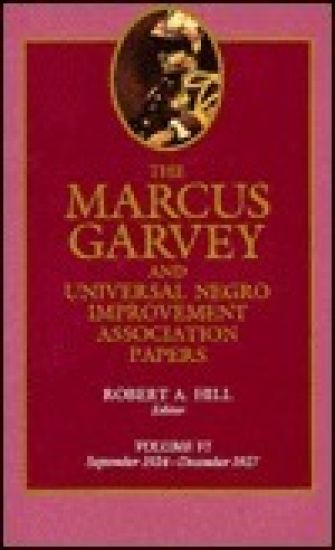
The Marcus Garvey and Universal Negro Improvement Association Papers, Vol. VI
'If I die in Atlanta my work shall then only begin, but I shall live, in the physical or spiritual, to see the day of Africa's glory...I shall write the history that will inspire the millions that are coming and leave the posterity of our enemies to reckon with the hosts for the deeds of their fathers' - Marcus Garvey upon his imprisonment in the Atlanta federal penitentiary, 1925. The sixth volume of "The Marcus Garvey and UNIA Papers" spans the great divide in the affairs of the American Garvey movement that resulted from the imprisonment of its charismatic leader in 1925. The volume tells the story of Garvey's failed efforts to win the appeal against his conviction for mail fraud, his incarceration, the legal battle to win his freedom, and the massive grass-roots petition movement mobilized in his defense. The activism inspired by Garvey's imprisonment was confounded by internecine struggles within the hierarchy of the movement and by growing financial difficulties, including the failure of the Black Cross Navigation and Trading Company, the loss of Liberty Hall, and the bankruptcy of Liberty University. The volume ends with Garvey's release from prison and his deportation from America. Although he never returned to the United States, Garvey continued his forceful shaping of the history of the movement that bore his name, first from Jamaica and then from his final exile in Britain.
The Marcus Garvey and Universal Negro Improvement Association Papers, Vol. VII
The publication of Volume VII marks the completion of the American series of "The Marcus Garvey and Universal Negro Improvement Association Papers". This final book in the seven-volume set charts the magnetic, controversial Pan-African leader's career from his deportation from the United States in November 1927 to his death in England in 1940. The volume begins with Garvey's triumphant welcome in Jamaica, his tour abroad, and his entry into Jamaican party politics. It traces his reshaping of the organizational structure of the Universal Negro Improvement Association (UNIA) in the late 1920s, and his management of UNIA affairs from Kingston and London in the 1930s. Though typically seen as a time of decline, this final period of Garvey's life appears, in editorials drawn from his publications, as a fruitful one in which some of his strongest political writings were produced. Surveillance reports filed by Jamaican police and British colonial officials provide a rich account of Garvey's speeches and activities. Although he was banned from the United States and restricted from traveling or speaking in many areas under colonial supervision, Garvey nevertheless traveled widely after his deportation, visiting and influencing affairs in Geneva, Paris, and London, and making organizational tours of Canada and the Caribbean. He chaired UNIA conferences in Toronto and inaugurated the School of African Philosophy, a series of lectures designed to train UNIA leaders. In the mid-1930s he moved the headquarters of the UNIA to London. In the final months of his life, correspondence between Garvey in England and his young sons in Jamaica shows the personal side of the public leader. The tragedy of Garvey's personal demise is framed by the cataclysmic events of Europe entering a world war and by the decline of the movement he had worked so diligently to build. The long financial hardships of the previous decade and the loss of Garvey's presence had winnowed the membership of the UNIA. Garvey suffered a disabling stroke in January 1940. He died in London the following June, as Italy invaded France and Germany prepared to occupy Paris. Volume VII ends with the reconstitution of the UNIA in the months immediately after Garvey's death and the establishment of a new headquarters with new leadership in Cleveland.
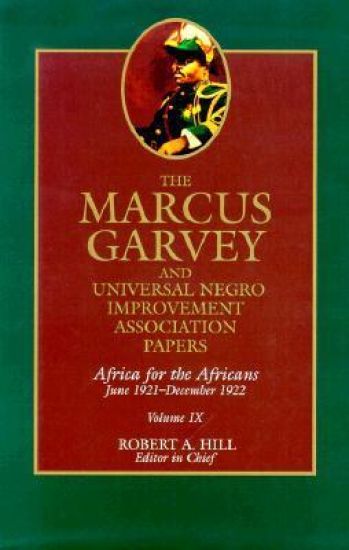
The Marcus Garvey and Universal Negro Improvement Association Papers, Vol. IX
'Africa for the Africans' was the name given in Africa to the extraordinary black social protest movement led by Jamaican Marcus Mosiah Garvey (1887-1940). Volumes I-VII of the "Marcus Garvey and Universal Negro Improvement Association Papers" chronicled the Garvey movement that flourished in the United States during the 1920s. Now, the long-awaited African volumes of this edition (Volumes VIII and IX and a forthcoming Volume X) demonstrate clearly the central role Africans played in the development of the Garvey phenomenon. The African volumes provide the first authoritative account of how Africans transformed Garveyism from an external stimulus into an African social movement. They also represent the most extensive collection of documents ever gathered on the early African nationalism of the inter-war period. Here is a detailed chronicle of the spread of Garvey's call for African redemption throughout Africa and the repressive colonial responses it engendered. Volume VIII begins in 1917 with the little-known story of the Pan-African commercial schemes that preceded Garveyism and charts the early African reactions to the UNIA. Volume IX continues the story, documenting the establishment of UNIA chapters throughout Africa and presenting new evidence linking Garveyism and nascent Namibian nationalism.
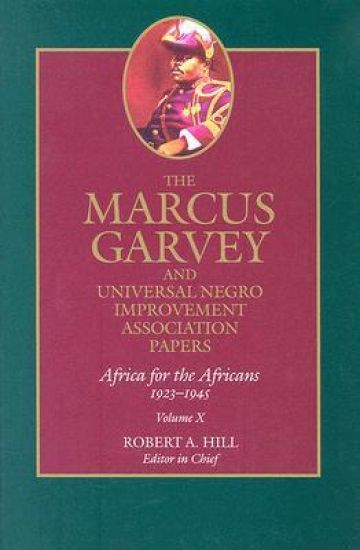
The Marcus Garvey and Universal Negro Improvement Association Papers, Vol. X
'Africa for the Africans' was the name given to the extraordinary movement led by Jamaican Marcus Mosiah Garvey (1887-1940). Volumes I-VII of the "Marcus Garvey and Universal Negro Improvement Association Papers" chronicled the Garvey movement that flourished in the United States during the 1920s. Now, the long-awaited African volumes of this edition demonstrate clearly the central role Africans played in the development of the Garvey phenomenon. The African volumes provide the first authoritative account of how Africans transformed Garveyism into an African social movement. The most extensive collection of documents ever gathered on the early African nationalism of the interwar period, Volume X provides a detailed chronicle of the spread of Garvey's call for African redemption throughout Africa.
Marcus Foster and the Oakland Public Schools

Marcus Foster and the Oakland Public Schools

Jesse J. McCorry

University of California Press
2022
pokkari
Critics of public organizations have charged them with rigidity, insensitivity to public needs, inefficiency, and other faults. The charges are not new, but the surge of urban political activism during the 1960s gave a sense of urgency to demands for organizational change. Marcus Foster and the Oakland Public Schools examines an urban political executive’s efforts to meet those demands. In an attempt to reform education bureaucracy, Marcus Foster—former superintendent of schools in Oakland, California—introduced a three-part program of community participation, decentralization, and budgeting. Each component responded to a specific criticism of bureaucracies, and each was strongly supported by students of organizations. The most successful changes were those for which the superintendent controlled the requisite resources, enabling Foster to initiate community involvement and determine its procedures. But where change required existing bureaucratic units to relinquish some of their resources, Foster’s success was more limited. It was not, however, the control of resources by others but the unbridgeable gap between theory and application that burdened efforts to reform budgeting. Jesse J. McCorry shows how the common notion that organizational change is thwarted by bureaucratic recalcitrance and inertia is oversimplified. Broadening analytic perspectives reveals that some bureaucratic reforms, along with their objectives, are beyond the limits of what even the most effective leadership can achieve. This title is part of UC Press's Voices Revived program, which commemorates University of California Press’s mission to seek out and cultivate the brightest minds and give them voice, reach, and impact. Drawing on a backlist dating to 1893, Voices Revived makes high-quality, peer-reviewed scholarship accessible once again using print-on-demand technology. This title was originally published in 1978.
Marcus Foster and the Oakland Public Schools

Marcus Foster and the Oakland Public Schools

Jesse J. McCorry

University of California Press
2022
sidottu
Critics of public organizations have charged them with rigidity, insensitivity to public needs, inefficiency, and other faults. The charges are not new, but the surge of urban political activism during the 1960s gave a sense of urgency to demands for organizational change. Marcus Foster and the Oakland Public Schools examines an urban political executive’s efforts to meet those demands. In an attempt to reform education bureaucracy, Marcus Foster—former superintendent of schools in Oakland, California—introduced a three-part program of community participation, decentralization, and budgeting. Each component responded to a specific criticism of bureaucracies, and each was strongly supported by students of organizations. The most successful changes were those for which the superintendent controlled the requisite resources, enabling Foster to initiate community involvement and determine its procedures. But where change required existing bureaucratic units to relinquish some of their resources, Foster’s success was more limited. It was not, however, the control of resources by others but the unbridgeable gap between theory and application that burdened efforts to reform budgeting. Jesse J. McCorry shows how the common notion that organizational change is thwarted by bureaucratic recalcitrance and inertia is oversimplified. Broadening analytic perspectives reveals that some bureaucratic reforms, along with their objectives, are beyond the limits of what even the most effective leadership can achieve. This title is part of UC Press's Voices Revived program, which commemorates University of California Press’s mission to seek out and cultivate the brightest minds and give them voice, reach, and impact. Drawing on a backlist dating to 1893, Voices Revived makes high-quality, peer-reviewed scholarship accessible once again using print-on-demand technology. This title was originally published in 1978.
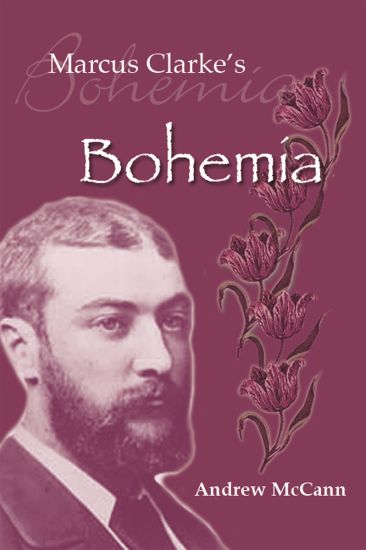
Marcus Clarke's Bohemia

Marcus Clarke's Bohemia

Andrew McCann

Melbourne University Press
2004
nidottu
Marcus Clarke's ""Bohemia"" is the first major critical study of Marcus Clarke - arguably Australia's best known and most important nineteenth-century writer. It situates Clarke both within the bohemian culture of Melbourne and a burgeoning cosmopolitan print-culture extending beyond national borders. Marcus Clarke's ""Bohemia"" offers detailed readings of Clarke's major works, many of which have not previously been discussed, and traces the influence of other European writers on Clarke's writing. Importantly, it focuses on his engagement with the modernity of the place and time in which he worked and lived. McCann's in-depth study unearths the richness of Clarke's writing and brings nineteenth-century Melbourne to life. Impeccably researched and gracefully written, Marcus Clarke's ""Bohemia"" is challenging and compelling reading.