Kirjojen hintavertailu. Mukana 11 244 527 kirjaa ja 12 kauppaa.

Kirjahaku

Etsi kirjoja tekijän nimen, kirjan nimen tai ISBN:n perusteella.

1000 tulosta hakusanalla Maria M. Delgado

Organic Acids and Food Preservation

Organic Acids and Food Preservation

Maria M. Theron; J. F. Rykers Lues

CRC Press
2019
nidottu
Although organic acids have been used to counteract pathogens in food for many years, there is a glaring need to assess and improve their continued effectiveness and sustainability. There is also a growing demand for foods that are produced using milder treatments (e.g., less heat, salt, sugar, and chemicals) and newer technologies to prevent the growth of dangerous bacteria. Organic Acids and Food Preservation concentrates on safe and effective techniques for applying organic acids to prevention of bacterial growth. Despite the wide range of potentially useful antimicrobials, relatively few are suitable in practice—and this invaluable hands-on guide explains why. With its wealth of information and rare focus solely on the subject, it provides practical tools that can be used in the food industry, various academic disciplines, research, education, and food technology fields to better understand the problem and develop optimal solutions. Why are preservative strategies ineffective? Why are microorganisms becoming acid tolerant and resistant in other ways? To answer these and other key questions, the authors combine research findings from industries and laboratories around the globe, specific application regimen, future prospects, and other information that is vital to the successful use of organic acids as food preservatives. After outlining challenges that the food industry faces from modern consumer trends, food legislation, and other obstacles, this book then explores possible solutions that are applicable not only to food science but to microbiology, food science, food technology, biochemistry, and biotechnology. It will become a valuable addition to the library of any scientist or researcher working in these and other fields.
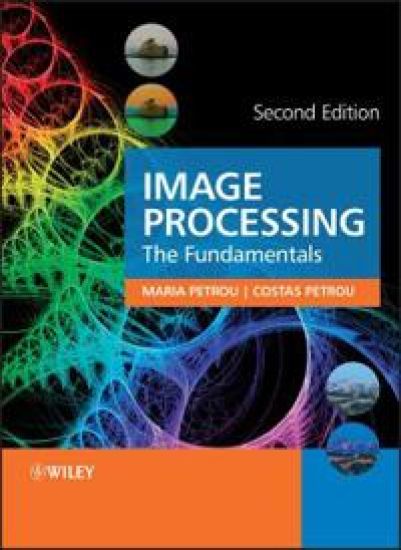
Image Processing

Image Processing

Maria M. P. Petrou; Costas Petrou

John Wiley Sons Inc
2010
sidottu
Following the success of the first edition, this thoroughly updated second edition of Image Processing: The Fundamentals will ensure that it remains the ideal text for anyone seeking an introduction to the essential concepts of image processing. New material includes image processing and colour, sine and cosine transforms, Independent Component Analysis (ICA), phase congruency and the monogenic signal and several other new topics. These updates are combined with coverage of classic topics in image processing, such as orthogonal transforms and image enhancement, making this a truly comprehensive text on the subject. Key features: Presents material at two levels of difficulty: the main text addresses the fundamental concepts and presents a broad view of image processing, whilst more advanced material is interleaved in boxes throughout the text, providing further reference for those who wish to examine each technique in depth.Contains a large number of fully worked out examples.Focuses on an understanding of how image processing methods work in practice.Illustrates complex algorithms on a step-by-step basis, and lists not only the good practices but also identifies the pitfalls in each case.Uses a clear question and answer structure.Includes a CD containing the MATLAB® code of the various examples and algorithms presented in the book. There is also an accompanying website with slides available for download for instructors as a teaching resource. Image Processing: The Fundamentals, Second Edition is an ideal teaching resource for both undergraduate and postgraduate students. It will also be of value to researchers of various disciplines from medicine to mathematics with a professional interest in image processing
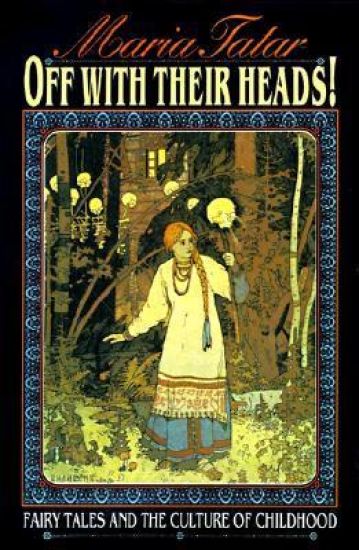
Off with Their Heads!

Off with Their Heads!

Maria M. Tatar

Princeton University Press
1993
pokkari
When Hansel and Gretel try to eat the witch's gingerbread house in the woods, are they indulging their "uncontrolled cravings" and "destructive desires" or are they simply responding normally to the hunger pangs they feel after being abandoned by their parents? Challenging Bruno Bettelheim and other critics who read fairy tales as enactments of children's untamed urges, Maria Tatar argues that it is time to stop casting the children as villians. In this provocative book she explores how adults mistreat children, focusing on adults not only as hostile characters in fairy tales themselves but also as real people who use frightening stories to discipline young listeners.
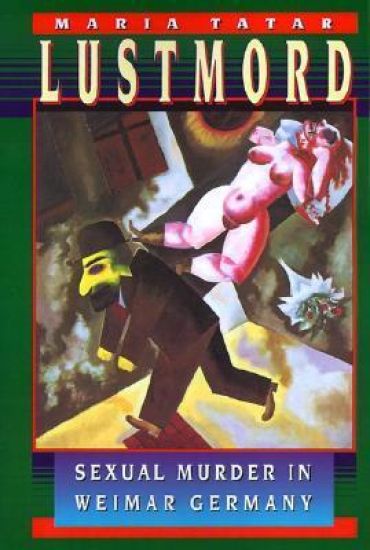
Lustmord

Lustmord

Maria M. Tatar

Princeton University Press
1997
pokkari
In a book that confronts our society's obsession with sexual violence, Maria Tatar seeks the meaning behind one of the most disturbing images of twentieth-century Western culture: the violated female corpse. This image is so prevalent in painting, literature, film, and, most recently, in mass media, that we rarely question what is at stake in its representation. Tatar, however, challenges us to consider what is taking place--both artistically and socially--in the construction and circulation of scenes depicting sexual murder. In examining images of sexual murder (Lustmord), she produces a riveting study of how art and murder have intersected in the sexual politics of culture from Weimar Germany to the present. Tatar focuses attention on the politically turbulent Weimar Republic, often viewed as the birthplace of a transgressive avant-garde modernism, where representations of female sexual mutilation abound. Here a revealing episode in the gender politics of cultural production unfolds as male artists and writers, working in a society consumed by fear of outside threats, envision women as enemies that can be contained and mastered through transcendent artistic expression. Not only does Tatar show that male artists openly identified with real-life sexual murderers--George Grosz posed as Jack the Ripper in a photograph where his model and future wife was the target of his knife--but she also reveals the ways in which victims were disavowed and erased. Tatar first analyzes actual cases of sexual murder that aroused wide public interest in Weimar Germany. She then considers how the representation of murdered women in visual and literary works functions as a strategy for managing social and sexual anxieties, and shows how violence against women can be linked to the war trauma, to urban pathologies, and to the politics of cultural production and biological reproduction. In exploring the complex relationship between victim and agent in cases of sexual murder, Tatar explains how the roles came to be destabilized and reversed, turning the perpetrator of criminal deeds into a defenseless victim of seductive evil. Throughout the West today, the creation of similar ideological constructions still occurs in societies that have only recently begun to validate the voices of its victims. Maria Tatar's book opens up an important discussion for readers seeking to understand the forces behind sexual violence and its portrayal in the cultural media throughout this century.
Secrets beyond the Door

Secrets beyond the Door

Maria M. Tatar

Princeton University Press
2006
pokkari
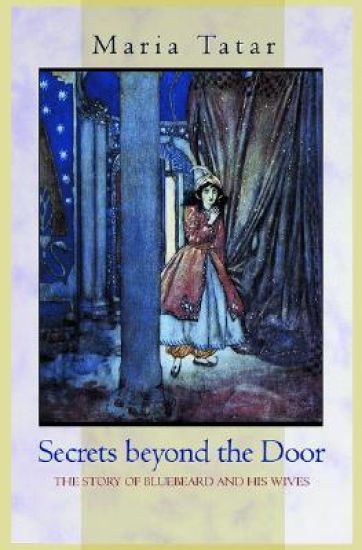
The tale of Bluebeard's Wife--the story of a young woman who discovers that her mysterious blue-bearded husband has murdered his former spouses--no longer squares with what most parents consider good bedtime reading for their children. But the story has remained alive for adults, allowing it to lead a rich subterranean existence in novels ranging from Jane Eyre to Lolita and in films as diverse as Hitchcock's Notorious and Jane Campion's The Piano. In this fascinating work, Maria Tatar analyzes the many forms the tale of Bluebeard's Wife has taken over time, particularly in Anglo-European popular culture. It documents the fortunes of Bluebeard, his wife, and their marriage in folklore, fiction, film, and opera, showing how others took the Bluebeard theme and revived it with their own signature twists. In some tales the wife is a deceiver; in others she is a clever investigator. Earlier ages denounced Bluebeard's wife for her "reckless curiosity" and for her "uncontrolled appetite"; our own times have turned her into something of a heroine, a woman who rescues herself--and often her marriage--through her detective work and psychological finesse. And as for Bluebeard? Once considered a one-dimensional brute, he has found renewed cultural energy both as a master criminal who kills in order to create a higher moral order and as an artist figure who must shield himself against intimacy to foster his creative powers. A brilliant account of how one classic fairy tale has been continually reincarnated, Secrets beyond the Door will appeal to both literary scholars and general readers.
The Hard Facts of the Grimms' Fairy Tales

The Hard Facts of the Grimms' Fairy Tales

Maria M. Tatar

Princeton University Press
2019
pokkari
Murder, mutilation, cannibalism, infanticide, and incest: the darker side of classic fairy tales is the subject of this groundbreaking and intriguing study of Jacob and Wilhelm Grimm’s Nursery and Household Tales. This expanded edition includes a new preface and an appendix featuring translations of six tales with commentary by Maria Tatar. Throughout the book, Tatar draws on the disciplinary tools of psychoanalysis and folklore while also providing historical context to explore the harsher aspects of these stories, presenting new interpretations of tales that engage in a kind of cultural repetition compulsion. No other book so thoroughly challenges us to rethink the happily-ever-after of these classic stories.
Spellbound

Spellbound

Maria M. Tatar

Princeton University Press
2015
pokkari
Franz Anton Mesmer's concept of animal magnetism exercised a profound influence on key European and American thinkers. Mesmer, who saw in his discovery the secret of health, had hoped to recover the harmony between man and nature by harnessing the power of magnetic fluids. In calling attention to the existence of a second self that surfaces in the hypnotic trance, Mesmer made his real contribution and took the first, decisive steps on the road leading to the unconscious. While most critical studies of mesmerism originate in the history of science or medicine, Maria Tatar's book takes a fresh approach by tracing the impact of mesmerism on literature. The author launches her account with a portrait of Mesmer and places his views in the context of eighteenth-century thought. She then explores the significance of Mesmer's ideas and studies their influence on nineteenth-century German, French, and American writers. In conclusion, she examines the ways in which modern authors absorbed and reshaped the mesmerist legacy bequeathed to them by earlier generations. Whether discussing the electrical energy vibrating through Kleist's dramas, the electrical heat radiating from Hoffmann's figures, the streams of magnetic fluid coursing through Balzac's novels, or the magnetic chain of humanity linking Hawthorne's characters, Professor Tatar recaptures the meaning of ideas, motifs, and metaphors often overlooked by literary critics. Her study illuminates, in a remarkable way, the subtle connections between science, psychology, and literature. Originally published in 1978. The Princeton Legacy Library uses the latest print-on-demand technology to again make available previously out-of-print books from the distinguished backlist of Princeton University Press. These editions preserve the original texts of these important books while presenting them in durable paperback and hardcover editions. The goal of the Princeton Legacy Library is to vastly increase access to the rich scholarly heritage found in the thousands of books published by Princeton University Press since its founding in 1905.
Spellbound

Spellbound

Maria M. Tatar

Princeton University Press
2016
sidottu
Franz Anton Mesmer's concept of animal magnetism exercised a profound influence on key European and American thinkers. Mesmer, who saw in his discovery the secret of health, had hoped to recover the harmony between man and nature by harnessing the power of magnetic fluids. In calling attention to the existence of a second self that surfaces in the hypnotic trance, Mesmer made his real contribution and took the first, decisive steps on the road leading to the unconscious. While most critical studies of mesmerism originate in the history of science or medicine, Maria Tatar's book takes a fresh approach by tracing the impact of mesmerism on literature. The author launches her account with a portrait of Mesmer and places his views in the context of eighteenth-century thought. She then explores the significance of Mesmer's ideas and studies their influence on nineteenth-century German, French, and American writers. In conclusion, she examines the ways in which modern authors absorbed and reshaped the mesmerist legacy bequeathed to them by earlier generations. Whether discussing the electrical energy vibrating through Kleist's dramas, the electrical heat radiating from Hoffmann's figures, the streams of magnetic fluid coursing through Balzac's novels, or the magnetic chain of humanity linking Hawthorne's characters, Professor Tatar recaptures the meaning of ideas, motifs, and metaphors often overlooked by literary critics. Her study illuminates, in a remarkable way, the subtle connections between science, psychology, and literature. Originally published in 1978. The Princeton Legacy Library uses the latest print-on-demand technology to again make available previously out-of-print books from the distinguished backlist of Princeton University Press. These editions preserve the original texts of these important books while presenting them in durable paperback and hardcover editions. The goal of the Princeton Legacy Library is to vastly increase access to the rich scholarly heritage found in the thousands of books published by Princeton University Press since its founding in 1905.
Wawa

Wawa

Maria M. Thompson; Donald H. Price

Arcadia Publishing (SC)
2004
nidottu
It's a conveinent-store giant in the Mid-Atlantic region today, but Wawa's history dates back to its days as an iron manufactuer over 200 years ago. Founded in 1803 and incorporated in 1865, Wawa has roots in the manufacture of cast-iron water pipes and decorative lampposts. Using the resources and surplus water power from the iron business, the family opened a cotton mill and began producing cotton piece goods, including Red Star diapers. The first Wawa milk plant opened in 1902 and by the late 1950s, the Wawa Dairy had expanded its home delivery business to include over 145 routes. The first Wawa Food Market opened on April 16, 1964. Today, the company is familiar to many as a chain of 545 convenience stores in Pennsylvania, New Jersey, Delaware, Maryland, and Virginia that offers a wide selection of fresh foods, coffee, and gasoline. Wawa contains vintage images documenting the evolution of the company as it adapted to changing economic and social conditions. From the early days of iron manufacture to the opening of the first store in Folsom, Pennsylvania, Wawa brings to life the many facets of one of America's top privately owned companies.
Re-Presenting 'Jane' Shore

Re-Presenting 'Jane' Shore

Maria M. Scott

CRC Press Inc
2017
sidottu
Re-Presenting 'Jane' Shore analyzes the representation of the mistress of Edward IV of England, known to us as 'Jane' Shore (c. 1445-c. 1527). The daughter of a well-to-do merchant, she left her merchant husband to become the king's concubine. After Edward's death, his brother, later Richard III, charged her with witchcraft and harlotry, prompting Thomas More to include her in his exposition of Richard's perfidies in The History of Richard III. Since then, Jane Shore has been a frequent subject of, among others, poets (Thomas Churchyard and Thomas Deloney), playwrights (Shakespeare and Nicholas Rowe), and novelists (Guy Padget and Jean Plaidy). Scott examines the anxiety in Anglo-American culture generated when sex and politics intersect, using the case of 'Jane' Shore to show how history is compromised and complicated by context. In doing so, she reveals how women continue to be deployed as symbols rather than as actors on the larger stage of the drama that is politics.
Image Processing

Image Processing

Maria M. P. Petrou; Sei-ichiro Kamata

Wiley-Blackwell
2021
sidottu
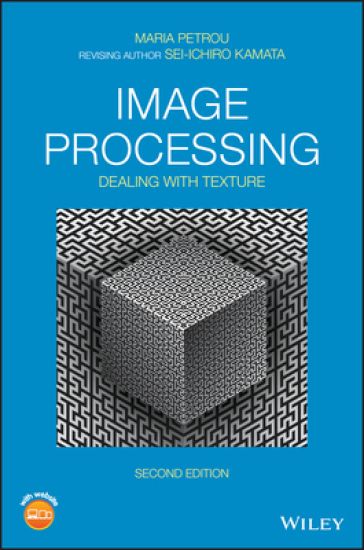
The classic text that covers practical image processing methods and theory for image texture analysis, updated second edition The revised second edition of Image Processing: Dealing with Textures updates the classic work on texture analysis theory and methods without abandoning the foundational essentials of this landmark work. Like the first, the new edition offers an analysis of texture in digital images that are essential to a diverse range of applications such as: robotics, defense, medicine and the geo-sciences. Designed to easily locate information on specific problems, the text is structured around a series of helpful questions and answers. Updated to include the most recent developments in the field, many chapters have been completely revised including: Fractals and Multifractals, Image Statistics, Texture Repair, Local Phase Features, Dual Tree Complex Wavelet Transform, Ridgelets and Curvelets and Deep Texture Features. The book takes a two-level mathematical approach: light math is covered in the main level of the book, with harder math identified in separate boxes. This important text: Contains an update of the classic advanced text that reviews practical image processing methods and theory for image texture analysis Puts the focus exclusively on an in-depth exploration of texture Contains a companion website with exercises and algorithms Includes examples that are fully worked to enhance the learning experience Written for students and researchers of image processing, the second edition of Image Processing has been revised and updated to incorporate the foundational information on the topic and information on the latest advances.