Kirjojen hintavertailu. Mukana 11 244 527 kirjaa ja 12 kauppaa.

Kirjahaku

Etsi kirjoja tekijän nimen, kirjan nimen tai ISBN:n perusteella.

1000 tulosta hakusanalla Marianne Farningham

MARIANNE

MARIANNE

A. M. Hedberg

Solentro
2022
nidottu
MARIANNE ÄR EN BUSIG FLICKA PÅ 6 ÅR. HON BOR I ETT VÅNINGSHUS MED SIN MAMMA OCH STORASYSTRAR ROSIE OCH YVONNE. STÄNDIGT HITTAR HON PÅ NYA BUS, OCH HON LÄR SIG NÅGOT NYTT OM VAD MAN SKA OCH INTE SKA GÖRA VARJE GÅNG.
Marianne

Marianne

Anna Alemo

Karat Förlag
2024
nidottu
Året är 1954 och Marianne arbetar som hembiträde hos familjen Westerberg. Efter drygt två år i huset börjar hon tröttna på att städa undan smulor på köksbordet och bädda sängarna åt barnen i huset. Tänk att istället få göra nytta på riktigt, att få utbilda sig till sjuksköterska som herr Westerbergs syster. Men blotta tanken på studier gör Marianne livrädd. Aldrig att hon skulle klara det.Den jämnårige Wilhelm Westerberg, son i huset, har nyss kommit hem efter ett år i Dalarna, och han råkar ständigt i konflikt med Marianne. En påfrestande kraftmätning mellan dem leder till extra sysslor för henne och pinsamma situationer för honom. Men när Marianne får reda på att Wilhelm också vill bli sjuksköterska hamnar saker och ting i ett nytt ljus. Kanske borde de försöka begrava stridsyxan och göra gemensam sak av sina drömmar ...Marianne är femte delen i den varma, romantiska serien Westerbergs. Där kärleksproblemen, vardagsbekymren och hemligheterna tätnar, medan snön faller över 1950-talets Ystad.
Marianne

Marianne

Nils-Eric Forsberg

Lava Förlag
2024
nidottu
Marianne tar sig för pannan när hon får veta att kriminella, som våldtagit två flickor, beviljas av Högsta domstolen en penningbelöning från samhället. Skakar på huvudet när hon får reda på att butiker utsättas för utpressning av kriminella män som erbjuder ”beskydd” mot betalning.Marianne och hennes vänner beslutar sig för att bilda en hemlig grupp som aktivt ställer sig på offrens sida och ser till att korrigera de alltför milda domar som brottslingar dömts till. Fler hemliga grupper bildas, som struntar i lagen och tar saken i egna händer. Är det tillräckligt för att väcka naiva och aningslösa beslutsfattare? Dessa som i åratal struntat i de varningar som framförts och i stället beskyllt de som varnat för utvecklingen, att ”fiska i grumliga vatten.”Marianne orkar inte se hur samhället förlamas av vettlösa skjutningar och sprängningar. Skall gängen få härja fritt? Är vi de enda som vågar ta upp kampen?”
Selected Letters of Marianne Moore

Selected Letters of Marianne Moore

Marianne Moore

PENGUIN CLASSICS
1998
nidottu
Marianne Moore's correspondence makes up the largest and most broadly significant collection of any modern poet. It documents the first two-thirds of this century, reflecting shifts from Victorian to modernist culture, the experience of the two world wars, the Depression and postwar prosperity, and the changing face of the arts in America and Europe. Moore wrote letters daily for most of her life--long, intense letters to friends and family; shorter, but always distinctive letters to an ever-widening circle of acquaintances and fans. At the height of her celebrity, she would occasionally write as many as fifty letters a day. Both Moore and her correspondents appreciated the value of their exchange, so that an extraordinary number of letters, approximately thirty thousand, have been preserved. For more than seventy years, Penguin has been the leading publisher of classic literature in the English-speaking world. With more than 1,700 titles, Penguin Classics represents a global bookshelf of the best works throughout history and across genres and disciplines. Readers trust the series to provide authoritative texts enhanced by introductions and notes by distinguished scholars and contemporary authors, as well as up-to-date translations by award-winning translators.
The Poems of Marianne Moore

The Poems of Marianne Moore

Marianne Moore

PENGUIN CLASSICS
2005
nidottu
A Penguin Classic This complete collection of Moore's poetry, lovingly edited by prize-winning poet Grace Schulman, for the first time gathers together all of Moore's poems, including more than a hundred that were previously uncollected and unpublished. This long-awaited volume will reveal to Moore's admirers the scope of her poetic voice and will introduce new generations of readers to her extraordinary achievement.For more than seventy years, Penguin has been the leading publisher of classic literature in the English-speaking world. With more than 1,700 titles, Penguin Classics represents a global bookshelf of the best works throughout history and across genres and disciplines. Readers trust the series to provide authoritative texts enhanced by introductions and notes by distinguished scholars and contemporary authors, as well as up-to-date translations by award-winning translators.
Marianne Moore and China

Marianne Moore and China

Cynthia Stamy

Clarendon Press
1999
sidottu
Marianne Moore's poetry offers an extraordinarily rich site from which to analyse a tradition of American orientalism which focused upon China. Marianne Moore and China examines why she chose to participate in that tradition and analyses why her borrowing of Chinese models of all kinds - from poetry to painting and philosophy - was so critical to the formation of her verse. Moore's poetry is part of a long tradition of satirical critique in orientalist writing which finds its roots in English literature. In the early twentieth century, this tradition of critique in orientalist prose was adopted by American poets, who borrowed Far Eastern poetic models to permanently transform the ways in which poetry in English was being written by launching a literary assault upon what they saw as outmoded methods of versification. Moore used the Far East to express her own dissatisfaction with contemporary trends in the writing of poetry, and embraced the more ancient culture of China as a means of resisting the American habit of looking to Europe as a singular source of cultural tradition 'at home'. Moore employed features of the ancient Chinese fu technique in her poems and used images of Chinese supernatural creatures in an effort to establish an alternative to logic and narrative linearity and to facilitate the moral didacticism for which her poetry is known. Moore's use of Chinese painting theory and philosophy in the creation of her poems enabled her to explore alternatives to Western perspectival principles and to Western ways of narrating visual experience. Marianne Moore and China also examines the ways in which Chinese linguistic features provide Moore with models for her compound nouns and syntactical ellipses, and gathers evidence to show that her abiding concerns for precision, brevity and restraint have both Confucian and Puritan antecedents. Additionally, this book analyses the degree to which her collection of quotations, from which she fashions so many of her poems, and her citation of them in numerous appended notes, are complicit in the same process of acquisition and display which characterizes the activity of the museum, the preoccupations of the curio-collector, and the pursuit of minute detail in orientalist discourse generally. Moore's consistent ingenuity in employing Chinese forms and methods makes her work a particularly fruitful source for investigating orientalism and its contribution to modern poetry.
Marianne or Germania?

Marianne or Germania?

Elizabeth Vlossak

Oxford University Press
2010
sidottu
Marianne or Germania is the first comprehensive study of modern Alsatian history using gender as a category of historical analysis, and the first to record the experiences of the region's women from 1870 to 1946. Relying on an extensive array of documentary, visual and literary material, national and regional publications, oral testimonies, and previously unused archival sources gathered in France, Germany, and Britain, the book contributes to the growing literature on the relationship between gender, the nation and citizenship, and between nationalism and feminism. It does so by focusing on the roles, both passive and active, that women played in the process of German and French nation-building in Alsace. The work also critiques and corrects the long-held assumptions that Alsatian women were the preservers, after 1871, of a French national heritage in the region, and that women were neglected or disregarded by policy-makers concerned with the consolidation of German, and later French, loyalties. Women were in fact seen as important agents of nation-formation and treated as such. In addition, all the categories of social action implicated in the nation-building process - confession, education, socialization, the public sphere, the domestic setting, the iconography of regional and national belonging - were themselves gendered. Thus nation-building projects impacted asymmetrically on men and women, with far-reaching consequences. Having been 'nationalized' through different 'rounds of restructuring' than men, the women of Alsace were, and continue to be, excluded from national and regional histories, as well as from public memory and official commemoration. Marianne or Germania questions, and ultimately challenges, these practices.
Marianne Meets the Mormons

Marianne Meets the Mormons

Heather Belnap; Corry Cropper; Daryl Lee

UNIVERSITY OF ILLINOIS PRESS
2022
sidottu
In the nineteenth century, a fascination with the Church of Jesus Christ of Latter-day Saints made Mormons and Mormonism a common trope in French journalism, art, literature, politics, and popular culture. Heather Belnap, Corry Cropper, and Daryl Lee bring to light French representations of Mormonism from the 1830s to 1914, arguing that these portrayals often critiqued and parodied French society. Mormonism became a pretext for reconsidering issues such as gender, colonialism, the family, and church-state relations while providing artists and authors with a means for working through the possibilities of their own evolving national identity. Surprising and innovative, Marianne Meets the Mormons looks at how nineteenth-century French observers engaged with the idea of Mormonism in order to reframe their own cultural preoccupations.
Marianne Meets the Mormons

Marianne Meets the Mormons

Heather Belnap; Corry Cropper; Daryl Lee

UNIVERSITY OF ILLINOIS PRESS
2022
nidottu
In the nineteenth century, a fascination with the Church of Jesus Christ of Latter-day Saints made Mormons and Mormonism a common trope in French journalism, art, literature, politics, and popular culture. Heather Belnap, Corry Cropper, and Daryl Lee bring to light French representations of Mormonism from the 1830s to 1914, arguing that these portrayals often critiqued and parodied French society. Mormonism became a pretext for reconsidering issues such as gender, colonialism, the family, and church-state relations while providing artists and authors with a means for working through the possibilities of their own evolving national identity. Surprising and innovative, Marianne Meets the Mormons looks at how nineteenth-century French observers engaged with the idea of Mormonism in order to reframe their own cultural preoccupations.
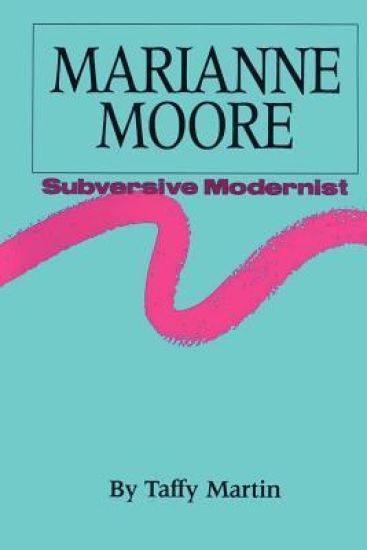
Marianne Moore, Subversive Modernist

Marianne Moore, Subversive Modernist

Taffy Martin

University of Texas Press
1986
nidottu
Myth and misconception have obstructed a clear understanding of the poetry and person of Marianne Moore. In this groundbreaking study, Taffy Martin delves beneath the layers of myth and recaptures the excitement that Moore's contemporaries, particularly William Carlos Williams, felt when they encountered her poetry. She reveals that, far from being a stanch upholder of Modernist order and stasis, Moore continually undermines the stability of her own medium, language. Unlike the writings of other Modernist poets, such as T. S. Eliot, who tried to create islands of order in the seas of twentieth-century fragmentation, Moore's work shows surprising awareness of that fragmentation. In this way, she anticipates the thematic preoccupation of Postmodernist writers and critics. In Marianne Moore, Subversive Modernist, Taffy Martin combines traditional scholarship and contemporary critical theory to create a feminist reading of one of the twentieth century's most difficult poets. In so doing, she places Moore in the tradition of Modernism, defines Moore's quarrels with it, and thus produces a broader understanding of both the poet and the movement. Drawing on Moore's unpublished correspondence, her reading notebooks, and her workbooks, as well as feminist criticism's attention to writers who elude traditional critical approaches, this excellent study provides much-needed insights into the Modernism, life, and art of Marianne Moore.
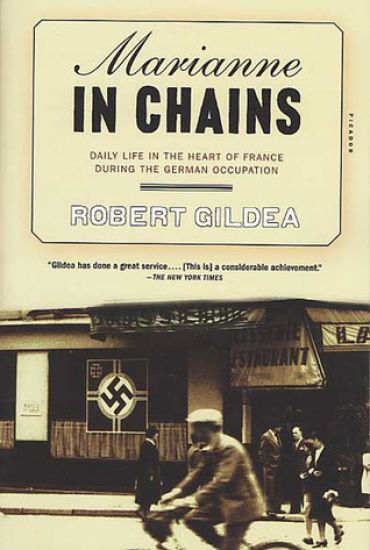
Marianne in Chains: Daily Life in the Heart of France During the German Occupation
A startling and original view of the occupation of the French heartland, based on a new investigation of everyday life under Nazi rule In France, the German occupation is called simply the "dark years." There were only the "good French" who resisted and the "bad French" who collaborated. Marianne in Chains, a broad and provocative history, uncovers a rather different story, one in which the truth is more complex and humane. Drawing on previously unseen archives, firsthand interviews, diaries, and eyewitness accounts, Robert Gildea reveals everyday life in the heart of occupied France. He describes the pressing imperatives of work, food, transportation, and family obligations that led to unavoidable compromise and negotiation with the army of occupation. In the process, he sheds light on such subjects as forced labor, the role of the Catholic Church, the "horizontal collaboration" between French women and German soldiers, and, most surprisingly, the ambivalent attitude of ordinary people toward the Resistance. A great work of reconstruction, Marianne in Chains provides a clear view, unobscured by romance or polemics, of the painful ambiguities of living under tyranny.
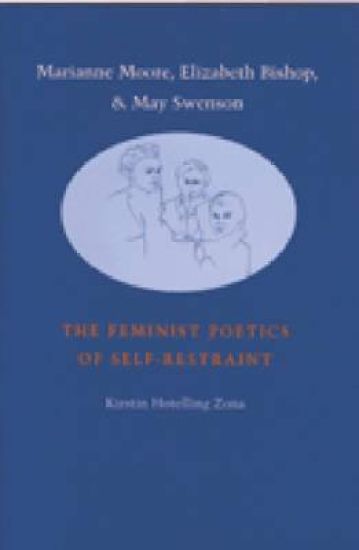
Marianne Moore, Elizabeth Bishop, and May Swenson

Marianne Moore, Elizabeth Bishop, and May Swenson

Kirstin Riter Hotelling Zona

The University of Michigan Press
2002
sidottu
This book examines the strategic possibilities of poetic self-restraint. Marianne Moore,Elizabeth Bishop, and May Swenson all wrote poetry that is marked by a certain reserve--precisely the motive against which most feminist poets and critics of the last thirty years have established themselves. Kirstin Hotelling Zona complicates this dichotomy by examining the conceptions of selfhood upon which it depends. She argues that Moore, Bishop, and Swenson expressed their commitment to feminism by exposing its most treasured assumptions: they not only challenge the ideal of autonomous self-definition, but also contest the integrity of a bodily or sexual authenticity by which that ideal is often measured. In recent years critical studies of Bishop and Moore have flourished, a large percentage of them devoted to explorations of sexuality and gender. A gap is growing, however, between feminist repossessions of Moore and Bishop and recent readings of their antiessentialist poetics. On the one hand, these poets are appearing more frequently in the feminist canon, but the price of this inclusion is usually the suppression of their strategies of self-restraint. While Zona questions the poetic privileging of self-expression, she establishes contiguity between feminist poetry and developments in American poetry at large. In doing so she asserts the centrality of feminist poetry within discussions of contemporary American poetry, thereby challenging the common perception of feminist poetry as an "alternative" (which often means auxiliary) genre. Kirstin Hotelling Zona is Assistant Professor of Poetry and Poetics, Illinois State University.
Becoming Marianne Moore

Becoming Marianne Moore

Marianne Moore; Robin G. Schulze

University of California Press
2002
sidottu
Throughout her lifetime, Marianne Moore was an avid editor of her own verse. The bulk of her poems appear in numerous, at times vastly different published versions. For Moore, no text was ever stable or finished; each opportunity to publish offered an opportunity to revise. "Becoming Marianne Moore" gives scholars and readers access to the multiple variant versions of Moore's poems published between 1907 and 1924. An innovative, deeply contextualized facsimile edition of the poet's published early verse, it brilliantly demonstrates that modernist textuality is not a fixed, static product but an ongoing, fluid process. "Becoming Marianne Moore" offers readers a full facsimile reprint of the first edition of "Observations" (1924), the book that garnered Moore the Dial Award for Literature and solidified her reputation as a modernist poet of note. The reprint is followed by a collection of facsimiles that presents each of Moore's poems published between 1907 and 1924 as it first appeared in a modernist little magazine.Each facsimile is accompanied by a variorum table that gives scholars quick access to all of the published changes that Moore made to each poem and a series of brief bibliographical notes that supply information about the immediate publication contexts of all of the presentations of the poem. These notes, in turn, point readers to narrative accounts of Moore's associations with her early publishers that offer a range of historical, contextual, biographical, and bibliographic information about the publication events of Moore's poems and explore her attempts to shape her literary career in concert with some of her most famous modernist peers - Richard Aldington, H.D., Harriet Monroe, Ezra Pound, and William Carlos Williams. A wonderful fusion of historical research and critical sensitivity, "Becoming Marianne Moore" will change the way people think about Moore's verse and modernist textuality in general. A powerful intervention into Moore studies, it gives readers a broader sense of the poet's complex and brilliant career.
Marianne in the Market

Marianne in the Market

Lisa Tiersten

University of California Press
2001
sidottu
In the late nineteenth century, controversy over the social ramifications of the emerging consumer marketplace beset the industrialized nations of the West. In France, various commentators expressed concern that rampant commercialization threatened the republican ideal of civic-mindedness as well as the French reputation for good taste. The female bourgeois consumer was a particularly charged figure because she represented consumption run amok. Critics feared that the marketplace compromised her morality and aesthetic discernment, with dire repercussions for domestic life and public order. "Marianne in the Market" traces debates about the woman consumer to examine the complex encounter between the market and the republic in nineteenth-century France. It explores how agents of capitalism - advertisers, department store managers, fashion journalists, self-styled taste experts - addressed fears of consumerism through the forging of an aesthetics of the marketplace: a 'marketplace modernism'. In so doing, they constructed an image of the bourgeois woman as the solution to the problem of unrestrained, individualized, and irrational consumption. Commercial professionals used taste to civilize the market and to produce consumers who would preserve the French aesthetic patrimony. Tasteful consumption legitimized women's presence in the urban public and reconciled their roles as consumers with their domestic and civic responsibilities. A fascinating case study, "Marianne in the Market" builds on a wide range of sources such as the feminine press, decorating handbooks, exposition reports, advertising materials, novels, and etiquette books. Lisa Tiersten draws on these materials to make the compelling argument that market professionals used the allure of aesthetically informed consumerism to promote new models of the female consumer and the market in keeping with Republican ideals.
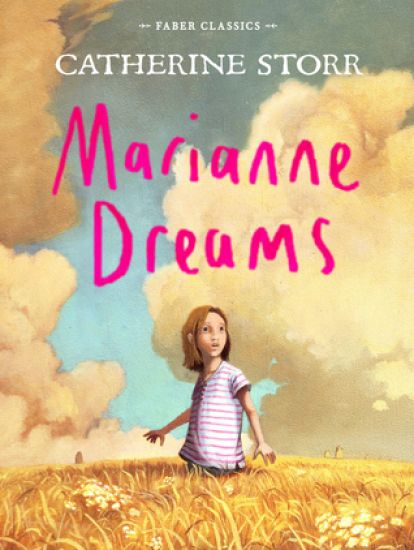
Marianne Dreams

Marianne Dreams

Storr Catherine

Faber Faber
2014
nidottu
'I could get in,' Marianne thought, 'if there was a person inside the house. There has got to be a person. I can't get in unless there is somebody there.' A powerful and haunting classic about a girl haunted by her own dreams. Ill and bored with having to stay in bed, Marianne picks up a pencil and starts doodling - a house, a garden, a boy at the window. That night she has an extraordinary dream. She is transported into her own picture, and as she explores further she soon realises she is not alone. The boy at the window is called Mark, and his every movement is guarded by the menacing stone watchers that surround the solitary house. Together, in their dreams, Marianne and Mark must save themselves... The perfect gift for girls aged 8+, this well-loved classic will delight a new generation of readers of the Faber Children's Classics list.
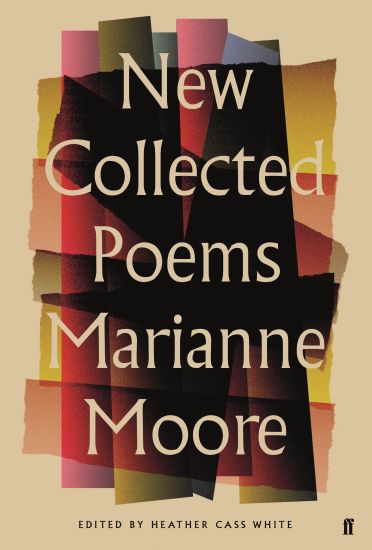
New Collected Poems of Marianne Moore

New Collected Poems of Marianne Moore

Marianne Moore

Faber Faber
2021
pokkari
During her lifetime Marianne Moore was that rarest of combinations, a genuine leader in the art of poetry, as well as a bona fide celebrity. She was an instantly recognisable symbol of Brooklyn, New York, appearing on the cover of Life magazine, asked by the Ford Motor Company to christen their new family sedan, and by the New York Yankees to throw the opening pitch of their baseball season. However, because of Moore's restless, seldom-ceasing, decade-spanning revision of her own poems, creating a 'stable' text of her work has posed editors a challenge ever since. Moore tackled the problem herself: Complete Poems (1967) was her own selection, but she favoured the later work, including less than half of her output up to that point. 'Omissions are not accidents,' she wrote pointedly in that edition, but for some readers the absence of more than one hundred poems constituted a wilful neglect of her startlingly innovative, highly influential early work, and contributed to Moore's undervaluing as a 'modernist' poet. Marianne Moore scholar Heather Cass White has prepared an edition of poems that, for the first time, presents the full range of Moore's work in its published order, while honouring the complex textual lives of the poems. With an inviting introduction and meticulous notes, the New Collected Poems of Marianne Moore is the first definitive text of this most celebrated writer, whose poems form part, as T. S. Eliot declared, of 'the small body of durable poetry written in our time'.
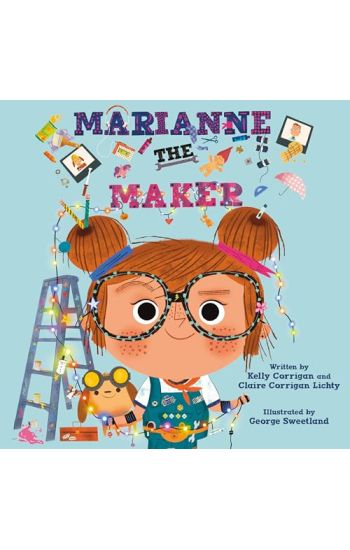
Marianne the Maker

Marianne the Maker

Kelly Corrigan; Claire Corrigan Lichty

Flamingo Books
2025
sidottu
From bestselling author Kelly Corrigan and her daughter debut author Claire Corrigan Lichty comes a new picture book about a determined young inventor Marianne's days are filled with schedules, structure, and soccer. There's just one problem: Marianne is a maker. She needs every minute of her weekends to scheme and dream, draw and design, to build and rebuild This is the story of how a creator with a crackerjack imagination finds a not-so-great way to skip practice and create her masterpiece. But will her dad understand? Told in delightful rhyme that bounces across George Sweetland's gorgeous collage-style illustrations (chock full of hidden gems, ) Marianne the Maker is sure to kindle the creative spark that lives inside all of us.
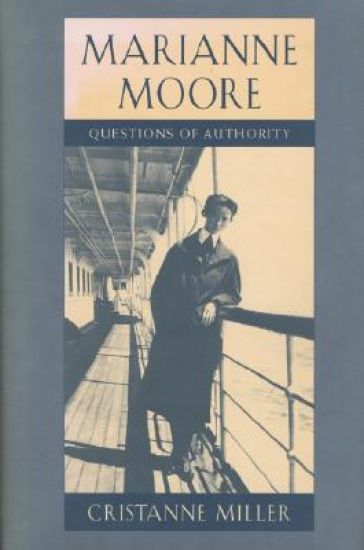
Marianne Moore

Marianne Moore

Cristanne Miller

Harvard University Press
1995
sidottu
Not confessional or autobiographical, not openly political or gender-conscious: all that Marianne Moore’s poetry is not has masked what it actually is. Cristanne Miller’s aim is to lift this mask and reveal the radically oppositional, aesthetic, and political nature of the poet’s work. A new Moore emerges from Miller’s persuasive book—one whose political engagement and artistic experiments, though not cut to the fashion of her time, point the way to an ambitious new poetic.Miller locates Moore within the historical, literary, and family environments that shaped her life and work, particularly her sense and deployment of poetic authority. She shows how feminist notions of gender prevalent during Moore’s youth are reflected in her early poetry, and tracks a shift in later poems when Moore becomes more openly didactic, more personal, and more willing to experiment with language typically regarded as feminine. Distinguishing the lack of explicit focus on gender from a lack of gender-consciousness, Miller identifies Moore as distinctly feminist in her own conception of her work, and as significantly expanding the possibilities for indirect political discourse in the lyric poem. Miller’s readings also reveal Moore’s frequent and pointed critiques of culturally determined power relationships, those involving race and nationality as well as gender.Making new use of unpublished correspondence and employing close interpretive readings of important poems, Miller revises and expands our understanding of Marianne Moore. And her work links Moore—in her radically innovative reactions to dominant constructions of authority—with a surprisingly wide range of late twentieth-century women poets.