Kirjojen hintavertailu. Mukana 11 244 527 kirjaa ja 12 kauppaa.

Kirjahaku

Etsi kirjoja tekijän nimen, kirjan nimen tai ISBN:n perusteella.

1000 tulosta hakusanalla Mark Clark

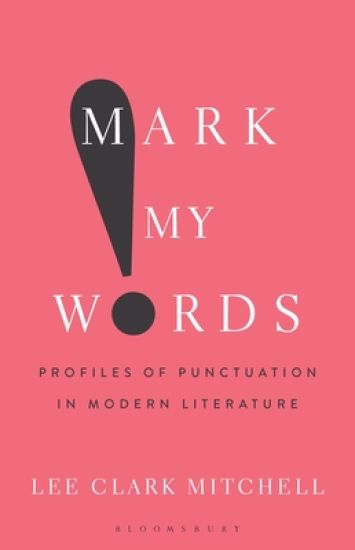
Mark My Words

Mark My Words

Lee Clark Mitchell

Bloomsbury Academic USA
2020
nidottu
Why are Emily Dickinson and Henry James drawn habitually to dashes? What makes James Baldwin such a fan of commas, which William Carlos Williams tends to ignore? And why do that odd couple, the novelist Virginia Woolf and the short story specialist Andre Dubus II, both embrace semicolons, while E. E. Cummings and Nikki Giovanni forego punctuation entirely? More generally, what effect do such nonverbal marks (or their absence) have on an author’s encompassing vision? The first book on modern literature to compare writers’ punctuation, and to show how fully typographical marks alter our sense of authorial style, Mark My Words offers new ways of reading some of our most important and beloved writers as well as suggesting a fresh perspective on literary style itself.
Mark My Words

Mark My Words

Lee Clark Mitchell

Bloomsbury Academic USA
2020
sidottu
Why are Emily Dickinson and Henry James drawn habitually to dashes? What makes James Baldwin such a fan of commas, which William Carlos Williams tends to ignore? And why do that odd couple, the novelist Virginia Woolf and the short story specialist Andre Dubus II, both embrace semicolons, while E. E. Cummings and Nikki Giovanni forego punctuation entirely? More generally, what effect do such nonverbal marks (or their absence) have on an author’s encompassing vision? The first book on modern literature to compare writers’ punctuation, and to show how fully typographical marks alter our sense of authorial style, Mark My Words offers new ways of reading some of our most important and beloved writers as well as suggesting a fresh perspective on literary style itself.
Graeme Clark

Graeme Clark

Mark Worthing

Allen Unwin
2015
nidottu
As a young man, Graeme Clark read about Louis Pasteur, Marie Curie and other great scientists, little knowing that one day he would join their ranks. After watching his father struggle with hearing problems, Graeme knew he wanted to find a solution to deafness.Graeme became a surgeon, and his quiet persistence and methodical approach yielded results that fulfilled his childhood dream. Around the world, hundreds of thousands of people have now received the gift of hearing from the cochlear implant he developed. The first major medical 'bionic' implant technology, it has transformed the everyday lives of people who are profoundly deaf. Throughout his career, his belief that the impossible could be achieved, his strong family support and his Christian faith have sustained him through many obstacles, and helped him overcome resistance to his ideas from people who doubted them.This new biography tells the inspiring story of Graeme's life, and the triumphs and the setbacks behind the invention of the bionic ear.
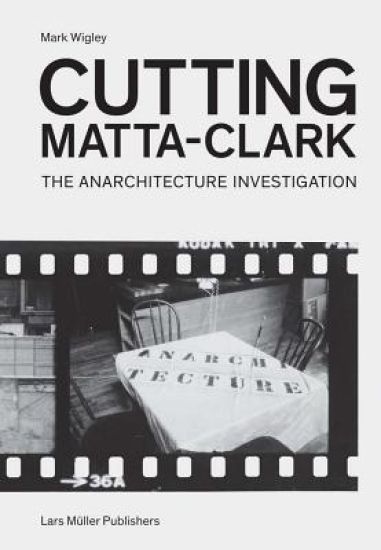
Cutting Matta-Clark

Cutting Matta-Clark

Mark Wigley

Lars Muller Publishers
2018
nidottu
Of the many shows at the fabled 112 Greene Street gallery--an artistic epicenter of New York's downtown scene in the 1970s--the Anarchitecture group show of March 1974 has been the subject of the most enduring discussion, despite a complete lack of documentation about it. Anarchitecture has become a foundational myth, but one that remains to be properly understood. Stemming from a series of meetings organized by Gordon Matta-Clark and refl ecting his long-standing interest in architecture, the Anarchitecture exhibition was conceived as an anonymous group statement in photographs about the intersection of art and building. But did it actually happen? It exists only through oblique archival traces and the memories of the participants. Cutting Matta-Clark investigates the Anarchitecture group as a kind of collective research seminar, through extensive interviews with the protagonists and a dossier of all the available evidence.The dossier includes a collection of Matta-Clark's aphoristic "art cards," the 96 photographs that were produced by the various participants for possible inclusion in the exhibition, and images from a recently unearthed video of Matta-Clark's now famous bus trip to see Splitting in Englewood, New Jersey.
Wayback: The Clarke Street Trilogy Book 3

Wayback: The Clarke Street Trilogy Book 3

Mark S. Howey

Createspace Independent Publishing Platform
2019
nidottu
With their mission in limbo, Richard Sobel and Peter Sands must try to escape the Trench and stop the ongoing destruction brought about by Gideon and the Eclipse. The last chapter of their adventure will take them from the squalor of prison to a mysterious City beneath the City, before returning to the remnants of Project Wayback. This is where Sands will reveal the scope of his plan to set the worlds back on track. It is beyond what Richard ever expected.
The Popper: Mark's Story

The Popper: Mark's Story

Asten Clarke

Independently Published
2018
nidottu
Twenty-five-year-old balloon fetishist Mark is infatuated with looner website HotBalloons' newest model, Anna. Mark's dreams come true when he gets the chance to meet Anna at a fetish party hosted by the site. The two fall in love and get married. But over the years Anna, now a professional balloon decorator, changes her tune when it comes to her husband's fetish, leaving Mark feeling 'sexually tortured'. When an ex-online friend starts stalking Anna, pushing their marriage to breaking point, Mark threatens to avenge himself and the looner community... This is a spinoff from the 'Rainbow Balloons' series but can also be read on its own.
Comeback: Book Two of the Clarke Street Trilogy

Comeback: Book Two of the Clarke Street Trilogy

Mark Howey

Createspace Independent Publishing Platform
2018
nidottu
Years after the death of Peter Sands, his inventions begin to fail. Technology of every kind soon follows. Despite the best efforts of great minds, no one can determine the cause. With growing unrest, and the threat of global devastation, a tough decision must be made. Should the man who might have all the answers be resurrected? Or is he the culprit?
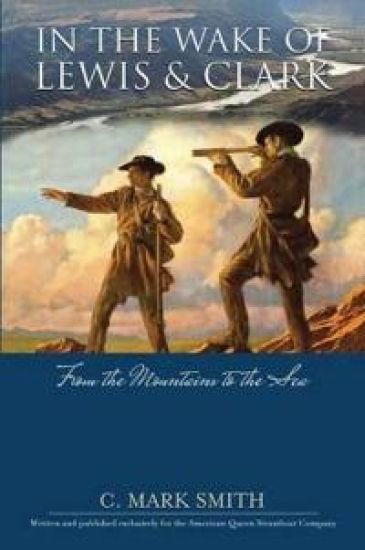
In the Wake of Lewis and Clark

In the Wake of Lewis and Clark

C Mark Smith

Lulu Publishing Services
2015
pokkari
This book is designed to help passengers better understand what the Lewis and Clark expedition experienced during those momentous years of 1804-1806, but also to be able to see through vintage photographs and other images what the members of the Corps of Discovery saw before the rivers were changed forever by hydroelectric dams. It affords an opportunity to travel "in the wake of Lewis and Clark." Leaving St. Louis on May 14, 1804, with thirty-four soldiers, hired voyagers, and Clark's slave, York, they traveled through the unexplored territory and beyond it, to the Pacific Ocean. Their exploits come alive today as cruise ships travel their route up and down the Snake and Columbia Rivers.
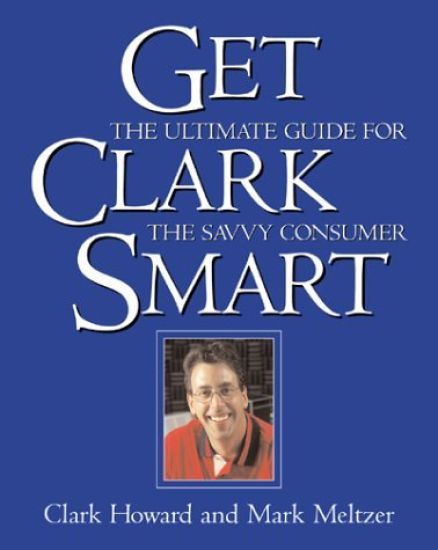
Get Clark Smart

Get Clark Smart

Clark Howard; Mark Meltzer

Longstreet Press
1955
nidottu
Consumer advocate Clark Howard is a rising star on America's airwaves with his popular syndicated radio show. Filled with practical tips, his new handbook will help readers avoid ripoffs and successfully navigate through the dozens of consumer decisions they face every day. Includes information on used cars, wireless deals, online investing, health club memberships, and affordable travel options.
The Baton Rouge Bus Boycott: The Mark That Could Not Be Erased
The Baton Rouge Bus Boycott was the first large-scale bus boycott by Blacks of the segregated bus system in the United States. In June of 1953, Martha White, who was a 23-year-old Black housekeeper, refused to move from the Whites Only Section of the city-owned segregated bus. The Black church and community came together both legally and physically. Within days, the impact to the city-owned segregated buses demanded public policy changes in Baton Rouge. Discover how hidden figures like Martha White and unsung heroes of the Baton Rouge Bus Boycott created the blueprint for the Free Ride System. This is a coloring book of a poem that reflects people around that time, historical places, and sequential events of the Baton Rouge Bus Boycott in Baton Rouge, Louisiana. Two years later in 1955, Rosa Parks was arrested for sitting in the Whites Only section of a segregated bus. Consequently, Dr. Martin Luther King Jr. led a 13-month bus boycott in Montgomery, Alabama modeled after the Baton Rouge Bus Boycott's blueprint. The Montgomery Bus Boycott ended when the Supreme Court ruled segregation on public buses was unconstitutional.
Bernard Berenson, Kenneth Clark and the Art Market

Bernard Berenson, Kenneth Clark and the Art Market

Mark Campbell

LUND HUMPHRIES PUBLISHERS LTD
2026
sidottu
Bernard Berenson (1865-1959) was a Lithuanian American connoisseur who was a hugely significant figure in the evolution of the commercial art world from the late 1880s to the 1940s. This book examines his conception of connoisseurship and its impact through his famous protégés, including Geoffrey Scott, Meyer Shapiro, John Walker and especially, art historian of Civilisation fame, Kenneth Clark. This is framed through a biographical account of his complex and duplicitous character, together with a description of his important methods for determining authorship and assigning value to Renaissance artworks. In terms of the assignation of authorship and the determination of value, Berenson remains a seminal if contradictory figure in the history of the art market, for whom the artwork was subject to a series of negotiations and the act of connoisseurship was both an aesthetic pursuit and a ‘scientific process’. Berenson’s commercial dealings ran counter to his own assertion that the connoisseur needed to be ‘disinterested’ in their consideration of art and engaged in an other-worldly ‘art in life’. The book examines Berenson’s complex and lucrative dealings with the industrialists of the American Gilded Age, including Isabella Stewart Gardiner. These transactions were enmeshed in issues of authenticity and forgery, as well as inflated estimates and unscrupulous skimming from both clients and business partners, including the notorious Duveen Brothers. These negotiations afforded him such celebrity and financial gain that 'everyone', as Marcel Proust once quipped, 'wanted to know about Berenson'. In this way, Berenson is not only an historic figure, but also a precursor to those sometimes slippery intermediaries who appear throughout the history of contemporary art.