We all face tough choices: business executives, community leaders, and family members all struggle with difficult decisions on a daily basis. What we decide reveals what really matters to us; how we decide determines whether we succeed or fail. Developed over twenty years in settings as diverse as hospital bedsides and corporate boardrooms, A Field Guide to Good Decisions provides the skills to make decisions that reflect your core values while respecting those of others, including the long-term implications for all participants. Illustrated through many real-life examples that will resonate with readers both professionally and personally, A Field Guide to Good Decisions offers practical tools and techniques for identifying individual and common goals, reaching consensus, and communicating the results effectively. The authors also show readers how to overcome common obstacles to good decision-making (psychological, cultural, and organizational). Ultimately, this book is about making decisions which, while not always a matter of life or death, nevertheless have a powerful effect on our sense of self, our credibility in the eyes of others, and the lives of those touched by the choices we make.Decision making is always personal. Each of us makes important decisions at work, in the community, and at home. When we face tough choices, what we decide reveals what really matters to us; how we decide determines whether we succeed or fail. Business executives, community leaders, and family members all struggle with difficult decisions: a senior management team makes an important choice about whether to pursue an acquisition; a baby-boomer decides whether to place an elderly parent in assisted living; a non-profit administrator considers laying off employees to have money and continue serving the community. For each, the steps toward a good decision are the same: know your values, engage others to understand theirs, and communicate with respect and candor. Simple in concept, not so easy in practice—but making a good decision demands nothing less.Developed over twenty years in settings as diverse as hopsital bedsides and corporate boardrooms, A Field Guide to Good Decisions provides the skills to make decisions that reflect your core values while respecting those of others, including the long-term implications for all participants. Illustrated through many real-life examples that will resonate with readers both professionally and personally, A Field Guide to Good Decisions offers practical tools and techniques for identifying individual and common goals, reaching consensus, and communicating the results effectively. The authors also show readers how to overcome common obstacles to good decision-making (psychological, cultural, and organizational). Ultimately, this book is about making decisions which, while not always a matter of life or death, nevertheless have a powerful effect on our sense of self, our credibility in the eyes of others, and the lives of those touched by the choices we make.
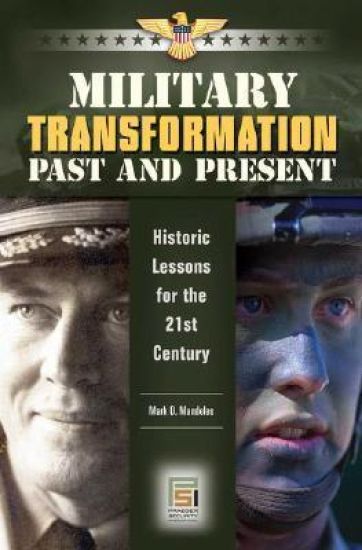
Transformation has become a buzz word in today's military, but what are its historical precursors—those large scale changes that were once called Revolutions in Military Affairs (RMA)? Who has gotten it right, and who has not? The Department of Defense must learn from history. Most studies of innovation focus on the actions, choices, and problems faced by individuals in a particular organization. Few place these individuals and organizations within the complex context where they operate. Yet, it is this very context that is a powerful determinant of how actions are conceived, examined, and implemented, and of how errors are identified and corrected. The historical cases that Mandeles examines reveal how different military services organized to learn, accumulate, and retrieve knowledge; and how their particular organization affected everything from the equipment they acquired to the quality of doctrine and concepts used in combat. In cases where more than one community of experts was responsible for weighing in on decisionmaking, the service benefited from enhanced application of evidence, sound inference, and logic. These cases demonstrate that, for senior leadership, participating in such a system should be a strategic and deliberate choice. In each of the cases featured in this book, no such deliberate choice was made. The interwar U.S. Navy (USN) aviation community and the U.S. Marine Corps amphibious operation community were lucky that, in a time of rapid technological advance and strategic risk, their decisions in framing and solving technological and operational problems were made within a functioning multi-organizational system. The Army Air Corps and the Royal Marines were unfortunate, with corresponding results. It is characteristic of 20th-century military history that no senior civilian or military leader suggested a policy to handle overlapping responsibilities by multiple departments. Today's policymakers have not learned this lesson. In the present time, while a great deal of thought is devoted to proper organizational design and the numbers of persons required to perform necessary functions, there is still no overarching framework guiding these designs.
Between the 1870s, when the great influx of European immigrants began, and the start of World War I, Argentina underwent a radical alteration of its social composition and patterns of economic productivity. Mark Szuchman, in this groundbreaking study, examines the occupational, residential, educational, and economic patterns of mobility of some four thousand men, women, and children who resided in Córdoba, Argentina's most important interior city, during this changeful era.Through several kinds of samples, Szuchman provides a widely encompassing social picture of Córdoba, describing, among others, the unskilled laborer, the immigrant bachelor in search of roots and identity, the merchant seeking or giving credit, and the member of the elite, blind to some of the realities around him. The challenge that the pursuit of security entailed for most people and the failure of so many to persist successfully form a large part of that picture.The author has made ample use of quantitative techniques, but secondary materials are also utilized to provide social perspectives that round out and humanize the quantitative data. The use of record linkage as the essential research method makes this work the first book on Argentina to follow similar and very successful research methodologies employed by U.S. historians.
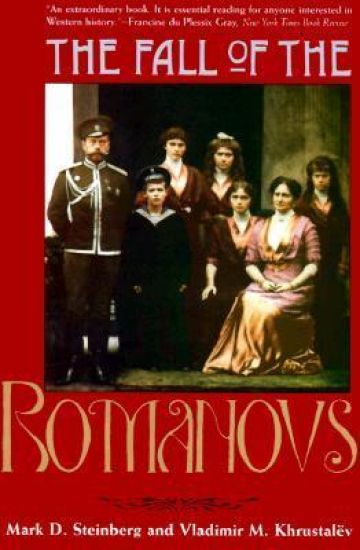
"All around me is treachery, cowardice, and deceit!"—diary of Nicholas II, on the day he abdicated"Behave with dignity; do not allow the former tsar and his family to be insulted or treated rudely."—Commissar Vasily Pankratov's instructions to the guard, September 1917"The bullets...ricocheted off [the jewels in the daughters' corsets] and jumped around the room like hail."—Yakov Yurovsky, commissar in charge of the execution of the tsar and his familyThe compelling and poignant story of the arrest, captivity, and execution of the last tsar of Russia and his family during the revolution of 1917-1918 has been recounted—and romanticized—for decades. Now a new book explores the full range of events and reveals the thoughts, perceptions, and judgments of the individuals involved—Nicholas and Alexandra, their children, and the men who guarded and eventually killed them. This deeply moving book is based on documents and photographs from recently opened Russian archives and from Western collections. The documents, which appear for the first time in English (the language in which some of them were originally written), include correspondence between Nicholas and Alexandra during the February 1917 revolution; portions of their diaries; minutes of government meetings, telegrams, and other official papers concerning the arrest, confinement, and execution of the Romanovs; letters written by the captive tsar and his family to friends and relatives; appeals from Russian citizens concerning the fate of the Romanovs; and testimonies by the revolutionaries who guarded and executed them.Mark D. Steinberg sets the stage for this dramatic saga of revolution in a text that provides engrossing narrative and sensitive exploration of ideas and values and that draws on the whole range of archival and published documents. He and Vladimir M. Khrustalëv also provide notes identifying people and explaining terms. Together, the text and documents challenge the conventional image of Nicholas as weak and witless and of Alexandra as either the preoccupied mother of a hemophiliac heir or as the treasonous "German empress." Instead they tell an ironic tale of individuals whose fatalistic spirituality and unbending faith in an archaic political culture allowed them to fall victim to revolutionaries whose political dreams had yet to be proven false.
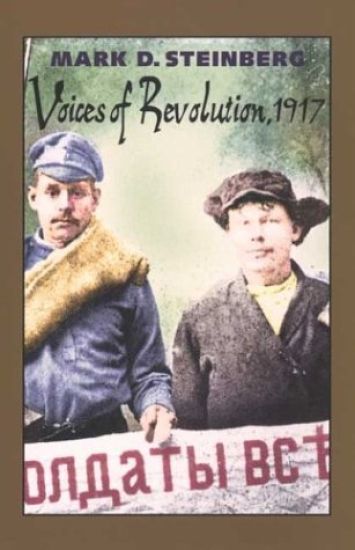
Although much has been written about the political history of the Russian revolution, the human story of what the revolution meant to ordinary people has rarely been told. This book gives voice to the experiences, thoughts, and feelings of the Russian people—workers, peasants, soldiers—as expressed in their own words during the vast political, social, and economic upheavals of 1917. The documents in the volume include letters from individuals to newspapers, institutions, or leaders; collective resolutions and appeals; and even poetry. Selected from the State Archive of the Russian Federation in Moscow, nearly all the texts are published here for the first time. In these writings we hear the voices of ordinary Russians seeking to understand the revolution and make sense of the values, ideals, and discontents of their turbulent times. Not only do they speak of their particular needs and desires—for solutions to the economic crisis or an end to the war, for example—they also reveal how relatively unprivileged Russians thought about such questions as political power, freedom, justice, democracy, social class, nationhood, and civic morality. Mark Steinberg provides introductions to the documents, explaining the language of popular revolution in Russia and setting the writings in the context of the history of the time.
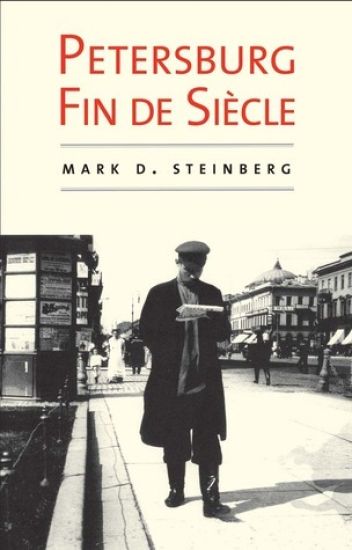
The final decade of the old order in imperial Russia was a time of both crisis and possibility, an uncertain time that inspired an often desperate search for meaning. This book explores how journalists and other writers in St. Petersburg described and interpreted the troubled years between the Russian revolutions of 1905 and 1917. Mark Steinberg, distinguished historian of Russia in the late nineteenth and early twentieth centuries, examines the work of writers of all kinds, from anonymous journalists to well-known public intellectuals, from secular liberals to religious conservatives. Though diverse in their perspectives, these urban writers were remarkably consistent in the worries they expressed. They grappled with the impact of technological and material progress on the one hand, and with an ever-deepening anxiety and pessimism on the other. Steinberg reveals a new, darker perspective on the history of St. Petersburg on the eve of revolution and presents a fresh view of Russia's experience of modernity.
An exploration of the human figure and artistic imagination in public art of the American Renaissance, from the nation’s centennial to World War I In an era of sweeping change following the devastation of the Civil War, an ambitious generation of American artists focused on the human figure in civic art. This richly illustrated publication showcases more than one hundred studies related to major commissions for the Boston Public Library, Library of Congress, Pennsylvania State Capitol, and other key civic institutions of the late nineteenth and early twentieth centuries. From intimate pencil sketches and clay maquettes to half-scale oil paintings for massive murals, these compelling expressions of ideas in formation reveal how artists such as Edwin Austin Abbey, Violet Oakley, John Singer Sargent, Augustus Saint-Gaudens, and others shaped their vision, recorded their influences, and developed a visual language that captivated a divided nation. Thematic sections offer discussions of related works, and essays address wider creative and cultural contexts, from the laboring body in an age of expanding industrialization to the relationship between the natural environment, art, and technology. This timely volume reassesses a neglected chapter in American art and shows how artists engaged with the struggles and forces of their time. Distributed for the Yale University Art Gallery Exhibition Schedule: Yale University Art Gallery (September 6, 2024–January 5, 2025)
Historical archaeology has largely focused on the study of early military sites and homes of upper class. Research on lower classes was viewed as a supplement to local histories documenting political, military and financial leaders of the 18th and 19th centuries. An Archaeological Study of Rural Capitalism and Material Life will be of interest to historical archaeologists, cultural anthropologists, social historians, and historical sociologists, especially researchers studying the influence of globalization and economic development upon rural regions like Appalachia.
Historical archaeology has largely focused on the study of early military sites and homes of upper class. Research on lower classes was viewed as a supplement to local histories documenting political, military and financial leaders of the 18th and 19th centuries. An Archaeological Study of Rural Capitalism and Material Life will be of interest to historical archaeologists, cultural anthropologists, social historians, and historical sociologists, especially researchers studying the influence of globalization and economic development upon rural regions like Appalachia.
In his great work, Mecanique Analytique (1788)-^Lagrange used the term "analytical" to mean "non-geometrical." Indeed, Lagrange made the following boast: "No diagrams will be found in this work. The methods that I explain in it require neither constructions nor geometrical or mechanical arguments, but only the algebraic operations inherent to a regular and uniform process. Those who love Analysis will, with joy, see mechanics become a new branch of it and will be grateful to me for thus having extended its field." This was in marked contrast to Newton's Philosohiae Naturalis Principia Mathematica (1687) which is full of elaborate geometrical constructions. It has been remarked that the classical Greeks would have understood some of the Principia but none of the Mecanique Analytique. The term analytical dynamics has now come to mean the develop ments in dynamics from just after Newton to just before the advent of relativity theory and quantum mechanics, and it is this meaning of the term that is meant here. Frequent use will be made of diagrams to illus trate the theory and its applications, although it will be noted that as the book progresses and the material gets "more analytical", the number of figures per chapter tends to decrease, although not monotonically.
Basics of Hebrew Accents provides readers of biblical Hebrew with a comprehensive working knowledge of accentuation. Hebrew accents can be perplexing but knowing them and their functions will help students become better readers of the Hebrew Bible. The book is an ideal tool for beginning students who are learning to read the language as well as for more advanced students who are reading and translating the Hebrew text.Mark Futato has carefully organized his book to emphasize accessibility while providing:Clear explanations of the primary functions of Hebrew accentsA student-friendly presentationAccessibility for independent studyA practical and handy reference resource for all students of the Hebrew Bible
Over seven chapters the book shows how international communication has been shaped by the structure of international political power and how these means of global communication have in turn been strategic tools for the exercise of international political power. There are separate chapters on global news flows, the international trade in cultural products (films, books, advertising, recorded music, periodicals and books), and government propaganda activities. The politics of the International Telecommunication Union (ITU), the Universal Postal Union (UPU) and the World Intellectual Property Organisation (WIPO) are analysed.
A noted World War I scholar examines the critical decisions and events that led to Germany's defeat, arguing that the German loss was caused by collapse at home as well as on the front.Much has been written about the causes for the outbreak of World War I and the ways in which the war was fought, but few historians have tackled the reasons why the Germans, who appeared on the surface to be winning for most of the war, ultimately lost. This book, in contrast, presents an in-depth examination of the complex interplay of factors—social, cultural, military, economic, and diplomatic—that led to Germany's defeat.The highly readable work begins with an examination of the strengths and weaknesses of the two coalitions and points out how the balance of forces was clearly on the side of the Entente in a long and drawn-out war. The work then probes the German plan to win the war quickly and the resulting campaigns of August and September 1914 that culminated in the devastating defeat in the First Battle of the Marne. Subsequent chapters discuss the critical factors and decisions that led to Germany's loss, including the British naval blockade, the role of economic factors in maintaining a consensus for war, and the social impact of material deprivation.
This issue of Radiologic Clinics of North America focuses on Extranodal Lymphoma from Head to Toe, and is edited by Dr. Mark Murphey. Articles will include: Pathology of Extranodal Lymphoma; Pulmonary and Mediastinal Extranodal Lymphoma; Gastrointestinal Extranodal Lymphoma; Extranodal Lymphoma Involving the CNS and Spine; Genitourinary Extranodal Lymphoma; Musculoskeletal Extranodal Lymphoma; Pediatric Extranodal Lymphoma; Extranodal Lymphoma of the Breast; Cardiac Extranodal Lymphoma, and more!
Indispensable for both surgeons and sports medicine physicians, DeLee, Drez, & Miller's Orthopaedic Sports Medicine: Principles and Practice, 5th Edition, remains your go-to reference for all surgical, medical, rehabilitation and injury prevention aspects related to athletic injuries and chronic conditions. Authored by Mark D. Miller, MD and Stephen R. Thompson, MD, this 2-volume core resource provides detailed, up-to-date coverage of medical disorders that routinely interfere with athletic performance and return to play, providing the clinically focused information you need when managing athletes at any level. Provides a unique balance of every relevant surgical technique along with extensive guidance on nonsurgical issues-making it an ideal reference for surgeons, sports medicine physicians, physical therapists, athletic trainers, and others who provide care to athletes. Offers expanded coverage of revision surgery, including revision ACL and revision rotator cuff surgery. Features additional coverage of cartilage restoration procedures and meniscal transplantation. Provides significant content on rehabilitation after injury, along with injury prevention protocols. Includes access to a comprehensive video collection, with more than 100 videos new to this edition. Retains key features such as coverage of both pediatric and aging athletes; a streamlined organization for quick reference; in-depth coverage of arthroscopic techniques; extensive references; levels of evidence at the end of each chapter; and "Author’s Preferred Technique" sections. Enhanced eBook version included with purchase. Your enhanced eBook allows you to access all of the text, figures, and references from the book on a variety of devices.
The vast majority of orthopaedic care takes place not in the orthopaedic surgeon's office or operating room but in various primary care settings. Essential Orthopaedics, 2nd Edition, provides concise, practical guidance from noted authority Dr. Mark D. Miller, along with a stellar editorial team and numerous contributors from both orthopaedics and primary care. Using a templated, bulleted format, it delivers the information you need on diagnosis, management, and appropriate referrals for adult and pediatric patients. It's the perfect, everyday orthopaedic reference for primary care physicians, physician assistants, nurse practitioners, physical therapists, and athletic trainers in the clinic or training room. Offers expert insight to help you confidently diagnose and treat sprains, fractures, arthritis and bursitis pain, and other musculoskeletal problems, or refer them when appropriate. Covers topics of high importance in orthopaedic care: anatomy and terminology, radiologic evaluation of orthopaedic conditions, principles of fracture management, and special considerations for the obese, the elderly, athletes, those with comorbidities, and other patient populations. Features 40 videos covering injections, physical examinations, common procedures, and more. Includes 12 new chapters with current information on physical exam of the hip and pelvis, femoroacetabular impingement (FAI), athletic pubalgia, state-of-the-art surgical techniques, and new imaging information, particularly in the area of musculoskeletal ultrasound. Provides new ICD-10 codes for common orthopaedic conditions. Features diagnostic algorithms, specific steps for treatment, and full-color illustrations throughout. Enhanced eBook version included with purchase, which allows you to access all of the text, figures, and references from the book on a variety of devices
This issue of Clinics in Sports Medicine, edited by series Consulting Editor, Dr. Mark Miller, will focus on common procedure and common problems in sports medicine. Subjects discussed include, but are not limited to: Rotator Cuff, Shoulder Instability, Elbow, Hand, Hip, ACL, Knee Multiple Ligament, Knee Meniscus, Knee Cartilage, Foot and Ankle, Pediatrics and Rehabilitation.
Over seven chapters the book shows how international communication has been shaped by the structure of international political power and how these means of global communication have in turn been strategic tools for the exercise of international political power. There are separate chapters on global news flows, the international trade in cultural products (films, books, advertising, recorded music, periodicals and books), and government propaganda activities. The politics of the International Telecommunication Union (ITU), the Universal Postal Union (UPU) and the World Intellectual Property Organisation (WIPO) are analysed.