
Kirjahaku
Etsi kirjoja tekijän nimen, kirjan nimen tai ISBN:n perusteella.
1000 tulosta hakusanalla Mark E. Strong

"...I, Jacob Frank Marson, being of sound and grateful mind, do hereby swear to my eternal friend, Iago de Maria Salvadore, that I will grant to him any request in my power to fulfill." "...I, Iago de Maria Salvadore, being of a sound mind...do hereby request the promised boon of my lifelong friend. I would have Jacob's son Michael marry my daughter Olivia." What makes my father think he can control my life? I make my own decisions. I always have. On the other hand...
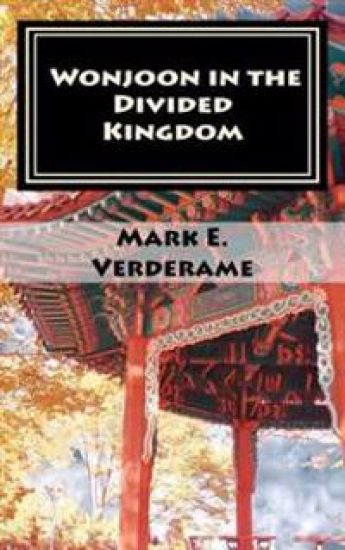
Wonjoon in the Divided Kingdom: The bell at Shen Dao
Mark E. Verderame
Wonjoon in the Divided Kingdom
2012
nidottu
![Out of the Alley and Other Stories [B&w Illus.]](/covers/9780615619064.jpg)
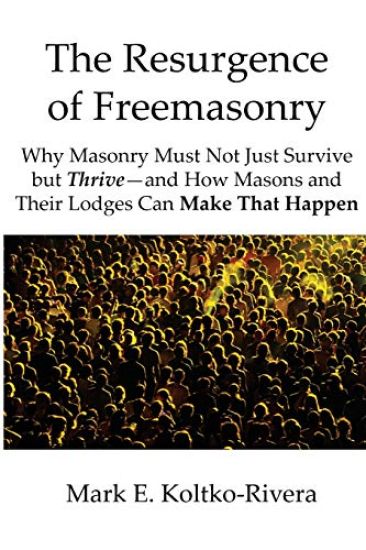
The Resurgence of Freemasonry: Why Masonry Must Not Just Survive But Thrive-And How Masons and Their Lodges Can Make That Happen
Mark E. Koltko-Rivera Ph. D.
LVX Publications
2018
nidottu
In this book, noted Masonic author Mark E. Koltko-Rivera, Ph.D., describes and offers solutions for the Masonic membership crisis in the United States. The 14 chapters and five appendixes here include: Why society needs a numerically stronger Freemasonry--and why this is entirely within the Fraternity's grasp. The five problems underlying the membership crisis--and the Five Tasks that will solve those problems. 46 numbered recommendations to work on those Five Tasks. Specific suggestions for what the rank-and-file Lodge member, the Worshipful Master of the Lodge, the District Deputy Grand Master, and the Grand Lodge can do to advance work on the Five Tasks, and further the Resurgence of Freemasonry. Guidelines for planning and conducting Masonic education in the Lodge. Directions to prepare and conduct: a Chamber of Reflection, a Master Mason Rededication Ceremony, and an Open House (at both the levels of Particular Lodges and the Grand Lodge). Guidelines for instructing Candidates in the Preparation of a Masonic Research Paper.

In 1863, Union soldiers from Illinois threatened to march from the battlefield to their state capital. Springfield had not been seized by the Rebels--but the state government was in danger of being captured by the Democrats. In The Union Divided, Pulitzer Prize-winning historian Mark E. Neely, Jr., vividly recounts the surprising story of political conflict in the North during the Civil War. Examining party conflict as viewed through the lens of the developing war, the excesses of party patronage, the impact of wartime elections, the highly partisan press, and the role of the loyal opposition, Neely deftly dismantles the argument long established in Civil War scholarship that the survival of the party system in the North contributed to its victory. The many positive effects attributed to the party system were in fact the result of the fundamental operation of the Constitution, in particular a four-year president who was commander in chief. In several ways, the party system actually undermined the Northern war effort; Americans uneasy about normal party operations in the abnormal circumstances of civil war saw near-treason in the loyal opposition. Engagingly written and brilliantly argued, The Union Divided is an insightful and original contribution to Civil War studies and American political history.
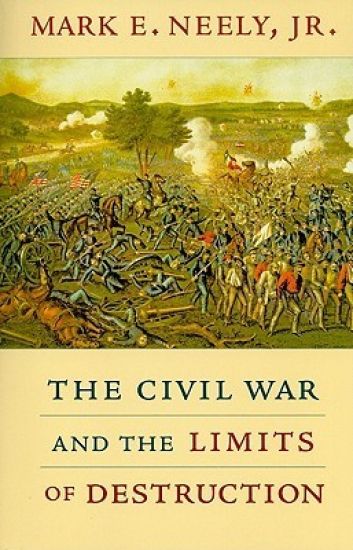
The Civil War is often portrayed as the most brutal war in America's history, a premonition of twentieth-century slaughter and carnage. In challenging this view, Mark E. Neely, Jr., considers the war's destructiveness in a comparative context, revealing the sense of limits that guided the conduct of American soldiers and statesmen.Neely begins by contrasting Civil War behavior with U.S. soldiers' experiences in the Mexican War of 1846. He examines Price's Raid in Missouri for evidence of deterioration in the restraints imposed by the customs of war; and in a brilliant analysis of Philip Sheridan's Shenandoah Valley campaign, he shows that the actions of U.S. cavalrymen were selective and controlled. The Mexican war of the 1860s between French imperial forces and republicans provided a new yardstick for brutality: Emperor Maximilian's infamous Black Decree threatened captured enemies with execution. Civil War battles, however, paled in comparison with the unrestrained warfare waged against the Plains Indians. Racial beliefs, Neely shows, were a major determinant of wartime behavior.Destructive rhetoric was rampant in the congressional debate over the resolution to avenge the treatment of Union captives at Andersonville by deliberately starving and freezing to death Confederate prisoners of war. Nevertheless, to gauge the events of the war by the ferocity of its language of political hatred is a mistake, Neely argues. The modern overemphasis on violence in Civil War literature has led many scholars to go too far in drawing close analogies with the twentieth century's "total war" and the grim guerrilla struggles of Vietnam.
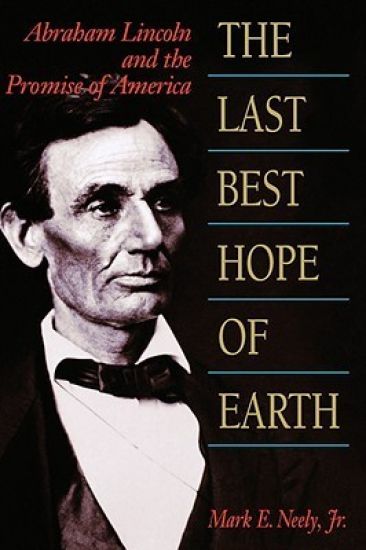
Mark E. Neely, Jr., gives us the first compact biography of Abraham Lincoln based on new scholarship. Neely, a Pulitzer Prize–winning historian, vividly recaptures the central place of politics in Lincoln’s life. Richly illustrated, nuanced and accessible, written with attention to the age in which Lincoln lived, yet ever alert to universal moral questions, this book provides a portrait of Lincoln as an extraordinary man in his own time and ours.
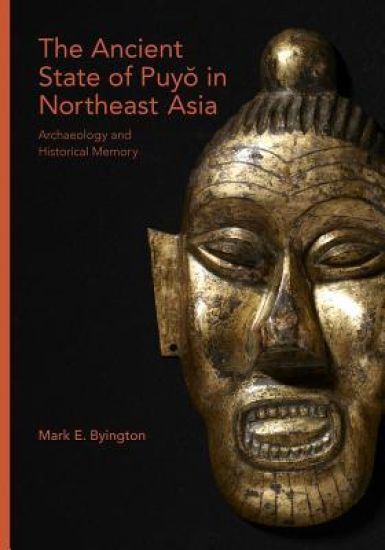
The Ancient State of Puyo in Northeast Asia
Mark E. Byington
Harvard University, Asia Center
2016
sidottu
Mark E. Byington explores the formation, history, and legacy of the ancient state of Puyo, which existed in central Manchuria from the third century BCE until the late fifth century CE. As the earliest archaeologically attested state to arise in northeastern Asia, Puyo occupies an important place in the history of that region. Nevertheless, until now its history and culture have been rarely touched upon in scholarly works in any language. The present volume, utilizing recently discovered archaeological materials from Northeast China as well as a wide variety of historical records, explores the social and political processes associated with the formation and development of the Puyo state, and discusses how the historical legacy of Puyo—its historical memory—contributed to modes of statecraft of later northeast Asian states and provided a basis for a developing historiographical tradition on the Korean peninsula. Byington focuses on two major aspects of state formation: as a social process leading to the formation of a state-level polity called Puyo, and as a political process associated with a variety of devices intended to assure the stability and perpetuation of the inegalitarian social structures of several early states in the Korea-Manchuria region.
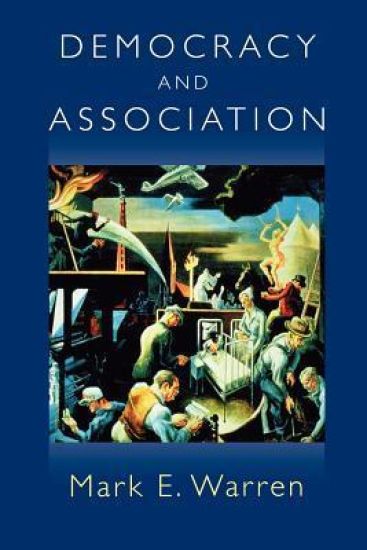
Tocqueville's view that a virtuous and viable democracy depends on robust associational life has become a cornerstone of contemporary democratic theory. Democratic theorists generally agree that issue networks, recreational associations, support circles, religious groups, unions, advocacy groups, and myriad other kinds of associations enhance democracy by cultivating citizenship, promoting public deliberation, providing voice and representation, and enabling varied forms of governance. Yet there has been little work to show how and why different kinds of association have different effects on democracy--many supportive but others minimal or even destructive. This book offers the first systematic assessment of what associations do and don't do for democracy. Mark Warren explains how and when associational life expands the domain, inclusiveness, and authenticity of democracy. He looks at which associations are most likely to foster individuals' capacities for democratic citizenship, provoke political debate, open existing institutions, guide market activities, or bring democratic decision-making to new venues. Throughout, Warren also considers the trade-offs involved, noting, for example, that organizational solidarity can dampen internal dissent and deliberation even as it enhances public deliberation. Blending political and social theory with an eye to social science, Democracy and Association will draw social scientists with interests in democracy, political philosophers, students of public policy, as well as the many activists who fortify the varied landscape we call civil society. As an original analysis of which associational soils yield vigorous democracies, the book will have a major impact on democratic theory and empirical research.

Scale, Heterogeneity, and the Structure and Diversity of Ecological Communities
Mark E. Ritchie
Princeton University Press
2009
pokkari
Understanding and predicting species diversity in ecological communities is one of the great challenges in community ecology. Popular recent theory contends that the traits of species are "neutral" or unimportant to coexistence, yet abundant experimental evidence suggests that multiple species are able to coexist on the same limiting resource precisely because they differ in key traits, such as body size, diet, and resource demand. This book presents a new theory of coexistence that incorporates two important aspects of biodiversity in nature--scale and spatial variation in the supply of limiting resources. Introducing an innovative model that uses fractal geometry to describe the complex physical structure of nature, Mark Ritchie shows how species traits, particularly body size, lead to spatial patterns of resource use that allow species to coexist. He explains how this criterion for coexistence can be converted into a "rule" for how many species can be "packed" into an environment given the supply of resources and their spatial variability. He then demonstrates how this rule can be used to predict a range of patterns in ecological communities, such as body-size distributions, species-abundance distributions, and species-area relations. Ritchie illustrates how the predictions closely match data from many real communities, including those of mammalian herbivores, grasshoppers, dung beetles, and birds. This book offers a compelling alternative to "neutral" theory in community ecology, one that helps us better understand patterns of biodiversity across the Earth.
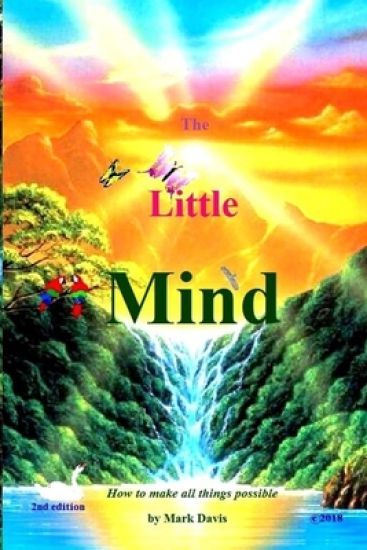
The Little Mind is a part of the brain responsible for spontaneous remission of disease. It also controls dreams, memory, body weight, our abilities, moods and emotions. We are not in touch with the Little Mind. Yet, many rely on intuition and instincts. This book explains how it developed and why it is so powerful. We can be plagued with accidents, illnesses, false memory, traumas, and cultural beliefs because of the Little Mind. Yet some receive positive memories, amazing insights and sparkling revelations almost daily. We do not control this mind. We only possess 15-30 seconds of memory. So, the Little Mind supplies what it considers the most needed memories, making us facile and brilliant, or fearful and negative. Every personality disorder, placebo effect, miracle, intuition, cure, and disease is created or allowed by the Little Mind, based on decisions it alone makes. It can lower immunity or raise it. It can make us accident prone, or extra aware. The Little Mind began developing very early. It is a part of consciousness. We have a great body of research into the quantum worlds. These invisible worlds are often interfered with or used by the Little Mind. We see only a few motor skills in the first brain, but by the time mammals arrive there is emotion, group behaviors, competition. and personality. Then we notice another brain emerging in many species. It is a bigger mind because it can hold sway over the Little Mind in some thought processes. This "big mind" suddenly becomes large in primates, who have more range, logic, and problem solving capability. A neocortex, along with the frontal lobes, or big mind, is even larger in the first Homo species, such as Homo erectus. By the time we see Homo sapien, the big mind is in far more control. The Little Mind still has instincts that are crucial, rapid, or automatic, so it retains tremendous authority. It also has authority over the memory banks so it shapes and impinges on the big mind. The big mind in modern humans is dominant. Unfortunately, it is usually out of sync and out of touch with the Little Mind. This creates a duality with two powerful minds often at cross-purposes. The Little Mind believes it is still the dominant one and in control. The big mind is confident and sure it is in control. Without "integration" there will often be sabotage and animosity coming from the Little Mind. We may want to be slim, healthy, and drug free. The Little Mind may respond with fixation, compulsion, and desire for the opposite of what we want. We may be deluged with even more memories and desires of what we do not want to think about. It decides. We can eliminate this antagonism quite rapidly, even undoing the most persistent old fears and traumas, but it requires fully understanding our very own Little Mind. Each one is vastly different. No one and nothing outside of us can do this. It is a journey each individual must undertake alone. "Nothing in history can be understood without the Little Mind, and nothing about the Little Mind can be understood without history." Therefore, the book "The Little Mind" provides a fresh view of history from the first humans, the dawn of religion, and civilization, through the Dark Ages into our modern political arena. We suddenly know what serves the Little Mind best and what brings integration. This ultimately helps bring universal integration. Integration with the Little Mind can make all things possible because it can make all of our dreams and desires automatic. It can affect our magnetism, health, appearance, and peace of mind. It can attract the right people, places, lives, and adventures. Most of us have never even been curious about the part of the mind that controls memory, weight, immunity, emotion, and mood. This has been a huge impediment and detriment. Now, all of the obstacles in life can be reconciled, understood, and changed by the Little Mind.
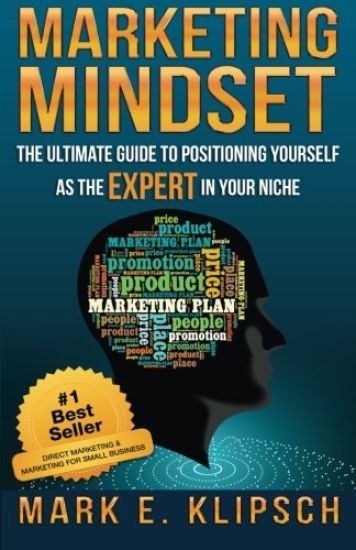
Marketing Mindset: The Ultimate Guide to Positioning Yourself as the Expert in Your Niche
Mark E. Klipsch
Meka Multicast Marketing
2015
nidottu
With 35 years of strategic business building and turnaround experience, Mark Klipsch, CEO of M. E. Klipsch & Associates and MEKA Multicast Marketing, is just the person to "spill the beans" on the best ways to build a business. Using his expertise, plus knowledge gained from his three greatest mentors, Dan Kennedy, Mike Koenigs and Frank Kern, Klipsch, in Marketing Mindset, provides powerful, useful and actionable information that all business owners can utilize - whether you've been in business for years or are just starting out.In this book, you'll discover the formulaic principles he's applied to the startup or turnaround of over twenty businesses in varied industries such as transportation, financial services and package engineering.In Marketing Mindset: The Ultimate Guide to Positioning Yourself and the Expert in Your Niche you'll find the keys to: -Understanding "who" your ideal customer is and is not-Developing a powerful message that speaks directly to your ideal customer-Identifying media channels that reach your ideal clients most effectively-Building an influential platform that establishes You as the Expert in your field-Implementing a repeatable strategy that has your prospects begging you to take them on as clientsRegardless of your business experience, this book will help you to create the mindset you need to springboard past your competitors and finally create the business of your dreams Want to learn more? See all the bonuses listed in the book at www.marketingmindsetbook.com and check back because additional content will be added each month
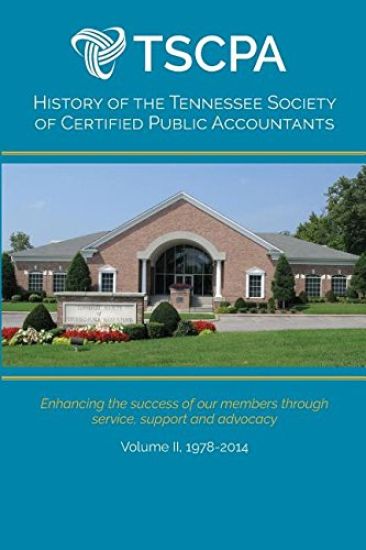
History of the Tennessee Society of Certified Public Accountants: Volume II: 1978-2014
Mark E. Steadman
Tennessee Society of Certified Public Account
2015
nidottu
This book is a continuation of "History of the Tennessee Society of Certified Public Accountants 1904-1977", authored by Dr. Harold O. Wilson and Hilary H. Osborn. Their book, published by TSCPA in 1977, details the early formation of the CPA profession and its development in Tennessee. This edition, volume II, continues the history of the CPA profession from 1978-2014 in Tennessee.
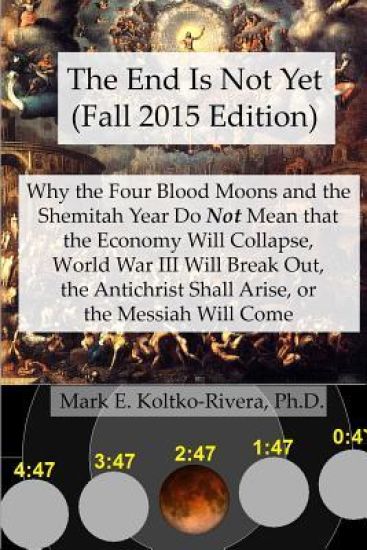
The End Is Not Yet (Fall 2015 Edition): Why the Four Blood Moons and the Shemitah Year Do Not Mean That the Economy Will Collapse, World War III Will
Mark E. Koltko-Rivera Ph. D.
Temple Spire Books
2015
nidottu
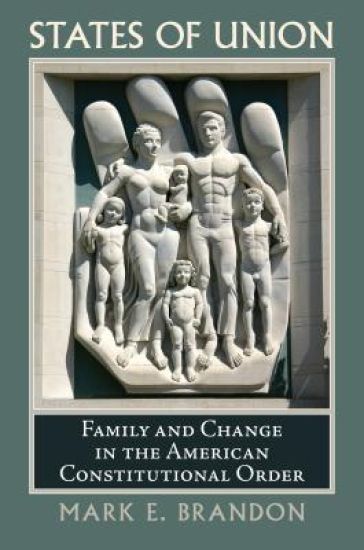
In two canonical decisions of the 1920s—Meyer v. Nebraska and Pierce v. Society of Sisters—the Supreme Court announced that family (including certain relations within it) was an institution falling under the Constitution’s protective umbrella. Since then, proponents of “family values” have claimed that a timeless form of family—nuclear and biological—is crucial to the constitutional order. Mark Brandon’s new book, however, challenges these claims. Brandon addresses debates currently roiling America—the regulation of procreation, the roles of women, the education of children, divorce, sexuality, and the meanings of marriage. He also takes on claims of scholars who attribute modern change in family law to mid-twentieth-century Supreme Court decisions upholding privacy. He shows that the “constitutional” law of family has much deeper roots. Offering glimpses into American households across time, Brandon looks at the legal and constitutional norms that have aimed to govern those households and the lives within them. He argues that, well prior to the 1960s, the nature of families in America had been continually changing—especially during western expansion, but also in the founding era. He further contends that the monogamous nuclear family was codified only at the end of the nineteenth century as a response to Mormon polygamy, communal experiments, and Native American households. Brandon discusses the evolution of familial jurisprudence as applied to disputes over property, inheritance, work, reproduction, the status of women and children, the regulation of sex, and the legal limits to and constitutional significance of marriage. He shows how the Supreme Court’s famous decisions in the latter part of the twentieth century were largely responses to societal change, and he cites a wide range of cases that offer fresh insight into the ways the legal system responded to various forms of family life. More than a historical overview, the book also considers the development of same-sex marriage as a political and legal issue in our time.States of Union is a groundbreaking volume that explains how family came to be “in” the Constitution, what it has meant for family to be constitutionally significant, and what the implications of that significance are for the constitutional order and for families.

As baseball was becoming the national pastime, Kansas was settling into statehood, with hundreds of towns growing up with the game. The early history of baseball in Kansas, chronicled in this book, is the story of those towns and the ballparks they built, of the local fans and teams playing out the drama of the American dream in the heart of the country.
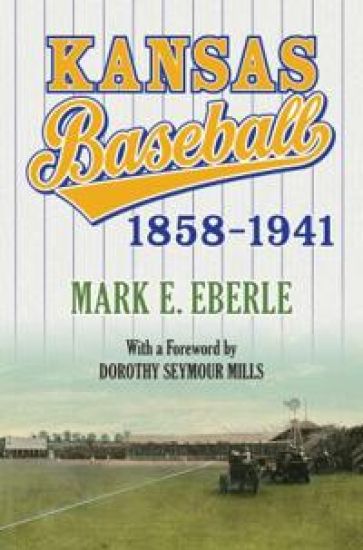
As baseball was becoming the national pastime, Kansas was settling into statehood, with hundreds of towns growing up with the game. The early history of baseball in Kansas, chronicled in this book, is the story of those towns and the ballparks they built, of the local fans and teams playing out the drama of the American dream in the heart of the country.