Kirjojen hintavertailu. Mukana 11 244 527 kirjaa ja 12 kauppaa.

Kirjahaku

Etsi kirjoja tekijän nimen, kirjan nimen tai ISBN:n perusteella.

1000 tulosta hakusanalla Mark R. Conte

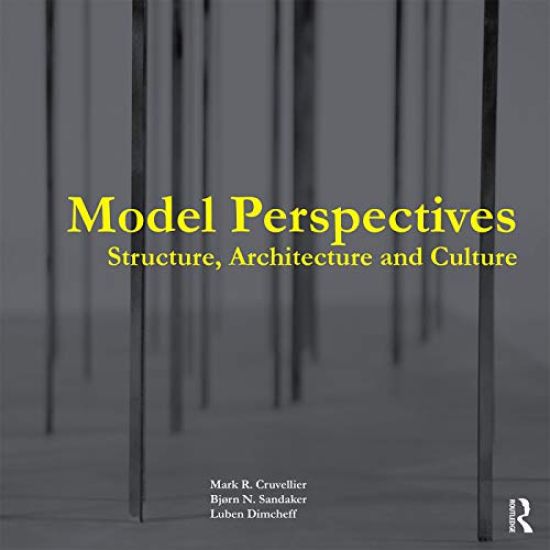
Model Perspectives: Structure, Architecture and Culture

Model Perspectives: Structure, Architecture and Culture

Mark R. Cruvellier; Bjorn N. Sandaker; Luben Dimcheff

Routledge
2016
sidottu
This book contains a unique collection of various perspectives on the relationship between structures and the forms and spaces of architecture. As such it provides students and professionals alike with an essential sourcebook that can be mined for visual inspiration as well as for textually rich and authoritative insight into the links between structure, architecture, and cultural context. The chapters address fundamental structural elements and systems: columns, walls, beams, trusses, frames, tensile structures, arches, domes and shells. Each chapter is subdivided into two parts:• The essays – introduce the chapters with the reprinting of a curated set of essays and excerpts by various authors that uniquely address how particular structural elements or systems relate in essential fashion to architectural design concepts.• The model studies – physical models of the overall structural systems of several notable contemporary buildings from Europe, North and South America, Africa and Asia are illustrated with large photographs, detail close-ups, and views of their external forms and internal spaces that establish the exceptional qualities of these projects in connecting structural form to architectural design objectives. Mosaic layouts complete the chapters with a collection of photographs of yet more models whose particular details and unique features serve to extend the visual repertoire of the structural type being considered.The combination, juxtaposition and mutual positive reinforcement of these two collections, one largely textual and the other image based, provides the reader with unique and multifaceted insights into how structural forms and systems can be related to architectural design intentions. Conveyed by a strong and deliberate graphical design format, this assembly of materials gets to the very essence of structures within the context of architecture, and will inspire students and practitioners alike to make strategic design decisions for their own projects.
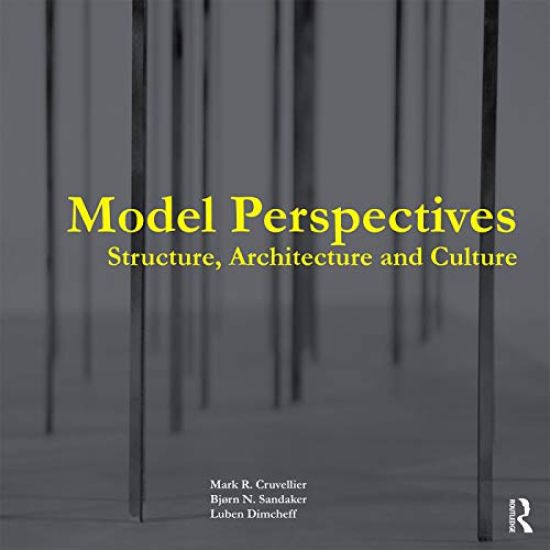
Model Perspectives: Structure, Architecture and Culture

Model Perspectives: Structure, Architecture and Culture

Mark R. Cruvellier; Bjorn N. Sandaker; Luben Dimcheff

Routledge
2016
nidottu
This book contains a unique collection of various perspectives on the relationship between structures and the forms and spaces of architecture. As such it provides students and professionals alike with an essential sourcebook that can be mined for visual inspiration as well as for textually rich and authoritative insight into the links between structure, architecture, and cultural context. The chapters address fundamental structural elements and systems: columns, walls, beams, trusses, frames, tensile structures, arches, domes and shells. Each chapter is subdivided into two parts:• The essays – introduce the chapters with the reprinting of a curated set of essays and excerpts by various authors that uniquely address how particular structural elements or systems relate in essential fashion to architectural design concepts.• The model studies – physical models of the overall structural systems of several notable contemporary buildings from Europe, North and South America, Africa and Asia are illustrated with large photographs, detail close-ups, and views of their external forms and internal spaces that establish the exceptional qualities of these projects in connecting structural form to architectural design objectives. Mosaic layouts complete the chapters with a collection of photographs of yet more models whose particular details and unique features serve to extend the visual repertoire of the structural type being considered.The combination, juxtaposition and mutual positive reinforcement of these two collections, one largely textual and the other image based, provides the reader with unique and multifaceted insights into how structural forms and systems can be related to architectural design intentions. Conveyed by a strong and deliberate graphical design format, this assembly of materials gets to the very essence of structures within the context of architecture, and will inspire students and practitioners alike to make strategic design decisions for their own projects.
Political Economy and Grand Strategy

Political Economy and Grand Strategy

Mark R. Brawley

Routledge
2013
nidottu
This book examines traditional balance of power theory from a political-economic perspective, using historical examples, to draw out distinctions between the liberal and realist approach and how this affects grand strategy.The realist view of the balance of power theory includes implicit assumptions that economic assets can be turned quickly into power, and that states always respond to threats quickly and only with a view to the 'short-run'. These assumptions drive many of the expectations generated from traditional balance-of-power theory, discouraging realists from looking at domestic sources of power, which in turn undermined their ability to frame strategic decisions properly. By thinking about how power must be managed over time, however, we can model the choices policy-makers confront when determining expenditures on defense, while keeping an eye on the impact of those costs on the economy. By emphasizing the role of the state, identifying different causal patterns in domestic politics, and demonstrating the importance of systemic competition, this book aims to establish why a neo-classical realist approach is not only different from a liberal approach, but also superior when addressing questions on grand strategy.This book will be of much interest to students of security studies, international political economy, grand strategy and IR theory in general.Mark R. Brawley is Professor of Political Science at McGill University, Montreal, Canada. He is author of several books on International Relations, specialising in the connections between political economic issues and security.
Nationalist Mobilization and the Collapse of the Soviet State

Nationalist Mobilization and the Collapse of the Soviet State

Mark R. Beissinger

Cambridge University Press
2002
pokkari
This 2002 study examines the process by which the seemingly impossible in 1987 - the disintegration of the Soviet state - became the seemingly inevitable by 1991, providing an original interpretation not only of the Soviet collapse, but also of the phenomenon of nationalism more generally. Probing the role of nationalist action as both cause and effect, Beissinger utilizes data and case studies from across the USSR during its final years to elicit the shifting relationship between pre-existing structural conditions, institutional constraints, and event-generated influences in the nationalist explosions that brought about the collapse of the Soviet Union. As Beissinger demonstrates, the 'tidal' context of nationalism - i.e., the transnational influence of one nationalism upon another - is critical to an explanation of the success and failure of particular nationalisms, why some nationalisms turn violent, and how a crescendo of events can overwhelm states, periodically evoking large-scale structural change in the character of the state system.
Animal Reintroductions

Animal Reintroductions

Mark R. Stanley Price

Cambridge University Press
2010
pokkari
When this book was first published in 1989, attempts to reintroduce plants or animals into their native habitat were still relatively rare, and those that were adequately planned, designed, funded and monitored over the course of years are even scarcer. The oryx story is an exception to this, and has the added interest that it represents the first attempt to re-establish a wild population of a species when there were no others left outside captivity. This meant that zoo-bred animals had to be prepared for release into the oryx's extreme and demanding habitat in the deserts of central Oman. This book will be accessible to the informed conservationist, amateur or professional.
Spatial Analysis

Spatial Analysis

Mark R. T. Dale; Marie-Josée Fortin

Cambridge University Press
2014
pokkari
Nowadays, ecologists worldwide recognize the use of spatial analysis as essential. However, because of the fast-growing range of methods available, even an expert might occasionally find it challenging to choose the most appropriate one. Providing the ecological and statistical foundations needed to make the right decision, this second edition builds and expands upon the previous one by: • Encompassing the basic methods for spatial analysis, for both complete census and sample data • Investigating updated treatments of spatial autocorrelation and spatio-temporal analysis • Introducing detailed explanations of currently developing approaches, including spatial and spatio-temporal graph theory, scan statistics, fibre process analysis, and Hierarchical Bayesian analysis • Offering practical advice for specific circumstances, such as how to analyze forest Permanent Sample Plot data and how to proceed with transect data when portions of the data series are missing. Written for graduates, researchers and professionals, this book will be a valuable source of reference for years to come.
Punishment, Compensation, and Law

Punishment, Compensation, and Law

Mark R. Reiff

Cambridge University Press
2011
pokkari
This book is the first comprehensive study of the meaning and measure of enforceability. While we have long debated what restraints should govern the conduct of our social life, we have paid relatively little attention to the question of what it means to make a restraint enforceable. Focusing on the enforceability of legal rights but also addressing the enforceability of moral rights and social conventions, Mark Reiff explains how we use punishment and compensation to make restraints operative in the world. After describing the various means by which restraints may be enforced, Reiff explains how the sufficiency of enforcement can be measured, and he presents a unified theory of deterrence, retribution, and compensation that shows how these aspects of enforceability are interconnected. Reiff then applies his theory of enforceability to illuminate a variety of real-world problem situations.
Labor Supply

Labor Supply

Mark R. Killingsworth

Cambridge University Press
1983
pokkari
Labor Supply is a survey of and critical guide to recent theoretical and empirical work on labor supply models, both static and dynamic. The chapters on recent empirical studies and on dynamic models are of particular interest, because neither topic has so far been discussed in any detail in standard texts. Integrated within this survey is an extensive discussion of public policy issues relating to labor supply, including income transfer programs, such as welfare and Social Security, and the income tax system. A concluding chapter discusses secular trends in labor supply in the U.S. economy, in particular the long-run increase in female labor force participation.
Spatial Pattern Analysis in Plant Ecology

Spatial Pattern Analysis in Plant Ecology

Mark R. T. Dale

Cambridge University Press
1999
sidottu
The predictability of the physical arrangement of plants, at whatever scale it is viewed, is referred to as their spatial pattern. Spatial pattern is a crucial aspect of vegetation which has important implications not only for the plants themselves, but also for other organisms which interact with plants, such as herbivores and pollinators, or those animals for which plants provide a habitat. This book describes and evaluates methods for detecting and quantifying a variety of characteristics of spatial pattern. As well as discussing the concepts on which these techniques are based, examples from real field studies and worked examples are included, which, together with numerous line figures, help guide the reader through the text. The result is a book that will be of value to graduate students and research workers in the fields of vegetation science, conservation biology and applied ecology.
Conscientious Objection in Health Care

Conscientious Objection in Health Care

Mark R. Wicclair

Cambridge University Press
2011
sidottu
Historically associated with military service, conscientious objection has become a significant phenomenon in health care. Mark Wicclair offers a comprehensive ethical analysis of conscientious objection in three representative health care professions: medicine, nursing and pharmacy. He critically examines two extreme positions: the 'incompatibility thesis', that it is contrary to the professional obligations of practitioners to refuse provision of any service within the scope of their professional competence; and 'conscience absolutism', that they should be exempted from performing any action contrary to their conscience. He argues for a compromise approach that accommodates conscience-based refusals within the limits of specified ethical constraints. He also explores conscientious objection by students in each of the three professions, discusses conscience protection legislation and conscience-based refusals by pharmacies and hospitals, and analyzes several cases. His book is a valuable resource for scholars, professionals, trainees, students, and anyone interested in this increasingly important aspect of health care.
Conscientious Objection in Health Care

Conscientious Objection in Health Care

Mark R. Wicclair

Cambridge University Press
2011
pokkari
Historically associated with military service, conscientious objection has become a significant phenomenon in health care. Mark Wicclair offers a comprehensive ethical analysis of conscientious objection in three representative health care professions: medicine, nursing and pharmacy. He critically examines two extreme positions: the 'incompatibility thesis', that it is contrary to the professional obligations of practitioners to refuse provision of any service within the scope of their professional competence; and 'conscience absolutism', that they should be exempted from performing any action contrary to their conscience. He argues for a compromise approach that accommodates conscience-based refusals within the limits of specified ethical constraints. He also explores conscientious objection by students in each of the three professions, discusses conscience protection legislation and conscience-based refusals by pharmacies and hospitals, and analyzes several cases. His book is a valuable resource for scholars, professionals, trainees, students, and anyone interested in this increasingly important aspect of health care.
Spatial Pattern Analysis in Plant Ecology

Spatial Pattern Analysis in Plant Ecology

Mark R. T. Dale

Cambridge University Press
2000
pokkari
The predictability of the physical arrangement of plants, at whatever scale it is viewed, is referred to as their spatial pattern. Spatial pattern is a crucial aspect of vegetation which has important implications not only for the plants themselves, but also for other organisms which interact with plants, such as herbivores and pollinators, or those animals for which plants provide a habitat. This book describes and evaluates methods for detecting and quantifying a variety of characteristics of spatial pattern. As well as discussing the concepts on which these techniques are based, examples from real field studies and worked examples are included, which, together with numerous line figures, help guide the reader through the text. The result is a book that will be of value to graduate students and research workers in the fields of vegetation science, conservation biology and applied ecology.
Nationalist Mobilization and the Collapse of the Soviet State

Nationalist Mobilization and the Collapse of the Soviet State

Mark R. Beissinger

Cambridge University Press
2002
sidottu
This study examines the process by which the seemingly impossible in 1987 - the disintegration of the Soviet state - became the seemingly inevitable by 1991, providing an original interpretation not only of the Soviet collapse, but also of the phenomenon of nationalism more generally. Probing the role of nationalist action as both cause and effect, Beissinger utilizes data and case studies from across the USSR during its final years to elicit the shifting relationship between pre-existing structural conditions, institutional constraints, and event-generated influences in the nationalist explosions that brought about the collapse of the Soviet Union. As Beissinger demonstrates, the ‘tidal’ context of nationalism - i.e., the transnational influence of one nationalism upon another - is critical to an explanation of the success and failure of particular nationalisms, why some nationalisms turn violent, and how a crescendo of events can overwhelm states, periodically evoking large-scale structural change in the character of the state system.
Punishment, Compensation, and Law

Punishment, Compensation, and Law

Mark R. Reiff

Cambridge University Press
2005
sidottu
This book is the first comprehensive study of the meaning and measure of enforceability. While we have long debated what restraints should govern the conduct of our social life, we have paid relatively little attention to the question of what it means to make a restraint enforceable. Focusing on the enforceability of legal rights but also addressing the enforceability of moral rights and social conventions, Mark Reiff explains how we use punishment and compensation to make restraints operative in the world. After describing the various means by which restraints may be enforced, Reiff explains how the sufficiency of enforcement can be measured, and he presents a unified theory of deterrence, retribution, and compensation that shows how these aspects of enforceability are interconnected. Reiff then applies his theory of enforceability to illuminate a variety of real-world problem situations.