Afrosonic Life explores the role sonic innovations in the African diaspora play in articulating methodologies for living the afterlife of slavery. Developing and extending debates on Afrosonic cultures, the book attends to the ways in which the acts of technological subversion, experimentation and production complement and interrupt the intellectual project of modernity. Music making processes such as dub, turntablism, hip-hop dj techniques and the remix, innovate methods of expressing subjecthoods beyond the dominant language of Western “Man” and the market. These sonic innovations utilize sound as a methodology to institute a rehumanizing subjectivity in which sound dislodges the hierarchical ordering of racial schemas. Afrosonic Life is invested in excavating and elaborating the nuanced and novel ways of music making and sound creation found in the African diaspora.
Afrosonic Life explores the role sonic innovations in the African diaspora play in articulating methodologies for living the afterlife of slavery. Developing and extending debates on Afrosonic cultures, the book attends to the ways in which the acts of technological subversion, experimentation and production complement and interrupt the intellectual project of modernity. Music making processes such as dub, turntablism, hip-hop dj techniques and the remix, innovate methods of expressing subjecthoods beyond the dominant language of Western “Man” and the market. These sonic innovations utilize sound as a methodology to institute a rehumanizing subjectivity in which sound dislodges the hierarchical ordering of racial schemas. Afrosonic Life is invested in excavating and elaborating the nuanced and novel ways of music making and sound creation found in the African diaspora.
We propose a sixth edition of our textbook that, since it was first published in 1987, has influenced two generations of IR scholars and practitioners. After four decades of teaching, we have learned to communicate difficult or complex ideas, concepts, and theories succinctly, and without watering down their content. Addressing the complexities of IR theory in particular, our book is written in plain language readily understood by both graduate and undergraduate audiences, as well as English-speaking and English-as-second-language (ESL) international students. Over the years, IR doctoral students—many of whom are now professors or serve in policy-related positions, have approached us at conferences to confide that they found our book helpful in preparing for their doctoral exams. We do not present “laundry lists” of IR theories one finds in other books. By contrast, we employ a framework or taxonomy of alternative images—or world views—that underlie present-day IR theory (i.e., realism, liberalism, economic structuralism, and the English School). Driven by one or another of these images, theorists also wear different interpretive lenses that profoundly influence their theorizing (positivism, feminism and those related to phenomenological understandings—post-modernism, critical theory, and constructivism). Both images and interpretive lenses have their place in our IR theory framework. This taxonomy weaves or integrates diverse and cross-cutting theoretical threads or strands into a meaningful “whole cloth” approach not found in other volumes
We propose a sixth edition of our textbook that, since it was first published in 1987, has influenced two generations of IR scholars and practitioners. After four decades of teaching, we have learned to communicate difficult or complex ideas, concepts, and theories succinctly, and without watering down their content. Addressing the complexities of IR theory in particular, our book is written in plain language readily understood by both graduate and undergraduate audiences, as well as English-speaking and English-as-second-language (ESL) international students. Over the years, IR doctoral students—many of whom are now professors or serve in policy-related positions, have approached us at conferences to confide that they found our book helpful in preparing for their doctoral exams. We do not present “laundry lists” of IR theories one finds in other books. By contrast, we employ a framework or taxonomy of alternative images—or world views—that underlie present-day IR theory (i.e., realism, liberalism, economic structuralism, and the English School). Driven by one or another of these images, theorists also wear different interpretive lenses that profoundly influence their theorizing (positivism, feminism and those related to phenomenological understandings—post-modernism, critical theory, and constructivism). Both images and interpretive lenses have their place in our IR theory framework. This taxonomy weaves or integrates diverse and cross-cutting theoretical threads or strands into a meaningful “whole cloth” approach not found in other volumes
International Relations Theory offers a unique approach to help students think conceptually and critically about how our contemporary world of diverse state and non-state actors works, but also the implications of domestic and global changes. The seventh edition covers current IR theory images (realism, liberalism, economic-structuralism, and the English School), interpretive understandings (constructivist, feminist, postmodern, critical theory, and green theory), normative considerations, and intellectual foundations from the ancient world to the modern era.
International Relations Theory offers a unique approach to help students think conceptually and critically about how our contemporary world of diverse state and non-state actors works, but also the implications of domestic and global changes. The seventh edition covers current IR theory images (realism, liberalism, economic-structuralism, and the English School), interpretive understandings (constructivist, feminist, postmodern, critical theory, and green theory), normative considerations, and intellectual foundations from the ancient world to the modern era.
American Agriculture tells the story of farming in American from contact between Native Americans and Europeans to the present. Agricultural historian Mark V. Wetherington provide a narrative overview of significant historical trends explored through specific crop regions and their emergence over time. He traces the decline of the family farm that at one time formed the backbone of America’s agrarian culture and the emergence of large industrial farms that overproduce subsidized commodity crops. American Agriculture provides a narrative overview of significant historical trends explored through specific crop regions and their emergence over time. It is interdisciplinary in approach and places the major themes and topics within the broader context of the nation's history. This book will be essential reading to anyone interesting in the past, present, or future of American farming.
A mother composes a poem, expressing what she has longed to say to her child throughout the years. She recounts treasured moments that were not without challenges, while conveying her hopes, fears and reassurances of love. 'Remember Me' captures those memories that create the special bond between parent and child, and demonstrates that love can transcend even time.
As he finds out, Aardvark is not a normal aardvark. One day he goes out to play with his friend Constantine and finds out he has a mission to complete. He goes through an adventure to save an empire but soon something much bigger.
Interest in finite automata theory continues to grow, not only because of its applications in computer science, but also because of more recent applications in mathematics, particularly group theory and symbolic dynamics. The subject itself lies on the boundaries of mathematics and computer science, and with a balanced approach that does justice to both aspects, this book provides a well-motivated introduction to the mathematical theory of finite automata.The first half of Finite Automata focuses on the computer science side of the theory and culminates in Kleene's Theorem, which the author proves in a variety of ways to suit both computer scientists and mathematicians. In the second half, the focus shifts to the mathematical side of the theory and constructing an algebraic approach to languages. Here the author proves two main results: Schützenberger's Theorem on star-free languages and the variety theorem of Eilenberg and Schützenberger. Accessible even to students with only a basic knowledge of discrete mathematics, this treatment develops the underlying algebra gently but rigorously, and nearly 200 exercises reinforce the concepts. Whether your students' interests lie in computer science or mathematics, the well organized and flexible presentation of Finite Automata provides a route to understanding that you can tailor to their particular tastes and abilities.
Published by Sinauer Associates, an imprint of Oxford University Press. Biogeography, first published in 1983, is one of the most comprehensive text and general reference books in the natural sciences. The fifth edition builds on the strengths of previous editions to provide an insightful and integrative explanation of how geographic variation across terrestrial and marine environments has influenced the fundamental processes of immigration, extinction, and evolution to shape species distributions and nearly all patterns of biological diversity. It is an empirically and conceptually rich text that illustrates general patterns and processes using examples from a broad diversity of life forms, time periods and aquatic and terrestrial ecosystems. Biogeography, Fifth Edition, is written as a primary text for undergraduate and graduate courses, and is also an invaluable reference for biogeographers, ecologists, evolutionary biologists, and conservation biologists. Its fundamental assertion is that patterns in biological diversity make little sense unless viewed within an explicit geographic context. Starting from principal patterns and fundamental principles, and assuming only a rudimentary knowledge of biology, geography, and Earth history, the text explains the relationships between geographic variation in biological diversity and the geological, ecological, and evolutionary processes that have produced them. The use of color illustrations, evaluated and optimized for colorblind readers, has transformed our abilities to illustrate key concepts and empirical patterns in the geography of nature. By providing a description of the historical development of biogeography, evolution and ecology, along with a comprehensive account of the principal patterns, fundamental principles and recent advances in each of these fields of science, our ultimate vision is for Biogeography to serve as the centerpiece of a one- or two-semester core course in biological diversity.
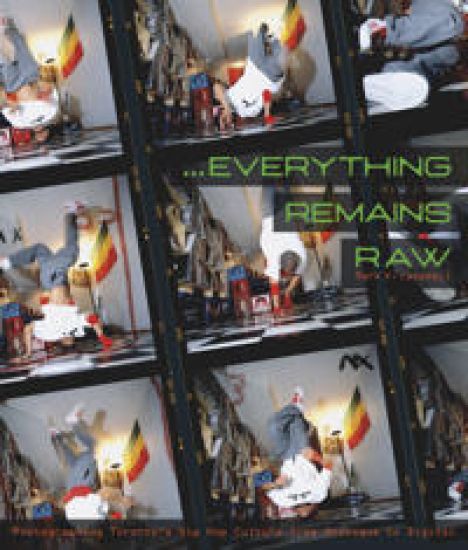
Before there was Drake, there was The 6. The genesis and rise of Toronto's Hip Hop culture.Amongst the algorithmic pulsations that remap informational networks at the whim of any giant tech company, hip hop culture produces ways of knowing (and being in) the world that continually disrupt the status quo.Guided by a sense of rawness — an unsanitized speaking of truth to power — hip hop culture thrives outside of the formal and institutional settings which are often used to confer importance. Hip hop has no use for such pedestals. Its inherent and purposefully self-critical nature ensures that hip hop is both a widely appealing form for youth protest and a self-calibrating system of quality control.A photographic excavation of Toronto's hip hop archive, ...Everything Remains Raw draws on photographs of Kardinal Offishall, Michie Mee, Dream Warriors, Maestro, Drake, Director X, and others by Michael Chambers, Sheinina Raj, Demuth Flake, Craig Boyko, Nabil Shash, Patrick Nichols, and Stella Fakiyesi to offer a deep dive in hip hop's visual culture. An intentional intersection of the taste-making skills of the DJ and the nuanced particularism of the curator, the book and the accompanying exhibition juxtapose never-before-seen images with photojournalism, street posters, and zines to reframe and enhance popular understandings of this thing called hip hop....Everything Remains Raw accompanies an exhibition organized at the McMichael Canadian Art Collection.
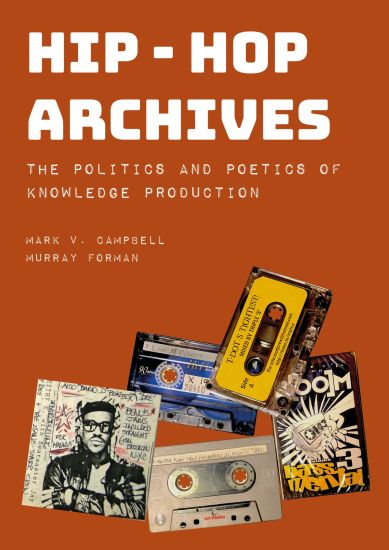
This book focuses on the culture and politics involved in building hip-hop archives. It addresses practical aspects, including methods of accumulation, curation, preservation, and digitization and critically analyzes institutional power, community engagement, urban economics, public access, and the ideological implications associated with hip-hop culture’s enduring tensions with dominant social values. The collection of essays are divided into four sections; Doing the Knowledge, Challenging Archival Forms, Beyond the Nation and Institutional Alignments: Interviews and Reflections. The book covers a range of official, unofficial, DIY and community archives and collections and features chapters by scholar practitioners, educators and curators. A wide swath of hip-hop culture is featured in the book, including a focus on dance, graffiti, clothing, and battle rap. The range of authors and their topics span countries in Asia, Europe, the Caribbean and North America.
Perhaps overshadowed by more 'exotic' locos, the Class 31s nonetheless played a significant part in British Railways' Modernisation Plan. Intended for use on more lightly loaded and shorter-distance trains on routes away from the main lines, the 263 original Brush Type 2 locomotives were new between 1957 and 1962 and entered service on the Eastern Region. They could soon be found all across the country. Not long into their careers, they were renumbered into Class 31 under the TOPS system and, over time, four subclasses were developed. The most numerous was the steam heat boiler-fitted 31/1, examples of which were further modified with electric train heating (ETH) to produce the 31/4. Towards the end of the class's collective lifespan came two more developments, the 31/5 and 31/6. The fact that so many still survive after decades of sterling service is testament to their usefulness and versatility, and they are especially appreciated on the various heritage lines up and down the country. This volume includes more than 200 images showing these workhorses in action, mostly in the south of England.
This book focuses on the culture and politics involved in building hip-hop archives. It addresses practical aspects, including methods of accumulation, curation, preservation, and digitization and critically analyzes institutional power, community engagement, urban economics, public access, and the ideological implications associated with hip-hop culture’s enduring tensions with dominant social values. The collection of essays are divided into four sections; Doing the Knowledge, Challenging Archival Forms, Beyond the Nation and Institutional Alignments: Interviews and Reflections. The book covers a range of official, unofficial, DIY and community archives and collections and features chapters by scholar practitioners, educators and curators. A wide swath of hip-hop culture is featured in the book, including a focus on dance, graffiti, clothing, and battle rap. The range of authors and their topics span countries in Asia, Europe, the Caribbean and North America.