Kirjojen hintavertailu. Mukana 11 244 527 kirjaa ja 12 kauppaa.

Kirjahaku

Etsi kirjoja tekijän nimen, kirjan nimen tai ISBN:n perusteella.

1000 tulosta hakusanalla Markos Vidalis

Facteurs affectant la normalisation de la langue wolaita
Selon Milroy (1999: 27), la normalisation entrave "le changement linguistique, mais ne l'emp che pas totalement". En d'autres termes, la normalisation r duit les changements et les variations linguistiques en proposant une forme standard et cr e une uniformit dans l'utilisation de la langue. Plusieurs chercheurs se sont pench s sur la signification et le processus de la normalisation. La normalisation d signe le processus par lequel une langue est codifi e ou une vari t d'une langue devient largement accept e dans l'ensemble de la communaut linguistique de cette langue en tant que norme supra dialectale (Ferguson, 1968: 31; Wardhough, 1992: 30). Il en ressort que la normalisation est trait e comme un processus qui contribue cr er une vari t standard d'une langue. Dans le m me ordre d'id es, Milroy (1999:173) a soulign que "la normalisation est mieux trait e comme un processus", car "toutes les langues ( l'exception des langues mortes) varient et sont dans un tat constant de changement". Ferguson (1961) d finit une norme comme une norme unique, largement accept e, utilis e avec seulement quelques modifications ou variations mineures pour tous les usages de la langue. Il tablit une distinction explicite entre cette notion g n rale de "norme" et le degr d'alphab tisation (" criture") des natifs dans une communaut linguistique.
Fattori che influenzano la standardizzazione della lingua wolaita
Secondo Milroy (1999: 27) la standardizzazione ostacola "il cambiamento linguistico, ma non lo impedisce del tutto". In altre parole, la standardizzazione riduce il cambiamento e la variazione linguistica proponendo una forma standard e creando uniformit nell'uso della lingua. Diversi studiosi hanno discusso il significato e il processo di standardizzazione. La standardizzazione si riferisce al processo attraverso il quale una lingua viene codificata o una variet di una lingua diventa ampiamente accettata in tutta la comunit linguistica di quella lingua come norma sovra dialettale (Ferguson, 1968: 31; Wardhough, 1992: 30). Da ci si evince che la standardizzazione trattata come un processo che aiuta a creare una variet standard di una lingua. In linea con ci , Milroy (1999: 173) ha sottolineato che "la standardizzazione meglio trattata come un processo", a causa del fatto che "tutte le lingue (eccetto quelle morte) variano e sono in un costante stato di cambiamento". Ferguson (1961) definisce uno standard come un'unica norma ampiamente accettata, utilizzata con modifiche o variazioni minime per tutti gli scopi dell'uso della lingua. Egli distingue esplicitamente tra questa nozione generale di "standard" e il grado di alfabetizzazione ("scrittura") dei nativi in una comunit linguistica.
Factores que afectam a normalização da língua Wolaita

Factores que afectam a normalização da língua Wolaita

Markos Mathewos

Edicoes Nosso Conhecimento
2024
pokkari
De acordo com Milroy (1999: 27), a padroniza o dificulta "a mudan a lingu stica, mas n o a impede totalmente". Por outras palavras, a normaliza o reduz a mudan a e a varia o lingu stica ao propor uma forma padr o e cria uniformidade no uso da l ngua. V rios estudiosos t m discutido o significado e o processo de padroniza o. A padroniza o refere-se ao processo pelo qual uma l ngua codificada ou uma variedade de uma l ngua se torna amplamente aceite em toda a comunidade de fala dessa l ngua como uma norma supra dialetal (Ferguson, 1968: 31; Wardhough, 1992: 30). Para revelar isso, a padroniza o tratada como um processo que ajuda a criar uma variedade padr o de uma l ngua. Em conson ncia com isto, Milroy (1999:173) salientou que "a padroniza o melhor tratada como um processo", devido ao facto de que "todas as l nguas (exceto as l nguas mortas) variam e est o em constante estado de mudan a". Ferguson (1961) define um padr o como uma norma nica, amplamente aceite, usada apenas com pequenas modifica es ou varia es para todos os fins de uso da l ngua. Distingue explicitamente entre esta no o geral de "norma" e o grau de literacia nativa ("escrita") numa comunidade de fala.
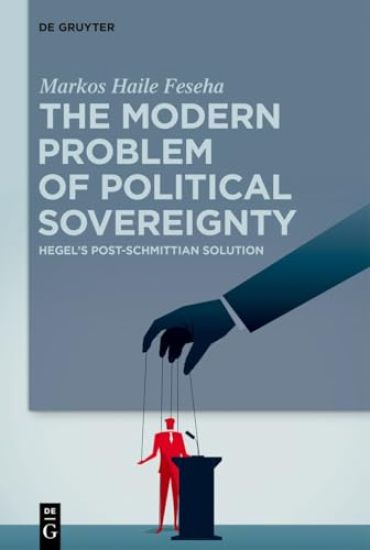
The Modern Problem of Political Sovereignty

The Modern Problem of Political Sovereignty

Markos Haile Feseha

De Gruyter
2025
sidottu
Both G.F.W. Hegel and Carl Schmitt took seriously the problem of political sovereignty. While Schmitt rejected liberal political theories that argue for the immediate unity of democracy and legality, Hegel claimed that the constitutional monarchy can maintain the division of the powers and their unity. Feseha argues that Hegel’s conception of the division of powers deserves attention by contemporary states to solve today’s issues.
Umnoe pitanie. Kak nauchitsja osoznanno est, zabyv navsegda pro pereedanie i strakh popravitsja
Kak nauchitsja prislushivatsja k svoemu telu i vybirat po-nastojaschemu zdorovoe pitanie? Spetsialist po osoznannomu pitaniju Markos Bodoke vydelit produkty, prinosjaschie polzu, i produkty, kotorye razrushajut zdorove. Avtor rasskazhet, chto na problemu pokhudenija nuzhno smotret tselostno, i osoznannoe pitanie - luchshij navigator dlja etogo. Nastojaschee zdorovoe pitanie iskhodit iz ljubvi k sebe i zhelanija zabotitsja o svoem zdorove. Kogda vy pitaetes osoznanno, vy perestaete bespokoitsja o svoem vese. Vy nachinaete obraschat vnimanie na: - uroven svoej energii v techenie dnja; - to, kak prokhodit protsess pischevarenija; - vashu sosredotochennost i kontsentratsiju na rabote i uchebe; - vashe nastroenie. Tsel osoznannogo pitanija - chuvstvovat sebja khorosho i byt schastlivym. Esli vy perestaete dumat o kilogrammakh i udeljaete vnimanie svoemu samochuvstviju, to ves normalizuetsja.
The Resistance Handbook

The Resistance Handbook

Markos Moulitsas; Michael Huttner

Disruption Books
2017
pokkari
It’s time to fight back.In November 2016, Donald Trump lost the national popular vote—by a lot!—yet managed to stumble into the White House. Trump’s presidency is not just an indictment of our political system—it’s an affront to our core values as a nation. How could such an ignorant autocratic buffoon claim to represent such a diverse, open, and free society?A majority of Americans have been shocked, dismayed, and disgusted—for good reason—by Trump’s actions since he took office. But we aren’t taking it lying down. Across the United States, the Resistance is growing, as many thousands of patriotic Americans lead the charge against the corrupt and traitorous Trump regime—and the Republican Party that is enabling him.Markos Moulitsas, founder of Daily Kos, and Michael Huttner, founder of ProgressNow, have built two of the nation’s largest advocacy organizations. Now, in The Resistance Handbook: 45 Ways to Fight Trump, they offer a much-needed guide to fighting Trump and building a better, more just, and more equitable America.This book is for all Americans who consider themselves part of the Resistance—people like us who wake up every day and think, “What more can I do to stop Trump?” The book offers 45 ways to stop the 45th president of the United States in his tracks, including ways to:• Protect our culture from the degrading effects of Trump’s presidency, which rewarded bullying, sexism, racism, and xenophobia.• Protect our communities from Trump’s personal attacks, which he and his Republican friends target at women, people of color, youth, immigrants, Jewish people, Muslims, and others.• Fight for our values and the issues that define us—in the face of a four-year assault on racial justice, income equality, the environment, women’s rights, education, and worker’s rights.• Build the infrastructure this movement needs (and sorely lacks), including the capacity to register and get out the vote for the 97 million Americans who didn’t cast a ballot in 2016; to find, train and promote tomorrow’s leaders; and to develop the media organizations that will report the facts and promote our values and candidates.
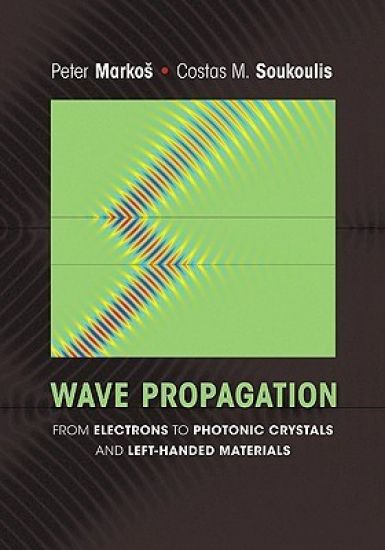
Wave Propagation

Wave Propagation

Peter Markos; Costas M. Soukoulis

Princeton University Press
2008
sidottu
This textbook offers the first unified treatment of wave propagation in electronic and electromagnetic systems and introduces readers to the essentials of the transfer matrix method, a powerful analytical tool that can be used to model and study an array of problems pertaining to wave propagation in electrons and photons. It is aimed at graduate and advanced undergraduate students in physics, materials science, electrical and computer engineering, and mathematics, and is ideal for researchers in photonic crystals, negative index materials, left-handed materials, plasmonics, nonlinear effects, and optics. Peter Markos and Costas Soukoulis begin by establishing the analogy between wave propagation in electronic systems and electromagnetic media and then show how the transfer matrix can be easily applied to any type of wave propagation, such as electromagnetic, acoustic, and elastic waves. The transfer matrix approach of the tight-binding model allows readers to understand its implementation quickly and all the concepts of solid-state physics are clearly introduced. Markos and Soukoulis then build the discussion of such topics as random systems and localized and delocalized modes around the transfer matrix, bringing remarkable clarity to the subject. Total internal reflection, Brewster angles, evanescent waves, surface waves, and resonant tunneling in left-handed materials are introduced and treated in detail, as are important new developments like photonic crystals, negative index materials, and surface plasmons. Problem sets aid students working through the subject for the first time.
Atheism on Trial

Atheism on Trial

Louis Markos

Harvest House Publishers,U.S.
2018
pokkari
Answers You Need for the Tough Questions About Your Faith Atheists are launching a new wave of attacks against Christianity and faith in God. It's hard to know how to handle their claims that they have a more enlightened, scientific, and sophisticated worldview. How can you respond with precision to arguments against your faith? With instructive clarity, Dr. Louis Markos confronts the modern-day atheists' claims that new evidence disproves the existence of God. In fact, you will find that the "proof" they peddle is not new at all. Rather, they recycle claims that have already been disproven by Christian thinkers of the past...claims that you can silence today with the same solid logic. Equip yourself to defend your beliefs from a deep well of knowledge and conviction. Stand in confidence that the trial of public opinion versus universal truth has already been held—and God is the victor.
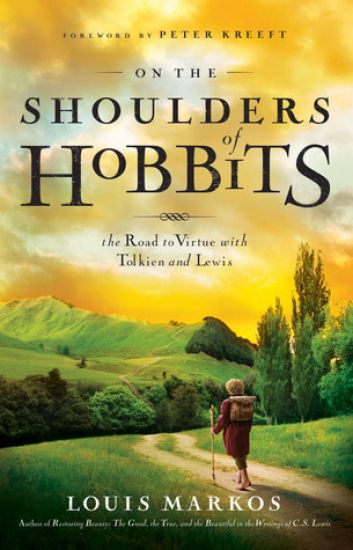
On The Shoulders Of Hobbits

On The Shoulders Of Hobbits

Louis Markos

Moody Publishers
2012
nidottu
The world of J. R. R. Tolkien is filled with strange creatures, elaborately crafted lore, ancient tongues, and magic that exists only in fantasy; yet the lessons taught by hobbits and wizards speak powerfully and practically to our real lives. Courage, valor, trust, pride, greed, and jealousy--these are not fictional virtues. This is the stuff of real life, the Christian life. Professor and author Louis Markos takes us on the road with Tolkien and C. S. Lewis, with looks at selected classic works of literature as well, to show how great stories bring us so much more than entertainment. They inspire and convict, imparting truth in unforgettable ways.Rediscover the virtue of great storytelling and the power of fantasy to transform our reality.
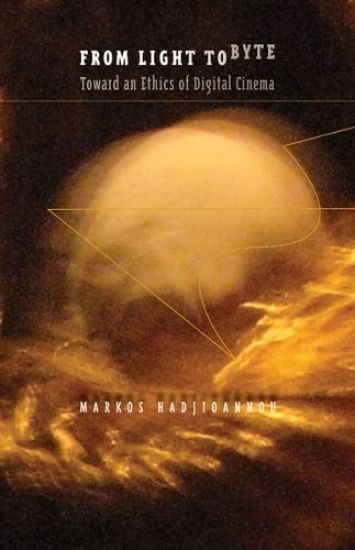
From Light to Byte

From Light to Byte

Hadjioannou Markos

University of Minnesota Press
2012
sidottu
Cinema has been undergoing a profound technological shift: celluloid film is being replaced by digital media in the production, distribution, and reception of moving images. Concerned with the debate surrounding digital cinema’s ontology and the interrelationship between cinema cultures, From Light to Byte investigates the very idea of change as it is expressed in the current technological transition. Markos Hadjioannou asks what is different in the way digital movies depict the world and engage with the individual and how we might best address the issue of technological shift within media archaeologies.Hadjioannou turns to the technical basis of the image as his first point of departure, considering the creative and perceptual activities of moviemakers and viewers. Grounded in film history, film theory, and philosophy, he explores how the digital configures its engagement with reality and the individual while simultaneously replaying and destabilizing celluloid’s own structures. He observes that, where film’s photographic foundation encourages an existential association between individual and reality, digital representations are graphic renditions of mathematical codes whose causal relations are more difficult to trace.Throughout this work Hadjioannou examines how the two technologies set themselves up with reference to reality, physicality, spatiality, and temporality, and he concludes that the question concerning digital cinema is ultimately one of ethical implications—a question, that is, of the individual’s ability to respond to the image of the world.
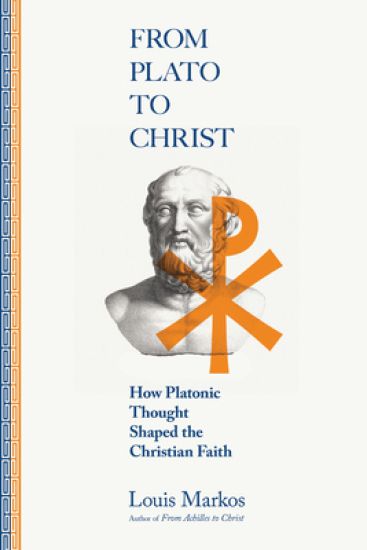
From Plato to Christ – How Platonic Thought Shaped the Christian Faith
What does Plato have to do with the Christian faith? Quite a bit, it turns out. In ways that might surprise us, Christians throughout the history of the church and even today have inherited aspects of the ancient Greek philosophy of Plato, who was both Socrates's student and Aristotle's teacher. To help us understand the influence of Platonic thought on the Christian faith, Louis Markos offers careful readings of some of Plato's best-known texts and then traces the ways that his work shaped the faith of some of Christianity's most beloved theologians, including Gregory of Nyssa, Augustine, Dante, and C. S. Lewis. With Markos's guidance, readers can ascend to a true understanding of Plato's influence on the faith.
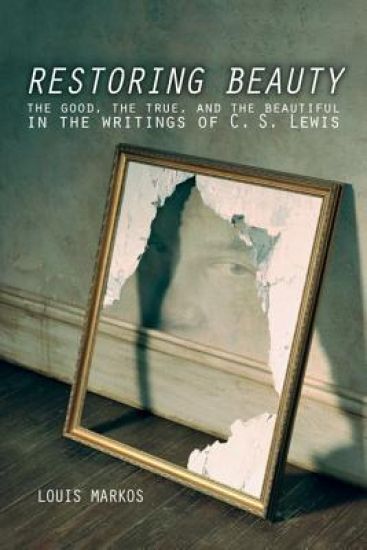
Restoring Beauty

Restoring Beauty

Louis Markos

Inter-Varsity Press,US
2010
pokkari
More and more in our modern and postmodern culture the twin concepts of beauty and truth have been separated both from each other and from their individual connection to the divine source of Beauty and Truth. Even as our public schools move further and further away from their connection to the universal moral code, the world of art (both high and low) embraces an aesthetic that privileges ugliness over beauty, nihilism over form, and radical self-expression over the pursuit of higher truth. As both an effective apologist for truth-based education and as a sub-creator of his own beauty-enhancing fiction, C.S. Lewis is the ideal guide for those who would seek to restore truth and beauty to their proper place and role in our modern world. Sections one and two analyze Lewis' eleven novels, showing how Lewis counters the growing cult of the ugly and helps restore a clearer understanding of the nature of good and evil. Sections three and four turn to Lewis' nonfiction works to assess what advice Lewis can give educators at all levels who would steer their students away from chronological snobbery and values-free education toward a true re-engagement with the past. The book concludes with a commentary onScrewtape Letters that exposes what Satan's main temptation tactics have been since the 1960s and a detailed bibliographical essay of books by and about Lewis.
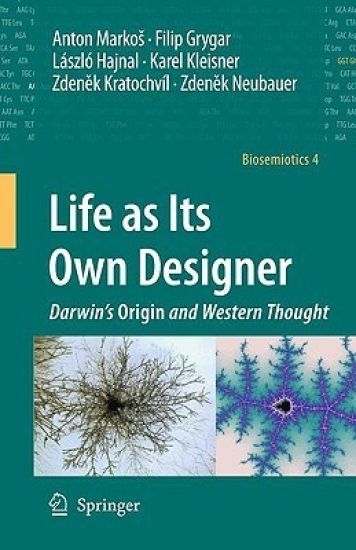
Life as Its Own Designer

Life as Its Own Designer

Anton Markoš; Filip Grygar; László Hajnal; Karel Kleisner; Zdenek Kratochvíl; Zdenek Neubauer

Springer-Verlag New York Inc.
2009
sidottu
It has been nearly 150 years since Darwin published On the Origin of Species, and his theory of natural selection still ignites a forest of heated debate between scientific fundamentalists on the one hand and religious fundamentalists on the other. But both sides actually agree more than they disagree, and what has long been needed is a third way to view evolution, one that focuses more on the aspect of life and “being alive”, one that can guide us through, and perhaps out of, the fiery thicket. This book, a seminal work in the burgeoning field of Biosemiotics, provides that third way, by viewing living beings as genuine agents designing their communication pathways with, and in, the world. Already hailed as the best account of biological hermeneutics, Life As Its Own Designer: Darwin’s Origin and Western Thought is a wholly unique book divided into two parts. The first part is philosophical and explores the roots of rationality and the hermeneutics of the natural world with the overriding goal of discovering how narrative can help us to explain life. It analyzes why novelty is so hard to comprehend in the framework of Western thinking and confronts head-on the chasm between evolutionism and traditional rationalistic worldviews. The second part is scientific. It focuses on the life of living beings, treating them as co-creators of their world in the process of evolution. It draws on insights gleaned from the global activity of the Gaian biosphere, considers likeness as demonstrated on homology studies, and probes the problem of evo-devo science from the angle of life itself. This book is both timely and vital. Past attempts at a third way to view evolution have failed because they were written either by scientists who lacked a philosophical grounding or New Age thinkers who lacked biological credibility. Markoš and his coworkers form an original group of thinkers supremely capable in both fields, and they havefashioned a book that is ideal for researchers and scholars from both the humanities and sciences who are interested in the history and philosophy of biology, biosemiotics, and the evolution of life.
Literature

Literature

Louis Markos

Crossway Books
2012
pokkari
Enjoying poetry and novels can seem irrelevant and out of touch in a world of texting, tweeting, and blogging. But even in this technological age literature matters. Seasoned professor Louis Markos invites us into the great literary conversation that has been taking place throughout the ages and illuminates the wisdom to be found therein. He offers both a guide to studying and understanding literature, especially poetry, and an inspiring look at what it means to think like poets and view the world through literary eyes. This book holds out a truth for all: that the understanding and appreciation of literature draws us closer to God, his Word, and his work in the world.