Kirjahaku
Etsi kirjoja tekijän nimen, kirjan nimen tai ISBN:n perusteella.
1000 tulosta hakusanalla Matthew Fox
Applying Quantitative Bias Analysis to Epidemiologic Data
Matthew P. Fox; Richard F. MacLehose; Timothy L. Lash
Springer Nature Switzerland AG
2022
sidottu
This textbook and guide focuses on methodologies for bias analysis in epidemiology and public health, not only providing updates to the first edition but also further developing methods and adding new advanced methods. As computational power available to analysts has improved and epidemiologic problems have become more advanced, missing data, Bayes, and empirical methods have become more commonly used. This new edition features updated examples throughout and adds coverage addressing: Measurement error pertaining to continuous and polytomous variablesMethods surrounding person-time (rate) dataBias analysis using missing data, empirical (likelihood), and Bayes methods A unique feature of this revision is its section on best practices for implementing, presenting, and interpreting bias analyses. Pedagogically, the text guides students and professionals through the planning stages of bias analysis, including the design of validation studies and the collection of validity data from other sources. Three chapters present methods for corrections to address selection bias, uncontrolled confounding, and measurement errors, and subsequent sections extend these methods to probabilistic bias analysis, missing data methods, likelihood-based approaches, Bayesian methods, and best practices.
Applying Quantitative Bias Analysis to Epidemiologic Data
Matthew P. Fox; Richard F. MacLehose; Timothy L. Lash
Springer Nature Switzerland AG
2023
nidottu
This textbook and guide focuses on methodologies for bias analysis in epidemiology and public health, not only providing updates to the first edition but also further developing methods and adding new advanced methods. As computational power available to analysts has improved and epidemiologic problems have become more advanced, missing data, Bayes, and empirical methods have become more commonly used. This new edition features updated examples throughout and adds coverage addressing: Measurement error pertaining to continuous and polytomous variablesMethods surrounding person-time (rate) dataBias analysis using missing data, empirical (likelihood), and Bayes methods A unique feature of this revision is its section on best practices for implementing, presenting, and interpreting bias analyses. Pedagogically, the text guides students and professionals through the planning stages of bias analysis, including the design of validation studies and the collection of validity data from other sources. Three chapters present methods for corrections to address selection bias, uncontrolled confounding, and measurement errors, and subsequent sections extend these methods to probabilistic bias analysis, missing data methods, likelihood-based approaches, Bayesian methods, and best practices.
The Sales Tax in the 21st Century
William F. Fox; Matthew Murray
Praeger Publishers Inc
1997
sidottu
Leading national experts examine the importance of sales tax as a revenue source in the U.S. and describe key factors that will determine its role in government revenue structures of the 21st century. This book offers a timely analysis of cutting-edge issues that affect both the private and the public sector, including reform, emerging technologies, interstate dimensions, auditing techniques, federal policy and more. Policymakers, tax administrators, analysts, and business professionals will find this work of great value.
Andy Coolquitt
Rachel Hooper; Dan Fox; Matthew Higgs; Jan Tumlir;
University of Texas Press
2012
sidottu
Andy Coolquitt makes objects and environments that exist in symbiosis with human relationships. During the 1990s, his life and work revolved around an expansive studio/artist commune/performance space/living sculpture/party place on the east side of Austin, Texas, where he continues to live, work, and host events. Intrigued by social contracts, Coolquitt creates artwork that facilitates conversation and interaction, augmenting the energy and frictions generated by individuals forming a community. He chooses materials that show the wear and tear of practical use, and, over the years, he has refined an artistic practice based on the collection, study, and reuse of things scavenged from the streets around him. Since his 2008 solo exhibition iight in New York City, Coolquitt’s work has gained a wide national and international audience.Andy Coolquitt is the first comprehensive monograph on the artist’s work. Published in conjunction with a solo museum exhibition at Blaffer Art Museum, this volume displays the full range of Coolquitt’s work over the past twenty-five years, including images of site-specific installations that no longer exist. Accompanying the color plates are an introduction and chronology of the artist’s work by exhibition curator Rachel Hooper, an essay tracing Coolquitt’s connections to other contemporary artists and designers by Frieze magazine senior editor Dan Fox, an in-depth exploration of Coolquitt’s concepts and process by art writer Jan Tumlir, an interview with Coolquitt by director and chief curator of White Columns Matthew Higgs, and Coolquitt’s biography and bibliography.
The AI Classroom
Dan Fitzpatrick; Amanda Fox; Brad Matthew Weinstein
Teachergoals Publishing
2023
pokkari
What is the role of educators in the artificial intelligence revolution? We are entering an unprecedented era of innovation, where humanity and technology will work together in harmony. The AI Classroom will equip educators with the knowledge and skills needed to stay ahead of the curve and fully embrace the transformative power of artificial intelligence.This book delves into the limitless possibilities of AI and how it will shape the future of education. Educators must take the opportunity to leverage artificial intelligence in order to provide students with a future-focused education that's tailored specifically to their needs. By embracing this change, educators be able to focus more of their time on building meaningful relationships and doing what they truly love - teaching This groundbreaking book will help you: Start using AI within secondsTake back your personal timeCreate content and do tasks using artificial intelligenceInfuse emotional intelligence with artificial intelligenceEnhance existing pedagogies Put students in control of their learning
The AI Classroom
Dan Fitzpatrick; Amanda Fox; Brad Matthew Weinstein
Teachergoals Publishing
2023
sidottu
What is the role of educators in the artificial intelligence revolution? We are entering an unprecedented era of innovation, where humanity and technology will work together in harmony. The AI Classroom will equip educators with the knowledge and skills needed to stay ahead of the curve and fully embrace the transformative power of artificial intelligence.This book delves into the limitless possibilities of AI and how it will shape the future of education. Educators must take the opportunity to leverage artificial intelligence in order to provide students with a future-focused education that's tailored specifically to their needs. By embracing this change, educators be able to focus more of their time on building meaningful relationships and doing what they truly love - teaching This groundbreaking book will help you: Start using AI within secondsTake back your personal timeCreate content and do tasks using artificial intelligenceInfuse emotional intelligence with artificial intelligenceEnhance existing pedagogies Put students in control of their learning
Applying Quantitative Bias Analysis to Epidemiologic Data
Timothy L. Lash; Matthew P. Fox; Aliza K. Fink
Springer-Verlag New York Inc.
2009
sidottu
Bias analysis quantifies the influence of systematic error on an epidemiology study’s estimate of association. The fundamental methods of bias analysis in epi- miology have been well described for decades, yet are seldom applied in published presentations of epidemiologic research. More recent advances in bias analysis, such as probabilistic bias analysis, appear even more rarely. We suspect that there are both supply-side and demand-side explanations for the scarcity of bias analysis. On the demand side, journal reviewers and editors seldom request that authors address systematic error aside from listing them as limitations of their particular study. This listing is often accompanied by explanations for why the limitations should not pose much concern. On the supply side, methods for bias analysis receive little attention in most epidemiology curriculums, are often scattered throughout textbooks or absent from them altogether, and cannot be implemented easily using standard statistical computing software. Our objective in this text is to reduce these supply-side barriers, with the hope that demand for quantitative bias analysis will follow.
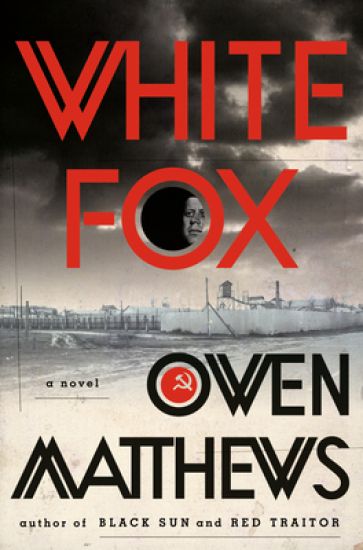
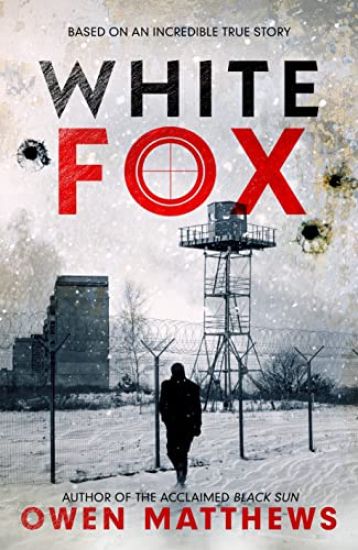
A page-turning thriller about two competing KGB operatives on a race across Russia and against time to uncover the devastating truth behind the assassination of JFK. 1963. In a desolate Russian penal colony, the radio blares the news of President Kennedy's death. Lieutenant Colonel Alexander Vasin's new post as director of a gulag camp in the middle of a frozen tundra is far from a promotion. This is where disgraced agents, like Vasin, are sent to disappear and die quietly. But when tensions in the camp mount and a violent revolt breaks out, Vasin finds himself on the run with a mysterious prisoner holding the most dangerous secret in the world: who ordered the murder of President Kennedy. In a breathless chase that leads them throughout the Soviet Union, from the barren Siberian wastelands, to the stunning halls of the Catherine Palace, and into the gritty streets of Leningrad and Moscow, Vasin must stay one step ahead of the deadliest spy and police organizations in the world, and keep the most wanted man in Russia alive. The journey will push Vasin's loyalty, morality, and patriotism to the limit, until he faces the ultimate choice: fall in line, or die fighting the system. With masterly storytelling that weaves together a moment of explosive history with the cutthroat machinations of Soviet politics, Owen Matthews's White Fox captures the paradigm-shifting assassination from a unique Soviet point of view. This is a page-turning thriller across Russia, where characters facing impossible odds are forced to decide among truth, justice, and all-out war.
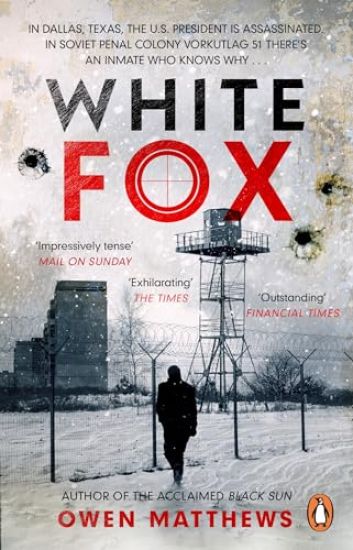
The new novel from a master of the Cold War thriller . . .'This is Robert Harris storytelling territory' Daily Mail'Outstanding' Sunday Times'Tense, exciting and authentic' Charles Cumming, author of Judas 62'Stunning' The Times'Brilliantly plotted' John Sweeney, author of Killer in the Kremlin'A standout thriller' Financial Times1963. In a desolate Russian penal colony, a radio broadcasts news of the killing of President John F. Kennedy . . .Alexander Vasin's new posting as director of a brutal gulag camp is far from a promotion. This is where disgraced KGB officers are sent to disappear, quietly, and forgotten.But when a violent revolt breaks out, Vasin must decide: run or die. So he runs. With him goes a mysterious prisoner – an individual who might hold the key to an extraordinarily dangerous secret: the identity of who really ordered Kennedy’s assassination.Racing from bleak Siberian wastelands to the grey streets of Soviet Moscow, Vasin needs to stay one step ahead of the most ruthless intelligence organization in the world in order to keep the most wanted man in Russia alive. And with his loyalty, morality and patriotic duty tested to the limits, he will face the ultimate choice: fall in line, or die fighting the system . . .Weaving together a critical moment in history with the cut-throat machinations of Soviet politics, this tautly told, nail-bitingly atmospheric novel is a superb Cold War thriller.
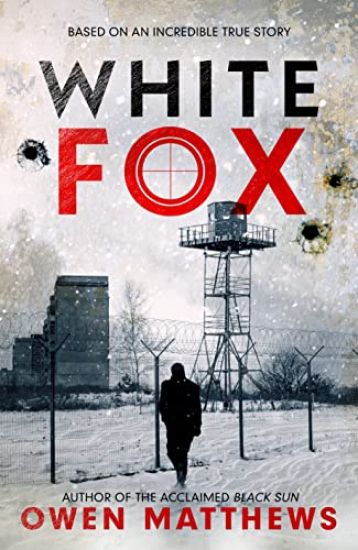
The new novel from a master of the Cold War thriller . . .'This is Robert Harris storytelling territory' Daily Mail'Outstanding' Sunday Times'Tense, exciting and authentic' Charles Cumming, author of Judas 62'Stunning' The Times'Brilliantly plotted' John Sweeney, author of Killer in the Kremlin'A standout thriller' Financial Times1963. In a desolate Russian penal colony, the radio broadcasts news of the assassination of President John F. Kennedy...Lieutenant Colonel Alexander Vasin's new posting as director of a gulag camp in the middle of the frozen tundra is far from a promotion. This is where disgraced agents, like Vasin, disappear - sent to die forgotten. And quietly. But tensions in the camp are running high and when a violent revolt breaks out, Vasin finds himself on the run. With him is a mysterious prisoner - who holds the key to the most dangerous secret in the world: who ordered Kennedy's murder.In a breathless race that takes them through the Soviet Union - from the barren Siberian wastelands to the stunning halls of the Katerina Palace and the grey streets of Leningrad and Moscow - Vasin must stay one step ahead of the most ruthless spy and police organizations in the world . . . and keep the most wanted man in Russia alive. It's a journey that will push Vasin's loyalty, morality and his patriotism to the limit. And he must confront the ultimate choice: fall in line, or die fighting the system.With masterful storytelling that weaves together an explosive moment in history with the cutthroat machinations of Soviet politics, Owen Matthews' White Fox captures the paradigm-shifting assassination from a unique Soviet point of view. This is a page-turning thriller - a race against time across Soviet Russia, where the participants face impossible odds and must decide between truth, justice and all-out war.
Children's story based on rhyming words and phrases.
This is volume twenty-six of The Anchor Bible, a new translation done book-by-book with accompanying introduction, notes, and comments. Matthew is the most familiar of the gospels, best known for its parables, miracle narratives, and the long Sermon on the Mount. Recognized by the early Church as the most fitting introduction to the New Testament, its special concern is to announce Jesus as the fulfillment of the Old Testament. Hence its emphasis on the Law, on ethics based on the traditional theology of the Covenant, and on the centrality of Messianic hope. This commentary sets the understanding of Matthew in the context of its author's own religious and secular background. Believing that the text should be approached directly, the writers of the commentary make constant use of the recently discovered historical and linguistic evidence now available to elucidate it. This approach results in placing Jesus firmly within the framework of ascertainable Jewish tradition in first-century Palestine. The writers hold that the claim of Jesus to fulfill the Law and not to abolish it must be taken seriously. They have therefore taken a fresh look at the legal discussions in Matthew. In the light of their examination, there emerges first a revaluation of the meaning attached to such key words as "parables" and "hypocrite" and then a new and vital significance for such words. The result is a new respect for Matthew, a highly reliable early source for the ministry of Jesus, and an examination of that ministry uncluttered by the presuppositions of various forms of modern "Platonism."
Jesus is the eternal KingAt first glance, it seems surprising that Jesus would call a man like Matthew to become one of His disciples. As a small-time tax collector, Matthew would have been despised by the Jewish people, who viewed those in the profession as traitors to Rome. But the fact that Matthew was educated, literate, and also familiar with Jewish law and customs made him the ideal candidate to not only accompany Jesus during His earthly ministry but also record all that he witnessed. The result is the Gospel we have today. Matthew shows how Jesus, as the promised Messiah, is worthy of our hope. He shows how Jesus, as the eternal King, is worthy of our complete devotion . . . and our complete submission to Him.The Jeremiah Bible Study Series captures Dr. David Jeremiah’s forty-plus years of commitment to teaching the Word of God. In each study, he will help you understand what the Bible says, what it meant to the people at the time it was written, and what it means to you today. Along the way, you will gain insights into the text, identify key stories and themes, and be challenged to apply the truth you find in your life.