Kirjojen hintavertailu. Mukana 11 342 296 kirjaa ja 12 kauppaa.

Kirjahaku

Etsi kirjoja tekijän nimen, kirjan nimen tai ISBN:n perusteella.

1000 tulosta hakusanalla Matthieu Durel

The Naked Don't Fear the Water: An Underground Journey with Afghan Refugees
Winner of the 2025 Pulitzer Prize for Explanatory Reporting - A New York Times Book Review Editor's Choice "This is a book of radical empathy, crossing many borders--not just borders that separate nations, but also borders of form, borders of meaning, and borders of possibility. It is powerful and humane and deserves to find a wide, wandering readership."--Mohsin Hamid, author of Exit WestIn this extraordinary book, an acclaimed young war reporter chronicles a dangerous journey on the smuggler's road to Europe, accompanying his friend, an Afghan refugee, in search of a better future.In 2016, a young Afghan driver and translator named Omar makes the heart-wrenching choice to flee his war-torn country, saying goodbye to Laila, the love of his life, without knowing when they might be reunited again. He is one of millions of refugees who leave their homes that year.Matthieu Aikins, a journalist living in Kabul, decides to follow his friend. In order to do so, he must leave his own passport and identity behind to go underground on the refugee trail with Omar. Their odyssey across land and sea from Afghanistan to Europe brings them face to face with the people at heart of the migration crisis: smugglers, cops, activists, and the men, women and children fleeing war in search of a better life. As setbacks and dangers mount for the two friends, Matthieu is also drawn into the escape plans of Omar's entire family, including Maryam, the matriarch who has fought ferociously for her children's survival. Harrowing yet hopeful, this exceptional work brings into sharp focus one of the most contentious issues of our times. The Naked Don't Fear the Water is a tale of love and friendship across borders, and an inquiry into our shared journey in a divided world.

Marine Geochemistry

Marine Geochemistry

Matthieu Roy-Barman; Catherine Jeandel

Oxford University Press
2016
sidottu
Marine geochemistry uses chemical elements and their isotopes to study how the ocean works in terms of ocean circulation, chemical composition, biological activity and atmospheric CO2 regulation. This rapidly growing field is at a crossroad for many disciplines (physical, chemical and biological oceanography, geology, climatology, ecology, etc.). It provides important quantitative answers to questions such as: What is the deep ocean mixing rate? How much atmospheric CO2 is pumped by the ocean? How fast are pollutants removed from the ocean? How do ecosystems react to anthropogenic pressure? This text gives a simple introduction to the concepts, the methods and the applications of marine geochemistry with a particular emphasis on isotopic tracers. Overall introducing a very large number of topics (physical oceanography, ocean chemistry, isotopes, gas exchange, modelling, biogeochemical cycles), with a balance of didactic and indepth information, it provides an outline and a complete course in marine geochemistry. Throughout, the book uses a hands-on approach with worked out exercises and problems (with answers provided at the end of the book), to help the students work through the concepts presented. A broad scale approach is take including ocean physics, marine biology, ocean-climate relations, remote sensing, pollutions and ecology, so that the reader acquires a global perspective of the ocean. It also includes new topics arising from ongoing research programs. This textbook is essential reading for students, scholars, researchers and other professionals.
Marine Geochemistry

Marine Geochemistry

Matthieu Roy-Barman; Catherine Jeandel

Oxford University Press
2016
nidottu
Marine geochemistry uses chemical elements and their isotopes to study how the ocean works in terms of ocean circulation, chemical composition, biological activity and atmospheric CO2 regulation. This rapidly growing field is at a crossroad for many disciplines (physical, chemical and biological oceanography, geology, climatology, ecology, etc.). It provides important quantitative answers to questions such as: What is the deep ocean mixing rate? How much atmospheric CO2 is pumped by the ocean? How fast are pollutants removed from the ocean? How do ecosystems react to anthropogenic pressure? This text gives a simple introduction to the concepts, the methods and the applications of marine geochemistry with a particular emphasis on isotopic tracers. Overall introducing a very large number of topics (physical oceanography, ocean chemistry, isotopes, gas exchange, modelling, biogeochemical cycles), with a balance of didactic and indepth information, it provides an outline and a complete course in marine geochemistry. Throughout, the book uses a hands-on approach with worked out exercises and problems (with answers provided at the end of the book), to help the students work through the concepts presented. A broad scale approach is take including ocean physics, marine biology, ocean-climate relations, remote sensing, pollutions and ecology, so that the reader acquires a global perspective of the ocean. It also includes new topics arising from ongoing research programs. This textbook is essential reading for students, scholars, researchers and other professionals.
The Practical Origins of Ideas

The Practical Origins of Ideas

Matthieu Queloz

Oxford University Press
2021
sidottu
This is an open access title available under the terms of a CC BY-NC-ND 4.0 International licence. It is free to read at Oxford Scholarship Online and offered as a free PDF download from OUP and selected open access locations. Why did such highly abstract ideas as truth, knowledge, or justice become so important to us? What was the point of coming to think in these terms? In The Practical Origins of Ideas Matthieu Queloz presents a philosophical method designed to answer such questions: the method of pragmatic genealogy. Pragmatic genealogies are partly fictional, partly historical narratives exploring what might have driven us to develop certain ideas in order to discover what these do for us. The book uncovers an under-appreciated tradition of pragmatic genealogy which cuts across the analytic-continental divide, running from the state-of-nature stories of David Hume and the early genealogies of Friedrich Nietzsche to recent work in analytic philosophy by Edward Craig, Bernard Williams, and Miranda Fricker. However, these genealogies combine fictionalizing and historicizing in ways that even philosophers sympathetic to the use of state-of-nature fictions or real history have found puzzling. To make sense of why both fictionalizing and historicizing are called for, this book offers a systematic account of pragmatic genealogies as dynamic models serving to reverse-engineer the points of ideas in relation not only to near-universal human needs, but also to socio-historically situated needs. This allows the method to offer us explanation without reduction and to help us understand what led our ideas to shed the traces of their practical origins. Far from being normatively inert, moreover, pragmatic genealogy can affect the space of reasons, guiding attempts to improve our conceptual repertoire by helping us determine whether and when our ideas are worth having.
The Ethics of Conceptualization

The Ethics of Conceptualization

Matthieu Queloz

Oxford University Press
2025
sidottu
Philosophy strives to give us a firmer hold on our concepts. But what about their hold on us? Why place ourselves under the sway of a concept and grant it the authority to shape our thought and conduct? Another conceptualization would carry different implications. What makes one way of thinking better than another? The Ethics of Conceptualization develops a framework for concept appraisal. Its guiding idea is that to question the authority of concepts is to ask for reasons of a special kind: reasons for concept use, which tell us which concepts to adopt, adhere to, or abandon, thereby shoring up—or undercutting—the reasons for action and belief that guide our deliberations. Traditionally, reasons for concept use have been sought either in timeless rational foundations or in concepts' inherent virtues, such as precision and consistency. Against this, the book advances two main claims: that we find reasons for concept use in the conceptual needs we discover when we critically distance ourselves from a concept by viewing it from the autoethnographic stance; and that sometimes, concepts that conflict, or exhibit other vices such as vagueness or superficiality, are just what we need. By considering which concepts we need rather than which are absolutely best, we can reconcile ourselves to the contingency of our concepts, determine the proper place of efforts to tidy up thought, and adjudicate between competing conceptions of things—even things as contested as liberty or free will. A needs-based approach separates helpful clarification from hobbling tidy-mindedness, and authoritative definition from conceptual gerrymandering. This is an open access title available under the terms of a CC BY-NC-ND 4.0 International licence. It is free to read on the Oxford Academic platform and offered as a free PDF download from OUP and selected open access locations.
Nostalgic Virility As a Cause of War

Nostalgic Virility As a Cause of War

Matthieu Grandpierron

MCGILL-QUEEN'S UNIVERSITY PRESS
2024
sidottu
Why do great powers go to war? Why are non-violent, diplomatic options not prioritized? Nostalgic Virility as a Cause of War argues that world leaders react to status decline by going to war, guided by a nostalgic, virile understanding of what it means to be powerful. This nostalgic virility – a system of subjective beliefs about power, bravery, strength, morality, and health – acts as a filter through which leaders articulate glorified interpretations of history and assess their power and their country's status on the international stage.In this rigorous study of France, the United Kingdom, and the United States, Matthieu Grandpierron tests the theory of nostalgic virility against the two more common theoretical frameworks of realism and the diversionary theory of war. Consulting thousands of newly declassified government documents at the highest levels of decision making, Grandpierron examines three specific cases – the early years of the Indochina War (1945–47), the British reconquest of the Falklands in 1982, and the US invasion of Grenada in 1983 – convincingly contending that status-seeking behaviour and nostalgic virility are more relevant in explaining why a leader chooses war and conflict over non-violent, diplomatic options than the dominant frameworks.Looking to the recent past, Nostalgic Virility as a Cause of War considers how this new model can be applied to current conflicts – from the Russian war in Ukraine to Chinese actions in the South China Sea – and provides surprising ways of thinking about the relationship between power, decision makers, and causes of war.
Nostalgic Virility As a Cause of War

Nostalgic Virility As a Cause of War

Matthieu Grandpierron

MCGILL-QUEEN'S UNIVERSITY PRESS
2024
nidottu
Why do great powers go to war? Why are non-violent, diplomatic options not prioritized? Nostalgic Virility as a Cause of War argues that world leaders react to status decline by going to war, guided by a nostalgic, virile understanding of what it means to be powerful. This nostalgic virility – a system of subjective beliefs about power, bravery, strength, morality, and health – acts as a filter through which leaders articulate glorified interpretations of history and assess their power and their country's status on the international stage.In this rigorous study of France, the United Kingdom, and the United States, Matthieu Grandpierron tests the theory of nostalgic virility against the two more common theoretical frameworks of realism and the diversionary theory of war. Consulting thousands of newly declassified government documents at the highest levels of decision making, Grandpierron examines three specific cases – the early years of the Indochina War (1945–47), the British reconquest of the Falklands in 1982, and the US invasion of Grenada in 1983 – convincingly contending that status-seeking behaviour and nostalgic virility are more relevant in explaining why a leader chooses war and conflict over non-violent, diplomatic options than the dominant frameworks.Looking to the recent past, Nostalgic Virility as a Cause of War considers how this new model can be applied to current conflicts – from the Russian war in Ukraine to Chinese actions in the South China Sea – and provides surprising ways of thinking about the relationship between power, decision makers, and causes of war.
Montreal After Dark

Montreal After Dark

Matthieu Caron

MCGILL-QUEEN'S UNIVERSITY PRESS
2025
nidottu
Sex and jazz, liquor and gambling: Montreal in the early twentieth century was a city that offered an exceptional nighttime scene in North America. By mid-century that scene came under scrutiny, and Montreal's influential mayor Jean Drapeau would be elected for the first time on a reformist platform that promised to end corruption. Over more than three decades, Drapeau would endeavour to transform Montreal into a world-class global city by regulating its nightlife. Montreal After Dark chronicles the spaces where nighttime regulations were enforced and contested. City authorities understood the night as enabling disorder, and they reorganized policing and crafted bylaws to gain control over it. Police and politicians mutually reinforced each other's drive to morally cleanse the urban landscape, especially for international events like Expo 67 and the 1976 Olympics. But in an era of social unrest Drapeau's administration also found itself responding to the protective services' discontent. The political culture of the city was quickly transformed following terrifying nights without their services. Matthieu Caron shows how, in an effort to incorporate the night into the expansionary tendencies of consumer capitalism, municipal authorities took sides in a debate over who had the right to public space at night, what constituted acceptable behaviour or expression, whose sexual activity sustained the social order – and whose threatened to destroy it. In terms that are strikingly familiar today, Montreal After Dark elucidates how the desires of politicians would come to reorganize how consumption and leisure, labour and dissent, noise, sex, and art were lived in Montreal after the sun went down.
Notebooks of a Wandering Monk

Notebooks of a Wandering Monk

Matthieu Ricard

MIT PRESS LTD
2023
sidottu
The memoirs of renowned Buddhist monk Matthieu Ricard and his extraordinary journey toward inner freedom and compassion in action.Matthieu Ricard began his spiritual transformation at the age of twenty-one, in Darjeeling, India, when he met Tibetan teacher Kangyur Rinpoche, who deeply impressed the young man with his extraordinary quality of being. In Notebooks of a Wandering Monk, Ricard tells the simple yet extraordinary story of his journey and the remarkable men and women who inspired him along the way, including Kangyur Rinpoche, Dilgo Khyentse Rinpoche, and the fourteenth Dalai Lama, as well as great luminaries such as Desmond Tutu, Jane Goodall, and a number of leading scientists.Growing up, Ricard, the son of philosopher Jean-François Revel and artist Yahne Le Toumelin, regularly found himself in the company of intellectuals and artists such as Luis Buñuel, Henri Cartier-Bresson, and Igor Stravinsky. Young Ricard loved nature, classical music, and science and dreamed of unlocking the mysteries of molecular biology. But, six years after meeting Kangyur Rinpoche, Ricard gave up a promising career in genetics to pursue a meditative life in the remote Himalayas. While spending half a century in India, Bhutan, and Nepal, he visited Tibet more than twenty times and spent years publishing rare Tibetan texts and photographing his spiritual teachers and the world in which they lived. Elegantly translated by Jesse Browner and accompanied by more than fifty full-color photographs, some of which are Ricard’s own, Notebooks of a Wandering Monk charts Ricard’s lifelong path to wisdom and compassion. This candid and reflective memoir will inspire all readers, wherever they may be on their own journey to a meaningful and well-lived life.
Beyond the Self

Beyond the Self

Matthieu Ricard; Wolf Singer

MIT Press
2018
pokkari
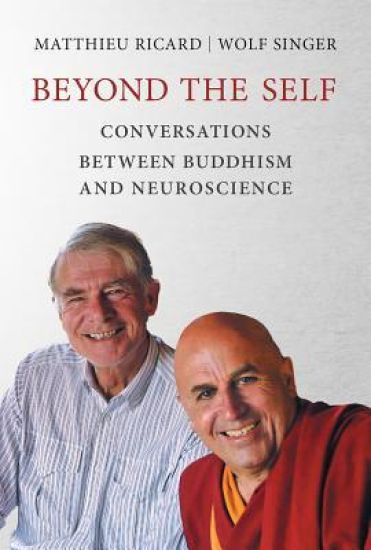
Converging and diverging views on the mind, the self, consciousness, the unconscious, free will, perception, meditation, and other topics.Buddhism shares with science the task of examining the mind empirically; it has pursued, for two millennia, direct investigation of the mind through penetrating introspection. Neuroscience, on the other hand, relies on third-person knowledge in the form of scientific observation. In this book, Matthieu Ricard, a Buddhist monk trained as a molecular biologist, and Wolf Singer, a distinguished neuroscientist—close friends, continuing an ongoing dialogue—offer their perspectives on the mind, the self, consciousness, the unconscious, free will, epistemology, meditation, and neuroplasticity. Ricard and Singer's wide-ranging conversation stages an enlightening and engaging encounter between Buddhism's wealth of experiential findings and neuroscience's abundance of experimental results. They discuss, among many other things, the difference between rumination and meditation (rumination is the scourge of meditation, but psychotherapy depends on it); the distinction between pure awareness and its contents; the Buddhist idea (or lack of one) of the unconscious and neuroscience's precise criteria for conscious and unconscious processes; and the commonalities between cognitive behavioral therapy and meditation. Their views diverge (Ricard asserts that the third-person approach will never encounter consciousness as a primary experience) and converge (Singer points out that the neuroscientific understanding of perception as reconstruction is very like the Buddhist all-discriminating wisdom) but both keep their vision trained on understanding fundamental aspects of human life.
Happiness: A Guide to Developing Life's Most Important Skill
In this groundbreaking book, Matthieu Ricard makes a passionate case for happiness as a goal that deserves as least as much energy as any other in our lives. Wealth? Fitness? Career success? How can we possibly place these above true and lasting well-being? Drawing from works of fiction and poetry, Western philosophy, Buddhist beliefs, scientific research, and personal experience, Ricard weaves an inspirational and forward-looking account of how we can begin to rethink our realities in a fast-moving modern world. With its revelatory lessons and exercises, Happiness is an eloquent and stimulating guide to a happier life.
Altruism: The Power of Compassion to Change Yourself and the World
The author of the international bestseller Happiness makes a passionate case for altruism -- and why we need it now more than ever. In Happiness, Matthieu Ricard demonstrated that true happiness is not tied to fleeting moments or sensations, but is an enduring state of soul rooted in mindfulness and compassion for others. Now he turns his lens from the personal to the global, with a rousing argument that altruism -- genuine concern for the well-being of others -- could be the saving grace of the 21st century. It is, he believes, the vital thread that can answer the main challenges of our time: the economy in the short term, life satisfaction in the mid-term, and environment in the long term. Ricard's message has been taken up by major economists and thinkers, including Dennis Snower, Amartya Sen, Joseph Stiglitz, and George Soros. Matthieu Ricard makes a robust and passionate case for cultivating altruistic love and compassion as the best means for simultaneously benefitting ourselves and our society. It's a fresh outlook on an ardent struggle -- and one that just might make the world a better place.
Altruism: The Power of Compassion to Change Yourself and the World
The author of the international bestseller Happiness makes a passionate case for altruism -- and why we need it now more than ever. In Happiness, Matthieu Ricard demonstrated that true happiness is not tied to fleeting moments or sensations, but is an enduring state of soul rooted in mindfulness and compassion for others. Now he turns his lens from the personal to the global, with a rousing argument that altruism -- genuine concern for the well-being of others -- could be the saving grace of the 21st century. It is, he believes, the vital thread that can answer the main challenges of our time: the economy in the short term, life satisfaction in the mid-term, and environment in the long term. Ricard's message has been taken up by major economists and thinkers, including Dennis Snower, Amartya Sen, Joseph Stiglitz, and George Soros. Matthieu Ricard makes a robust and passionate case for cultivating altruistic love and compassion as the best means for simultaneously benefitting ourselves and our society. It's a fresh outlook on an ardent struggle -- and one that just might make the world a better place.
Anti-Black Racism in Early Modern English Drama
This is the first book to deploy the methods and ensemble of questions from Afro-pessimism to engage and interrogate the methods of Early Modern English studies. Using contemporary Afro-pessimist theories to provide a foundation for structural analyses of race in the Early Modern Period, it engages the arguments for race as a fluid construction of human identity by addressing how race in Early Modern England functioned not only as a marker of human identity, but also as an a priori constituent of human subjectivity. Chapman argues that Blackness is the marker of social death that allows for constructions of human identity to become transmutable based on the impossibility of recognition and incorporation for Blackness into humanity. Using dramatic texts such as Othello, Titus Andronicus, and other Early Modern English plays both popular and lesser known, the book shifts the binary away from the currently accepted standard of white/non-white that defines "otherness" in the period and examines race in Early Modern England from the prospective of a non-black/black antagonism. The volume corrects the Afro-pessimist assumption that the Triangle Slave Trade caused a rupture between Blackness and humanity. By locating notions of Black inhumanity in England prior to chattel slavery, the book positions the Triangle Trade as a result of, rather than the cause of, Black inhumanity. It also challenges the common scholarly assumption that all varying types of human identity in Early Modern England were equally fluid by arguing that Blackness functioned as an immutable constant. Through the use of structural analysis, this volume works to simplify and demystify notions of race in Renaissance England by arguing that race is not only a marker of human identity, but a structural antagonism between those engaged in human civil society opposed to those who are socially dead. It will be an essential volume for those with interest in Renaissance Literature and Culture, Shakespeare, Contemporary Performance Theory, Black Studies, and Ethnic Studies.
Physical-Layer Security

Physical-Layer Security

Matthieu Bloch; João Barros

Cambridge University Press
2011
sidottu
This complete guide to physical-layer security presents the theoretical foundations, practical implementation, challenges and benefits of a groundbreaking new model for secure communication. Using a bottom-up approach from the link level all the way to end-to-end architectures, it provides essential practical tools that enable graduate students, industry professionals and researchers to build more secure systems by exploiting the noise inherent to communications channels. The book begins with a self-contained explanation of the information-theoretic limits of secure communications at the physical layer. It then goes on to develop practical coding schemes, building on the theoretical insights and enabling readers to understand the challenges and opportunities related to the design of physical layer security schemes. Finally, applications to multi-user communications and network coding are also included.
Solidarity without the State?

Solidarity without the State?

Matthieu Leimgruber

Cambridge University Press
2008
sidottu
This book presents the first comprehensive history of the interplay of public and private provision that made the Swiss 'three-pillar' pension system into a model for the World Bank and other pension reformers during the last two decades of the twentieth century. Through a study of business federations', private pension lobbyists' and insurance companies' archives, Matthieu Leimgruber charts the century-long battle waged over the boundaries of state and private pensions. He shows how a distinctive path towards social provision has laid the foundation for a pension fund industry rivalling that of the United States and the United Kingdom. Through this comparative approach Matthieu Leimgruber is also able to question current assumptions about the strict dichotomy between 'Anglo-Saxon' and 'continental' models of welfare provision. This study will appeal to scholars of twentieth-century European history, economic history, political economy and welfare economics.
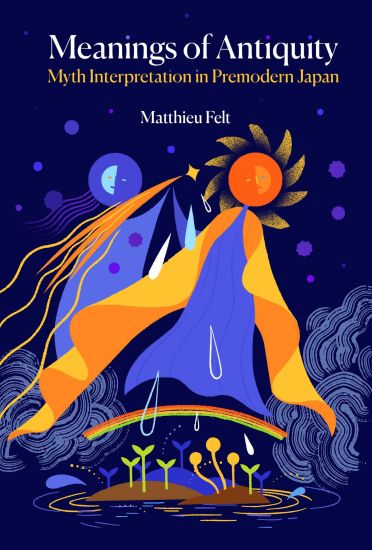
Meanings of Antiquity

Meanings of Antiquity

Matthieu Felt

HARVARD UNIVERSITY PRESS
2023
sidottu
Meanings of Antiquity is the first dedicated study of how the oldest Japanese myths, recorded in the eighth-century texts Kojiki and Nihon shoki, changed in meaning and significance between 800 and 1800 CE. Generations of Japanese scholars and students have turned to these two texts and their creation myths to understand what it means to be Japanese and where Japan fits into the world order.As the shape and scale of the world explained by these myths changed, these myths evolved in turn. Over the course of the millennium covered in this study, Japan transforms from the center of a proud empire to a millet seed at the edge of the Buddhist world, from the last vestige of China’s glorious Zhou Dynasty to an archipelago on a spherical globe. Analyzing historical records, poetry, fiction, religious writings, military epics, political treatises, and textual commentary, Matthieu Felt identifies the geographical, cosmological, epistemological, and semiotic changes that led to new adaptations of Japanese myths. Felt demonstrates that the meanings of Japanese antiquity and of Japan’s most ancient texts were—and are—a work in progress, a collective effort of writers and thinkers over the past 1,300 years.