Kirjojen hintavertailu. Mukana 11 342 296 kirjaa ja 12 kauppaa.

Kirjahaku

Etsi kirjoja tekijän nimen, kirjan nimen tai ISBN:n perusteella.

1000 tulosta hakusanalla Maurice Azurdia

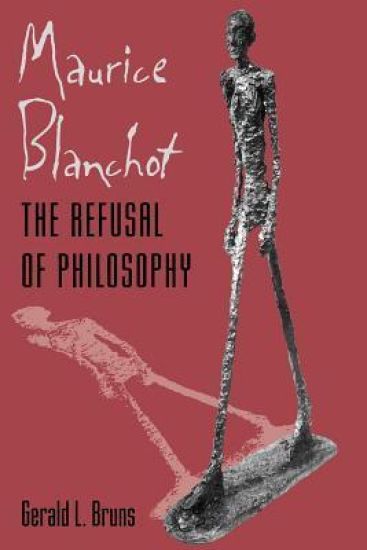
Maurice Blanchot:

Maurice Blanchot:

Gerald L. Bruns

Johns Hopkins University Press
2005
nidottu
As a novelist, essayist, critic, and theorist, Maurice Blanchot has earned tributes from authors as diverse as Jacques Derrida, Giles Deleuze, and Emmanuel Levinas. But their praise has told us little about what Blanchot's work actually says and why it has been so influential. In the first comprehensive study of this important French writer to appear in English, Gerald Bruns ties Blanchot's writings to each other and to the works of his contemporaries, including the poet Paul Celan. Blanchot belongs to the generation of French intellectuals who came of age during the 1930s, survived the Occupation, and flourished during the quarter century or so after World War II. He was one of the first French intellectuals to take a systematic interest in questions of language and meaning. His focus in the mid-1930s on extreme situations-death, madness, imprisonment, exile, revolution, catastrophe-anticipated the later interest of the existentialists. Like Nietzsche, Wittgenstein, and Adorno, Blanchot was a self-conscious writer of fragments, and he has given us one the most developed investigations that we have on the fragment as a kind of writing. In a series of close readings, Bruns addresses the philosophical and political questions that have surrounded Blanchot and his writings for decades. He describes what is creative in Blanchot's readings of Heidegger's controversial works and examines Blanchot's conception of poetry as an inquiry into the limits of philosophy, rationality, and power.
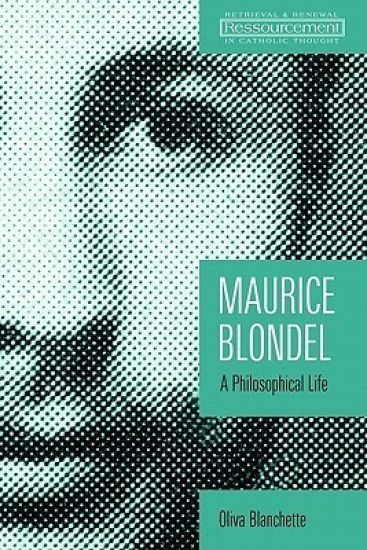
Maurice Blondel

Maurice Blondel

Oliva Blanchette

William B Eerdmans Publishing Co
2010
nidottu
French philosopher Maurice Blondel had a tremendous impact on both philosophy and religion over the first half of the twentieth century. He was at once a postmodern critical philosopher and a devout traditional Catholic, trying not only to reconcile these two seemingly disparate factors in his own mind, but also to prove to others that the two must go together. / In the first critical examination of the philosopher's life Oliva Blanchette tells the story of Blondel's stormy life confronting an Academy dismissive of religion and a Religion uncomfortable with rational philosophy. This book not only follows his biographical history, but also presents his systematic philosophy, from the beginning of his journey to the culmination found in Philosophical Exigencies of Christianity, the book for which he signed the publishing contract the day before he died. / Maurice Blondel is part of the Ressourcement: Retrieval and Renewal in Catholic Thought series, edited by David L. Schindler.
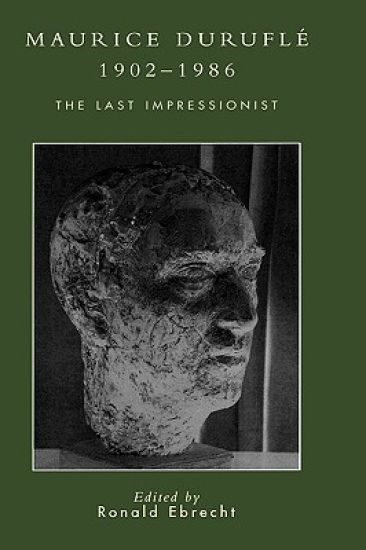
Maurice Duruflé, 1902-1986
Maurice Duruflé (1902-1986) is best known as composer of the hauntingly beautiful and moving Requiem of 1947, and as organist during his long tenure at the church of Saint-Etienne-du-Mont in Paris. He studied composition and organ with Tournemire, Vierne, Gigout, and Dukas among others, and became well known outside France through tours and conferences, often attended with his wife, the late Marie-Madeleine Chevalier. Ebrecht has brought together in this centenary tribute a fine collection of articles on Duruflé's life and work that will enthrall all those who have come under the spell of this great master of French Impressionism. About the contributors: Marie-Claire Alain the renowned French organist, recording artist, and teacher was one of Duruflés first harmony students at the Paris Conservatoire. James Frazier has studied liturgy and music at several universities, and was a Fulbright scholar in France, where he studied privately with Madame Duruflé. Maria Rubis Bauer concluded her doctoral dissertation on Duruflé at the University of Kansas. Jeffrey Reynolds is Associate Professor of Humanities and chair of the music department at the University of Alabama, Birmingham. Herndon Spillman's landmark recording of the complete works of Duruflé won him a Grand Prix du Disque in 1973. He is Professor of Music at Louisiana State University. Eliane Chevalier was the sister of Marie-Madeleine Duruflé, with whom she shared a passion for music. Ned Tipton is Director of Music of the American Cathedral in Paris.
Maurice's Strategikon

Maurice's Strategikon

University of Pennsylvania Press
2001
pokkari
As a veteran campaigner, the Byzantine emperor Maurice (582-602) compiled a unique and influential handbook intended for the field commander. In this first complete English translation, the Strategikon is an invaluable source not only for early Byzantine history but for the general history of the art of war. Describing in detail weaponry and armor, daily life on the march or in camp, clothing, food, medical care, military law, and titles of the Byzantine army of the seventh century, the Strategikon offers insights into the Byzantine military ethos. In language contemporary, down-to-earth, and practical, the text also provides important data for the historian, and even the ethnologist, including eyewitness accounts of the Persians, Slavs, Lombards, and Avars at the frontier of the Empire.
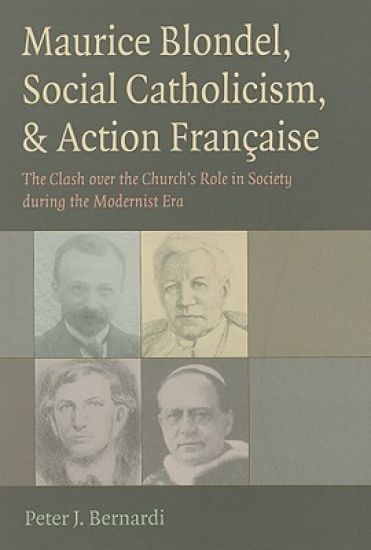
Maurice Blondel, Social Catholicism, and Action Francaise

Maurice Blondel, Social Catholicism, and Action Francaise

Peter J. Bernardi

The Catholic University of America Press
2008
sidottu
How does the Church realize its public mission? How do different theological and philosophical commitments influence the conception of the Church's role in the public square? This work casts light on contemporary arguments over social Catholicism and the believer's role in society by illuminating a similar dispute between French Catholics among the Modernist Crisis (1909-1914).In the first decades of the twentieth century French Catholics were sharply divided over what strategy the Church should adopt to re-Christianize society. This conflict of mentalities found expression in a polemical exchange between lay philosopher Maurice Blondel and Jesuit Pedro Descoqs that occurred at the height of the Modernist crisis. On the one hand, Descoqs offered a defense of a Catholic alliance with the proto-fascist, monarchist Action Francaise. On the other hand, Blondel defended the democratic, social Catholics against the charge of social modernism in his ""Testis"" essays. Blondel's trenchant analysis of the integralist mentality that he found in Action Francaise Catholics has been described as ""the most penetrating analysis of this phenomenon of Catholic integralism that...represents an ever recurrent temptation for militant Catholics. ""Peter J. Bernardi's study presents a thorough exposition and analysis of this significant controversy. While highly sensitive to historical context, Bernardi primarily highlights the philosophical and theological positions involved. He maintains throughout the book that political allegiances and orientations colored theological arguments and makes clear that the issues at stake then are still relevant in understanding ecclesial tensions today. As eminent historical theologian Joseph Komonchak notes in the foreword, ""the controversy analyzed and described addressed issues so basic in importance and so broad in implication that the work will also be read with profit by others outside of the historical guild.
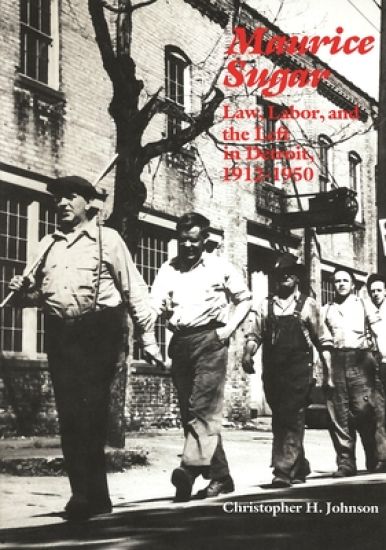
Maurice Sugar

Maurice Sugar

Christopher H. Johnson

Wayne State University Press
2018
nidottu
It was Maurice Sugar, labor activist and lawyer for the United Auto Workers, who played a key role in guiding the newly-formed union through the treacherous legal terrain obstructing its development in the 1930s. He orchestrated the injunction hearings on the Dodge Main strike and defended the legality of the sit-down tactic. As the UAW's General Council, he wrote the union's constitution in 1939, a model of democratic thinking. Sugar worked with George Addes, UAW Secretary-Treasurer, to nurture rank-and-file power. A founder of the National Lawyers' Guild, Sugar also served as a member of Detroit's Common Council at the head of a UAW ""labor"" ticket.By 1947, Sugar was embroiled in a struggle within the UAW that he feared would destroy the open structures he had helped to build. He found himself in opposition to Walter Reuther's bid to run the union. A long-time socialist, Sugar fell victim to mounting Cold War hysteria. When Reuther assumed control of the UAW, Sugar was summarily dismissed.Christopher Johnson chronicles the life of Maurice Sugar, from his roots in Michigan's Upper Peninsula, through his resistance with Eugene V. Debs to World War I, and on to the struggles of the early 1930s to bring the union message to Detroit. Firmly grounded on the historiography of the UAW, Johnson shows the importance of Sugar and the Left in laying the foundation for unionizing the auto industry in the pre-UAW days. He documents the work of the Left in building a Black-labor coalition in Detroit, the importance of anti-Communism in Reuther's rise to power, and the diminution of union democracy in the UAW brought about by the Cold War. Maurice Sugar represents a force in American life that bears recalling in these barren years of plant closings.
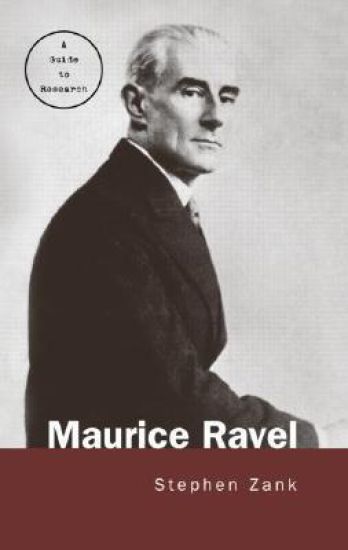
Maurice Ravel

Maurice Ravel

Stephen Zank

CRC Press Inc
2004
sidottu
Maurice Ravel: A Research and Information Guide is an annotated bibliography concerning both the nature of primary sources related to the composer and the scope and significance of the secondary sources which deal with him, his compositions, and his influence as a composer and theorist.
Maurice Samuel

Maurice Samuel

Alan T. Levenson

THE UNIVERSITY OF ALABAMA PRESS
2022
sidottu
An intellectual biography that reassesses one of the premier Jewish humanists of the mid-twentieth centuryIn Maurice Samuel: Life and Letters of a Secular Jewish Contrarian Alan T. Levenson recaptures the life, works, and milieu of the Romanian-born, English-educated, American belletrist Maurice Samuel. A diaspora intellectual—or a rooted cosmopolitan, as Levenson describes him—Samuel made an indelible mark on many features of contemporary Jewish thought and culture. A generalist in an age of experts, an independent scholar in an age of rabbis and professors, Samuel was one of the most productive and visible members of the group dubbed “The Other New York Jewish Intellectuals.” His fame as a public intellectual and popular speaker were well warranted: no mere popularizer, Samuel contributed significantly to four seemingly unrelated but critical areas of modern Jewish thought. Samuel is characterized by some as principally a Zionist, by others as an accomplished translator and many Americans’ first entrÉe into the world of Yiddish literature, by still others as a polemicist and campaigner against anti-Semitism, and finally as a media-savvy Biblical critic, essayist, and radio personality. But he was all of these things, since Samuel succeeded in an era when it was possible to be a public intellectual without being an expert. Drawing on Samuel’s vast literary opus, as well as previously unexplored archival material from three continents, this study writes Samuel back into the history of mid-twentieth century American letters. Levenson argues that Samuel’s varied and substantive contributions demand reconsideration of our assumptions about the means and ends of cultural transmission, and merit him a place as one of twentieth century American Jewry’s most significant cultural and intellectual voices.
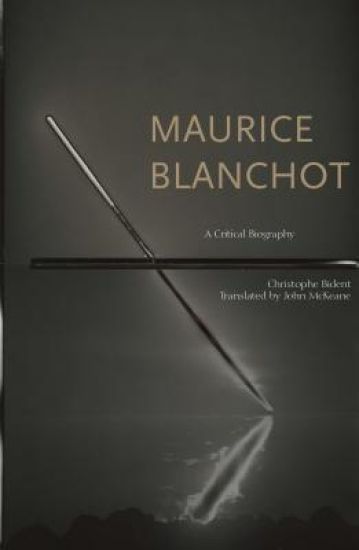
Maurice Blanchot

Maurice Blanchot

Christophe Bident

Fordham University Press
2018
pokkari
Maurice Blanchot (1907–2003) was one of the most important writers of the twentieth century. His novels, shorter narratives, literary criticism, and fragmentary texts exercised enormous influence over several generations of writers, artists, and philosophers. In works such as Thomas the Obscure, The Instant of my Death, The Writing of the Disaster, The Unavowable Community, Blanchot produced some of the most incisive statements of what it meant to experience the traumas and turmoils of the twentieth century. As a journalist and political activist, Blanchot had a public side that coexisted uneasily with an inclination to secrecy, a refusal of interviews and photographs, and a reputation for mysteriousness and seclusion. These public and private Blanchots came together in complicated ways at some of the twentieth century's most momentous occasions. He was among the public intellectuals participating in the May '68 revolution in Paris and helped organize opposition to the Algerian war. During World War II, he found himself moments away from being executed by the Nazis. More controversially, he had been active in far-right circles in the '30s. Now translated into English, Christophe Bident's magisterial, scrupulous, much-praised critical biography provides the first full-length account of Blanchot's itinerary, drawing on unpublished letters and on interviews with the writer's close friends. But the book is both a biography and far more. Beyond filling out a life famous for its obscurity, Bident's book will transform the way readers of Blanchot respond to this major intellectual figure by offering a genealogy of his thought, a distinctive trajectory that is at once imaginative and speculative, at once aligned with literary modernity and a close companion and friend to philosophy. The book is also a historical work, unpacking the 'transformation of convictions' of an author who moved from the far-right in the 1930s to the far-left in the 1950s and after. Bident's extensive archival research explores the complex ways that Blanchot's work enters into engagement with his contemporaries, making the book also a portrait of the circles in which he moved, which included friends such as Georges Bataille, Marguerite Duras, Emmanuel Levinas, Michel Foucault, and Jacques Derrida. Finally, the book traces the strong links between Blanchot's life and an oeuvre that nonetheless aspires to anonymity. Ultimately, Bident shows how Blanchot's life itself becomes an oeuvre—becomes a literature that bears the traces of that life secretly. In its even-handed appraisal, Bident's sophisticated reading of Blanchot's life together with his work offers a much-needed corrective to the range of cruder accounts, whether from Blanchot's detractors or from his champions, of a life too easily sensationalized. This definitive biography of a seminal figure of our time will be essential reading for anyone concerned with twentieth-century literature, thought, culture, and politics.
Maurice Blanchot

Maurice Blanchot

Christophe Bident

FORDHAM UNIVERSITY PRESS
2018
sidottu
Maurice Blanchot (1907–2003) was one of the most important writers of the twentieth century. His novels, shorter narratives, literary criticism, and fragmentary texts exercised enormous influence over several generations of writers, artists, and philosophers. In works such as Thomas the Obscure, The Instant of my Death, The Writing of the Disaster, The Unavowable Community, Blanchot produced some of the most incisive statements of what it meant to experience the traumas and turmoils of the twentieth century. As a journalist and political activist, Blanchot had a public side that coexisted uneasily with an inclination to secrecy, a refusal of interviews and photographs, and a reputation for mysteriousness and seclusion. These public and private Blanchots came together in complicated ways at some of the twentieth century's most momentous occasions. He was among the public intellectuals participating in the May '68 revolution in Paris and helped organize opposition to the Algerian war. During World War II, he found himself moments away from being executed by the Nazis. More controversially, he had been active in far-right circles in the '30s. Now translated into English, Christophe Bident's magisterial, scrupulous, much-praised critical biography provides the first full-length account of Blanchot's itinerary, drawing on unpublished letters and on interviews with the writer's close friends. But the book is both a biography and far more. Beyond filling out a life famous for its obscurity, Bident's book will transform the way readers of Blanchot respond to this major intellectual figure by offering a genealogy of his thought, a distinctive trajectory that is at once imaginative and speculative, at once aligned with literary modernity and a close companion and friend to philosophy. The book is also a historical work, unpacking the 'transformation of convictions' of an author who moved from the far-right in the 1930s to the far-left in the 1950s and after. Bident's extensive archival research explores the complex ways that Blanchot's work enters into engagement with his contemporaries, making the book also a portrait of the circles in which he moved, which included friends such as Georges Bataille, Marguerite Duras, Emmanuel Levinas, Michel Foucault, and Jacques Derrida. Finally, the book traces the strong links between Blanchot's life and an oeuvre that nonetheless aspires to anonymity. Ultimately, Bident shows how Blanchot's life itself becomes an oeuvre—becomes a literature that bears the traces of that life secretly. In its even-handed appraisal, Bident's sophisticated reading of Blanchot's life together with his work offers a much-needed corrective to the range of cruder accounts, whether from Blanchot's detractors or from his champions, of a life too easily sensationalized. This definitive biography of a seminal figure of our time will be essential reading for anyone concerned with twentieth-century literature, thought, culture, and politics.
Maurice Baring

Maurice Baring

Ethel 1858-1944 Smyth

Hassell Street Press
2021
sidottu
This work has been selected by scholars as being culturally important and is part of the knowledge base of civilization as we know it.This work is in the public domain in the United States of America, and possibly other nations. Within the United States, you may freely copy and distribute this work, as no entity (individual or corporate) has a copyright on the body of the work.Scholars believe, and we concur, that this work is important enough to be preserved, reproduced, and made generally available to the public. To ensure a quality reading experience, this work has been proofread and republished using a format that seamlessly blends the original graphical elements with text in an easy-to-read typeface.We appreciate your support of the preservation process, and thank you for being an important part of keeping this knowledge alive and relevant.
Maurice Baring

Maurice Baring

Ethel 1858-1944 Smyth

Hassell Street Press
2021
nidottu
This work has been selected by scholars as being culturally important and is part of the knowledge base of civilization as we know it.This work is in the public domain in the United States of America, and possibly other nations. Within the United States, you may freely copy and distribute this work, as no entity (individual or corporate) has a copyright on the body of the work.Scholars believe, and we concur, that this work is important enough to be preserved, reproduced, and made generally available to the public. To ensure a quality reading experience, this work has been proofread and republished using a format that seamlessly blends the original graphical elements with text in an easy-to-read typeface.We appreciate your support of the preservation process, and thank you for being an important part of keeping this knowledge alive and relevant.
Maurice Baring: a Postscript, With Some Letters and Verse

Maurice Baring: a Postscript, With Some Letters and Verse

Laura 1892-1965 Lister

Hassell Street Press
2021
sidottu
This work has been selected by scholars as being culturally important and is part of the knowledge base of civilization as we know it.This work is in the public domain in the United States of America, and possibly other nations. Within the United States, you may freely copy and distribute this work, as no entity (individual or corporate) has a copyright on the body of the work.Scholars believe, and we concur, that this work is important enough to be preserved, reproduced, and made generally available to the public. To ensure a quality reading experience, this work has been proofread and republished using a format that seamlessly blends the original graphical elements with text in an easy-to-read typeface.We appreciate your support of the preservation process, and thank you for being an important part of keeping this knowledge alive and relevant.