
Kirjahaku
Etsi kirjoja tekijän nimen, kirjan nimen tai ISBN:n perusteella.
1000 tulosta hakusanalla Maurice Jackson
Maurice Hewlett, Being a Critical Review of His Prose and Poetry
Milton Bronner
Trieste Publishing
2018
nidottu
Maurice and Berghetta; Or, the Priest of Rahery. a Tale
William Parnell
Trieste Publishing
2018
nidottu

Much of the music of Maurice Ravel (1875-1937) is among the most accessible of any written in the last hundred years; the man, however, was notoriously difficult to get to know. In Maurice Ravel, Gerald Larner aims to trace the development of the composer's personality not only through events in his life and in the society around him but also through his music, which is more revealing in this respect than is generally believed. This beautifully crafted book offers many fresh insights into the life and work of this enigmatic composer.
One of the most gifted directors of the post New Wave, Maurice Pialat is frequently compared to such legendary filmmakers as Jean Renoir and Robert Bresson. A quintessentially realist filmmaker, who, like Bresson, was also trained as a painter, Pialat’s particular form of realism influenced an entire generation of young filmmakers in the 1990s. This volume is the first book-length study of Pialat’s cinema in English. It provides an introduction to a complex and difficult director, who saw himself as a marginal and marginalised filmmaker, but whose films are deeply rooted in French society and culture. Pialat was long considered the only major filmmaker to portray ‘la France profonde’, the heart of France - the people who, as he put it, ‘take the subway’. Taken as a whole, Pialat’s work can be seen both as an oblique autobiography and the portrait of a fundamental institution - the family - over several generations.

This study is intended as the first biography of Maurice Paléologue, an important figure in the diplomatic history of the Third French Republic. He has never received adequate recognition or biographical attention for his role in the events surrounding the immediate outbreak of World War I and French policy towards Russia and the Balkans in 1920. This book brings to the surface the possibility of a powerful behind-the-scenes influence exerted by Paléologue to initiate and/or execute policy decisions of a controversial nature. It examines documents from the British Foreign Office and the French Foreign Ministry that were used extensively from 1907 to 1917 when Paléologue emerged from the inner depths of the departmental apparatus of the Quai d'Orsay. The material is important in illuminating and analyzing two virtually unknown chapters in Paléologue's career: his Ambassadorship to Bulgaria and his efforts to shape a comprehensive war aims agreement while at St. Petersburg. Extensive use has been made of Paléologue's varied writings, as well. Because Paléologue's thoughts and actions were consistent with one another, an analysis of the writers' ideas yields a fuller understanding of the diplomat's motives. Such a comparison between ideas and their realization is of vital significance in explaining why Paléologue engaged in intrigue, obfuscation, and insubordination in the various diplomatic posts he held. Through this analysis the reader is provided with a cohesive theory and interpretation of Paléologue's life.

Maurice Bebb Goldenrod and Red Admiral Boxed Small Notecards
Pomegranate Communications Inc,US
2019
muu

Maurice Tourneur (1876-1961), the French and American director, actor, and theatrical manager, is the focus of this work. He began in France during the years 1912-1914, and then spent 1914-1926 in New Jersey and Hollywood, directing more than 50 films, using his French interests and talents to help shape the industry, and bringing "stylization" to the screen.
As a novelist, essayist, critic, and theorist, Maurice Blanchot has earned tributes from authors as diverse as Jacques Derrida, Giles Deleuze, and Emmanuel Levinas. But their praise has told us little about what Blanchot's work actually says and why it has been so influential. In the first comprehensive study of this important French writer to appear in English, Gerald Bruns ties Blanchot's writings to each other and to the works of his contemporaries, including the poet Paul Celan. Blanchot belongs to the generation of French intellectuals who came of age during the 1930s, survived the Occupation, and flourished during the quarter century or so after World War II. He was one of the first French intellectuals to take a systematic interest in questions of language and meaning. His focus in the mid-1930s on extreme situations-death, madness, imprisonment, exile, revolution, catastrophe-anticipated the later interest of the existentialists. Like Nietzsche, Wittgenstein, and Adorno, Blanchot was a self-conscious writer of fragments, and he has given us one the most developed investigations that we have on the fragment as a kind of writing. In a series of close readings, Bruns addresses the philosophical and political questions that have surrounded Blanchot and his writings for decades. He describes what is creative in Blanchot's readings of Heidegger's controversial works and examines Blanchot's conception of poetry as an inquiry into the limits of philosophy, rationality, and power.
French philosopher Maurice Blondel had a tremendous impact on both philosophy and religion over the first half of the twentieth century. He was at once a postmodern critical philosopher and a devout traditional Catholic, trying not only to reconcile these two seemingly disparate factors in his own mind, but also to prove to others that the two must go together. / In the first critical examination of the philosopher's life Oliva Blanchette tells the story of Blondel's stormy life confronting an Academy dismissive of religion and a Religion uncomfortable with rational philosophy. This book not only follows his biographical history, but also presents his systematic philosophy, from the beginning of his journey to the culmination found in Philosophical Exigencies of Christianity, the book for which he signed the publishing contract the day before he died. / Maurice Blondel is part of the Ressourcement: Retrieval and Renewal in Catholic Thought series, edited by David L. Schindler.
A concordance of Delie by the Renaissance writer Maurice Sceve that will be crucial in examining the structure and meaning of the work.
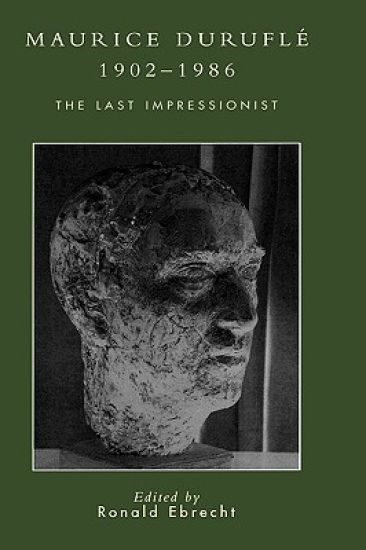
Maurice Duruflé, 1902-1986
Scarecrow Press
2002
sidottu
Maurice Duruflé (1902-1986) is best known as composer of the hauntingly beautiful and moving Requiem of 1947, and as organist during his long tenure at the church of Saint-Etienne-du-Mont in Paris. He studied composition and organ with Tournemire, Vierne, Gigout, and Dukas among others, and became well known outside France through tours and conferences, often attended with his wife, the late Marie-Madeleine Chevalier. Ebrecht has brought together in this centenary tribute a fine collection of articles on Duruflé's life and work that will enthrall all those who have come under the spell of this great master of French Impressionism. About the contributors: Marie-Claire Alain the renowned French organist, recording artist, and teacher was one of Duruflés first harmony students at the Paris Conservatoire. James Frazier has studied liturgy and music at several universities, and was a Fulbright scholar in France, where he studied privately with Madame Duruflé. Maria Rubis Bauer concluded her doctoral dissertation on Duruflé at the University of Kansas. Jeffrey Reynolds is Associate Professor of Humanities and chair of the music department at the University of Alabama, Birmingham. Herndon Spillman's landmark recording of the complete works of Duruflé won him a Grand Prix du Disque in 1973. He is Professor of Music at Louisiana State University. Eliane Chevalier was the sister of Marie-Madeleine Duruflé, with whom she shared a passion for music. Ned Tipton is Director of Music of the American Cathedral in Paris.

Maurice's Strategikon
University of Pennsylvania Press
2001
pokkari
As a veteran campaigner, the Byzantine emperor Maurice (582-602) compiled a unique and influential handbook intended for the field commander. In this first complete English translation, the Strategikon is an invaluable source not only for early Byzantine history but for the general history of the art of war. Describing in detail weaponry and armor, daily life on the march or in camp, clothing, food, medical care, military law, and titles of the Byzantine army of the seventh century, the Strategikon offers insights into the Byzantine military ethos. In language contemporary, down-to-earth, and practical, the text also provides important data for the historian, and even the ethnologist, including eyewitness accounts of the Persians, Slavs, Lombards, and Avars at the frontier of the Empire.
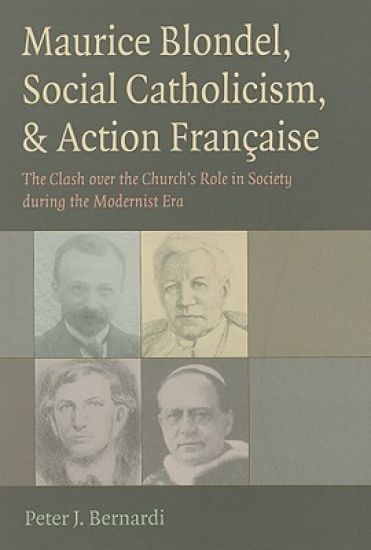
Maurice Blondel, Social Catholicism, and Action Francaise
Peter J. Bernardi
The Catholic University of America Press
2008
sidottu
How does the Church realize its public mission? How do different theological and philosophical commitments influence the conception of the Church's role in the public square? This work casts light on contemporary arguments over social Catholicism and the believer's role in society by illuminating a similar dispute between French Catholics among the Modernist Crisis (1909-1914).In the first decades of the twentieth century French Catholics were sharply divided over what strategy the Church should adopt to re-Christianize society. This conflict of mentalities found expression in a polemical exchange between lay philosopher Maurice Blondel and Jesuit Pedro Descoqs that occurred at the height of the Modernist crisis. On the one hand, Descoqs offered a defense of a Catholic alliance with the proto-fascist, monarchist Action Francaise. On the other hand, Blondel defended the democratic, social Catholics against the charge of social modernism in his ""Testis"" essays. Blondel's trenchant analysis of the integralist mentality that he found in Action Francaise Catholics has been described as ""the most penetrating analysis of this phenomenon of Catholic integralism that...represents an ever recurrent temptation for militant Catholics. ""Peter J. Bernardi's study presents a thorough exposition and analysis of this significant controversy. While highly sensitive to historical context, Bernardi primarily highlights the philosophical and theological positions involved. He maintains throughout the book that political allegiances and orientations colored theological arguments and makes clear that the issues at stake then are still relevant in understanding ecclesial tensions today. As eminent historical theologian Joseph Komonchak notes in the foreword, ""the controversy analyzed and described addressed issues so basic in importance and so broad in implication that the work will also be read with profit by others outside of the historical guild.