Kirjojen hintavertailu. Mukana 11 627 469 kirjaa ja 12 kauppaa.

Kirjahaku

Etsi kirjoja tekijän nimen, kirjan nimen tai ISBN:n perusteella.

1000 tulosta hakusanalla Michael Cooper

Mendelssohn's Italian Symphony

Mendelssohn's Italian Symphony

Cooper John Michael

Oxford University Press
2003
sidottu
Mendelssohn's posthumously published Symphony in A Major has become one of the staples of the nineteenth-century symphonic canon, and is often considered emblematic of Mendelssohn's stylistic strengths and weaknesses - yet the version by which the work has always been known is the first complete version (1833), which was rejected by the composer and rewritten by him the following year. This study documents the Symphony's complicated genesis, examines the reception history of that version, and explores the far-reaching changes incorporated in the 1834 reworking. The book concludes with chapters about the validity and implications of the traditional 'Italian' epithet and the ways in which the music of the two principal versions can shape our understanding of Mendelssohn, his music, and his significance as a cultural figure in the musical culture of the nineteenth century.
Orbit: The Seventies: David Bowie, Alice Cooper, Keith Richards and Michael Jackson
Defining 70s music is a challenge. Spinning out of the Motown sound, funk, soul, and R & B influenced the burgeoning soft and hard rock genre. Smooth jazz replaced the big band sound popular since World War II. Protest songs from the 60s continued to fight "the man" and "his" war in Vietnam. Disco, the feel-good, dance until you drop, pop culture phenomenon, dominated the second half of the decade. It was the golden age of vinyl, and the sexy party music wore out the needles on record players everywhere. Showcasing the musicians who dominated the Billboard Hot 100, Orbit: The Seventies features the biographies of David Bowie, Alice Cooper, Keith Richards, Michael Jackson, and many more. With a striking cover from famed comic book artist Joe Phillips, this collected edition revisits the "Me Decade" through the eyes of the artists who shaped it. This series has been featured in Rolling Stone magazine.
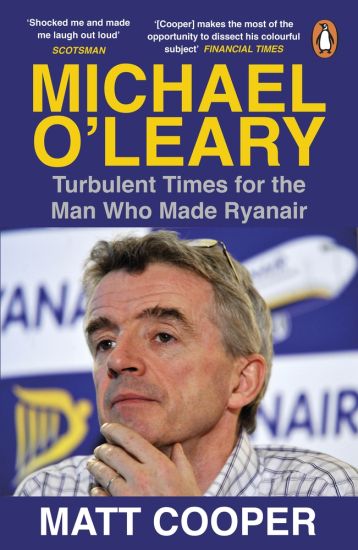
Michael O'Leary

Michael O'Leary

Matt Cooper

Penguin Books Ltd
2019
pokkari
'In a world of colourless corporate leaders, Ryanair's aggressive, mouthy chief executive provides catnip for journalists. Cooper, an award-winning Irish writer and reporter, makes the most of the opportunity to dissect his colourful subject' Book of the Month, The Financial Times Michael O'Leary lifts the veil on the wildly successful and wildly controversial Ryanair CEO. Based on extensive research - including with close associates of O'Leary - the book examines O'Leary's personality, beliefs and obsessions and describes how these have moulded the business he runs. Written by a multi-award-winning journalist and broadcaster, with a thirty-year career covering business and current affairs, it is a fascinating insight into the business behind the man, and the man behind the business.'Fascinating book ... very comprehensive' Eamon Dunphy, The Stand'An indispensable guide for anyone who wants to understand not just where Michael O'Leary and Ryanair are coming from, but where they are going' Sunday Business Post'A frequently enlightening unauthorised biography ... entertaining' Irish Independent
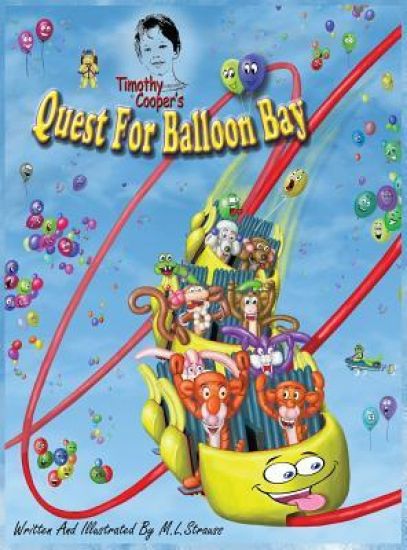
Timothy Cooper's Quest For Balloon Bay

Timothy Cooper's Quest For Balloon Bay

Michael L Strauss

Michael L. Strauss
2018
sidottu
Experience the power of imagination as it unfolds right in front of your eyes. Come with us as we journey into Timothy Copper's extraordinary adventures, where he desperately seeks to save his balloon-animal friend. In this colorful land of Balloon Bay, all the characters magically come to life.Learn where balloons really go when they are free to roam the skies. Find out their true dreamland destination.Discover how 8-year old Timmy unlocks the big magical gate of his imagination. Travel with him as he discovers clues on how to seek out a mystical talented Professor. Enjoy the incredible friends Timmy makes during his quest and smile at the wonders in this amazing carnival village. Let these whimsical illustrations help guide you as your children lose themselves' in this breathtaking land of funny, colorful balloon-animal characters. At Balloon Bay there is only fun, excitement and laughter. This tale of magical dreams will leave your child wanting to read their favorite chapters over and over.This story is devided into seven chapters. Average reading times are reported on table of conents page.
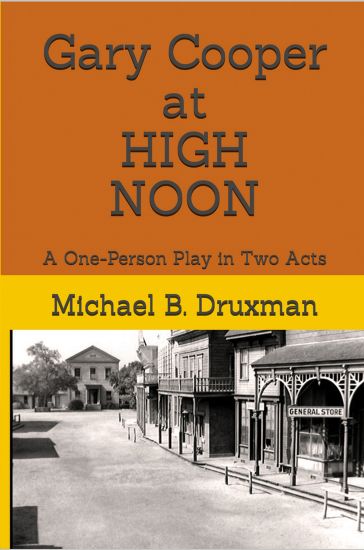
Gary Cooper at HIGH NOON

Gary Cooper at HIGH NOON

Michael B Druxman

Independently Published
2019
pokkari
Gary Cooper was a Hollywood icon whose career spanned over thirty-five years. Many of his films, including MR. DEEDS GOES TO TOWN, SERGEANT YORK, THE PRIDE OF THE YANKEES and HIGH NOON, are still revered by audiences and critics well over half a century after his death. On screen, "Coop" may have been America's staunch "hero," but in private life, he was anything but that. A man of indecision, he enjoyed torrid romances with the likes of Clara Bow, Lupe Velez and Ingrid Bergman, as well as a three-year relationship with actress Patricia Neal, which almost brought an end to his marriage. Michael B. Druxman's GARY COOPER AT HIGH NOON finds the 50-year-old actor at a critical point in his life. Dealing with health issues and no longer a major box-office draw, he has accepted the role in HIGH NOON at a fraction of his usual fee, and now, as he sits in his dressing room, he ponders his deteriorating bond with Patricia Neal, as well as what to do about his friend, Carl Foreman, the screenwriter of HIGH NOON who is about to be blacklisted. Gary Cooper has reached a point in his life where he must make a life-changing choice.
Strategic Cooperation

Strategic Cooperation

Michael O. Slobodchikoff

Lexington Books
2013
sidottu
Power inequalities and mistrust have characterized many interstate relationships. Yet most international relations theories do not take into account power and mistrust when explaining cooperation. While some scholars argue that power relations inhibit cooperation between states, other scholars expect interstate cooperation regardless of the power relations and level of trust. Strategic Cooperation: Overcoming the Barriers of Global Anarchy argues that although states benefit from cooperation, they are also wary of the power relations between states, making cooperation difficult. Successful and cooperative bilateral relationships are formed between strong and weak states that are power asymmetric and have mistrust of one another, but they are built in such as way as to overcome the problem of power asymmetry and mistrust. This book answers how and why states that are in power asymmetry and have mistrust of one another are able to build a cooperative bilateral relationship. It argues that states forge a relationship due to strategic needs such as economic or security needs. Slobodchikoff has developed a database composed of the whole population of bilateral treaties between Russia and each of the former Soviet republics, and examines all of these bilateral relationships. He finds that Russia indeed forged relationships with the former republics based on its strategic interests. However, despite Russia's strategic interests, it had to build a bilateral relationship that would address the issues of mistrust and power asymmetry between the states. To achieve this, Russia and the former Soviet republics created treaty networks, which served to legitimize as well as legalize the independent status of each of the former republics while also increasing the cost to Russia of violating any of the treaties. This book argues that strong treaty networks account for a more cooperative relationship between states, allowing both states to cooperate by alleviating the problems of mistrust and power asymmetry.
Strategic Cooperation

Strategic Cooperation

Michael O. Slobodchikoff

Lexington Books
2015
nidottu
Power inequalities and mistrust have characterized many interstate relationships. Yet most international relations theories do not take into account power and mistrust when explaining cooperation. While some scholars argue that power relations inhibit cooperation between states, other scholars expect interstate cooperation regardless of the power relations and level of trust. Strategic Cooperation: Overcoming the Barriers of Global Anarchy argues that although states benefit from cooperation, they are also wary of the power relations between states, making cooperation difficult. Successful and cooperative bilateral relationships are formed between strong and weak states that are power asymmetric and have mistrust of one another, but they are built in such as way as to overcome the problem of power asymmetry and mistrust. This book answers how and why states that are in power asymmetry and have mistrust of one another are able to build a cooperative bilateral relationship. It argues that states forge a relationship due to strategic needs such as economic or security needs. Slobodchikoff has developed a database composed of the whole population of bilateral treaties between Russia and each of the former Soviet republics, and examines all of these bilateral relationships. He finds that Russia indeed forged relationships with the former republics based on its strategic interests. However, despite Russia's strategic interests, it had to build a bilateral relationship that would address the issues of mistrust and power asymmetry between the states. To achieve this, Russia and the former Soviet republics created treaty networks, which served to legitimize as well as legalize the independent status of each of the former republics while also increasing the cost to Russia of violating any of the treaties. This book argues that strong treaty networks account for a more cooperative relationship between states, allowing both states to cooperate by alleviating the problems of mistrust and power asymmetry.
Security Cooperation in a Strategic Competition

Security Cooperation in a Strategic Competition

Michael J Mazarr; Nathan Beauchamp-Mustafaga; Jonah Blank; Samuel Charap; Michael S Chase; Beth Grill; Derek Grossman; Dara Massicot; Jennifer D P Moroney; Lyle J Morris; Alexander Noyes; Stephanie Pezard; Ashley L Rhoades; Alice Shih; Mark Stalczynski; Melissa Shostak; David E Thaler; Dori Walker

RAND Corporation
2022
pokkari
In this study, RAND researchers examined the current role of security cooperation efforts as a tool in the emerging strategic competition among the United States, Russia, and China. In particular, they sought to identify how, where, and to what degree the three major competitors?plus Australia, Japan, India, and several countries in Europe?are using security cooperation.
Orbit: Alice Cooper

Orbit: Alice Cooper

Michael Frizell

TidalWave Productions
2017
sidottu
Alice Cooper is a man, a band, and an idea that took on a life of its own, a voice for shock and glitter rockers whose influence created stars like Marilyn Manson and KISS. Behind the paint, the boa constrictors, and the staged executions is a man whose creative energies gave rise to a legend. Half truth, half fiction, Alice Cooper defines fame.
Why We Cooperate

Why We Cooperate

Michael Tomasello

MIT Press
2009
sidottu
Understanding cooperation as a distinctly human combination of innate and learned behavior.Drop something in front of a two-year-old, and she's likely to pick it up for you. This is not a learned behavior, psychologist Michael Tomasello argues. Through observations of young children in experiments he himself has designed, Tomasello shows that children are naturally-and uniquely-cooperative. Put through similar experiments, for example, apes demonstrate the ability to work together and share, but choose not to. As children grow, their almost reflexive desire to help-without expectation of reward-becomes shaped by culture. They become more aware of being a member of a group. Groups convey mutual expectations, and thus may either encourage or discourage altruism and collaboration. Either way, cooperation emerges as a distinctly human combination of innate and learned behavior. In Why We Cooperate, Tomasello's studies of young children and great apes help identify the underlying psychological processes that very likely supported humans' earliest forms of complex collaboration and, ultimately, our unique forms of cultural organization, from the evolution of tolerance and trust to the creation of such group-level structures as cultural norms and institutions. Scholars Carol Dweck, Joan Silk, Brian Skyrms, and Elizabeth Spelke respond to Tomasello's findings and explore the implications.
Cooperative Phenomena in Jahn—Teller Crystals

Cooperative Phenomena in Jahn—Teller Crystals

Michael D. Kaplan; Benjamin G. Vekhter

Kluwer Academic/Plenum Publishers
1995
sidottu
This book by Kaplan and Vekhter brings together the molecular world of the chemist with the condensed matter world of the physicist. Prior to the collapse of the Soviet Union, chemists in the West devoted lit­ to relationships between molecular electronic structure and tle attention solid-state vibronic phenomena. Treating quantum mechanical problems wherein the adiabatic Born-Oppenheimer approximation fails was done by "brute force. " With bigger and better computers available in the West, molecular orbital calculations were done on observed and conceived static structures with little concern for any cooperativity of vibrational behavior that might connect these states. While it had long been understood in the West that situations do occur in which different static structures are found for molecules that have identical or nearly identical electronic structures, little attention had been paid to understanding the vibrational states that could connect such structures. It was easier to calculate the electronic structure observed with several possible distortions than to focus on ways to couple electronic and vibrational behavior. In the former Soviet Union, computational power was not as acces­ sible as in the West. Much greater attention, therefore, was devoted to conserving computational time by considering fundamental ways to han­ dle the vibrational connectivity between degenerate or nearly degenerate electronic states.