Kirjojen hintavertailu. Mukana 11 244 527 kirjaa ja 12 kauppaa.

Kirjahaku

Etsi kirjoja tekijän nimen, kirjan nimen tai ISBN:n perusteella.

1000 tulosta hakusanalla Michael D Butler

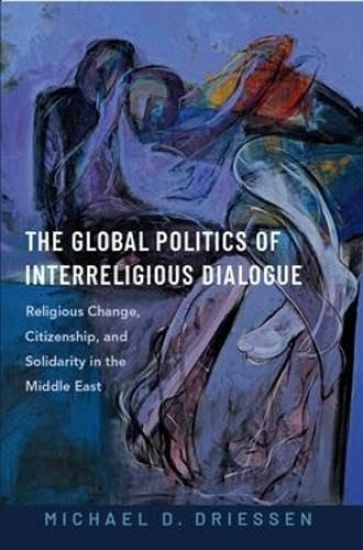
The Global Politics of Interreligious Dialogue

The Global Politics of Interreligious Dialogue

Michael D. Driessen

OXFORD UNIVERSITY PRESS INC
2025
nidottu
Over the last thirty years, governments across the globe have formalized new relationships with religious communities through their domestic and foreign policies and have variously sought to manage, support, marginalize, and co-opt religious forces through them. Many scholars view these policies as evidence of the "return of religion" to global politics although there is little consensus about the exact meaning, shape, or future of this political turn. In The Global Politics of Interreligious Dialogue, Michael D. Driessen examines the growth of state-sponsored interreligious dialogue initiatives in the Middle East and their use as a policy instrument for engaging with religious communities and ideas. Using a novel theoretical framework and drawing on five years of ethnographic fieldwork, Driessen explores both the history of interreligious dialogue and the evolution of theological approaches to religious pluralism in the traditions of Roman Catholicism and Sunni Islam. He analyzes state-centric accounts of interreligious dialogue and conceptualizes new ideas and practices of citizenship, religious pluralism, and social solidarity that characterize dialogue initiatives in the region. To make his case, Driessen presents four studies of dialogue in the Middle East--the Focolare Community in Algeria, the Adyan Foundation in Lebanon, KAICIID of Saudi Arabia, and DICID of Qatar--and highlights key interreligious dialogue declarations produced in the broader Middle East over the last two decades. Compelling and nuanced, The Global Politics of Interreligious Dialogue illustrates how religion operates in contemporary global politics, offering important lessons about the development of alternative models of democracy, citizenship, and modernity.

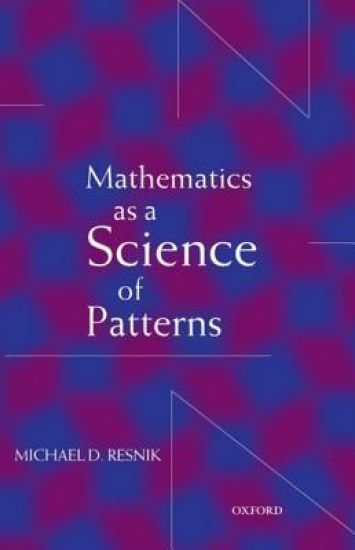
Mathematics as a Science of Patterns

Mathematics as a Science of Patterns

Michael D. Resnik

Clarendon Press
1997
sidottu
Mathematics as a Science of Patterns is the definitive exposition of a system of ideas about the nature of mathematics which Michael Resnik has been elaborating for a number of years. In calling mathematics a science he implies that it has a factual subject-matter and that mathematical knowledge is on a par with other scientific knowledge; in calling it a science of patterns he expresses his commitment to a structuralist philosophy of mathematics. He links this to a defence of realism about the metaphysics of mathematics--the view that mathematics is about things that really exist. Resnik's distinctive philosophy of mathematics is here presented in an accessible and systematic form: it will be of value not only to specialists in this area, but to philosophers, mathematicians, and logicians interested in the relationship between these three disciplines, or in truth, realism, and epistemology.
Mathematics as a Science of Patterns

Mathematics as a Science of Patterns

Michael D. Resnik

Oxford University Press
1999
nidottu
Mathematics as a Science of Patterns is the definitive exposition of a system of ideas about the nature of mathematics which Michael Resnik has been elaborating for a number of years. In calling mathematics a science he implies that it has a factual subject-matter and that mathematical knowledge is on a par with other scientific knowledge; in calling it a science of patterns he expresses his commitment to a structuralist philosophy of mathematics. He links this to a defence of realism about the metaphysics of mathematics--the view that mathematics is about things that really exist. Resnik's distinctive philosophy of mathematics is here presented in an accessible and systematic form: it will be of value not only to specialists in this area, but to philosophers, mathematicians, and logicians interested in the relationship between these three disciplines, or in truth, realism, and epistemology.
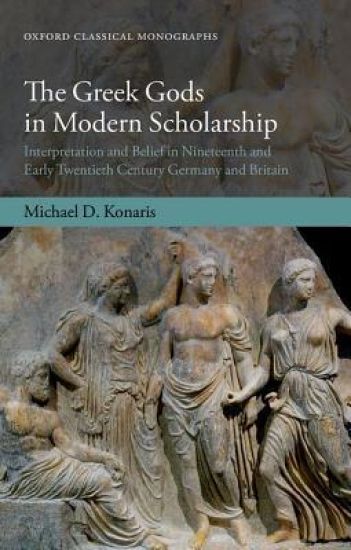
The Greek Gods in Modern Scholarship

The Greek Gods in Modern Scholarship

Michael D. Konaris

Oxford University Press
2015
sidottu
The nineteenth century is a key period in the history of the interpretation of the Greek gods. The Greek Gods in Modern Scholarship examines how German and British scholars of the time drew on philology, archaeology, comparative mythology, anthropology, or sociology to advance radically different theories on the Greek gods and their origins. For some, they had been personifications of natural elements, for others, they had begun as universal gods like the Christian god, yet for others, they went back to totems or were projections of group unity. The volume discusses the views of both well-known figures like K. O. Müller (1797-1840), or Jane Harrison (1850-1928), and of forgotten, but important, scholars like F. G. Welcker (1784-1868). It explores the underlying assumptions and agendas of the rival theories in the light of their intellectual and cultural context, laying stress on how they were connected to broader contemporary debates over fundamental questions such as the origins and nature of religion, or the relation between Western culture and the 'Orient'. It also considers the impact of theories from this period on twentieth- and twenty-first-century scholarship on Greek religion and draws implications for the study of the Greek gods today.
Elections, Parties, Democracy

Elections, Parties, Democracy

Michael D. McDonald; Ian Budge

Oxford University Press
2005
sidottu
This bold venture into political theory and comparative politics combines traditional concerns about democracy with modern analytical methods. It asks how contemporary democracies work, an essential stage in asking how they can be justified. An answer to both questions is found in the idea of the median mandate. The voter in the middle - the voice of the majority - empowers the centre party in parliament to translate his or her preferences into public policy. The median mandate provides a unified theory of democracy - pluralist, consensus, majoritarian, liberal, and populist - by replacing each qualified 'vision' with an integrated account of how representative institutions work. The unified theory is put to the test with comprehensive cross-national evidence covering 21 democracies from 1950 through to 1995. This exciting book will be of interest to specialists and general readers alike, representing as it does a reaffirmation of traditional democratic practice in an uncertain and threatening world. Comparative Politics is a series for students and teachers of political science that deals with contemporary government and politics. The General Editors are Max Kaase, Professor of Political Science, Vice President and Dean, School of Humanities and Social Science, International University, Bremen, Germany; and Kenneth Newton, Professor of Comparative Politics, University of Southampton. The series is published in association with the European Consortium for Political Research.
Religion and Democratization

Religion and Democratization

Michael D. Driessen

Oxford University Press Inc
2014
sidottu
Religion and Democratization is a comparative study of how regime types and religion-state arrangements frame questions of religious and political identities in Muslim and Catholic societies. The book proposes a theory for modeling the dynamics of "religiously friendly democratization " processes in which states institutionally favor specific religious values and organizations and allow religious political parties to contest elections. Religiously friendly democratization has a transformative effect on both the democratic politics and religious life of society. As this book demonstrates, it affects the political goals of religious leaders and the political salience of the religious identities of religious individuals. In a religiously charged national setting, religiously friendly democratization can generate more support for democracy among religious actors. By embedding religious ideas and values into its institutions, however, it also mediates the effects of secularization on national religious markets, creating more favorable conditions for the emergence of public religions and new trajectories of religious life. The book anchors its theoretical claims in case studies of Italy and Algeria, integrating original qualitative evidence and statistical data on voters' political and religious attitudes. It also considers the dynamics of religiously friendly democratization across the Muslim world today, through a comparative analysis of Tunisia, Morocco, Turkey and Indonesia. Finally, the book examines the theory's wider relevance through a large-N quantitative analysis, employing cross-national databases on religion-state relationships created by Grim and Finke and Fox.
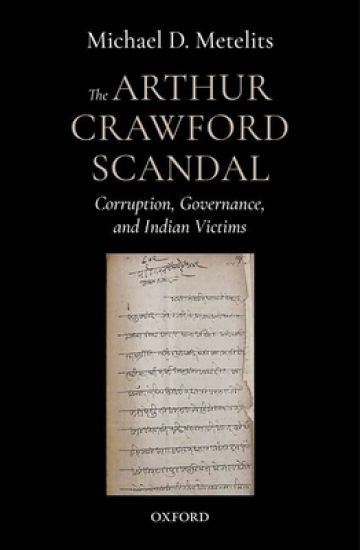
The Arthur Crawford Scandal

The Arthur Crawford Scandal

Michael D. Metelits

OUP India
2020
sidottu
The Arthur Crawford Scandal explores how 19th century Bombay tried a British official for corruption. The presidency government persuaded Indians, government officials, to testify against the very person who controlled their career, by offering immunity from legal action and career punishment. A criminal conviction of Crawford's henchman established the modus operandi of a bribery network. Subsequent efforts to intimidate Indian witnesses led to litigation at the high court level, resulting in a political pressure campaign in London based on biased press reports from India. These reports evoked questions in the House of Commons; questions became demands that Indians witnesses against Crawford be fired from government service. The Secretary of State for India and the Bombay Government negotiated about the Indian witnesses' fate. At first the Secretary of State accepted Bombay Government proposals. But the press campaign against the Indian witnesses eventually led the Secretary of State to order the Government of India, in consultation with the Government of Bombay, to pass a law ordering those officials who paid Crawford willingly, to be fired. Those who whom the Bombay Government determined were extorted, were not to be fired. Both groups retained immunity from further actions at law. Thus Bombay won a victory that almost saved its original guarantee of immunity: those who were fired were to receive their salary (along with periodic step increases) until they reached retirement age, at which time they would receive a pension. However, this "solution" did little to overcome the stigma and suffering of the fired officials
Colonial Copyright

Colonial Copyright

Michael D. Birnhack

Oxford University Press
2012
sidottu
When the British Empire enacted copyright law for its colonies and called it colonial, or Imperial, copyright, it had its own interests in mind. Deconstructing the imperial policy regarding copyright offers a startling glimpse into how this law was received in the colonies themselves. Offering the first in-depth study from the point of view of the colonized, this book suggests a general model of Colonial Copyright as it was understood as the intersection of legal transplants, colonial law, and the particular features of copyright, especially authorship. Taking as a case study the story of Mandate Palestine (1917-1948), the book details the untold history of the copyright law that became the basis of Israeli law, and still is the law in the Palestinian Authority. It queries the British motivation in enacting copyright law, traces their first, indifferent reaction, and continues with the gradual absorption into the local legal and cultural systems. In the modern era copyright law is at the forefront of globalization but this was no less true when colonial copyright first emerged. By shining a light on the introduction and reception of copyright law in Mandate Palestine, the book illuminates the broader themes of copyright law: the questions surrounding the concept of authorship; the relationship between copyright and the demands of progress; and the complications of globalization.
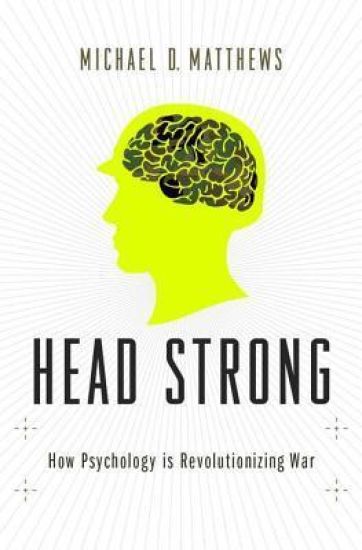
Head Strong

Head Strong

Michael D. Matthews

Oxford University Press Inc
2014
sidottu
Psychology is the science that will determine who wins and who loses the wars of the 21st century, just as physics ultimately led the United States to victory in World War II. Changes in the world's political landscape coupled with radical advances in the technology of war will greatly alter how militaries are formed, trained, and led. Leadership under fire - and the traits and skills it requires - is also changing. Grant, Lee, Pershing, Patton - these generals would not succeed in 21st century conflicts. In Head Strong: Psychology and Military Dominance in the 21st Century, Michael D. Matthews explores the many ways that psychology will make the difference for wars yet to come, from revolutionary advances in soldier selection and training to new ways of preparing soldiers to remain resilient in the face of horror and to engineering the super-soldier of the future. These advancements will ripple out to impact on the lives of all of us, not just soldiers. Amputees will have "intelligent" life-like prosthetics that simulate the feel and function of a real limb. Those exposed to trauma will have new and more effective remedies to prevent or treat post-traumatic stress disorder. And a revolution in training - based heavily in the military's increasing reliance on immersive simulations - will radically alter how police, fire, and first-responder personnel are trained in the future. At its heart, war is the most human of endeavors. Psychology, as the science of human behavior, will prove essential to success in future war. Authored by a West Point military psychologist, this book is one of the first to expose us to the smarter wars, and the world around them, to come.
Scientific Babel: How Science Was Done Before and After Global English
English is the language of science today. No matter which languages you know, if you want your work seen, studied, and cited, you need to publish in English. But that hasn't always been the case. Though there was a time when Latin dominated the field, for centuries science has been a polyglot enterprise, conducted in a number of languages whose importance waxed and waned over time--until the rise of English in the twentieth century. So how did we get from there to here? How did French, German, Latin, Russian, and even Esperanto give way to English? And what can we reconstruct of the experience of doing science in the polyglot past? With Scientific Babel, Michael D. Gordin resurrects that lost world, in part through an ingenious mechanism: the pages of his highly readable narrative account teem with footnotes--not offering background information, but presenting quoted material in its original language. The result is stunning: as we read about the rise and fall of languages, driven by politics, war, economics, and institutions, we actually see it happen in the ever-changing web of multilingual examples. The history of science, and of English as its dominant language, comes to life, and brings with it a new understanding not only of the frictions generated by a scientific community that spoke in many often mutually unintelligible voices, but also of the possibilities of the polyglot, and the losses that the dominance of English entails. Few historians of science write as well as Gordin, and Scientific Babel reveals his incredible command of the literature, language, and intellectual essence of science past and present. No reader who takes this linguistic journey with him will be disappointed.
Strained Relations

Strained Relations

Michael D. Bordo; Owen F. Humpage; Anna J. Schwartz

University of Chicago Press
2015
sidottu
Drawing on a trove of previously confidential data, Strained Relations reveals the evolution of US policy regarding currency market intervention, and its interaction with monetary policy. The authors consider how foreign-exchange intervention was affected by changing economic and institutional circumstances - most notably the abandonment of the international gold standard - and how political and bureaucratic factors affected this aspect of public policy.
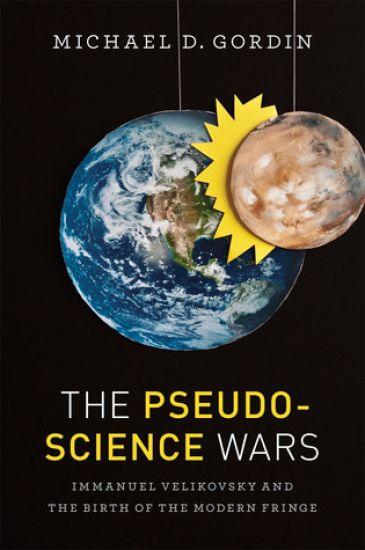
The Pseudoscience Wars

The Pseudoscience Wars

Michael D. Gordin

University of Chicago Press
2013
nidottu
The publication of Immanuel Velikovsky's Worlds in Collision in 1950 was an event: the book was an instant best seller and launched Velikovsky on a long career as a writer and public figure opining on questions of science, history, myth, and more. But at the same time, Velikovsky and his theories - which claimed that ancient mythological and religious writings revealed Earth's hitherto unknown history of natural disasters and cosmic near-misses - were vigorously attacked by scientists, who saw them as unscientific nonsense. In The Pseudoscience Wars, Michael D. Gordin resurrects the largely forgotten figure of Velikovsky and uses his strange career and surprisingly influential writings to explore the changing definitions of the line that separates legitimate scientific inquiry from what is deemed bunk and to show how vital this question remains to us today.
The Pseudoscience Wars

The Pseudoscience Wars

Michael D. Gordin

University of Chicago Press
2012
sidottu
Properly analyzed, the collective mythological and religious writings of humanity reveal that around 1500 BC, a comet swept perilously close to Earth, triggering widespread natural disasters and threatening the destruction of all life before settling into solar orbit as Venus, our nearest planetary neighbor. Sound implausible? Well, from 1950 until the late 1970s, a huge number of people begged to differ, as they devoured Immanuel Velikovsky’s major best-seller, Worlds in Collision, insisting that perhaps this polymathic thinker held the key to a new science and a new history. Scientists, on the other hand, assaulted Velikovsky’s book, his followers, and his press mercilessly from the get-go. In The Pseudoscience Wars, Michael D. Gordin resurrects the largely forgotten figure of Velikovsky and uses his strange career and surprisingly influential writings to explore the changing definitions of the line that separates legitimate scientific inquiry from what is deemed bunk, and to show how vital this question remains to us today. Drawing on a wealth of previously unpublished material from Velikovsky’s personal archives, Gordin presents a behind-the-scenes history of the writer’s career, from his initial burst of success through his growing influence on the counterculture, heated public battles with such luminaries as Carl Sagan, and eventual eclipse. Along the way, he offers fascinating glimpses into the histories and effects of other fringe doctrines, including creationism, Lysenkoism, parapsychology, and more—all of which have surprising connections to Velikovsky’s theories. Science today is hardly universally secure, and scientists seem themselves beset by critics, denialists, and those they label “pseudoscientists”—as seen all too clearly in battles over evolution and climate change. The Pseudoscience Wars simultaneously reveals the surprising Cold War roots of our contemporary dilemma and points readers to a different approach to drawing the line between knowledge and nonsense.
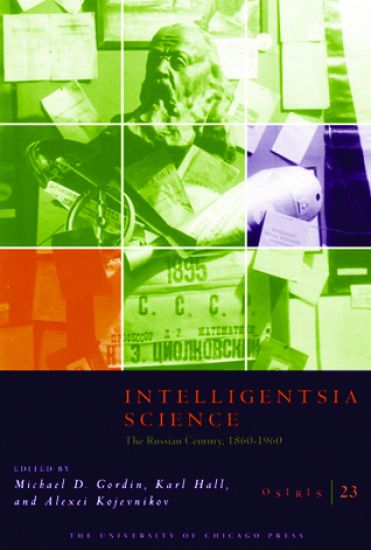
Osiris, Volume 23

Osiris, Volume 23

Michael D. Gordin

University of Chicago Press
2008
nidottu
The newest annual volume of "Osiris, Intelligentsia Science" explores the transformations in science in the history of Russia and the Soviet Union, from serfdom to Sputnik, as a series of developments in Russian culture.The contributors argue that it was the generation of the 1860s that transformed "intelligentsia" into a central notion of Russian popular discourse, cementing its association with revolutionary politics - and with science. Science became the cornerstone of the intelligentsia's ideological and political projects, either as an alternative to socialism, or more often as its nominal raison d'etre. The Russian century may in fact be over, but the interrelation of the intelligentsia and science to form "intelligentsia science" proves enduring.
No Longer Outsiders

No Longer Outsiders

Michael D. Minta

University of Chicago Press
2021
sidottu
With the rise of Black Lives Matter and immigrant rights protests, critics have questioned whether mainstream black and Latino civil rights organizations such as the NAACP and UnidosUS are in touch with the needs of minorities—especially from younger generations. Though these mainstream groups have relied on insider political tactics, such as lobbying and congressional testimony, to advocate for minority interests, Michael D. Minta argues that these strategies are still effective tools for advocating for progressive changes. In No Longer Outsiders, Minta provides a comprehensive account of the effectiveness of minority civil rights organizations and their legislative allies. He finds that the organizations’ legislative priorities are consistent with black and Latino preferences for stronger enforcement of civil rights policy and immigration reform. Although these groups focus mainly on civil rights for blacks and immigration issues for Latinos, their policy agendas extend into other significant areas. Minta concludes with an examination of how diversity in Congress helps groups gain greater influence and policy success despite many limits placed upon them.
No Longer Outsiders

No Longer Outsiders

Michael D. Minta

University of Chicago Press
2021
nidottu
With the rise of Black Lives Matter and immigrant rights protests, critics have questioned whether mainstream black and Latino civil rights organizations such as the NAACP and UnidosUS are in touch with the needs of minorities—especially from younger generations. Though these mainstream groups have relied on insider political tactics, such as lobbying and congressional testimony, to advocate for minority interests, Michael D. Minta argues that these strategies are still effective tools for advocating for progressive changes. In No Longer Outsiders, Minta provides a comprehensive account of the effectiveness of minority civil rights organizations and their legislative allies. He finds that the organizations’ legislative priorities are consistent with black and Latino preferences for stronger enforcement of civil rights policy and immigration reform. Although these groups focus mainly on civil rights for blacks and immigration issues for Latinos, their policy agendas extend into other significant areas. Minta concludes with an examination of how diversity in Congress helps groups gain greater influence and policy success despite many limits placed upon them.
Honoring Elders

Honoring Elders

Michael D. McNally

Columbia University Press
2009
sidottu
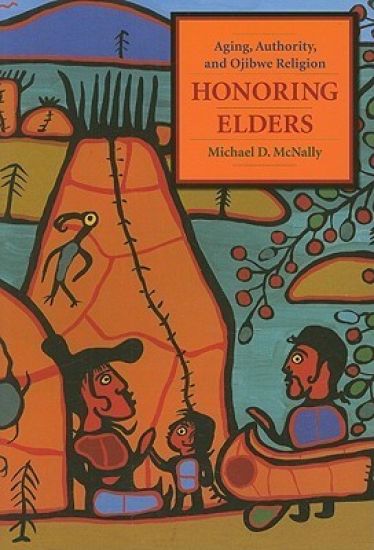
Like many Native Americans, Ojibwe people esteem the wisdom, authority, and religious significance of old age, but this respect does not come easily or naturally. It is the fruit of hard work, rooted in narrative traditions, moral vision, and ritualized practices of decorum that are comparable in sophistication to those of Confucianism. Even as the dispossession and policies of assimilation have threatened Ojibwe peoplehood and have targeted the traditions and the elders who embody it, Ojibwe and other Anishinaabe communities have been resolute and resourceful in their disciplined respect for elders. Indeed, the challenges of colonization have served to accentuate eldership in new ways. Using archival and ethnographic research, Michael D. McNally follows the making of Ojibwe eldership, showing that deference to older women and men is part of a fuller moral, aesthetic, and cosmological vision connected to the ongoing circle of life--a tradition of authority that has been crucial to surviving colonization. McNally argues that the tradition of authority and the authority of tradition frame a decidedly indigenous dialectic, eluding analytic frameworks of invented tradition and naive continuity. Demonstrating the rich possibilities of treating age as a category of analysis, McNally provocatively asserts that the elder belongs alongside the priest, prophet, sage, and other key figures in the study of religion.
Honoring Elders

Honoring Elders

Michael D. McNally

Columbia University Press
2009
pokkari
Like many Native Americans, Ojibwe people esteem the wisdom, authority, and religious significance of old age, but this respect does not come easily or naturally. It is the fruit of hard work, rooted in narrative traditions, moral vision, and ritualized practices of decorum that are comparable in sophistication to those of Confucianism. Even as the dispossession and policies of assimilation have threatened Ojibwe peoplehood and have targeted the traditions and the elders who embody it, Ojibwe and other Anishinaabe communities have been resolute and resourceful in their disciplined respect for elders. Indeed, the challenges of colonization have served to accentuate eldership in new ways. Using archival and ethnographic research, Michael D. McNally follows the making of Ojibwe eldership, showing that deference to older women and men is part of a fuller moral, aesthetic, and cosmological vision connected to the ongoing circle of life--a tradition of authority that has been crucial to surviving colonization. McNally argues that the tradition of authority and the authority of tradition frame a decidedly indigenous dialectic, eluding analytic frameworks of invented tradition and naive continuity. Demonstrating the rich possibilities of treating age as a category of analysis, McNally provocatively asserts that the elder belongs alongside the priest, prophet, sage, and other key figures in the study of religion.
The Work of Art

The Work of Art

Michael D. Jackson

Columbia University Press
2016
sidottu
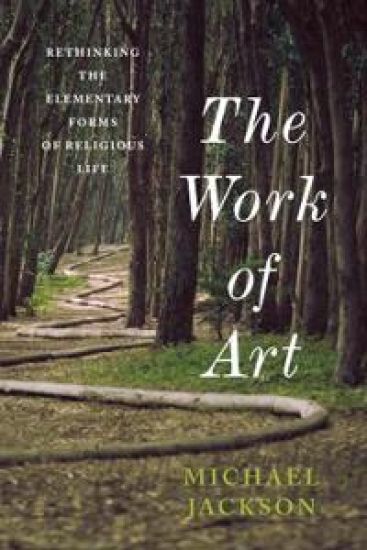
How are we to think of works of art? Rather than treat art as an expression of individual genius, market forces, or aesthetic principles, Michael Jackson focuses on how art effects transformations in our lives. Art opens up transitional, ritual, or utopian spaces that enable us to reconcile inward imperatives and outward constraints, thereby making our lives more manageable and meaningful. Art allows us to strike a balance between being actors and being acted upon. Drawing on his ethnographic fieldwork in Aboriginal Australia and West Africa, as well as insights from psychoanalysis, religious studies, literature, and the philosophy of art, Jackson deploys an extraordinary range of references-from Bruegel to Beuys, Paleolithic art to performance art, Michelangelo to Munch-to explore the symbolic labor whereby human beings make themselves, both individually and socially, out of the environmental, biographical, and physical materials that affect them: a process that connects art with gestation, storytelling, and dreaming and illuminates the elementary forms of religious life.
The Varieties of Temporal Experience

The Varieties of Temporal Experience

Michael D. Jackson

Columbia University Press
2018
sidottu
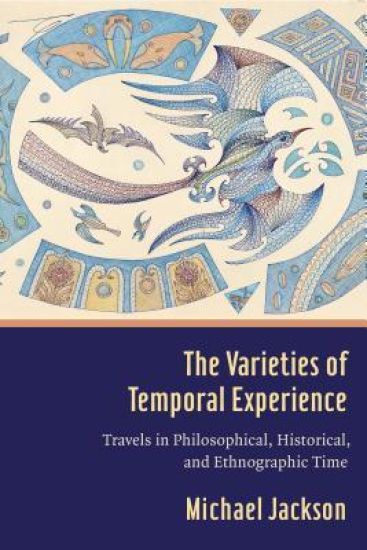
What does it mean to live in time, between the unforeseeable and the irreversible? In The Varieties of Temporal Experience, Michael Jackson demonstrates the significance of a phenomenology of time for ethnography, philosophy, and history through a multifaceted consideration of the gap between our cultural representations of temporality and the bewildering multiplicity of our experience of being-in-time.Jackson explores temporality in a subjective mode as a form of literary anthropology. The first part of the book tells the story of John Joseph Pawelka, whose 1910 escape from prison and subsequent disappearance became one of New Zealand’s great unsolved mysteries, discussing what it reveals about the interplay of popular stories, hidden histories, and media narratives in constructing allegories of national and moral identity. In the second, Jackson reflects on journeys up and down the islands of New Zealand, touching on the ways that personal stories are interwoven with social and historical events. Throughout this groundbreaking book, Jackson juxtaposes philosophy, history, and ethnography in an attempt to do justice to the extraordinary variety of temporal experience, at the same time exploring the ethical and existential quandaries that arise from the complexity of lived time.