Kirjojen hintavertailu. Mukana 11 244 527 kirjaa ja 12 kauppaa.

Kirjahaku

Etsi kirjoja tekijän nimen, kirjan nimen tai ISBN:n perusteella.

1000 tulosta hakusanalla Michael J. O'farrell

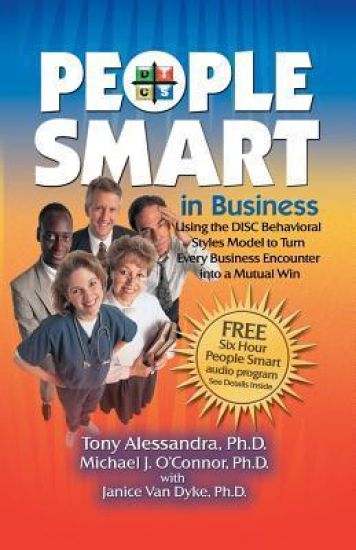
People Smarts – Behavioral Profiles

People Smarts – Behavioral Profiles

Tony Alessandra; Michael J. O'Connor; Janice Van Dyke

Pfeiffer Wiley
1994
nidottu
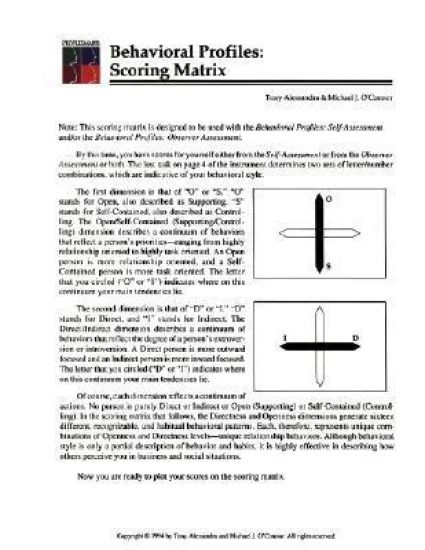
This exciting line of learning tools helps you improve communication in any group or organization. Every individual has a unique personality, but many behaviors can be understood within a systematic, predictable framework. The People Smarts package will train participants to identify colleagues' behavioral patterns so they can work in harmony. This simple, easy-to-understand method helps you: get results from interactions with colleagues express your wants and needs clearly - and recognize the needs of others improve collaborative efforts by learning to adapt to others' styles understand your co-workers, bosses, and subordinates through a systematic, effective method anyone can learn. The Self- and Observer Assessments help your employees define their own styles. The Self-Assessment determines how a person believes he/she interacts with others. The Observer Assessment provides a picture of how others perceive an individual's interactions. Used together, these instruments provide valuable information for personal growth. Participants can recognize differences between the way they think they are perceived and the way they are actually perceived by others. This evaluation provides tangible goals for improving versatility and enhancing relationships. Use the Scoring Matrix with the Self-Assessment, the Observer Assessment, or both to get a visual representation of individuals' styles. The Scoring Matrix includes comprehensive descriptions of styles and substyles, plus advice for achieving balance. The Reminder Card is an instant reference to the four behavioral styles identified in the program, with guides to recognizing and dealing with each. The Participant Workbook focuses on application of the People Smarts principles. Participants learn how to use verbal and visual clues to identify another person's style and adapt their own behavior to make relationships more successful. This workbook is also a great self-study tool. Filled with humorous examples that teach valuable principles, the People Smarts book introduces the simple but powerful business relationship concept on which the People Smarts program is based: treat other people the way they want to be treated. Streamline your preparation and save! Purchase one Participant's Package for each participant in your program and get everything you need to improve communication today!
Management of the Difficult Airway: A Handbook for Surgeons

Management of the Difficult Airway: A Handbook for Surgeons

Jerome W Thompson; Francisco O M Vieira; Michael J Rutter

JP Medical Ltd
2015
sidottu
Airway management is a crucial skill to master and the first priority in the assessment of a critically ill or injured patient. Failure to secure an adequate airway can quickly lead to death or disability. Though primarily the remit of the anaesthesiologist, airway management also presents challenges to the surgeon, for example in obese patients or during surgery for thyroid cancer, particularly where reconstruction of the airway is involved. Management of the Difficult Airway: A Handbook for Surgeons is the first book designed to help surgeons with the issues they face maintaining a clear airway and preventing obstruction. It provides practical guidance not just on emergency situations, but also on complex, planned interventions where it is the surgeon who oversees the management of the airway, for example during surgery for congenital airway anomalies. Early chapters cover anatomy, imaging, indications and specific techniques; later ones cover airway situations in specific groups, for example patients requiring surgical reconstruction of the airway resulting from cancer. Management of the Difficult Airway provides a comprehensive, timely review of the core knowledge and clinical skills necessary for successful airway management in the surgical environment. Key Points Provides a ‘go-to’ skills manual for surgeons focussing on difficult airway management in surgical patientsCovers surgical airway management issues in adult and paediatric patientsMultidisciplinary author team combines the expertise of ENT and other surgeons, radiologists and anaesthesiologists
First Impressions

First Impressions

English & Film Studies University of Alberta; Michael J. O'Driscoll

University of Alberta Press
2003
pokkari
Showcasing archival materials from the early years of John Martin's Black Sparrow Press, this catalogue brings to light the collaborative relationship between writers, editors, designers, and presses. Prominently featured are the works of poets Charles Bukowski, Robert Creeley, John Ashbery, and others. The exhibit, which took place at the University of Alberta's Bruce Peel Special Collections Library (home of the Black Sparrow Press Archive), was curated by twelve University of Alberta graduate students under the guidance of Dr. Michael J. O'Driscoll of the Department of English and Film Studies.
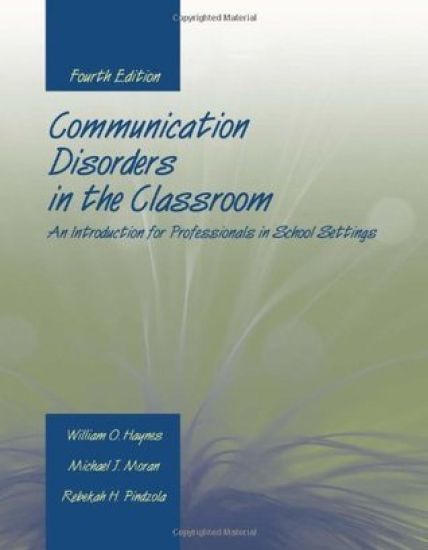
Communication Disorders in the Classroom: an Introduction for Professionals in School Settings

Communication Disorders in the Classroom: an Introduction for Professionals in School Settings

William O. Haynes; Michael J. Moran; Rebekah H. Pindzola

Jones and Bartlett Publishers, Inc
2005
nidottu
Speech, language, and hearing disorders have the potential to affect a student communicatively, socially, psychologically, and academically. In this work, the authors cover the range of impairments found in school-age children with suggestions for teacher intervention. Topic coverage includes: . Legal issues and service delivery models 2. Normal aspects of communication 3. The development of language and phonology 4. Phonological disorders 5. Children with limited language . School-age and adolescent language disorders 7. Dialectal differences: African American English as a case study 8. Fluency disorders 9. Voice disorders . Hearing impairment . Craniofacial anomolies 2. Neurological impairment 3. Communication disorders and academic success.Each chapter includes teacher tips, key terms, study questions, and suggestions for further reading.
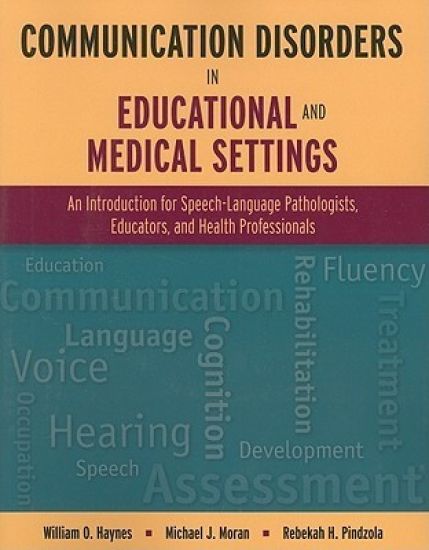
Communication Disorders In Educational And Medical Settings

Communication Disorders In Educational And Medical Settings

William O. Haynes; Michael J. Moran; Rebekah H. Pindzola

Jones and Bartlett Publishers, Inc
2010
nidottu
Communication Disorders in Educational and Medical Settings is a useful guide for the speech-language pathologist in working with other professionals in school and medical environments and includes practical suggestions for involvement of these professionals in the assessment and remediation process. This valuable resource will help speech-language pathologist students gain an appreciation of the variety of roles and responsibilities they will take on in educational and medical settings and how to work with educational and health professionals. This text is also helpful for health professions practitioners and educational professionals to gain basic knowledge of the nature of various communication disorders and become aware of how they might play a role in the treatment process in collaboration with the speech-language pathologist. Whether you are an educator, health professional or speech-language pathologist, you will find this accessible introduction to the field of communication disorders to be exciting, interesting and relevant to your future work. Features: - Presents a broad coverage of the field of communications disorders, yet remains at an accessible introductory level - Focuses on work settings and collaboration - Provides suggestions for teachers and health professionals on how to deal with patients who have communication disorders and how to cooperate with the SLP - Covers themes highlighting assessment information, treatment overviews, tips for educators, and tips for health care professionals - Addresses educational impacts of speech/language problems as well as coverage of quality of life issues across the life span for each communication disorder - Useful to a wide range of professionals Instructor Resources: PowerPoint Slides, and a TestBank with Multiple Choice, Fill-in-the-blank and Discussion Questions
Assessing the Value of Regionally Aligned Forces in Army Security Cooperation

Assessing the Value of Regionally Aligned Forces in Army Security Cooperation

Angela O'Mahony; Thomas S Szayna; Michael J McNerney

RAND
2017
nidottu
This document reports on a study to assist the Army, geographic combatant commands, and the rest of the U.S. Department of Defense in better aligning security cooperation missions with national interests and security goals. In addition, the report provides some recommendations and analytic tools for the Army's leadership and regionally aligned force planners to improve regionally aligned force implementation.
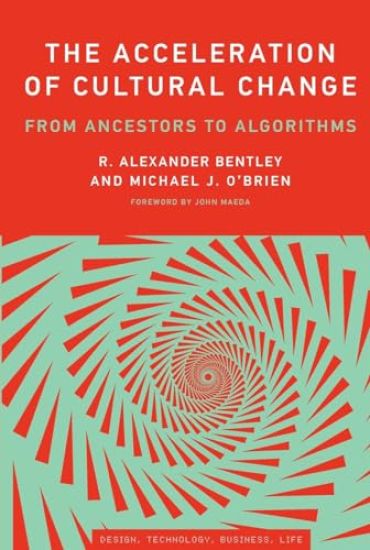
The Acceleration of Cultural Change

The Acceleration of Cultural Change

R. Alexander Bentley; Michael J. O'Brien; John Maeda

MIT PRESS LTD
2024
pokkari
How culture evolves through algorithms rather than knowledge inherited from ancestors. From our hunter-gatherer days, we humans evolved to be excellent throwers, chewers, and long-distance runners. We are highly social, crave Paleolithic snacks, and display some gendered difference resulting from mate selection. But we now find ourselves binge-viewing, texting while driving, and playing Minecraft. Only the collective acceleration of cultural and technological evolution explains this development. The evolutionary psychology of individuals--the drive for "food and sex"--explains some of our current habits, but our evolutionary success, Alex Bentley and Mike O'Brien explain, lies in our ability to learn cultural know-how and to teach it to the next generation. Today, we are following social media bots as much as we are learning from our ancestors. We are radically changing the way culture evolves. Bentley and O'Brien describe how the transmission of culture has become vast and instantaneous across an Internet of people and devices, after millennia of local ancestral knowledge that evolved slowly. Long-evolved cultural knowledge is aggressively discounted by online algorithms, which prioritize popularity and recency. If children are learning more from Minecraft than from tradition, this is a profound shift in cultural evolution. Bentley and O'Brien examine the broad and shallow model of cultural evolution seen today in the science of networks, prediction markets, and the explosion of digital information. They suggest that in the future, artificial intelligence could be put to work to solve the problem of information overload, learning to integrate concepts over the vast idea space of digitally stored information.
The Rise and Fall of Culture History

The Rise and Fall of Culture History

R. Lee Lyman; Michael J. O'Brien; Robert C. Dunnell

Kluwer Academic/Plenum Publishers
1997
sidottu
VJver forty years ago Gordon R. Willey (1953b:361) stated that "[t]he objectives of archeology ...are approached by the study and manipulation of three basic factors: form, space, and time. " A few years later, Albert C. Spaulding (1960b:439) repeated this thought using different words: "[AJrchaeology can be defined minimally as the study of the interrelation- ship of form, temporal locus, and spatial locus exhibited by artifacts. In other words, archaeologists are always concerned with these interrelation- ships, whatever broader interests they may have, and these interrelation- ships are the special business of archaeology. " Many of the means Americanist archaeologists use to examine formal variation in artifacts and the distribution of that variation across space and through time were formulated early in the twentieth century. The analytical tenets, or principles, underlying the various methods and techniques were formalized and axiomatized in later years such that by the 1930s they con- stituted the first formal paradigm for Americanist archaeology-a paradigm commonly termed culture history. This paradigm began with a very specific goal-to document the history of the development of prehistoric cultures in the Americas. Although it fell from favor in the 1960s, many of its central tenets were carried over to newer paradigms and thus continue to be fun- damental within Americanist archaeology. With Willey's and Spaulding's conceptions as our guide, we elsewhere reprinted (Lyman et al.
The Rise and Fall of Culture History

The Rise and Fall of Culture History

R. Lee Lyman; Michael J. O'Brien; Robert C. Dunnell

Kluwer Academic/Plenum Publishers
1997
nidottu
VJver forty years ago Gordon R. Willey (1953b:361) stated that "[t]he objectives of archeology ...are approached by the study and manipulation of three basic factors: form, space, and time. " A few years later, Albert C. Spaulding (1960b:439) repeated this thought using different words: "[AJrchaeology can be defined minimally as the study of the interrelation- ship of form, temporal locus, and spatial locus exhibited by artifacts. In other words, archaeologists are always concerned with these interrelation- ships, whatever broader interests they may have, and these interrelation- ships are the special business of archaeology. " Many of the means Americanist archaeologists use to examine formal variation in artifacts and the distribution of that variation across space and through time were formulated early in the twentieth century. The analytical tenets, or principles, underlying the various methods and techniques were formalized and axiomatized in later years such that by the 1930s they con- stituted the first formal paradigm for Americanist archaeology-a paradigm commonly termed culture history. This paradigm began with a very specific goal-to document the history of the development of prehistoric cultures in the Americas. Although it fell from favor in the 1960s, many of its central tenets were carried over to newer paradigms and thus continue to be fun- damental within Americanist archaeology. With Willey's and Spaulding's conceptions as our guide, we elsewhere reprinted (Lyman et al.
Measuring Time with Artifacts

Measuring Time with Artifacts

R. Lee Lyman; Michael J. O'Brien

University of Nebraska Press
2006
sidottu
Combining historical research with a lucid explication of archaeological methodology and reasoning, Measuring Time with Artifacts examines the origins and changing use of fundamental chronometric techniques and procedures and analyzes the different ways American archaeologists have studied changes in artifacts, sites, and peoples over time. In highlighting the underpinning ontology and epistemology of artifact-based chronometers—cultural transmission and how to measure it archaeologically—this volume covers issues such as why archaeologists used the cultural evolutionism of L. H. Morgan, E. B. Tylor, L. A. White, and others instead of biological evolutionism; why artifact classification played a critical role in the adoption of stratigraphic excavation; how the direct historical approach accomplished three analytical tasks at once; why cultural traits were important analytical units; why paleontological and archaeological methods sometimes mirror one another; how artifact classification influences chronometric method; and how graphs illustrate change in artifacts over time.An understanding of the history of artifact-based chronometers enables us to understand how we know what we think we know about the past, ensures against modern misapplication of the methods, and sheds light on the reasoning behind archaeologists' actions during the first half of the twentieth century.
Measuring Time with Artifacts

Measuring Time with Artifacts

R. Lee Lyman; Michael J. O'Brien

University of Nebraska Press
2006
pokkari
Combining historical research with a lucid explication of archaeological methodology and reasoning, Measuring Time with Artifacts examines the origins and changing use of fundamental chronometric techniques and procedures and analyzes the different ways American archaeologists have studied changes in artifacts, sites, and peoples over time. In highlighting the underpinning ontology and epistemology of artifact-based chronometers—cultural transmission and how to measure it archaeologically—this volume covers issues such as why archaeologists used the cultural evolutionism of L. H. Morgan, E. B. Tylor, L. A. White, and others instead of biological evolutionism; why artifact classification played a critical role in the adoption of stratigraphic excavation; how the direct historical approach accomplished three analytical tasks at once; why cultural traits were important analytical units; why paleontological and archaeological methods sometimes mirror one another; how artifact classification influences chronometric method; and how graphs illustrate change in artifacts over time.An understanding of the history of artifact-based chronometers enables us to understand how we know what we think we know about the past, ensures against modern misapplication of the methods, and sheds light on the reasoning behind archaeologists' actions during the first half of the twentieth century.
Collaborators through Time

Collaborators through Time

R. Alexander Bentley; Michael J. O'Brien

BLOOMSBURY PUBLISHING PLC
2026
sidottu
Spanning 2 million years, this book examines how humans partnered with nature, technology, and each other to shape their world, from evolutionary origins and ancient innovations to the rise of artificial intelligence. This book examines how humans collaborated with other entities, expanding in scale from individuals to other species of Homo, and further to the formation of groups, interactions with organisms, connections with past generations, and the transformative role of technology. Through dozens of vivid examples—from the lives of Neanderthals to the origins of agriculture, the impact of ancient diseases, the practices of shamans, Bronze Age innovations, global trade routes, and the products of the world’s first cities—this narrative illuminates the intricate web of partnerships that defined human history. The final chapter delves into artificial intelligence, illustrating how its evolution mirrors the co-evolution of humans with technologies. AI’s rapid development of learning and collaborative abilities echoes humanity’s own adaptive journey, albeit at an accelerated pace. Richly illustrated with over 50 full-color figures, this book offers a visually engaging and intellectually stimulating journey through the partnerships that have shaped our world, from the dawn of prehistory to the cutting edge of AI.
Paid to Perform: Aligning Total Military Compensation with Talent Management

Paid to Perform: Aligning Total Military Compensation with Talent Management

Roy A. Wallace; Michael J. Colarusso; Andrew O. Hall; David S. Lyle; Michael S. Walker

Lulu.com
2015
nidottu
The United States finds itself at a profound inflection point. Since World War II, its national security threats have tended to accumulate rather than diminish. While U.S. military capabilities remain more advanced than that of any other state, an increasingly interconnected global economy has allowed potential adversaries to shrink the technological lead currently enjoyed by America's Armed Forces. Additionally, U.S. economic power has declined relative to that of other nations, steadily narrowing its defense spending advantage. Meanwhile, increasing Federal budget austerity has focused Congress upon reigning in defense costs, particularly in the personnel realm. The authors of this monograph believe that talent management-the science of creating a higher performing, more productive, and more satisfied workforce-is critical to dealing with these national security challenges. They argue that, instead of making across-the-board cuts to service member pay and benefits...
Analysis and Design of Discrete Part Production Lines

Analysis and Design of Discrete Part Production Lines

Chrissoleon T. Papadopoulos; Michael E. J. O'Kelly; Michael J. Vidalis; Diomidis Spinellis

Springer-Verlag New York Inc.
2009
sidottu
Analysis and Design of Discrete Part Production Lines provides a complete overview of production systems, investigating several production line problems, and describing the best approaches to the analysis of production line performance. Written by experts in the field of production and manufacturing research, this book also presents numerous techniques that can be used to describe and model various types of production lines. Special Features: * Includes access to a supplementary web-based software package, providing algorithms and examples, developed by distinguished experts of the field. * Describes new results for evaluative techniques and design algorithms as well as several open problems in production line optimization. * Presents in detail the theory and techniques that underlie production system management, design, and analysis, allowing the book to serve as an excellent introduction to newcomers in the field. * Has potential for use in a graduate level course in industrial or manufacturing engineering, or in a business course with a manufacturing focus. * Contains appendices providing an overview of several mathematical techniques employed to design and evaluate production line models.