Kirjojen hintavertailu. Mukana 11 244 527 kirjaa ja 12 kauppaa.

Kirjahaku

Etsi kirjoja tekijän nimen, kirjan nimen tai ISBN:n perusteella.

1000 tulosta hakusanalla Michael J. Perry

TCP/IP Sockets in C

TCP/IP Sockets in C

Michael J. Donahoo; Kenneth L. Calvert

Morgan Kaufmann Publishers In
2009
nidottu
TCP/IP Sockets in C: Practical Guide for Programmers, Second Edition is a quick and affordable way to gain the knowledge and skills needed to develop sophisticated and powerful web-based applications. The book's focused, tutorial-based approach enables the reader to master the tasks and techniques essential to virtually all client-server projects using sockets in C. This edition has been expanded to include new advancements such as support for IPv6 as well as detailed defensive programming strategies. If you program using Java, be sure to check out this book’s companion, TCP/IP Sockets in Java: Practical Guide for Programmers, 2nd Edition.
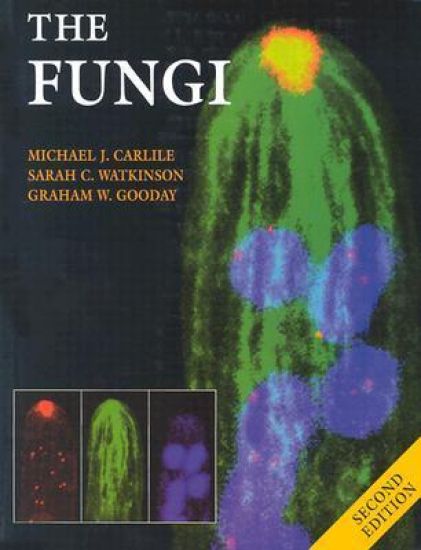
The Fungi

The Fungi

Michael J. Carlile; Sarah C. Watkinson

Academic Press Inc
2000
nidottu
The fungi are one of the great groups of living organisms, comparable in numbers of species, diversity and ecological significance with animals, plants, protists and bacteria. This textbook deals with all fundamental and applied aspects of mycology, illustrated by reference to well studied species from major fungal groups. Since the publication of the first edition of The Fungi, there have been many important advances in the field of mycology. This second up-to-date edition has been revised and substantially expanded, and incorporates the application of methods of molecular biology, especially DNA technology to mycology.
Functional Diversity of Mycorrhiza and Sustainable Agriculture

Functional Diversity of Mycorrhiza and Sustainable Agriculture

Michael J. Goss; Mário Carvalho; Isabel Brito

Academic Press Inc
2017
nidottu
Functional Diversity of Mycorrhiza and Sustainable Agriculture is the first book to present the core concepts of working with Arbuscular mycorrhizal fungi to improve agricultural crop productivity. Highlighting the use of indigenous AM fungi for agriculture, the book includes details on how to maintain and promote AM fungal diversity to improve sustainability and cost-effectiveness. As the need to improve production while restricting scarce inputs and preventing environmental impacts increases, the use of AMF offers an important option for exploiting the soil microbial population. It can enhance nutrient cycling and minimize the impacts of biotic and abiotic stresses, such as soil-borne disease, drought, and metal toxicity. The book offers land managers, policymakers, soil scientists, and agronomists a novel approach to utilizing soil microbiology in improving agricultural practices.
Through the Global Lens

Through the Global Lens

Michael J Strada

TAYLOR FRANCIS INC
2008
nidottu
Through the Global Lens uses a global perspective to analyze human affairs. This text looks at each of the six social sciences (sociology, anthropology, political science, economics, psychology, and geography), and uses case studies, feature film analyses, maps, and photos to highlight important historical events and concepts throughout.
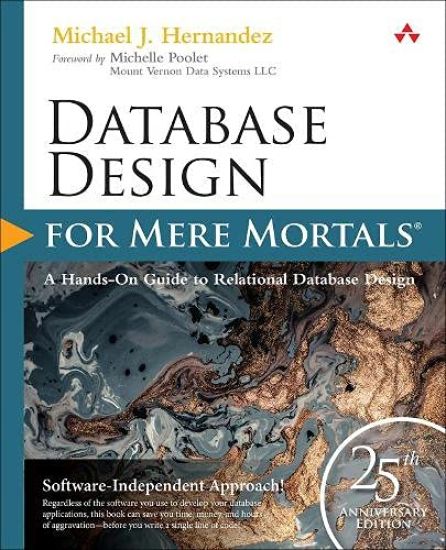
Database Design for Mere Mortals

Database Design for Mere Mortals

Michael J Hernandez

Addison Wesley
2020
nidottu
The #1 Easy, Commonsense Guide to Database Design—Now Updated Foreword by Michelle Poolet, Mount Vernon Data Systems LLC Database Design for Mere Mortals has earned worldwide respect as the simplest way to learn relational database design. Now, this hands-on, software independent tutorial is even clearer and easier to use. Step by step, this new 25th Anniversary Edition shows you how to design modern databases that are soundly structured, reliable, and flexible, even in the latest online applications. Michael Hernandez guides you through everything from planning to defining tables, fields, keys, table relationships, business rules, and views. You will learn practical ways to improve data integrity, how to avoid common mistakes, and when to break the rules. Updated review questions and figures help you learn these techniques more easily and effectively. Understand database types, models, and design terminologyPerform interviews to efficiently capture requirements—even if everyone works remotelySet clear design objectives and transform them into effective designsAnalyze a current database so you can identify ways to improve itEstablish table structures and relationships, assign primary keys, set field specifications, and set up viewsEnsure the correct level of data integrity for each databaseIdentify and establish business rulesPreview and prepare for the future of relational databases Whatever relational database systems you use, Hernandez will help you design databases that are robust and trustworthy. Never designed a database before? Settling for inadequate generic designs? Running existing databases that need improvement? Start here.
Justice

Justice

Michael J. Sandel

Penguin Books Ltd
2010
pokkari
Michael Sandel's Justice: What's the Right Thing to Do? invites readers of all ages and political persuasions on a journey of moral reflection, and shows how reasoned debate can illuminate our lives.Is it always wrong to lie?Should there be limits to personal freedom?Can killing sometimes be justified?Is the free market fair?What is the right thing to do?Questions like these are at the heart of our lives. In this acclaimed book Michael Sandel - BBC Reith Lecturer and the Harvard professor whose 'Justice' course has become world famous - gives us a lively and accessible introduction to the intersection of politics and philosophy. He helps us think our way through such hotly contested issues as equal rights, democracy, euthanasia, abortion and same-sex marriage, as well as the ethical dilemmas we face every day.'One of the most popular teachers in the world' - Observer'Enormously refreshing ... Michael Sandel transforms moral philosophy by putting it at the heart of civic debate' - New Statesman'One of the world's most interesting political philosophers' - Guardian'Spellbinding' - The Nation
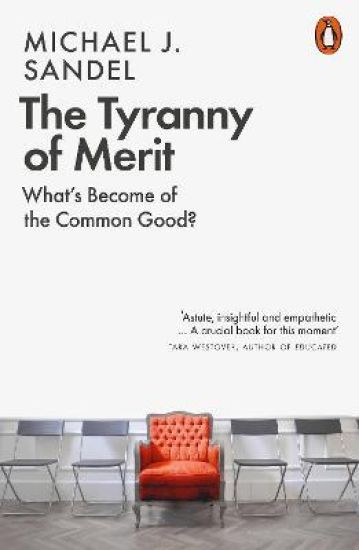
The Tyranny of Merit

The Tyranny of Merit

Michael J. Sandel

Penguin Books Ltd
2021
pokkari
A TLS, GUARDIAN AND NEW STATESMAN BOOK OF THE YEAR 2020The new bestseller from the acclaimed author of Justice and one of the world's most popular philosophers"Astute, insightful, and empathetic...A crucial book for this moment" Tara Westover, author of EducatedThese are dangerous times for democracy. We live in an age of winners and losers, where the odds are stacked in favour of the already fortunate. Stalled social mobility and entrenched inequality give the lie to the promise that "you can make it if you try". And the consequence is a brew of anger and frustration that has fuelled populist protest, with the triumph of Brexit and election of Donald Trump.Michael J. Sandel argues that to overcome the polarized politics of our time, we must rethink the attitudes toward success and failure that have accompanied globalisation and rising inequality. Sandel highlights the hubris a meritocracy generates among the winners and the harsh judgement it imposes on those left behind. He offers an alternative way of thinking about success - more attentive to the role of luck in human affairs, more conducive to an ethic of humility, and more hospitable to a politics of the common good.
The Oxford Handbook of Genetic Counseling

The Oxford Handbook of Genetic Counseling

Michael J. Deem

OXFORD UNIVERSITY PRESS INC
2025
sidottu
Genetic counseling is one of the fastest growing fields across clinical care, medical research, and health-related industries. This growth is driven by advancements in genetic knowledge, the expansion of genetic tests and sequencing tools, industry demands for new testing modalities, and a public interest in direct-to-consumer genetic testing. As the field continues to expand and diversify, The Oxford Handbook of Genetic Counseling is the most comprehensive and authoritative resource designed to meet the demands of a growing workforce. The volume contains thirty-six chapters that cover historic developments, application in clinical practice, research and industry, and genetic and genomic testing. The book also discusses ethical and social issues and provides an outlook on the future of the field. Bringing together an interdisciplinary team that includes genetic counselors, clinical geneticists, medical researchers, bioethicists, legal and policy experts, and other healthcare professionals, this volume is an invaluable resource for professionals in the field. It appeals to genetic counselors, genetic counseling students, teachers, scholars, and bioethicists. Given its scope and diversity of topics, it is also an important resource for clinical faculty, health researchers, and healthcare providers who are increasingly encountering genetics and genomics in their respective fields.
National Security and Double Government

National Security and Double Government

Michael J. Glennon

Oxford University Press Inc
2014
sidottu
Why has U.S. security policy scarcely changed from the Bush to the Obama administrations? The theory of "double government" posed by the 19th century English scholar Walter Bagehot suggests a disquieting answer that is extensively discussed in National Security and Double Government. Michael J. Glennon challenges the myth that U.S. security policy is made through the visible, "Madisonian institutions"--the President, Congress, and the courts, proposing that their roles are largely illusory. Presidential control is nominal, congressional oversight is dysfunctional, and judicial review is negligible. He argues that security policy is really made by the managers of the military, intelligence, diplomatic, and law enforcement agencies- a concealed "Trumanite network" of several hundred members who are responsible for protecting the nation, and who are primarily immune from constitutional restraints. As such, this new system of "double government" will not correct itself, as to do so would require those branches to exercise the very power that they lack. Glennon suggests that the main problem is political ignorance, which is becoming more acute as public influence on security policy declines. This book aims to inform and enlighten the reader about the Trumanite network, and highlight the restraints on the Constitution, which operates primarily upon the hollowed-out Madisonian institutions, and poses a grave threat to democratic accountability.
Prosecuting Corporations for Genocide

Prosecuting Corporations for Genocide

Michael J. Kelly; Luis Moreno-Ocampo

Oxford University Press Inc
2016
sidottu
Modern corporations are key participants in the new globalized economy. As such, they have been accorded tremendous latitude and granted extensive rights. However, accompanying obligations have not been similarly forthcoming. Chief among them is the obligation not to commit atrocities or human rights abuses in the pursuit of profit. Multinational corporations are increasingly complicit in genocides that occur in the developing world. While they benefit enormously from the crime, they are immune from prosecution at the international level. Prosecuting Corporations for Genocide proposes new legal pathways to ensure such companies are held criminally liable for their conduct by creating a framework for international criminal jurisdiction. If a state or a person commits genocide, they are punished, and international law demands such. Nevertheless, corporate actors have successfully avoided this through an array of legal arguments which Professor Kelly challenges. He demonstrates how international criminal jurisdiction should be extended over corporations for complicity in genocide and makes the case that it should be done promptly.
The Return of the Sun

The Return of the Sun

Michael J. Kral

Oxford University Press Inc
2019
nidottu
Inuit have among the highest suicide rates in the world - ten times the national average. Inuit narratives of suicide provide clues as to what can and in some cases has been done to combat the problem, but until recently they have not circulated far beyond Inuit communities themselves. At the same time, academic researchers have studied suicide among Indigenous peoples, but have stopped short of analyzing narrative accounts for their themes of cultural survival. Based on two decades of participatory action and ethnographic research, The Return of the Sun is a historical and anthropological examination of suicide among Inuit youth in Arctic Canada. Conceptualizing suicide among Inuit as a response to colonial disruption of family and interpersonal relationships and examining how the community has addressed the issue, Kral draws on research from psychology, anthropology, Indigenous studies, and social justice to understand and address this population. Central to the book are narrative accounts by Inuit of their experiences and perceptions of suicide, and the lives of youth and their community action for change. As these Indigenous community success stories have not previously been widely retold, The Return of the Sun gives voice to a historically ignored community. Kral also locates this community action within the larger Inuit movement toward self-determination and self-governance. This important volume will be of interest to a broad range of social scientists, as well as researchers and practitioners in the mental health fields.
Dealing with Losers

Dealing with Losers

Michael J. Trebilcock

Oxford University Press Inc
2015
nidottu
Whenever governments change policies--tax, expenditure, or regulatory policies, among others--there will typically be losers: people or groups who relied upon and invested in physical, financial, or human capital predicated on, or even deliberately induced by the pre-reform set of policies. The issue of whether and when to mitigate the costs associated with policy changes, either through explicit government compensation, grandfathering, phased or postponed implementation, is ubiquitous across the policy landscape. Much of the existing literature covers government takings, yet compensation for expropriation comprises merely a tiny part of the universe of such strategies. Dealing with Losers: The Political Economy of Policy Transitions explores both normative and political rationales for transition cost mitigation strategies and explains which strategies might create an aggregate, overall enhancement in societal welfare beyond mere compensation. Professor Michael J. Trebilcock highlights the political rationales for mitigating such costs and the ability of potential losers to mobilize and obstruct socially beneficial changes in the absence of well-crafted transition cost mitigation strategies. This book explores the political economy of transition cost mitigation strategies in a wide variety of policy contexts including public pensions, U.S. home mortgage interest deductions, immigration, trade liberalization, agricultural supply management, and climate change, providing tested examples and realistic strategies for genuine policy reform.
Interpersonal Divide in the Age of the Machine

Interpersonal Divide in the Age of the Machine

Michael J. Bugeja

Oxford University Press
2017
nidottu
Interpersonal Divide in the Age of the Machine challenges us to scrutinize data science and take inventory of ourselves through the lens of the human condition, from which media and technology offer escape. Through a rich telling of media history and deep discussion of media and civic issues from an applied perspective, Bugeja illustrates how each medium changes the message, resulting in cultural upheaval that also causes deep rifts in personal and professional relationships. This new recasting of the Interpersonal Divide addresses the impact on society of machines in the age of big data and artificial intelligence and urges us to remain focused on the importance of consciousness, conscience, and community.
Sir Charles Bell

Sir Charles Bell

Michael J Aminoff

Oxford University Press Inc
2016
sidottu
Sir Charles Bell (1774-1842), the Scottish anatomist-surgeon, was a true polymath. His original ideas on the nervous system have been likened to those of William Harvey on the circulation of blood, and his privately published pamphlet detailing his ideas about the brain has been called the Magna Carta of neurology. He described the separate functions of different parts of the nervous system, new nerves and muscles, and several previously unrecognized neurological disorders, and he characterized the features of the facial palsy and its associated features now named after him. His sketches and paintings of the wounded from the Napoleonic Wars and his essays on the anatomical basis of expression changed the way art students are taught and influenced British and European artists, particularly the Pre-Raphaelites. He was a renowned medical teacher who founded his own private medical school, took over the famous Hunterian school, and helped establish the University of London and the Middlesex Hospital Medical School. So how is it that a man of such influence is virtually unknown today by most neuroscientists, biologists, and clinicians? Sir Charles Bell: His Life, Art, Neurological Concepts, and Controversial Legacy discusses the work and teachings of this brilliant man. His reputation was tarnished by charges of intellectual dishonesty and fraud, but his work changed the way scientists and clinicians think about the nervous system and its operation in health and disease, led directly to the work of Charles Darwin on facial expressions, and influenced the way artists view the human body and depict illnesses and wounds. Masterfully written by Dr. Michael J. Aminoff in his signature approachable style, this is the perfect addition to any library of medical history.
The Drone Age

The Drone Age

Michael J. Boyle

Oxford University Press Inc
2020
sidottu
Over the last decade, the rapid pace of innovation with drone technology has led to dozens of new and innovative commercial and scientific applications, from Amazon drone deliveries to the patrolling of national parks with drones. But what is less understood is how the spread of unmanned technology will change the patterns of war and peace in the future. Will the use of drones produce a more stable world or will it lead to more conflict? Will drones gradually replace humans on the battlefield or will they empower soldiers to act more precisely, and humanely, in crisis situations? How will drones change surveillance around the world and at home? In The Drone Age, Michael J. Boyle examines how unmanned technology alters the decision-making and risk calculus of its users both on and off the battlefield. It shows that the introduction of drones changes the dynamics of wars, humanitarian crises and peacekeeping missions, empowering some actors while making others more vulnerable to surveillance and even attack. The spread of drones is also reordering geopolitical fault lines and providing new ways for states to test the nerves and strategic commitments of their rivals. Drones are also allowing terrorist groups like the Islamic State to take to the skies and to level the playing field against their enemies. Across the world, the low financial cost of drones and the reduced risks faced by pilots is making drone technology an essential tool for militaries, peacekeeping forces and even private companies. From large surveillance drones to insect-like micro-drones, unmanned technology is revolutionizing the way that states and non-state actors compete with each other and is providing game-changing benefits to those who can most rapidly adapt unmanned technology to their own purposes. An essential guide to a potentially disruptive force in modern world politics, The Drone Age shows how the mastery of drone technology will become central to the ways that governments and non-state actors seek power and influence in the coming decades.
Sharia Tribunals, Rabbinical Courts, and Christian Panels

Sharia Tribunals, Rabbinical Courts, and Christian Panels

Michael J. Broyde

Oxford University Press Inc
2017
sidottu
This book explores the rise of private arbitration in religious and other values-oriented communities, and it argues that secular societies should use secular legal frameworks to facilitate, enforce, and also regulate religious arbitration. It covers the history of religious arbitration; the kinds of faith-based dispute resolution models currently in use; how the law should perceive them; and what the role of religious arbitration in the United States and the western world should be. Part One examines why religious individuals and communities are increasingly turning to private faith-based dispute resolution to arbitrate their litigious disputes. It focuses on why religious communities feel disenfranchised from secular law, and particularly secular family law. Part Two looks at why American law is so comfortable with faith-based arbitration, given its penchant for enabling parties to order their relationships and resolve their disputes using norms and values that are often different from and sometimes opposed to secular standards. Part Three weighs the proper procedural, jurisdictional, and contractual limits of arbitration generally, and of religious arbitration particularly. It identifies and explains the reasonable limitations on religious arbitration. Part Four examines whether secular societies should facilitate effective, legally enforceable religious dispute resolution, and it argues that religious arbitration is not only good for the religious community itself, but that having many different avenues for faith-based arbitration which are properly limited is good for any vibrant pluralistic democracy inhabited by diverse faith groups.
Heathen, Hindoo, Hindu

Heathen, Hindoo, Hindu

Michael J. Altman

Oxford University Press Inc
2017
sidottu
Heathen, Hindoo, Hindu is a groundbreaking analysis of American representations of religion in India before the turn of the twentieth century. In their representations of India, American writers from a variety of backgrounds described "heathens," "Hindoos," and, eventually "Hindus." Before Americans wrote about "Hinduism," they wrote about "heathenism," "the religion of the Hindoos," and "Brahmanism." Various groups interpreted the religions of India for their own purposes. Cotton Mather, Hannah Adams, and Joseph Priestley engaged the larger European Enlightenment project of classifying and comparing religion in India. Evangelical missionaries used images of "Hindoo heathenism" to raise support at home. Unitarian Protestants found a kindred spirit in the writings of Bengali reformer Rammohun Roy. Transcendentalists and Theosophists imagined the contemplative and esoteric religion of India as an alternative to materialist American Protestantism, while popular magazines and common school books used the image of dark, heathen, despotic India to buttress Protestant, white, democratic American identity. Americans used the heathen, Hindoo, and Hindu as an other against which they represented themselves. The questions of American identity, classification, representation and the definition of "religion" that animated descriptions of heathens, Hindoos, and Hindus in the past still animate American debates today.
National Security and Double Government

National Security and Double Government

Michael J. Glennon

Oxford University Press Inc
2017
nidottu
Why has U.S. security policy scarcely changed from the Bush to the Obama administration? National Security and Double Government offers a disquieting answer. Michael J. Glennon challenges the myth that U.S. security policy is still forged by America's visible, "Madisonian institutions" - the President, Congress, and the courts. Their roles, he argues, have become largely illusory. Presidential control is now nominal, congressional oversight is dysfunctional, and judicial review is negligible. The book details the dramatic shift in power that has occurred from the Madisonian institutions to a concealed "Trumanite network" - the several hundred managers of the military, intelligence, diplomatic, and law enforcement agencies who are responsible for protecting the nation and who have come to operate largely immune from constitutional and electoral restraints. Reform efforts face daunting obstacles. Remedies within this new system of "double government" require the hollowed-out Madisonian institutions to exercise the very power that they lack. Meanwhile, reform initiatives from without confront the same pervasive political ignorance within the polity that has given rise to this duality. The book sounds a powerful warning about the need to resolve this dilemma-and the mortal threat posed to accountability, democracy, and personal freedom if double government persists. This paperback version features an Afterword that addresses the emerging danger posed by populist authoritarianism rejecting the notion that the security bureaucracy can or should be relied upon to block it.
Closing Death's Door

Closing Death's Door

Michael J. Saks; Stephan Landsman

Oxford University Press Inc
2021
sidottu
After heart disease and cancer, the third leading cause of death in the United States is iatrogenic injury (avoidable injury or infection caused by a healer). Research suggests that avoidable errors claim several hundred thousand lives every year. The principal economic counterforce to such errors, malpractice litigation, has never been a particularly effective deterrent for a host of reasons, with fewer than 3% of negligently injured patients (or their families) receiving any compensation from a doctor or hospital's insurer. Closing Death's Door brings the psychology of decision making together with the law to explore ways to improve patient safety and reduce iatrogenic injury, when neither the healthcare industry itself nor the legal system has made a substantial dent in the problem. Beginning with an unflinching introduction to the problem of patient safety, the authors go on to define iatrogenic injury and its scope, shedding light on the culture and structure of a healthcare industry that has failed to effectively address the problem-and indeed that has influenced legislation to weaken existing legal protections and impede the adoption of potentially promising reforms. Examining the weak points in existing systems with an eye to using law to more effectively bring about improvement, the authors conclude by offering a set of ideas intended to start a conversation that will lead to new legal policies that lower the risk of harm to patients. Closing Death's Door is brought to vivid life by the stories of individuals and groups that have played leading roles in the nation's struggle with iatrogenic injury, and is essential reading for medical and legal professionals, as well as lawmakers and laypeople with an interest in healthcare policy.